
Expert guide to fixing a Rheem 6-flash error. This code means a water leak sensor or Flammable Vapor Sensor (FVS) lockout. Learn to diagnose and reset.
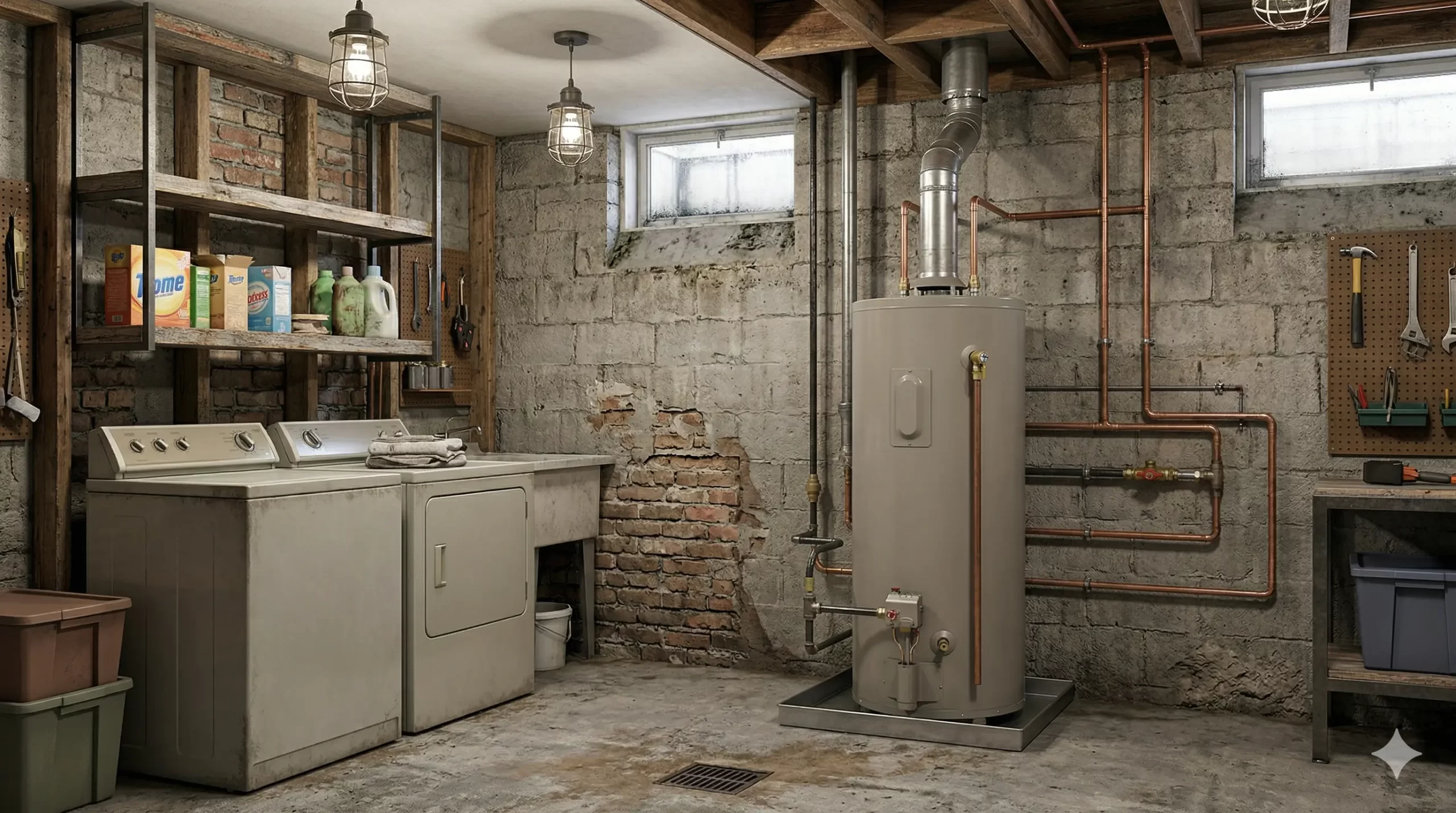
A 6-flash FVS lockout is a direct warning of potentially explosive atmospheric conditions. Do not attempt a reset without first identifying and eliminating the source of flammable vapors (e.g., gasoline, solvents, propane). Creating an ignition source, including static electricity or operating a light switch in a vapor-rich environment, can lead to catastrophic failure. This error code signifies the appliance’s safety system has performed its critical function; overriding it without due diligence is exceptionally hazardous.
️ Repair Profile
Required Diagnostics Tools
Digital Multimeter (with Ohm setting), Phillips Head Screwdriver, Flathead Screwdriver, Non-Contact Voltage Tester, Flashlight, Adjustable Wrench, Gas Leak Detection Solution
Financial Breakdown: Parts vs. Licensed Labor
The labor allocation is significant due to the critical diagnostic phase required to differentiate between a simple water leak and a potentially hazardous flammable vapor situation. The part cost reflects the replacement of a specialized electronic component like an FVS, not just a simple mechanical part.
Deep Technical Diagnosis: The Physics of the Failure
A 6-flash diagnostic code on a Rheem gas water heater’s integrated control valve (typically a Honeywell or White-Rodgers unit) indicates a lockout condition triggered by one of two distinct safety sensors. The primary function of these sensors is to prevent water damage or, more critically, the ignition of combustible fumes, thereby averting potential fire or explosion. The control module’s microprocessor continuously monitors the electrical signals from these sensors, and a deviation beyond a pre-programmed threshold initiates this specific alert and shutdown.
The first potential trigger, found on Rheem Protech models, is the Water Leak Detection Sensor. This is a simple two-contact conductive sensor placed in the unit’s drip pan. When water bridges the two metal contacts, it completes a low-voltage circuit, signaling the main controller to shut down the gas valve and trigger the 6-flash code. This can be caused by a catastrophic tank failure, a leaking T&P valve, a compromised drain valve, or even severe condensation under specific atmospheric conditions.
The second, and more urgent, cause is the activation of the Flammable Vapor Sensor (FVS). This is a mandatory safety device on all FVIR (Flammable Vapor Ignition Resistant) heaters. The FVS is a highly sensitive thermistor whose electrical resistance changes predictably in the presence of hydrocarbon vapors. In clean air, its resistance is typically high (e.g., 10,000-45,000 Ohms). When exposed to vapors from gasoline, paint thinner, solvents, or other volatile organic compounds, its resistance plummets. The gas valve’s microprocessor interprets this sharp drop in resistance as a critical threat. It immediately enters a hard lockout mode to prevent the burner from igniting and causing a flashback explosion, ensuring the appliance fails safe before achieving stoichiometric combustion in a dangerous environment.
- Root Cause Analysis:
- Ambient Hydrocarbon Presence: Spilled gasoline from lawn equipment, open paint or solvent containers, or aerosol propellants have saturated the air near the heater’s combustion air intake.
- Water Leak Sensor Activation: A leak from the tank, plumbing connections, Temperature & Pressure (T&P) relief valve, or drain valve has pooled in the drip pan.
- Faulty FVS: The sensor itself has failed, sending an erroneous low-resistance signal to the control board. This can be verified with a multimeter; a reading significantly below 5,000 Ohms in clean air often indicates a compromised sensor.
- Sensor Contamination: The FVS has been contaminated by water, dirt, or oil, altering its resistive properties and causing a false positive reading.
- Damaged Wiring Harness: The connection between the sensor and the gas control valve is shorted or damaged, mimicking the electrical signature of a vapor event.
US Building Codes & Plumbing Regulations
The presence of a Flammable Vapor Sensor and its 6-flash lockout code is directly tied to mandates within the NFPA 54: National Fuel Gas Code. Specifically, this code stringently regulates the installation of fuel-fired appliances to mitigate fire and explosion hazards. Section 9.3, for instance, details prohibited locations for gas appliances, such as areas where flammable vapors are consistently present. The FVS system is an engineered solution that allows for installation in approved residential locations (like basements or utility closets) where accidental spills might occur, acting as a final line of defense mandated by these safety standards. A recurring FVS lockout may signify an installation environment that is in violation of NFPA 54’s core principles regarding air quality and proximity to volatile substances.
Furthermore, the Uniform Plumbing Code (UPC), Section 507, addresses the location and installation of water heaters. The code mandates adequate and unobstructed space around the appliance for service, inspection, and ventilation. This requirement is not merely for convenience; it is a safety measure designed to prevent the storage of combustibles and flammables against or near the unit. A 6-flash error resulting from an FVS lockout often serves as a direct indicator that these clearance and storage stipulations are being ignored. An inspector would view this error code as a potential symptom of a non-compliant installation that compromises the engineered safety features of the FVIR system.
Professional Master Plumber Repair Sequence
- Initial Safety Protocol: Immediately cease any activity that could create a spark. Do NOT touch light switches or unplug appliances. Turn off the gas supply at the shutoff valve located on the gas line leading to the water heater.
- Identify the Sensor Type: Visually inspect the base of the heater. Look for a small sensor with two metallic prongs sitting in the drip pan (Water Leak Sensor) or a small, typically gray or black plastic sensor mounted near the combustion chamber air intake (Flammable Vapor Sensor).
- Environmental Assessment & Ventilation: Conduct a thorough sweep of the area for any sources of flammable vapors—gas cans, paint thinners, solvents, cleaners, or aerosol cans. If any are found or a chemical odor is present, remove the source and immediately ventilate the area by opening doors and windows. Allow at least 60 minutes for vapors to dissipate completely.
- Leak Inspection: Using a flashlight, meticulously inspect the entire unit, from the top water connections down to the drain valve and the base of the tank, for any sign of moisture. If water is present in the pan, the water leak sensor is the cause. The source of the leak must be repaired before proceeding.
- Sensor Integrity Check: Visually inspect the FVS or leak sensor and its wiring for any signs of physical damage, corrosion, or contamination. Ensure the wiring harness is securely plugged into the gas control valve.
- Test Sensor Resistance (Professional Step): Disconnect the sensor’s wiring harness from the control valve. Set a digital multimeter to measure resistance (Ohms). For an FVS, test the two leads; a reading in clean, vapor-free air should be between 10,000 and 45,000 Ohms. A reading near zero or ‘OL’ (open loop) indicates a failed sensor that requires replacement. A water leak sensor should read ‘OL’ when dry.
- Perform Hard Reset: After confirming the environment is safe (no vapors, no water leaks) and the sensor is functional, perform the manufacturer-specified hard reset. For most Rheem units, this involves turning the gas control knob to ‘OFF’, waiting 10 seconds, then rotating the knob to the ‘PILOT’ position. Push down and hold the knob while clicking the igniter repeatedly. Once the pilot is lit, continue holding the knob for 60 seconds. This sequence clears the lockout from the controller’s memory.
- Restore Gas & Leak Test: Slowly turn the main gas shutoff valve back to the ‘ON’ position. Using a gas leak detection solution (soap bubbles), test all fittings you may have touched to ensure there are no leaks.
- Verify Operation: Turn the temperature dial to your desired setting. The main burner should ignite. Observe the LED status light on the gas control valve; it should now be blinking a slow, steady ‘heartbeat’ flash, indicating normal operation. A return to 6 flashes indicates a persistent fault.
Expert Verdict: Is It Worth Repairing?
The decision to repair or replace a Rheem water heater displaying a 6-flash error code hinges entirely on the root cause. If the lockout was triggered by a temporary environmental factor, such as spilled paint thinner that has since been removed, a simple reset (repair) is the only logical and cost-effective action, with a near-100% ROI. If the diagnostic reveals a failed Flammable Vapor Sensor on a unit that is otherwise in good condition (less than 8 years old, no signs of tank corrosion), replacing the sensor is a sound investment. The repair cost is a fraction of a new installation and restores a critical safety system.
Conversely, the replacement decision becomes paramount under two conditions. First, if the 6-flash code was triggered by the water leak sensor and the source is a corroded, leaking tank, repair is not an option; immediate replacement is required. Second, if the FVS lockouts are recurrent due to a fundamentally unsafe installation location (e.g., a workshop with constant chemical use), simply replacing the sensor repeatedly is a poor investment. In this case, the long-term solution is to replace the unit AND relocate it to a code-compliant area or switch to an electric or power-vent model that does not draw combustion air from the contaminated space.
Frequently Asked Questions (FAQ)
Q: Can I just bypass the Flammable Vapor Sensor to fix the 6-flash error?
A: Absolutely not. Bypassing the FVS is a severe safety hazard that defeats a critical, federally mandated safety feature. It creates a significant risk of explosion and fire, will void any warranty or insurance claim, and may be illegal in your jurisdiction.
Q: Why did my Rheem heater show 6 flashes if there’s no water in the pan and no gas smell?
A: This often points to non-obvious sources of volatile organic compounds (VOCs). Aerosol sprays, cleaning solvents, fresh paint, or even certain types of flooring adhesive used nearby can release enough vapor to trigger the sensitive FVS without being easily detectable by smell.
Q: How is a ‘hard reset’ for a 6-flash code different from just turning the heater off and on?
A: A standard power cycle won’t clear an FVS lockout. A hard reset involves a specific sequence of turning the gas control knob (e.g., OFF, wait, then a specific pattern) which signals the control board’s microprocessor to clear the non-volatile memory where the critical safety lockout code is stored.
Q: If the water leak sensor triggered the 6-flash code, does that mean my tank has failed?
A: Not necessarily. While a tank leak is a primary concern, the moisture could also originate from a leaking T&P valve, a loose plumbing connection at the top of the tank, or even heavy condensation. A thorough diagnostic by a qualified plumber is required to pinpoint the water’s source before condemning the unit.