
A Rheem 7-flash code indicates a critical gas control valve failure. This emergency requires immediate professional replacement of the entire valve assembly.
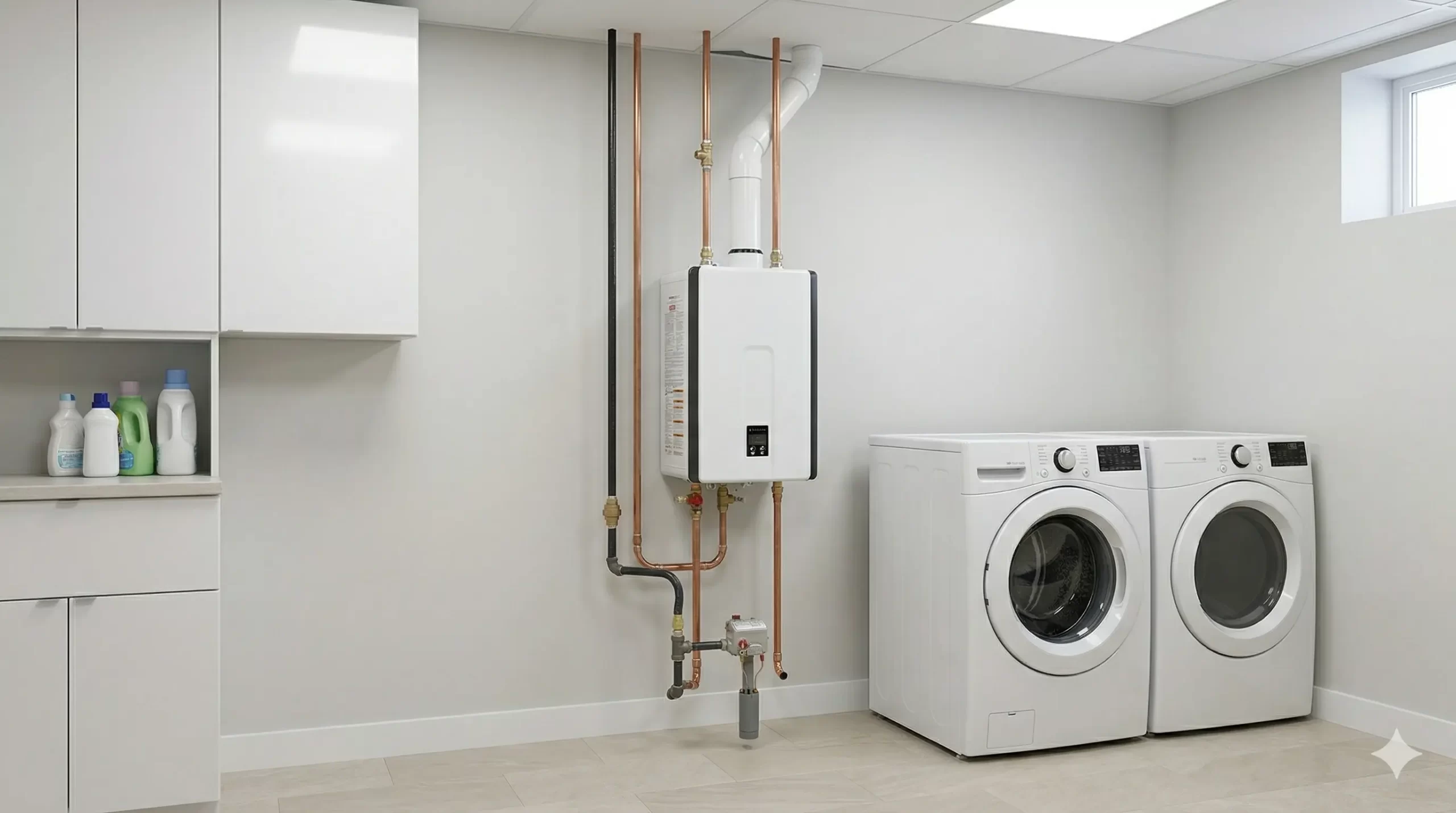
CRITICAL ALERT: A 7-flash error code indicates the gas valve’s internal microprocessor is compromised. This is not a simple sensor fault; the valve’s logic is unpredictable. It may fail to close completely, creating a persistent, non-odorous gas leak, or it could stick open during a heating cycle. Do not attempt to reset the power or relight the pilot. Immediately shut off the gas supply line to the appliance, ventilate the area, and contact a certified professional. This condition presents an imminent risk of gas accumulation and explosion.
️ Repair Profile
Required Diagnostics Tools
Pipe Wrenches (2), Adjustable Wrench, Flare Nut Wrench Set, Phillips & Flathead Screwdrivers, Gas Leak Detection Solution, Pipe Thread Sealant (gas-rated)
Financial Breakdown: Parts vs. Licensed Labor
The high parts percentage reflects the cost of the sophisticated, factory-sealed electronic gas control valve, which contains a non-serviceable microprocessor. Labor costs encompass the meticulous, code-required process of installation, system purging, and multi-point leak verification.
Deep Technical Diagnosis: The Physics of the Failure
A 7-flash diagnostic code on a Rheem gas water heater’s control valve is a definitive indication of an internal, non-recoverable electronic fault. This error is generated directly by the valve’s integrated microprocessor, which has detected a fatal anomaly within its own circuitry or has identified a mechanical state inconsistent with its commands. Unlike sensor-related errors (e.g., high-limit switch), this code signifies the control unit itself is the point of failure. The internal logic board continuously monitors inputs, such as the thermopile millivoltage (typically 300-750mV), and controls outputs to the solenoid-driven gas ports. A 7-flash fault is triggered when the microprocessor’s self-diagnostic routine fails, or it detects that the physical valve position (open/closed) does not match the electrical signal sent to the internal solenoid actuator.
This failure prevents the system from achieving safe and stable stoichiometric combustion because the fuel delivery mechanism is compromised. A technician using a manometer might observe correct inlet gas pressure (typically 5-7 inches of water column), yet the valve will refuse to operate, confirming the fault is internal to the sealed unit. The root cause is often multifaceted, but a comprehensive analysis points to several possibilities:
- Voltage Irregularity Damage: A power surge or significant brownout can corrupt the microprocessor’s firmware or physically damage the delicate integrated circuits responsible for valve logic and safety checks.
- Solenoid Coil Failure: The internal electromagnetic coil that physically opens the gas diaphragm may have shorted or developed an open circuit. The microprocessor detects the incorrect amperage draw and initiates a hard lockout.
- Internal Mechanical Seizure: Debris within the gas line or corrosion on internal valve components can cause the diaphragm or plunger to become mechanically stuck. The microprocessor commands the valve to actuate, but receiving no confirmation of state change, it flags an unrecoverable error.
- Thermopile Signal Processor Fault: The onboard circuitry responsible for interpreting the low-voltage signal from the thermopile may fail, leading the microprocessor to incorrectly believe there is no stable pilot flame, even when one is present. This results in a permanent safety shutdown.
Ultimately, the valve is a sealed, non-serviceable component. The 7-flash code is the unit’s final report indicating that its primary safety and operational controller has failed and must be replaced entirely.
US Building Codes & Plumbing Regulations
According to the NFPA 54 (National Fuel Gas Code), any replacement component, such as a gas control valve, must be listed and approved for the specific appliance model. Installing a generic or non-OEM valve constitutes a significant code violation, as the replacement part has not been tested for compatibility with the Rheem unit’s specific operational parameters, including its burner assembly and venting system. The code mandates that the new valve’s specifications (BTU rating, pressure regulation, electrical connections) must precisely match the original equipment to ensure safe operation and prevent conditions like over-firing or flame rollout.
Furthermore, the Uniform Plumbing Code (UPC) directly governs the physical installation process. Section 1211.1.7 (or local equivalent) explicitly requires that any gas piping connection that has been disassembled must be leak-tested prior to placing the appliance back into service. For a gas valve replacement, this means every reconnected joint—the main gas inlet, the pilot tube fitting, and the main burner supply tube—must be tested using a non-corrosive leak detection fluid. Relying solely on smell is insufficient and non-compliant. A licensed plumber must document that the system is free of leaks at normal operating pressure before considering the job complete.
Professional Master Plumber Repair Sequence
- Isolate Utilities: Turn off the main gas shutoff valve for the entire building and the local appliance shutoff valve to the water heater. Turn the gas control knob on the old valve to the ‘OFF’ position.
- Depressurize and Disconnect Gas Lines: Using a flare nut wrench to prevent rounding the fittings, carefully disconnect the pilot tube, thermocouple/thermopile lead, and the main burner supply line from the bottom of the old gas control valve.
- Remove Old Valve Assembly: Place one pipe wrench on the gas inlet pipe leading to the valve to act as a ‘backup’ and prevent stress on the tank connection. Use a second, larger pipe wrench to turn the entire gas control valve counter-clockwise, unscrewing it from the water heater tank spud.
- Prepare Threads on New Valve: Clean the male threads on the new OEM gas control valve. Apply a moderate amount of gas-rated pipe thread sealant (e.g., RectorSeal No. 5 or PTFE tape approved for gas) to the threads, leaving the first two threads bare to prevent sealant from entering the valve.
- Install New Gas Control Valve: Carefully thread the new valve into the tank spud by hand to avoid cross-threading. Tighten it using the pipe wrenches in the same manner as removal until it is snug and properly oriented (typically facing forward). Do not overtighten.
- Reconnect All Lines: Re-attach the main burner supply line, the pilot tube, and the thermocouple/thermopile lead to the new valve. Ensure the thermocouple connection is finger-tight plus a quarter-turn with a wrench to ensure proper millivolt signal transmission.
- Restore Gas and Perform Leak Test: Slowly turn the main gas supply back on. Using a soapy water solution or an approved gas leak detector, generously apply it to every connection you disturbed: the main inlet to the valve, the pilot tube nut, and the burner line nut. Watch for the formation of bubbles, which indicates a gas leak. If bubbles appear, shut off the gas and tighten the leaking connection.
- Follow Lighting Procedure: Once all connections are confirmed to be leak-free, follow the specific lighting instructions printed on the new gas control valve or the water heater’s label to relight the pilot and turn the unit on. Verify main burner ignition and normal operation.
Expert Verdict: Is It Worth Repairing?
When faced with a 7-flash error on a Rheem unit, the repair-versus-replace decision hinges almost entirely on the water heater’s age. The electronic gas control valve is one of the most expensive components to replace. If the water heater is less than 5-6 years old and still under parts warranty (check with Rheem), replacing the valve is a sound financial decision, restoring the unit to full functionality for the remainder of its expected service life. However, if the unit is approaching or has exceeded 8-10 years of service, investing several hundred dollars into a new gas valve offers a poor return on investment. At this age, the anode rod is likely depleted, sediment buildup is significant, and the risk of tank failure increases exponentially. Pouring money into a new control valve for a tank that may fail within a year or two is not economical. In such cases, the cost of the repair should be applied toward a complete water heater replacement.
Frequently Asked Questions (FAQ)
Q: Can I just reset my Rheem water heater to clear the 7 flashes code?
A: No. The 7-flash code indicates a permanent, internal hardware failure within the gas control valve’s microprocessor. Unlike temporary faults, it cannot be cleared by cycling power or pressing a reset button. The valve has entered a permanent safety lockout and requires complete replacement.
Q: Is a 7-flash error dangerous?
A: Yes, it is considered an emergency. The fault means the valve’s internal computer is compromised, making its behavior unpredictable. It could fail to shut off gas flow completely. You must shut off the gas supply to the appliance immediately and call a professional for diagnosis and replacement.
Q: Why did my Rheem gas valve fail with 7 flashes?
A: The most common causes are internal electronic component degradation due to age, damage from a power surge or brownout, or an internal mechanical part seizing which the microprocessor registers as a critical fault. It is a complex electronic device that can fail over time, similar to any other circuit board.
Q: Can I use a universal gas control valve to fix a 7-flash error?
A: Absolutely not. You must use an OEM (Original Equipment Manufacturer) or a manufacturer-approved replacement valve. Universal valves are not calibrated for the specific BTU input, burner design, and safety systems of your Rheem model. Using an incorrect valve is a serious code violation and creates an extreme safety hazard.