
Diagnose and eliminate the rotten egg (sulfur) smell in your hot water. This guide details the professional fix: replacing the anode rod with a powered unit.
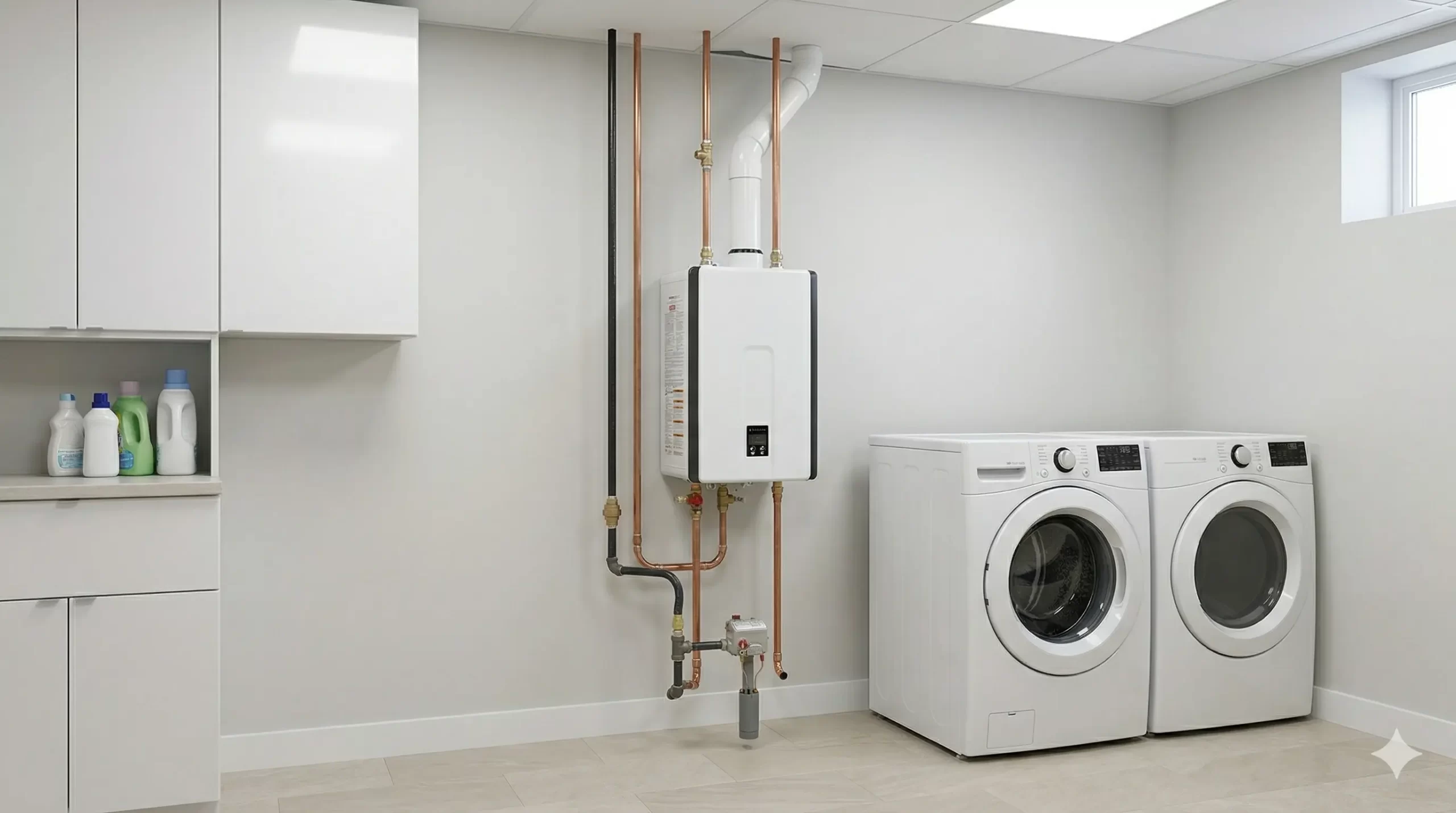
EXTREME CAUTION ADVISED: The hydrogen sulfide gas (H₂S) causing the rotten egg odor is flammable and can accumulate in the tank’s headspace. Using power tools near the open anode port presents a spark ignition risk. Furthermore, removing a seized anode rod requires immense torque, often exceeding 400 ft-lbs, which can fracture plumbing connections or rupture the tank lining if applied improperly. This procedure must involve a verified gas supply shutdown and subsequent leak testing with a manometer or approved detection fluid. Failure to adhere to these protocols can result in gas leaks, fire, or explosion.
️ Repair Profile
Required Diagnostics Tools
High-Torque Impact Wrench or Long Breaker Bar, 1-1/16 inch 6-point Deep Socket, Pipe Wrench, PTFE Thread Seal Tape, Garden Hose, Bucket, Gas Leak Detector Solution, Manometer
Financial Breakdown: Parts vs. Licensed Labor
The cost distribution is heavily weighted towards parts because a specialized powered titanium or zinc-aluminum anode rod is significantly more expensive than a standard magnesium rod. Labor costs are moderate as the replacement, while physically demanding, is a direct component swap-out without complex repiping.
Deep Technical Diagnosis: The Physics of the Failure
The perception of a ‘rotten egg’ odor is the sensory detection of hydrogen sulfide (H₂S) gas dissolved in the hot water. This gas is not typically present in the municipal or well water supply itself but is manufactured within the water heater through a specific electrochemical and biological process. The primary catalyst is the interaction between sulfate-reducing bacteria (SRB) and the sacrificial anode rod, most commonly one made of magnesium.
A standard sacrificial anode rod protects the steel tank from corrosion via a galvanic process. Magnesium, having a more negative electrochemical potential (approximately -2300 millivolts) than steel, corrodes preferentially, releasing a steady stream of electrons into the water. In environments rich with sulfates (SO₄²⁻) and populated by anaerobic SRB, these bacteria utilize the free electrons supplied by the corroding anode as an energy source. The bacteria metabolize the sulfates, effectively ‘breathing’ them in a process that reduces the sulfate to sulfide (S²⁻).
This sulfide ion then readily combines with free hydrogen ions (H⁺) present in the water, following the stoichiometric reaction 2H⁺ + S²⁻ → H₂S. The resulting hydrogen sulfide gas is sparingly soluble in water, and its solubility decreases as water temperature increases. When a hot water tap is opened, the pressure drop and temperature change cause the dissolved H₂S to off-gas, producing the distinct and unpleasant odor. The issue is often exacerbated by water softeners that use sodium chloride, as the ion exchange process can increase water’s conductivity and sometimes foster an environment more conducive to SRB proliferation.
- Root Cause 1: High-Potential Anode Rod: A magnesium anode rod’s high reactivity (-2300 mV) produces an abundance of free electrons, supercharging the SRB metabolic process.
- Root Cause 2: Sulfate-Reducing Bacteria (SRB): The presence of these specific non-pathogenic microbes is a prerequisite. They are common in well water but can also colonize municipal systems.
- Root Cause 3: High Sulfate Content: The water supply must contain sufficient levels of dissolved sulfates (SO₄²⁻) to act as the ‘fuel’ for the bacteria.
- Root Cause 4: Water Stagnation: Low hot water usage allows H₂S gas to accumulate in the tank’s headspace, leading to a potent burst of odor when a tap is first opened.
US Building Codes & Plumbing Regulations
While no code explicitly mentions water odor, the service procedure directly implicates sections of the NFPA 54, National Fuel Gas Code. Specifically, Section 8.5, ‘Procedures for Placing Equipment in Operation,’ mandates that after servicing (such as this anode replacement which requires gas shutoff), the system must be properly recommissioned. This includes verifying the integrity of the gas piping with a pressure test or approved leak detection method before restoring the gas supply. A casual inspection is non-compliant; a professional must ensure zero leakage at the gas control valve and any disturbed fittings to prevent a hazardous condition.
Furthermore, the Uniform Plumbing Code (UPC), Section 604.1, stipulates that materials used in potable water systems must be approved and suitable for the intended use. Installing an unlisted or improper type of anode rod could be interpreted as a violation. More broadly, the UPC’s fundamental principle is the preservation of a sanitary water supply. The generation of significant hydrogen sulfide gas, an odorous and potentially corrosive compound, can be argued as compromising the intended sanitary condition of the potable hot water system, making its remediation a matter of compliance with the spirit of the code.
Professional Master Plumber Repair Sequence
- Isolate the Appliance: Turn the gas control knob on the water heater to the ‘OFF’ position. Then, locate the gas shutoff valve on the line leading to the unit and turn it to the off position (typically a quarter turn so it is perpendicular to the pipe). Shut off the cold water supply valve to the tank.
- Relieve System Pressure: Open any hot water faucet in the building and let it run until it stops. This depressurizes the tank and the hot water lines.
- Partial Tank Drain: Connect a garden hose to the drain valve at the bottom of the water heater. Route the hose to a floor drain or outside. Open the drain valve and empty at least 5-10 gallons of water to ensure the water level is below the top of the tank where the anode is located.
- Locate and Expose the Anode Rod: The anode rod is a large hex bolt head (usually 1-1/16 inch) on top of the water heater. You may need to remove a plastic cap to access it.
- High-Torque Removal: This is the most critical step. Use a 1-1/16″ 6-point deep well socket attached to a high-torque impact wrench or a long breaker bar. The factory-installed rod is often extremely tight. Have an assistant hold the tank firmly to prevent it from twisting and damaging the water or gas connections. Apply sudden, forceful torque to break it loose.
- Extract Old Rod and Inspect: Unscrew and carefully lift the old, corroded anode rod out of the tank. It may be heavily pitted or completely consumed.
- Install the New Anode Rod: Apply 3-4 wraps of PTFE thread seal tape in a clockwise direction to the threads of the new powered or zinc-aluminum anode rod. Carefully thread it into the port by hand to avoid cross-threading.
- Tighten and Seal: Tighten the new rod firmly with a pipe wrench or socket wrench until it is snug and secure. For powered anodes, follow the manufacturer’s specific instructions for final connections and power-up.
- Refill and Purge Air: Close the tank’s drain valve. Slowly reopen the cold water supply valve. Keep the hot water faucet open elsewhere in the house. You will hear the tank filling and air sputtering from the faucet. Once a steady stream of water flows from the faucet, all air has been purged. Close the faucet.
- Recommission and Leak Test: Carefully inspect the new anode rod connection for any water leaks. Restore the gas supply by opening the shutoff valve. Using a gas leak detector solution, check all disturbed gas fittings for bubbles. If secure, follow the manufacturer’s instructions on the tank label to relight the pilot light and return the unit to normal operation.
Expert Verdict: Is It Worth Repairing?
When confronting a hydrogen sulfide odor issue, a repair is overwhelmingly the most cost-effective solution with a high return on investment. The problem is not an indication of tank failure but rather a chemical reaction based on water composition. The cost of a premium powered anode rod (e.g., Corro-Protec) and professional installation typically ranges from $250 to $550. In contrast, a complete gas water heater replacement costs between $1,500 and $2,500+. The repair not only solves the immediate odor problem but also provides superior, long-term corrosion protection, potentially extending the service life of the existing tank beyond its original warranty period. Replacing the entire unit for this specific issue would be a significant financial misallocation unless the tank is already leaking or is well past its 10-12 year expected lifespan.
Frequently Asked Questions (FAQ)
Q: Will simply flushing the water heater fix the rotten egg smell?
A: No. Flushing the tank may temporarily reduce the odor by removing some of the bacteria and sulfide-laden water, but it does not address the root cause. The anaerobic bacteria will quickly repopulate, and as long as the magnesium anode rod is present, the electrochemical reaction that produces hydrogen sulfide gas will resume, causing the smell to return within days or weeks.
Q: Is the hydrogen sulfide gas from my water heater dangerous to my health?
A: At the low concentrations produced in a water heater, hydrogen sulfide is primarily a nuisance due to its strong odor and is not typically considered a health hazard. However, it is corrosive to metals like silver and copper, potentially damaging electronics and plumbing components over time. The primary danger associated with this issue is the flammability of the gas if it accumulates in a confined space.
Q: My cold water smells fine, only the hot water has the sulfur smell. Why?
A: This is the classic symptom confirming the problem originates inside your water heater. The reaction that creates hydrogen sulfide gas requires the three key components found in the tank: the sacrificial anode rod, heat (which accelerates the reaction), and the sulfate-reducing bacteria. The cold water line bypasses this ‘incubator’ and therefore does not undergo the chemical transformation, so it remains odor-free.
Q: Can I use a zinc-aluminum anode rod instead of a powered one?
A: Yes, a zinc-aluminum alloy anode rod is a viable alternative to a powered anode and is less expensive. The zinc in the alloy alters the electrochemical reaction, making the environment less hospitable for sulfate-reducing bacteria and reducing or eliminating the odor. While generally effective, in cases of extremely aggressive water chemistry or high bacteria counts, a powered anode provides a more definitive and permanent solution.