
A rusted, flaking draft hood on your gas water heater indicates corrosive flue gas condensation. This guide covers replacement and fixing the root cause.
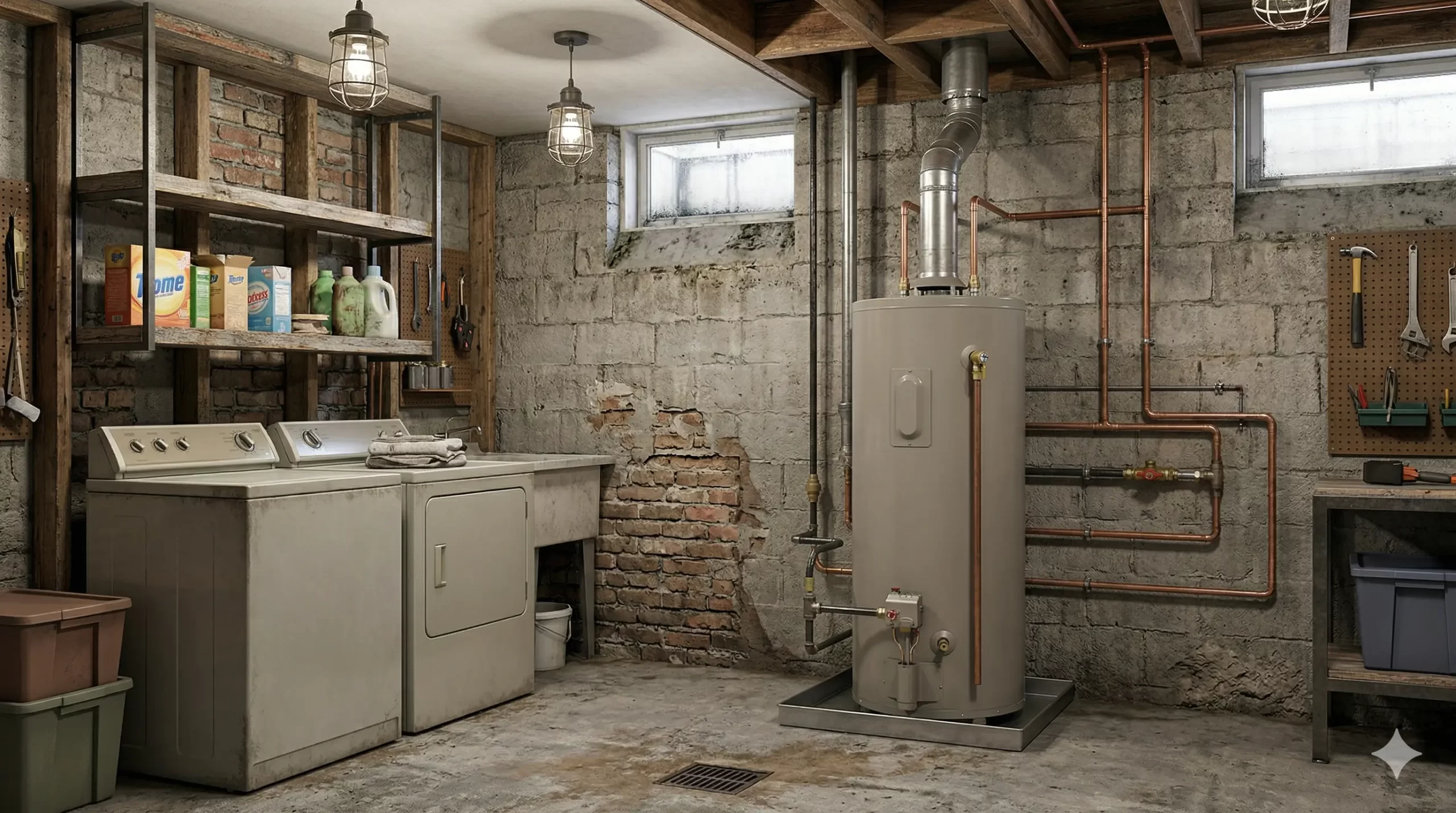
EXTREME HAZARD WARNING: A corroded draft hood is a primary indicator of chronic flue gas spillage or backdrafting. The same acidic condensate destroying the hood is likely producing elevated levels of carbon monoxide (CO). Operating the appliance in this condition poses an immediate risk of CO poisoning. Do not assume the issue is merely cosmetic. The venting system is compromised, and professional combustion analysis is mandatory before the appliance can be considered safe to operate.
️ Repair Profile
Required Diagnostics Tools
CO Detector, Manometer, Flashlight, Phillips and Flathead Screwdrivers, Work Gloves, Safety Glasses, Replacement Draft Hood, High-Temperature Metal Foil Tape
Financial Breakdown: Parts vs. Licensed Labor
The replacement component is a simple, low-cost stamped metal part, representing a minor fraction of the total expense. The majority of the cost is allocated to the technician’s diagnostic labor, which includes combustion analysis and draft testing to ensure the underlying venting issue is identified and the system operates safely.
Deep Technical Diagnosis: The Physics of the Failure
The observation of oxidation and delamination on a gas water heater’s draft hood is a direct symptom of sustained flue gas condensation. Under ideal conditions, the products of stoichiometric combustion—primarily water vapor (H2O), carbon dioxide (CO2), and nitrogen (N2)—remain well above their dew point (approximately 130°F or 54°C for natural gas) until they are expelled from the termination point of the vent. When the draft hood rusts, it confirms that flue gas temperatures are dropping below this critical threshold within the venting system, allowing acidic condensate to form and attack the metal surfaces.
The primary culprit is almost always an improperly sized B-vent chimney, typically one that is oversized for the appliance’s BTU input. An excessively large flue volume causes the hot exhaust gases to lose velocity and thermal energy too quickly. This slow-moving column of gas transfers its heat to the cold vent walls, leading to condensation. The resulting liquid is not merely water; it’s a corrosive solution of carbonic acid, formed when CO2 dissolves in H2O. This acid aggressively attacks the thin, often aluminized or galvanized, steel of the draft hood. A manometer reading will often show a weak or fluctuating draft (below -0.01 inches W.C.), confirming poor exhaust velocity. The entire system’s ability to achieve proper thermal buoyancy is compromised.
While an oversized chimney is the most common cause, other factors can contribute to this phenomenon. It’s crucial to investigate the entire system to identify the true root cause and prevent a recurring failure of the new component.
- Low Thermostat Setting: Consistently running the water heater at a very low temperature can cause short cycling of the burner. These brief run times fail to adequately heat the entire mass of the chimney, preventing the establishment of a strong, stable draft and promoting condensation during each cycle.
- Excessive Vent Length or Elbows: An overly long or convoluted vent run can create enough resistance and surface area to cool gases below their dew point before they can exit. Each 90-degree elbow adds significant equivalent length and turbulence, slowing the exhaust flow.
- Negative Air Pressure: The appliance may be located in a tightly sealed space or competing for combustion air with other equipment, like a clothes dryer or kitchen exhaust fan. This can create a negative static pressure environment, impeding the natural draft and causing flue gases to stall and cool within the vent.
- Partial Vent Blockage: Debris, animal nests, or internal liner collapse can restrict flow, slowing the gases and causing them to cool and condense before the point of blockage.
US Building Codes & Plumbing Regulations
According to NFPA 54, the National Fuel Gas Code, the venting system must be designed and installed to convey all combustion products to the outside atmosphere completely and safely. A rusted and flaking draft hood is a definitive visual failure of this requirement, as it proves the system is allowing the formation and collection of corrosive condensate. Section G2427.10.7 (UPC) or equivalent states that a vent shall terminate in a manner that prevents blockage from foreign material and minimizes the potential for re-entry of combustion gases. The underlying cause of the corroded hood—improper draft—directly violates the principles of vent sizing tables provided in the code, which are engineered specifically to maintain flue gas temperature and velocity to avoid condensation.
From an inspector’s viewpoint, a compromised draft hood immediately renders the appliance’s installation non-compliant and unsafe. The International Fuel Gas Code (IFGC) mandates that all components of the venting system shall be in a safe and sanitary condition. The presence of corrosion severe enough to cause flaking indicates the component’s structural integrity is compromised, potentially altering its designed function of regulating the draft and preventing spillage. Therefore, replacement of the damaged component is not sufficient for compliance; the code compels the technician to diagnose and rectify the venting deficiency that caused the failure in the first place, ensuring the entire installation adheres to code-mandated safety and performance standards.
Professional Master Plumber Repair Sequence
- Initial Safety Protocol & Assessment: Don personal protective equipment (gloves, safety glasses). Before touching anything, turn the water heater’s thermostat to its lowest setting. Use a calibrated CO detector to measure carbon monoxide levels around the appliance’s base and draft hood to assess the immediate danger.
- Shut Down the Appliance: Turn the gas control valve knob to the ‘OFF’ position. For added safety, locate the manual gas shutoff valve on the supply line leading to the water heater and turn it to the off position (handle perpendicular to the pipe).
- Disconnect the B-Vent Connector: Locate the screws securing the B-vent pipe to the outlet of the draft hood. Using a screwdriver, remove these screws. Gently twist and lift the vent pipe off the draft hood and set it aside. Inspect the interior of this pipe for moisture or corrosion.
- Remove the Damaged Draft Hood: The draft hood is often press-fit or held by a few screws to the top of the water heater’s flue collar. Carefully remove any fasteners and lift the old draft hood off the unit. Be mindful of sharp, rusted edges.
- Clean and Inspect the Flue Collar: With the hood removed, use a wire brush to gently clean any rust or debris from the flue collar on top of the water heater. Inspect this area for any cracks or severe corrosion that might compromise the seal of the new hood.
- Install the New Draft Hood: Position the new, manufacturer-approved draft hood onto the flue collar, ensuring it is seated fully and oriented correctly according to the appliance’s manual. If fasteners were used previously, secure the new hood with new, corrosion-resistant screws.
- Reconnect and Seal the Venting: Carefully place the B-vent pipe back onto the outlet of the new draft hood. Ensure at least a 1-inch overlap. Secure the connection with at least three screws. For an added measure of safety and to prevent any minor leaks, seal the joint with UL 181-rated high-temperature aluminum foil tape.
- Restore Operation & Perform Leak Test: Turn the main gas supply valve back on. Follow the manufacturer’s lighting instructions to restore the pilot light and turn the gas control valve to ‘ON’. Set the thermostat to call for heat, igniting the main burner. Use a soap solution to check the gas connections for leaks.
- CRITICAL – Conduct Spillage & Draft Test: Allow the burner to run for at least five minutes to establish a draft. Using a smoke pen or match, observe the relief opening of the draft hood; the smoke should be drawn into the hood, not spill out. Use a manometer to verify a stable draft reading (typically between -0.02″ and -0.04″ W.C.). Confirm with your CO detector that no carbon monoxide is spilling into the room.
- Client Communication and Recommendation: Document your findings. Clearly explain to the homeowner that while the draft hood is replaced, the root cause (likely an oversized or inefficient vent) still exists. Strongly recommend a full Level 2 inspection of the venting system by a qualified HVAC technician to prevent recurrence and ensure long-term safety.
Expert Verdict: Is It Worth Repairing?
The decision matrix for a rusted draft hood is not a simple repair vs. replace scenario for the water heater itself; it’s an analysis of symptomatic vs. causal repair. Replacing the draft hood is a low-cost, mandatory repair required for immediate safety, costing a fraction of a new unit. The ROI on this specific repair is infinite, as it mitigates an immediate safety hazard. However, this action alone yields a poor long-term financial return because it does not address the underlying pathology of flue gas condensation. The new draft hood will inevitably suffer the same fate.
The true ROI is realized by investing in the correction of the venting system. This may involve installing a properly sized chimney liner, a more significant expense. Comparing this ‘causal repair’ cost to a full water heater replacement reveals the correct path. Installing a brand new, high-efficiency water heater without correcting the defective vent is a complete financial loss; the new appliance’s draft hood and potentially its internal flue will be damaged by the same condensation, possibly voiding the warranty. Therefore, the financially prudent and safety-oriented approach is to replace the draft hood and concurrently invest in correcting the vent system, preserving the life of the existing appliance and ensuring any future replacement can operate as designed.
Frequently Asked Questions (FAQ)
Q: Can I just use high-temperature rust-resistant paint on the draft hood?
A: Absolutely not. Painting over the rust is a purely cosmetic fix that dangerously ignores the root cause. The metal is likely already thinned and compromised. More importantly, it does nothing to stop the formation of acidic condensate, which will continue to corrode the metal from the inside and lead to a hazardous flue gas spillage condition.
Q: Is a rusted draft hood a serious carbon monoxide (CO) risk?
A: Yes, it is a very serious indicator of a potential CO risk. The rust itself isn’t the direct threat, but it is physical evidence that the venting system is failing to exhaust combustion byproducts properly. This same poor draft condition can easily lead to flue gases, including deadly carbon monoxide, spilling into your home instead of exiting through the chimney.
Q: My water heater is 10 years old and the draft hood just started rusting. Why now?
A: Venting system dynamics can change over time. Common causes include a partial blockage from debris developing in the chimney, a change in the home’s air-tightness from new windows or doors, or the replacement of an old furnace that previously shared the flue. When a new, high-efficiency furnace is installed, it’s often vented separately, leaving the water heater as the sole appliance on an now-oversized chimney, which initiates the condensation problem.
Q: If the plumber replaces the draft hood, is the entire problem solved?
A: No. Replacing the draft hood is only the first step and treats the symptom, not the disease. A reputable technician will replace the part to restore immediate safety but will then strongly advise on the necessary next step: a thorough evaluation and correction of the venting system (the chimney). Without fixing the vent, the new draft hood will simply rust out again.