
Heavily rusted dielectric nipples indicate galvanic corrosion. This pro guide details the safe replacement with brass unions to prevent catastrophic failure.
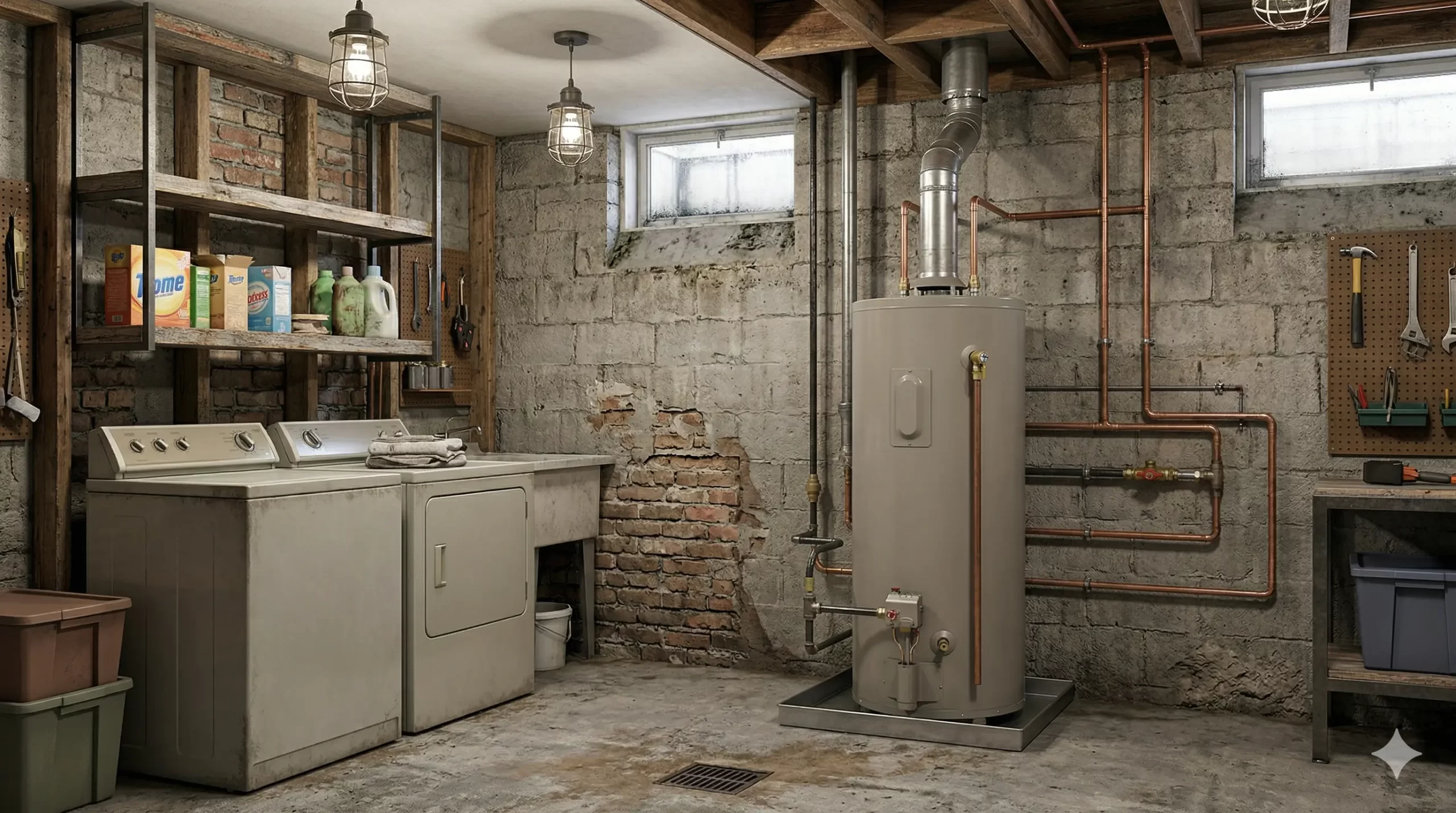
Critical Risk Assessment: Heavily rusted nipples signify a profound structural weakening at the water heater’s highest pressure points. This is not a slow drip risk; it is a precursor to a potential catastrophic failure. The corroded threads can strip under normal operating pressure (40-80 PSI), causing the supply line to eject violently, releasing scalding water at a high rate. Immediate shutdown of water and fuel to the appliance is mandatory before any diagnostic or repair attempt.
️ Repair Profile
Required Diagnostics Tools
Pipe wrenches (2), Channel-lock pliers, PTFE thread sealant tape, Pipe dope, Wire brush, Garden hose, Bucket, Safety glasses, Work gloves
Financial Breakdown: Parts vs. Licensed Labor
The cost allocation is heavily weighted towards labor due to the critical technical procedures involved, including system depressurization, partial draining, and meticulous reassembly to ensure a leak-proof, code-compliant dielectric separation. Material costs for the specialized nipples and brass unions are minor compared to the expertise required to prevent future catastrophic failure.
Deep Technical Diagnosis: The Physics of the Failure
The observation of heavily rusted nipples on a water heater is a definitive symptom of advanced galvanic corrosion. This electrochemical phenomenon occurs when two dissimilar metals, such as the steel of the water heater tank/nipple and the copper of the plumbing lines, are brought into electrical contact within an electrolyte—in this case, potable water. The system effectively becomes an electrolytic cell, or a battery. Based on the galvanic series, steel is less noble (more anodic) than copper (more cathodic). This creates a millivolt potential difference that drives a flow of electrons from the anode (steel) to the cathode (copper). Consequently, the steel nipple sacrificially corrodes, losing iron ions into the water. The stoichiometry of this reaction involves the oxidation of iron (Fe -> Fe²+ + 2e⁻), which then reacts with oxygen and water to form hydrated iron(III) oxide, commonly known as rust.
The installer’s critical error was likely the use of a standard galvanized steel nipple, mistakenly believing the zinc coating provided adequate protection. While zinc is even more anodic than steel and will sacrifice itself first, this is a temporary measure. Once the zinc layer is depleted, the underlying steel is left to corrode at an accelerated rate. A true dielectric nipple incorporates a non-conductive polymer lining that physically separates the water from contact with the metal nipple body for most of its length, preventing the establishment of an electrical circuit. The heavy rusting indicates this barrier was either absent or has failed. This process can be significantly exacerbated by aggressive water chemistry, such as high total dissolved solids (TDS), chlorides, or a low pH, which increases the water’s conductivity and accelerates the ion exchange. Furthermore, any stray electrical currents from improper appliance grounding can supercharge this corrosive action, leading to rapid and severe material degradation far exceeding typical timelines.
- Root Cause 1: Installation of standard galvanized steel nipples instead of true, polymer-lined dielectric nipples, creating a direct steel-to-copper connection.
- Root Cause 2: Failure of the insulating components within an older, improperly specified dielectric union, allowing the electrical circuit to be completed.
- Root Cause 3: Water chemistry with high conductivity (elevated mineral or chloride content) that acts as a more efficient electrolyte, accelerating the natural galvanic process.
- Root Cause 4: The absence of a brass fitting as an intermediary, which, while still creating a galvanic cell, would result in a much lower potential difference and slower corrosion rate compared to a direct steel-copper junction.
US Building Codes & Plumbing Regulations
The presence of heavily rusted nipples is a direct contravention of established plumbing codes, specifically principles outlined in the International Plumbing Code (IPC) and the Uniform Plumbing Code (UPC). For instance, UPC Section 605.17 (or its equivalent in the IPC) explicitly mandates that connections between dissimilar metals shall be made with dielectric unions or other approved fittings to prevent corrosion. The severe rusting is prima facie evidence that the installed connection failed to provide the required dielectric break, creating an electrolytic cell that has compromised the system’s integrity. An inspector would immediately flag this as a hazardous, non-compliant installation because it directly violates the code’s core mission to protect health and safety by ensuring the longevity and structural soundness of the potable water system.
Addressing this code violation is not merely a recommendation but a requirement for safe operation. The prescribed solution—installing new dielectric nipples and often supplementary brass unions—restores the system to a compliant state. This method ensures a robust and permanent electrical isolation between the ferrous water heater tank and the non-ferrous copper piping. Failure to correct this issue leaves the homeowner with a system that is not only actively self-destructing but is also in clear violation of the standards that govern safe plumbing practices in the United States. A proper repair demonstrates due diligence in adhering to the code’s mandate for durable materials and workmanship, preventing premature failure and potential property damage.
Professional Master Plumber Repair Sequence
- System Shutdown and Safety Protocol: Turn the gas control valve knob on the water heater to the ‘OFF’ position. Locate the main water shutoff valve for the heater (or the entire house) and turn it fully clockwise to stop the water supply.
- Pressure and Water Relief: Open a hot water faucet at the highest point in the house (e.g., an upstairs bathroom sink) to allow air into the system. Connect a garden hose to the drain valve near the bottom of the water heater and route it to a floor drain or outside. Open the drain valve to begin draining the tank. You only need to drain it until the water level is below the top inlet and outlet connections.
- Disconnect Supply Lines: Position one pipe wrench on the rusted nipple itself to provide counter-torque and prevent stress on the tank’s threaded port (spud). Use a second pipe wrench to loosen and disconnect the flexible connector or copper pipe union from the nipple. Repeat for both hot and cold sides.
- Remove Failed Nipples: With the lines disconnected, use a pipe wrench to carefully unthread the heavily rusted nipples from the top of the water heater. Apply steady, firm pressure. If seized, apply a penetrating oil and wait 15 minutes before retrying. Be prepared for them to crumble.
- Clean and Inspect Tank Threads: Once the old nipples are removed, use a stiff wire brush to meticulously clean the female threads inside the water heater’s spuds. Remove all old thread sealant, rust, and debris. Critically inspect the threads for deep pitting or damage; if the spuds are compromised, the entire tank must be replaced.
- Install New Dielectric Nipples: Tightly wrap the male threads of the new dielectric nipples with 3-4 layers of PTFE tape in a clockwise direction. Apply a layer of code-approved pipe dope over the tape. Carefully thread the new nipples into the tank spuds by hand, then tighten with a pipe wrench until snug. Do not overtighten.
- Install Brass Unions and Reconnect: Install new brass unions onto the outlets of the dielectric nipples. This provides a secondary, robust dielectric break and facilitates future service. Reconnect the hot and cold water supply lines to the new unions, ensuring all connections are tight.
- Refill and Purge System: Close the water heater’s drain valve. Slowly turn the main water supply back on. Keep the hot water faucet open upstairs and listen for the tank to fill. Once water flows steadily from the faucet without any sputtering air, the tank is full. Close the faucet.
- Final Inspection and Reignite: Meticulously inspect all new nipples, unions, and connections for any signs of leaks. Dry the connections with a cloth and re-check after 10 minutes. If everything is dry and secure, follow the manufacturer’s specific instructions printed on the heater to relight the pilot light and return the gas control valve to its operational setting.
Expert Verdict: Is It Worth Repairing?
The decision to repair the rusted dielectric nipples versus replacing the entire water heater hinges almost exclusively on the condition of the tank’s threaded connection points (spuds) upon removal of the failed fittings. If the galvanic corrosion has been localized to the sacrificial nipples and the tank’s spuds remain structurally sound with clean, intact threads, a repair offers an exceptional Return on Investment (ROI). For a relatively low cost in parts and a few hours of skilled labor, the service life of an otherwise healthy water heater (e.g., one less than 8 years old) can be fully restored, preventing a catastrophic leak and deferring a major appliance purchase. In this scenario, the repair is the most financially prudent and logical course of action.
However, if upon inspection the tank’s spuds are found to be deeply pitted, corroded, or have stripped threads, the ROI calculus inverts immediately. A repair is no longer viable, as a secure, watertight seal cannot be guaranteed. Attempting to install new nipples into a compromised spud is a significant safety hazard that will lead to failure. In this case, the initial problem has caused irreversible collateral damage to the pressure vessel itself. The only safe and logical solution is a complete water heater replacement. The cost of the attempted repair becomes a sunk cost, and investing further in a compromised tank is fiscally irresponsible and dangerous.
Frequently Asked Questions (FAQ)
Q: Why can’t I just use a standard galvanized nipple instead of a dielectric one?
A: A standard galvanized nipple is simply a steel pipe with a thin zinc coating. In a water system with copper pipes, the zinc coating will corrode away quickly, and then the steel itself will begin to rapidly corrode, leading to the exact failure you are trying to prevent. A true dielectric nipple has an inert plastic liner that creates a physical, non-conductive barrier, effectively stopping the electrochemical reaction.
Q: Will wrapping the threads in extra Teflon tape stop galvanic corrosion?
A: No. While PTFE (Teflon) tape is an excellent thread sealant, it is not a sufficient electrical insulator in this context. The water flowing through the fitting acts as an electrolyte, bridging any microscopic gaps and completing the electrical circuit between the dissimilar metals. The corrosion occurs internally, wherever water touches both metals, rendering the tape ineffective at preventing it.
Q: If installed correctly, how long should new dielectric nipples last?
A: When high-quality, code-compliant dielectric nipples are installed correctly in conjunction with brass unions, they should be expected to last the entire operational lifespan of the water heater, typically 8 to 12 years or more. Their purpose is to fundamentally prevent the corrosive process, so they are designed for long-term durability and should not be a recurring maintenance item.
Q: Is the rust from the corroded nipples a danger to my drinking water?
A: While excessive iron oxide (rust) can cause discoloration and a metallic taste, it is generally not considered a health hazard at these concentrations. The primary and most severe danger is not water quality, but the imminent risk of structural failure. The corrosion severely weakens the threaded connection, which could lead to a sudden, high-pressure burst and catastrophic water damage.