
Diagnosis: If your well pump continuously runs, the contacts in your Square D FSG2 pressure switch have likely welded shut from severe electrical arcing. This failure is most often a symptom of rapid pump short-cycling caused by a waterlogged or failed pressure tank. The immediate fix is to cut power, but the permanent solution requires replacing the switch and correcting the underlying hydraulic issue to prevent a recurrence.
In this Guide:
What Causes the Square D Contacts Welding Shut Issue?
The primary cause of welded contacts in a Pumptrol FSG2 switch is electrical arcing, a phenomenon rooted in the physics of inductive loads. A pump motor is a large inductor; when the pressure switch contacts open to shut it off, the motor’s collapsing magnetic field induces a high-voltage back-EMF (electromotive force). This voltage is high enough to jump the air gap between the separating contacts, creating a miniature lightning bolt—a plasma arc with temperatures exceeding 6,000°F. This intense heat vaporizes and melts the silver-cadmium oxide contact surfaces. When this happens infrequently in a healthy system, the damage is minimal. However, when a system is short-cycling, this violent event occurs repeatedly, often dozens of times per hour. The cumulative heat damage leads to significant pitting and material transfer, until one day the molten contacts fuse together as they cool, creating a permanent, welded-shut connection that prevents the pump from ever turning off.
This destructive short-cycling is almost always a direct result of a failed pressure tank. A properly functioning tank contains a bladder with a specific air pre-charge, creating a cushion that allows several gallons of water to be drawn before the pump needs to run. When this bladder fails or loses its charge, the tank becomes ‘waterlogged.’ With no air cushion, the system pressure drops instantaneously the moment a faucet is opened, causing the pump to start. It runs for only a few seconds to satisfy the immediate demand and high-pressure shutoff setting, then stops. This violent start-stop sequence, happening over and over, is the mechanical equivalent of torture for the pump. The immense start-up torque places extreme stress on the motor shaft, splines, and thrust bearings, leading to accelerated wear, vibration, and eventual mechanical failure.
Electrically and internally, the consequences of short-cycling are just as severe. Each startup draws a massive inrush current, typically 5-7 times the motor’s normal running amperage. This current surge generates significant heat in the motor windings. Over thousands of rapid cycles, this heat degrades the enamel insulation coating the copper windings, leading to turn-to-turn shorts and, ultimately, a complete motor burnout. This heat also conducts through the motor shaft to the mechanical pump seals. The elevated temperature causes the seal elastomers and O-rings to become brittle and crack, allowing water to penetrate the motor housing. This intrusion compromises the dielectric oil, shorts the windings, and causes a catastrophic failure that requires a complete pump replacement.
DIY Troubleshooting Steps
- Emergency Power Cut-Off: Your first and most critical step is to locate the dedicated two-pole circuit breaker for the well pump in your main electrical panel and shut it off. A pump that cannot turn off can over-pressurize your plumbing system, causing leaks or bursting pipes. Verify power is off at the switch with a multimeter before proceeding.
- Visual Contact Inspection: Carefully remove the gray plastic cover from the Square D pressure switch. Visually inspect the set of four electrical contacts. Look for signs of severe black carbon scoring, deep pitting on the contact faces, and melted or distorted metal. If the contacts are physically touching and fused together, you have confirmed a welded failure.
- Pressure Tank Pre-Charge Test: With the pump breaker off and the entire plumbing system depressurized (open a downstairs faucet until water stops), locate the air valve (Schrader valve) on your pressure tank, usually on top. Use a reliable tire pressure gauge to check the air pressure. The reading should be exactly 2 PSI below your pump’s cut-in pressure (e.g., 38 PSI for a 40/60 PSI switch). A reading of 0 PSI, or if water spits out of the valve, confirms a failed tank bladder, which is the root cause of the short-cycling that destroyed your switch.
- Monitor Post-Repair Cycle Time: After replacing the switch and addressing the tank issue, you must time the pump’s performance. Turn on a faucet and use a stopwatch to measure the pump’s run time from when it kicks on to when it shuts off. A healthy residential system should have a minimum run time (drawdown cycle) of 60 seconds. Anything less, especially under 30 seconds, indicates a persistent problem that will quickly destroy the new switch.
- Check Amperage (Advanced): If you are comfortable and trained in using a clamp-on ammeter, clamp it around one of the two hot wires (L1 or L2) leading to the pump. Compare the running amp draw to the Full Load Amps (FLA) rating printed on the pump motor’s nameplate. An amperage reading that significantly exceeds the FLA suggests a failing motor, binding pump, or low voltage condition, all of which contribute to excessive heat and arcing at the switch contacts.
When to Call a Professional Well Service
Upon arrival, a professional technician’s first step is a systematic diagnosis that goes beyond the obvious failed switch. After performing a strict Lockout/Tagout (LOTO) on the pump circuit, they will confirm the welded contacts with a multimeter, checking for continuity across the switch. The critical next step is to use a megohmmeter (often called a ‘Megger’) to test the motor’s electrical integrity. This instrument applies a high voltage (500-1000V) to the motor windings to measure the insulation resistance to ground. A reading below 1-2 megohms indicates compromised winding insulation, meaning the submersible motor itself is failing and pulling excessive current, which was a contributing factor to the switch failure. This test definitively determines if the repair is a simple top-side fix or requires pulling the pump from the well.
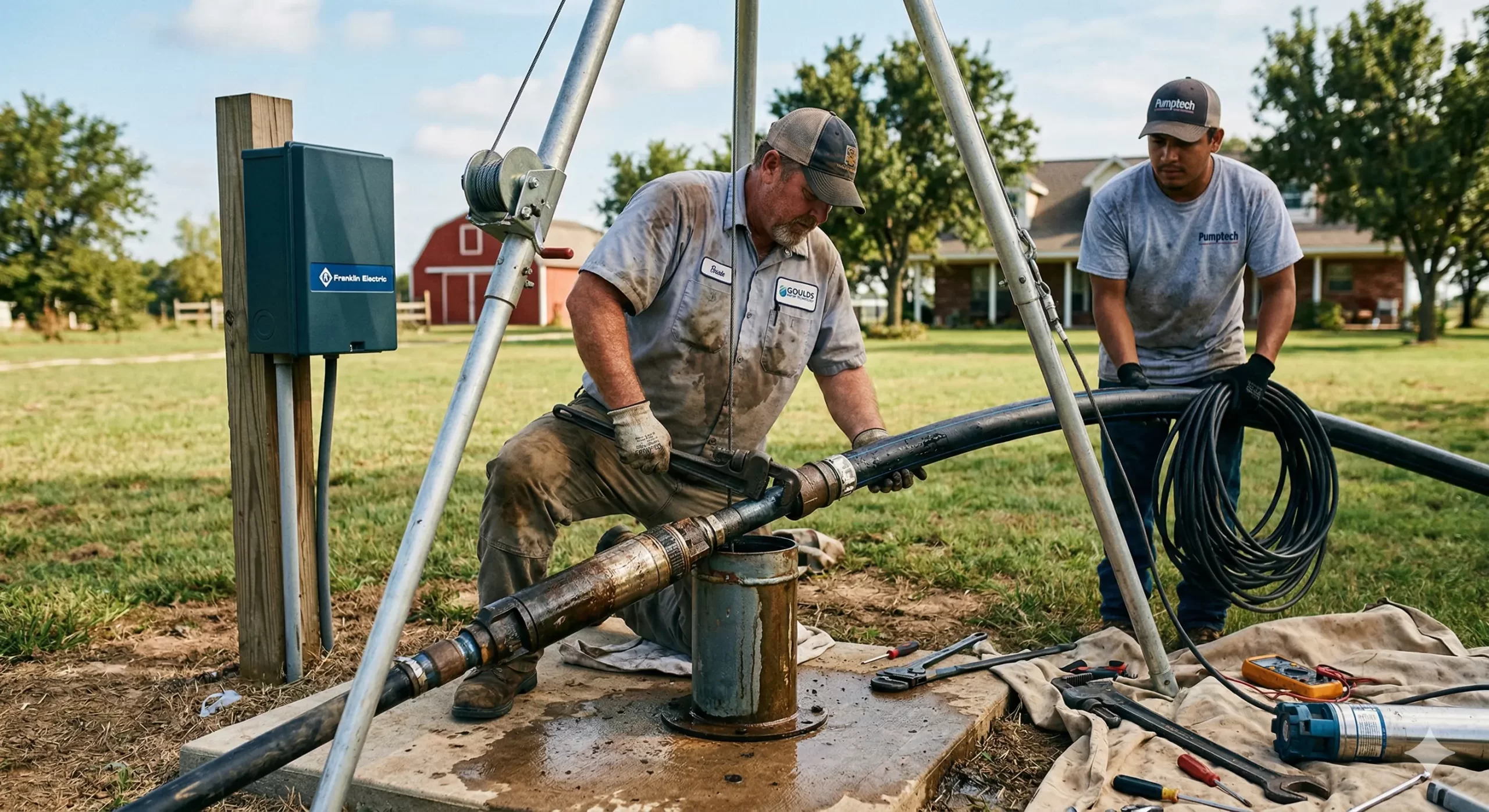
If the megohmmeter test fails or other symptoms point to a downhole issue (like a failed internal check valve), the pump must be pulled. This is a hazardous operation requiring specialized heavy equipment. The technician will employ a hydraulic pump hoist or a dedicated pulling rig designed to safely manage the combined weight of the pump, motor, hundreds of feet of water-filled drop pipe, and heavy-gauge power cable. To access the pump, they will use a specific pitless adapter key—a long T-handle tool that threads into the pitless adapter inside the well casing. This allows the entire pump assembly to be disconnected and lifted straight out of the well without excavating the buried water line, saving immense time and landscape damage.
The comprehensive professional repair involves much more than swapping one component. It includes installing a new, correctly rated Square D FSG2 switch, replacing the faulty pressure tank, and setting the air pre-charge precisely. If the pump was pulled, the failing pump/motor assembly is replaced, and a new waterproof heat-shrink splice is meticulously installed to connect the new motor lead to the main power cable from the surface. Upon reinstallation, the technician will chlorinate the well for sanitation, verify correct motor rotation, and perform a flow test to assess the well yield, ensuring the new pump is properly matched to the well’s capacity.
Safety Protocol
Any work involving a 240V deep-well pump system carries significant risk of electrocution and severe physical injury. Professionals adhere to strict LOTO safety protocols to ensure the circuit is de-energized. Handling a pump that can weigh over 300 lbs with pipe and water requires a certified pump hoist; attempting to pull a pump by hand or with a truck hitch can result in a dropped pump (a catastrophic and expensive event), well casing damage, or serious personal injury.
Repair Cost & Time Assessment
The cost of repairing a welded pressure switch is highly dependent on the root cause. For a straightforward service call where the pump does not need to be pulled from the well, a homeowner can expect to pay between $400 and $750. This price typically includes the initial service fee, 1-2 hours of a licensed technician’s labor, the cost of a new Square D pressure switch and pressure gauge, and the labor to properly replace, adjust, and test a new pressure tank if it has failed. The bulk of this cost is skilled labor and diagnostic time.
If the diagnostics determine the submersible pump motor has failed and must be replaced, the cost increases dramatically, typically ranging from $2,800 to $6,000+. This significant jump in price reflects the intensive labor and heavy equipment required. The cost includes 4-8 hours of labor for a two-person crew, the use of a specialized pump hoist rig, the price of the new submersible pump and motor assembly (which can be $800-$2,500 alone depending on horsepower and brand), and all necessary materials like new drop pipe fittings, a torque arrestor, pitless adapter components, and a code-compliant heat-shrink splice kit. The depth of the well and the pump’s horsepower are the primary factors influencing this final cost.
Fast Local Service & Diagnostics
Calls are routed to a licensed local well professional.