
Top Septic Pumping in
Atascocita
Atascocita Pumping Costs & Data
Here are the critical statistics defining the current state of wastewater infrastructure in the Atascocita area:
- Explosive ATU Growth: Due to the heavy clay soils prevalent in the region, over 85% of all new housing starts outside the city sewer limits are mandated to install Aerobic Treatment Units (ATUs) rather than conventional drain fields.
- Weather-Related Failure Spikes: During periods of sudden, heavy tropical rainfall, local data indicates a 40% spike in emergency service calls. These are predominantly caused by hydraulically overloaded systems backing up into homes because the saturated clay cannot absorb the effluent.
- The Maintenance Deficit: Despite the mechanical complexity of modern systems, local service data indicates that nearly 30% of homeowners fail to schedule their necessary 3-year trash tank pump-outs, leading directly to burnt-out aerator motors and clogged spray heads.
- Storm Infiltration Rates: During intense flood events, ground saturation accounts for an estimated 25% of all temporary system failures, as groundwater forces its way into aging tanks.
The mathematics of septic maintenance in heavy coastal clay are unforgiving. Routine, scheduled vacuum pumping is the only scientifically valid method to protect your property from a $15,000+ system collapse.
The final invoice for your specific pump-out will be dictated by these localized variables:
- “Gumbo” Clay Excavation: Finding the tank and manually digging through feet of dense, sticky coastal clay to expose the access lids adds a significant manual labor surcharge. We highly recommend paying for PVC surface risers to eliminate this future cost.
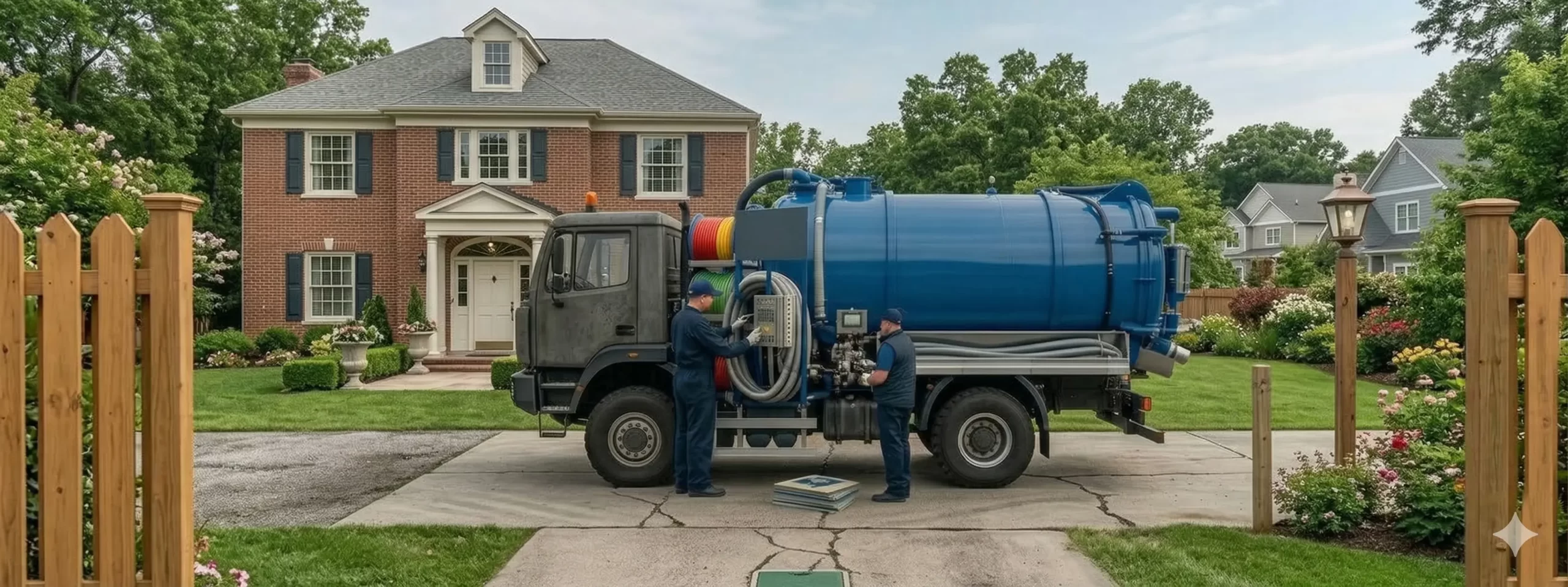
- Extended Hose Deployments (Lakefront): Pumping tanks located on steep lakefront lots, behind homes with delicate landscaping, or on large golf-course properties requires staging the 30,000-pound vacuum truck on solid ground to prevent property damage. Technicians frequently deploy 100 to 250 feet of heavy industrial hose.
- System Complexity (ATU Focus): To overcome the poor drainage of local clay and high water tables, modern homes rely heavily on Aerobic Treatment Units. Servicing these requires cleaning multiple chambers, verifying the aeration compressor, and testing the chlorination tubes—a much more complex process than pumping a simple gravity tank.
- Emergency Weather Dispatch: Severe sewage backups during tropical depressions or intense spring thunderstorms require expedited dispatch, invoking premium overtime rates for immediate hazard mitigation in flooded zones.
Furthermore, Harris County’s specific soil profiles dictate maintenance frequency:
| Atascocita Terrain / Soil | Drainage Capacity | Impact on Septic Systems | Maintenance Need |
|---|---|---|---|
| Expansive “Gumbo” Clay | Extremely Poor | Swells when wet, completely blocking effluent absorption. Highly vulnerable to tropical flooding. | High (Strict 3-year pumping) |
| Lake Basin Loam | Moderate | Better drainage, but high water tables mean conventional tanks must be pumped frequently to prevent contamination of Lake Houston. | Standard to High |
Cost Estimation by System Profile in Atascocita:
| Service Description | Estimated Range | Primary Labor Factors |
|---|---|---|
| Legacy Conventional Pump-Out | $340 – $580+ | Manual excavation through heavy clay, thick crust density breakdown. |
| Standard ATU Pump-Out | $360 – $670 | Multi-tank evacuation, filter sanitation, and mechanical compressor diagnostics. |
| Extended Hose / Lakefront Access | +$75 – $250 | Deploying 150+ feet of vacuum hose down steep inclines to protect retaining walls and property. |
Our platform guarantees that you connect with transparent professionals who understand the rugged, weather-extreme demands of Harris County lakefront properties.
81°F in Atascocita
🌱 Local Environmental Status
When an On-Site Sewage Facility (OSSF) is neglected in the Atascocita area, the localized consequences are distinct and hazardous:
- Lake Houston Watershed Threat: Properties located near the lake or the San Jacinto River are under strict environmental scrutiny. Lake Houston is a major drinking water reservoir. A saturated, overflowing septic tank releases raw human pathogens and high nitrogen loads directly into the watershed, threatening municipal water quality and local ecosystems.
- “Gumbo” Clay Saturation: The local clay soil has virtually zero natural drainage. It acts like an impenetrable sponge, swelling when wet. If a drain field is overloaded with unpumped sludge, the effluent cannot soak into the ground. It instantly pools on the surface, creating a foul, mosquito-breeding swamp in the tropical heat.
- Hurricane & Storm Surge Vulnerability: Atascocita faces frequent torrential downpours and the lingering effects of Gulf Coast storms. Low-lying drain fields become hydraulically locked instantly during heavy rains. If the primary tank is already full of solid waste, the excess stormwater will force raw sewage to back up directly into the home.
- Drought-Induced Pipe Fracturing: Conversely, during severe late-summer droughts, the expansive clay shrinks drastically, creating deep fissures in the ground. This violent geological shifting frequently snaps buried PVC lateral lines and cracks rigid concrete tanks.
To protect the Harris County ecosystem, property owners must enforce uncompromising maintenance protocols:
- Strict Pumping Intervals: Schedule a professional vacuum pump-out every 3 to 5 years. The heavy coastal clay cannot forgive any solid sludge escaping into the lateral lines; a single overflow can permanently seal the biomat.
- Storm Preparation: Never pump a tank completely dry when the ground is severely saturated, as the empty tank can act like a boat and literally float out of the wet mud, snapping all plumbing connections.
- Chemical Discipline: Stop flushing harsh cleaners and non-biodegradable wipes that slaughter the essential anaerobic bacteria required to break down solid waste in humid environments.
Consistent, weather-aware pumping is the absolute baseline of environmental stewardship for acreage owners in Atascocita.
⚙️ Local Service Details
When a certified vac-truck arrives at your Atascocita home, you can expect a rigorous, exhaustive service protocol:
- Electronic Tank Locating: Utilizing flushable sondes and ground-penetrating technology to locate buried tanks. Technicians then carefully hand-dig through sticky clay to expose the lids safely.
- Low-Impact Equipment Staging: Strategically parking heavy 30,000-gallon vacuum trucks on solid ground and deploying up to 200 feet of industrial hose to protect delicate landscaping, retaining walls, and underground PVC lines from crushing weight.
- Complete Sludge Evacuation: Engaging high-CFM vacuum power to entirely empty the tank. For severely neglected systems, technicians utilize hydro-jetting and crust-busters to break down calcified solids and dense garbage disposal blockages.
- Filter & ATU Maintenance: Removing and power-washing the effluent filter, and checking aerobic system components (air compressors, diffusers, chlorinators) to ensure maximum operational efficiency and legal compliance.
- Structural Soil-Shift Diagnostics: Performing a critical visual inspection of the emptied tank to detect structural fractures or snapped baffles caused by the violent shrinking and expanding of the local clay soils during summer droughts.
This comprehensive, specialized approach guarantees that your Texas property is protected against catastrophic backups and costly premature drain field failures.
Hyper-Local Service Graph
We track local contractor dispatch. Septic pumping is currently the top-trending emergency in Atascocita.
Urban Runoff & Septic Recovery
Living in Atascocita exposes your system to unique drainage factors. High saturation leads to surface pooling.
Solid Waste Recovery
You will build profound sludge layers over time. Here is how close you are to needing a pump in Atascocita.
Investment vs. Disaster
A pump-out is maintenance. A collapsed tank is a disaster. Calculate your Atascocita risk exposure below.
Base Drain Field Replacement in Atascocita: $16,743
Pre-Winter Prep Protocol
A drastic drop in temperature makes digging impossible. Here is your local ideal month to pump.
Fleet Center Check
Is the local network busy? See the live distance and routing information for Atascocita septic services.
📍 Coverage & ZIP Codes
🏡 Real Estate Transactions
Navigating a property transfer in Atascocita requires meticulous attention to septic documentation:
- Harris County ATU Compliance: Because traditional gravity fields frequently fail in the heavy gumbo clay and high water tables, the vast majority of newer homes utilize Aerobic Treatment Units (ATUs). The seller must present a verified, active maintenance contract to Harris County Public Health. Lapsed contracts will unconditionally stall the title transfer.
- Lakefront Proximity Inspections: For properties located near Lake Houston, appraisers demand a full vacuum pump-out and a structural inspection to guarantee the tanks are completely sealed against groundwater leaks and storm infiltration.
- Soil-Shift Verifications: Buyers routinely require visual inspections to ensure the concrete tank seams haven’t been cracked by the severe shrinking and expanding of the clay soil during dry spells.
- Appraisal Value Protection: A failed leach field in heavy coastal clay can cost $15,000 to $25,000 to replace due to extreme excavation difficulty, expensive landscaping restoration, and tight lakefront property lines. Providing a potential buyer with a flawless 5-year pumping and maintenance log neutralizes their ability to demand massive price concessions.
Protect your Greater Houston property’s equity. Securing a professional pump-out and a clean bill of health from our vetted technicians is the most profitable step you can take before listing your Atascocita home.
⚠️ Local Regulatory Warning
Homeowners are legally bound by the following uncompromising mandates:
- TCEQ State Laws: The Texas Commission on Environmental Quality dictates that all septic pumping must be performed exclusively by registered sludge transporters. The waste must be legally manifested and disposed of at approved municipal treatment facilities. Hiring an unlicensed contractor makes you complicit in illegal dumping.
- Harris County ATU Contracts: If you operate an aerobic system with surface spray application, Harris County Public Health absolutely requires you to maintain a continuous, active maintenance contract with a certified provider. This guarantees proper chlorination and aeration. Lapsing on this contract leads to immediate permit revocation.
- Watershed Protection Enforcement: Properties located in flood plains or near Lake Houston must adhere to strict structural codes to prevent contamination during hurricanes and heavy storms. Electrical control panels for ATUs must be securely mounted above base flood elevations.
- System Expansion Permitting: Upgrading a drain field, adding a guest house, or building a pool house bathroom without filing engineered blueprints with the local Environmental Health Department will result in massive retroactive fines and stop-work orders.
Consequences of Regulatory Non-Compliance in Atascocita:
| Environmental Violation | Enforcing Agency | Potential Penalty |
|---|---|---|
| Illegal Surface Discharge (Raw Sewage) | County Health / TCEQ | Emergency fines up to $500 per day until mitigated; forced system condemnation. |
| Operating Without an ATU Contract | Harris County | Permit revocation, Class C Misdemeanor, blockage of property sales. |
| Using Unlicensed “Gypsy” Pumpers | State EPA / Police | Homeowner liability for illegal dumping, massive environmental restitution fees. |
Protect your finances and your legal standing. Our network only provides access to elite, fully insured, and TCEQ-compliant professionals who protect your property legally and environmentally.
Homeowner Feedback



Reliable Septic Services in
Atascocita, TX
Atascocita Septic Expert AI
What are the specific septic tank regulations, typical soil drainage characteristics, and the local permitting authority for the Atascocita area?
Residential Septic Systems in Atascocita, TX: An Expert Overview (2026)
As a Senior Environmental Health Inspector and Septic Regulatory Expert for Texas, I can provide you with precise information regarding residential septic systems in the Atascocita area for the year 2026. Atascocita is predominantly located within Harris County, Texas.
1. Specific Septic Tank Regulations (Harris County, TX)
The overarching regulatory framework for On-Site Sewage Facilities (OSSF), including septic systems, in Texas is established by the Texas Commission on Environmental Quality (TCEQ). The primary state regulation is:
- TCEQ Chapter 285 - On-Site Sewage Facilities: This chapter outlines the minimum standards for the planning, design, construction, installation, alteration, extension, repair, use, and maintenance of all OSSFs in Texas. It covers everything from tank sizing and drainfield requirements to permitting procedures and effluent standards.
In addition to state regulations, Harris County Public Health (HCPH), as the designated Authorized Agent for TCEQ in unincorporated Harris County, implements local orders and rules that often impose more stringent requirements to address local environmental conditions and public health concerns. These local rules supplement, but do not supersede, TCEQ Chapter 285. They may dictate specific requirements for:
- Minimum lot sizes for certain system types.
- Proximity to water bodies or wells.
- Types of systems allowed (e.g., favoring aerobic treatment units over conventional systems due to soil conditions).
- Specific inspection frequencies for aerobic systems.
- Installer and maintenance provider licensing.
Any proposed septic system in Atascocita must comply with both TCEQ Chapter 285 and the local regulations set forth by Harris County Public Health.
2. Typical Soil Drainage Characteristics in Atascocita and Drain Field Design
The Atascocita area, situated in the Gulf Coastal Plain of Texas, is characterized by soils that present significant challenges for conventional septic systems. The typical soil drainage characteristics include:
- Heavy Clay Soils: Predominant soil types often include high-plasticity clays (e.g., Beaumont Clay, Lake Charles Clay series). These soils have a very fine texture, resulting in extremely low permeability rates (meaning water drains very slowly).
- Poor Aeration: The dense nature of clay soils means they are poorly aerated, which can hinder the natural biological treatment processes essential for effective wastewater dispersal.
- High Seasonal Water Table: Due to proximity to Lake Houston, numerous bayous (such as Spring Creek), and the relatively flat topography of the coastal plain, many areas in Atascocita can experience a high seasonal water table, especially during periods of heavy rainfall. This means the depth to groundwater can be very shallow, significantly limiting the available soil depth for wastewater treatment.
How it Dictates Drain Field Design:
Given these soil characteristics, conventional gravity-fed septic systems with standard drain fields are often unsuitable or severely restricted in Atascocita. Instead, drain field design is typically dictated by the need to overcome poor drainage and a high water table:
- Aerobic Treatment Units (ATUs): These are vastly more common than conventional septic tanks in Atascocita. ATUs provide a higher level of treatment by introducing oxygen to accelerate the breakdown of waste. The treated effluent is cleaner, making it more suitable for dispersal in challenging soils.
- Drip Irrigation Systems: Effluent from ATUs is frequently dispersed through drip irrigation fields. These systems distribute the treated wastewater slowly and uniformly near the surface of the soil, allowing for evapotranspiration and absorption without saturating the poor-draining clay.
- Mound Systems: In areas with very shallow soil over impermeable layers or a high water table, mound systems may be necessary. These systems involve constructing an elevated absorption bed using sand and gravel on top of the natural soil, providing the necessary separation from the water table and adequate treatment depth.
- Larger Drain Field Footprints: Regardless of the system type, the low permeability of clay soils necessitates significantly larger drain field areas compared to sandy soils to adequately disperse the effluent without surfacing or causing system failure.
- Detailed Site Evaluations: Perc tests (percolation tests) and soil borings are critical. However, given the clayey nature, engineers often rely more on detailed soil profile analysis and hydraulic conductivity tests to design appropriate systems.
3. Local Permitting Authority for Atascocita
The exact local permitting authority for residential septic systems in Atascocita, TX, operating in 2026, is Harris County Public Health (HCPH). Specifically, you will work with their On-Site Sewage Facilities (OSSF) program within the Environmental Public Health Division. They are responsible for:
- Reviewing and approving septic system applications and designs.
- Issuing permits for installation and major repairs.
- Conducting inspections during various phases of construction.
- Issuing final approvals for operation.
- Overseeing the maintenance and operation of existing systems, particularly aerobic units which require regular inspections.
It is imperative to contact HCPH directly at the outset of any project involving a new septic system or significant modifications to an existing one.
4. Realistic 2026 Cost Estimates for Atascocita
Please note that these are estimates for 2026 and actual costs can vary significantly based on site-specific conditions, system complexity, contractor bids, and material/labor market fluctuations.
- Septic Tank Pumping (Aerobic or Conventional):
- For a standard 1,000-1,500 gallon septic tank, you can expect costs to range from $400 to $750. This typically includes pumping the tank, basic visual inspection, and disposal. Aerobic systems may have additional fees if requiring specific filter cleaning or minor repairs during a routine service.
- New Septic System Installation (Residential):
- Conventional Septic System (if permissible): Given the challenging soils in Atascocita, conventional gravity-fed systems are rare and often require very large fields. If conditions allow, costs could range from $9,000 to $17,000. However, this is increasingly uncommon for new installations.
- Aerobic Treatment Unit (ATU) System with Drip or Spray Dispersal: This is the most common type of system installed in Atascocita due to soil conditions and regulatory requirements. These systems are more complex, involve electrical components, and require a higher level of design and installation expertise. Costs typically range from $17,000 to $28,000. This estimate includes the ATU, electrical connections, disinfection unit, pump, and the dispersal field (drip or spray). Mound systems or more advanced solutions would likely be at the higher end of this range or exceed it.
These installation costs factor in engineering design, permits, excavation, materials, labor, and initial inspections. Always obtain multiple bids from licensed and insured OSSF installers specializing in the Atascocita market.
Expert Septic FAQ
My yard is flooded after a massive tropical rainstorm. Should I have my septic tank pumped immediately?
Why does the ground over my septic tank crack open so deeply during the summer drought?
Are “flushable” wipes safe for my aerobic septic system?
Only human waste and rapid-dissolving toilet paper should ever enter your OSSF.