
A water heater leaking rusty water from the bottom signifies catastrophic tank failure. Immediate gas/water shutoff and full replacement are required. UNREPAIRABLE.
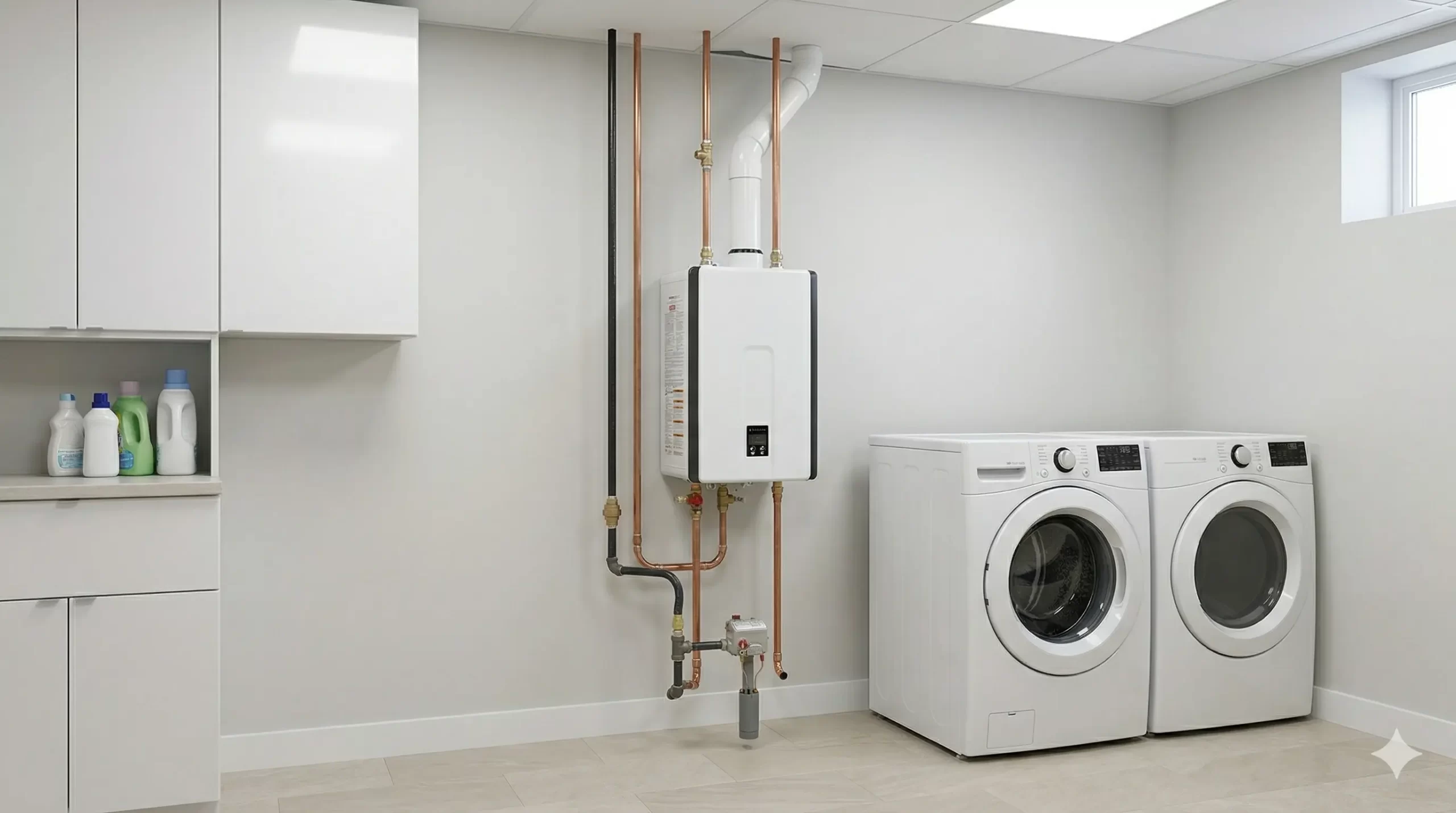
️ Repair Profile
Required Diagnostics Tools
Pipe wrenches (2), Channel lock pliers, Tube cutter, Soldering torch, Lead-free solder, Flux, Pipe thread sealant, Teflon tape, Manometer, Multimeter, Level, Wet/dry vacuum, Safety glasses, Work gloves
Financial Breakdown: Parts vs. Licensed Labor
The cost allocation is heavily weighted towards parts because the primary component, the water heater itself, is a total loss and requires full replacement. Associated code-mandated upgrades like a thermal expansion tank and new supply lines further inflate the material investment, overshadowing the professional labor charges.
Deep Technical Diagnosis: The Physics of the Failure
The observation of rusty water concomitant with leakage from the tank’s base is an unequivocal indicator of terminal tank failure, originating from a complete breakdown of its internal corrosion protection systems. Every steel water heater tank is essentially a controlled galvanic cell. To prevent the steel tank (the cathode) from corroding in the presence of an electrolyte (your water), a more electrochemically active metal, the sacrificial anode rod (typically magnesium or aluminum), is installed to act as the anode. This rod corrodes preferentially, sacrificing its mass over years and protecting the tank lining. Its depletion is a predictable process governed by the stoichiometry of the galvanic reaction and accelerated by factors like high water conductivity (total dissolved solids) or elevated chloride levels.
Once the anode rod’s effective mass is consumed, its protective potential, measurable in millivolts, drops to zero. At this point, the electrochemical potential reverses, and the steel tank itself becomes the anode in the galvanic circuit. Minor imperfections or microscopic cracks in the vitreous glass lining, which previously were non-critical, now become focal points for aggressive corrosion. The process of dielectric breakdown of the lining is followed by rapid oxidation of the exposed steel. This corrosion penetrates the full thickness of the steel substrate, resulting in a physical perforation of the pressure vessel. The rusty appearance of the water is the direct result of iron oxide (rust) from the corroded tank wall mixing with the stored potable water. The leak’s location at the bottom is typical due to gravity pulling sediment and rust to the lowest point, where corrosion is often most concentrated.
- Neglected Maintenance: Failure to inspect and replace the sacrificial anode rod every 3-5 years is the primary root cause.
- Aggressive Water Chemistry: High concentrations of chlorides, sulfates, or a low pH (acidic water) can dramatically accelerate anode depletion and attack the steel tank directly.
- Excessive Temperature Settings: Sustained temperatures above 140°F can increase the rate of all chemical reactions, including galvanic corrosion.
- Stray Electrical Currents: Improper grounding of household electrical systems can induce electrolysis, causing rapid and localized corrosion within the tank.
US Building Codes & Plumbing Regulations
In the context of a catastrophic tank failure evidenced by bottom leakage and rust, specific provisions of the Uniform Plumbing Code (UPC) become paramount during replacement. UPC Section 507.5 mandates the installation of a watertight pan of corrosion-resistant material beneath any water heater situated in a location where leakage could cause damage—a reality this failure makes undeniable. The code further stipulates that this pan must be drained by an indirect waste pipe with a minimum diameter of 3/4 inch, terminating at an approved location. Failure to install or replace a damaged pan during this job constitutes a significant compliance violation that leaves the property vulnerable to future water damage.
From a fuel gas perspective, NFPA 54 (the National Fuel Gas Code) compliance is non-negotiable for ensuring safety. During the replacement, NFPA 54 Section 9.6.7 requires the installation of a sediment trap (drip leg) upstream of the appliance’s gas controls. This device is critical for capturing moisture, pipe scale, and debris from the gas supply that could otherwise foul the gas valve or burners, a risk heightened when old piping is disturbed. Furthermore, the venting system must be meticulously re-installed and verified according to Part 7 of the code, ensuring proper draft and complete evacuation of combustion byproducts like carbon monoxide. An inspector will verify these specific points post-installation.
Professional Master Plumber Repair Sequence
- Immediate System Isolation: This is a hazardous materials situation. Immediately turn off the gas supply at the shutoff valve located on the gas line leading to the water heater. Then, locate and shut off the main water supply valve to the entire building to stop water flow to the breached tank.
- Verify Gas Shutoff: Using a calibrated manometer or an approved combustible gas detector, verify zero pressure or gas presence at the union or drip leg downstream of the shutoff valve. This is a critical safety verification before any disconnection.
- Controlled Depressurization and Draining: Attach a heavy-duty garden hose to the tank’s drain valve at the bottom. Route the hose to a floor drain or outside, ensuring the exit point is lower than the tank. Open a hot water faucet somewhere in the house to break the vacuum, then slowly open the drain valve to begin draining the rusty water.
- Disconnect Water Lines: Once drained, use two pipe wrenches (one for backup to prevent stressing the plumbing) to disconnect the hot and cold water supply lines from the top of the unit. Expect some residual water spillage.
- Disconnect Gas Piping: Using two pipe wrenches, carefully disconnect the gas line at the union fitting. Brace the water heater’s gas control valve to prevent transferring torque to the sensitive component.
- Disassemble Venting: Carefully detach the sheet metal vent pipe from the draft hood on top of the water heater. Inspect this component for corrosion or obstruction; it will likely need to be replaced.
- Remove Failed Unit: With all lines disconnected, carefully remove the old, heavy water heater from its location. Be aware it will still contain sludge and some water.
- Prepare and Install New Unit with Code Upgrades: Clean the installation area. Install a new, code-compliant drain pan. Set the new water heater in place, ensuring it is level. Install a new thermal expansion tank on the cold water supply line as required by local plumbing codes.
- Reconnect and Test Systems: Reconnect the hot and cold water lines using new flexible connectors or soldered fittings. Reconnect the gas line, applying approved pipe sealant to male threads. Re-install the venting system securely.
- Commissioning Sequence: Open the main water valve and allow the new tank to fill completely; verify this by opening a hot water tap until all air is purged and water flows freely. ONLY then, turn the gas supply back on, check all new gas fittings for leaks with a soapy water solution, and follow the manufacturer’s specific instructions for lighting the pilot or igniter and setting the temperature.
Expert Verdict: Is It Worth Repairing?
The financial analysis for a water heater with a perforated tank is absolute: there is zero return on investment (ROI) for any repair attempt. The structural integrity of the internal pressure vessel is permanently compromised. Any external patch, weld, or epoxy application is not only a violation of plumbing and safety codes but is guaranteed to fail under the constant stress of thermal expansion/contraction and mains water pressure, leading to a much larger, more destructive flood. The only viable option is a complete replacement. The ROI of a replacement is realized through the restoration of a safe and reliable hot water supply, prevention of catastrophic water damage and potential mold growth, and compliance with current building codes. Furthermore, a new unit will operate at a higher efficiency than the failing one, providing marginal but tangible long-term savings on utility bills. Investing in a new, warrantied appliance is the only financially sound and safe decision.
Frequently Asked Questions (FAQ)
Q: Can I just patch the small leak at the bottom of my water heater?
A: Absolutely not. A leak from the tank body is an irreversible sign of systemic internal corrosion and structural failure. Applying an external patch is exceptionally dangerous, violates all safety and plumbing codes, and will inevitably fail under pressure, likely resulting in a catastrophic flood and extensive property damage.
Q: Why did my water heater fail so suddenly without any warning?
A: The failure process is gradual but internal. The primary protective component, the sacrificial anode rod, corrodes away silently over years. Once it’s depleted, the tank begins to rust from the inside out. The first visible sign—rusty water or a leak—is actually the final stage of this long-term decay process, making the failure seem abrupt when it was, in fact, predictable with regular maintenance.
Q: My rusty water is intermittent. Does that mean the tank isn’t breached yet?
A: No. Intermittent rusty water indicates that the steel tank wall is actively corroding and flakes of iron oxide are being stirred up from the bottom by water flow. The structural breach is already present or imminent. The intermittency is not a sign of safety; it’s a symptom of a terminal condition that will lead to a constant leak.
Q: Is the rusty water from the failing tank a direct health hazard?
A: While the iron oxide (rust) itself is generally not considered a significant health hazard for consumption, the compromised, stagnant environment at the bottom of a failing tank can be a breeding ground for bacteria. The most significant danger, however, is not from the water quality, but from the imminent physical risks of a major flood, associated property damage, and potential gas safety issues at the appliance.