
Water Heater Repair in Louisiana
From the sweltering summer heat to hurricane season prep, count on us for reliable hot water when your Louisiana home needs it most.
No Hot Water? Get It Fixed Today.
Connect with licensed Louisiana plumbers. Emergency service available.
Fast Local Water Heater Repair & Diagnostics
Calls are routed to a licensed local plumbing professional.
Common Failures We Fix in Louisiana
🔥 Gas Water Heaters
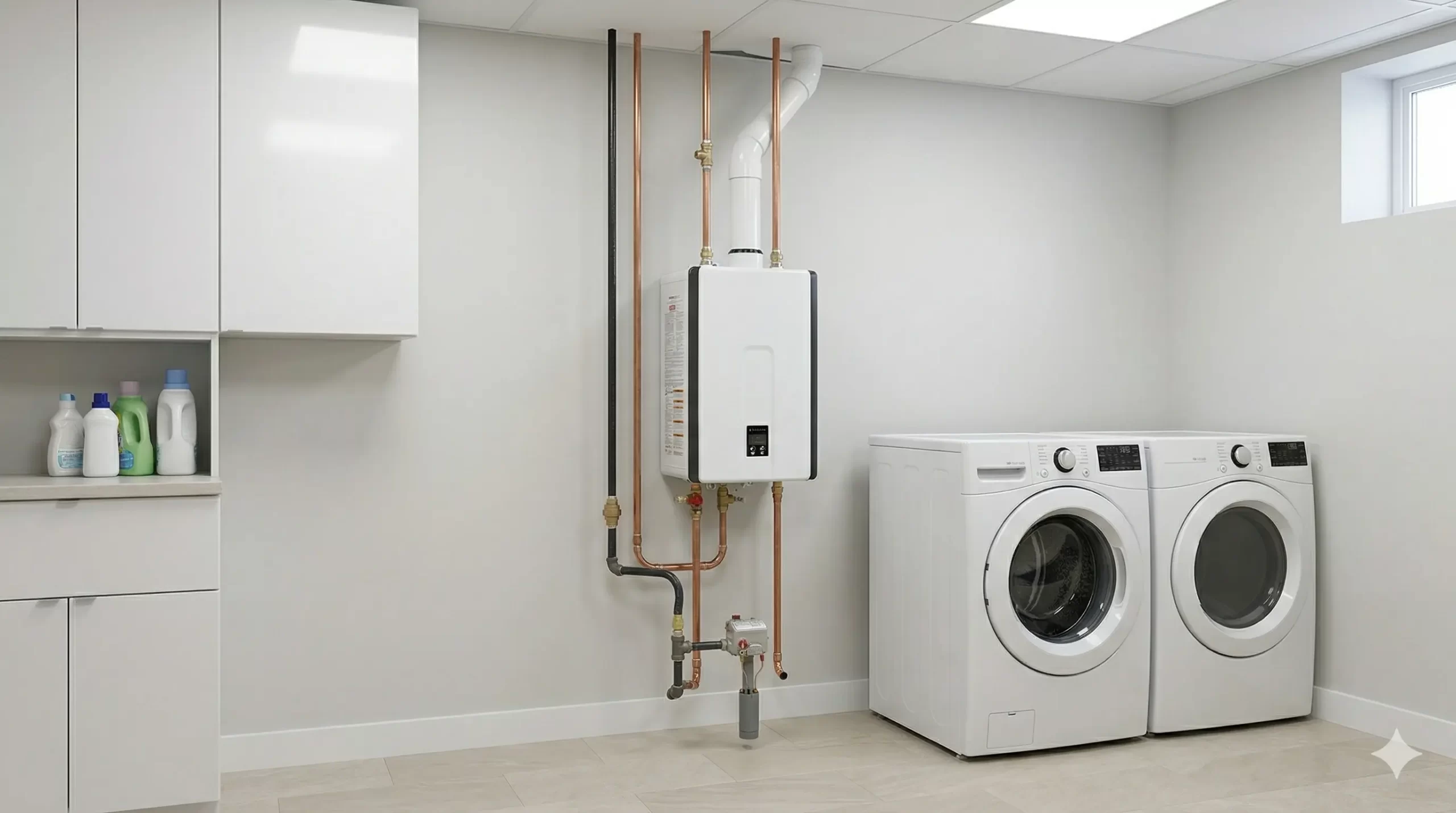
In many Louisiana homes, the gas water heater is tucked away in the garage, often on an elevated platform to protect it from potential flooding. While this is a smart placement, it also presents unique risks. A flickering pilot light that won’t stay lit, a rotten egg smell indicating a gas leak, or banging sounds from the tank are urgent warning signs. These issues can be worsened by the humid, drafty conditions in a garage. A failing unit on an elevated stand poses a significant water damage threat to anything stored below it, making prompt professional diagnosis essential.
Another common failure point is a faulty thermocouple or gas control valve, leading to intermittently hot or completely cold water. You might also notice rust-colored water or small puddles forming around the base of the platform. Ignoring these symptoms can lead to a complete system failure, a dangerous gas leak, or a tank rupture that floods your garage. Our expert plumbers understand these specific Louisiana setups and can safely diagnose and repair your gas water heater, ensuring it’s both efficient and secure on its stand.
⚡ Electric Water Heaters
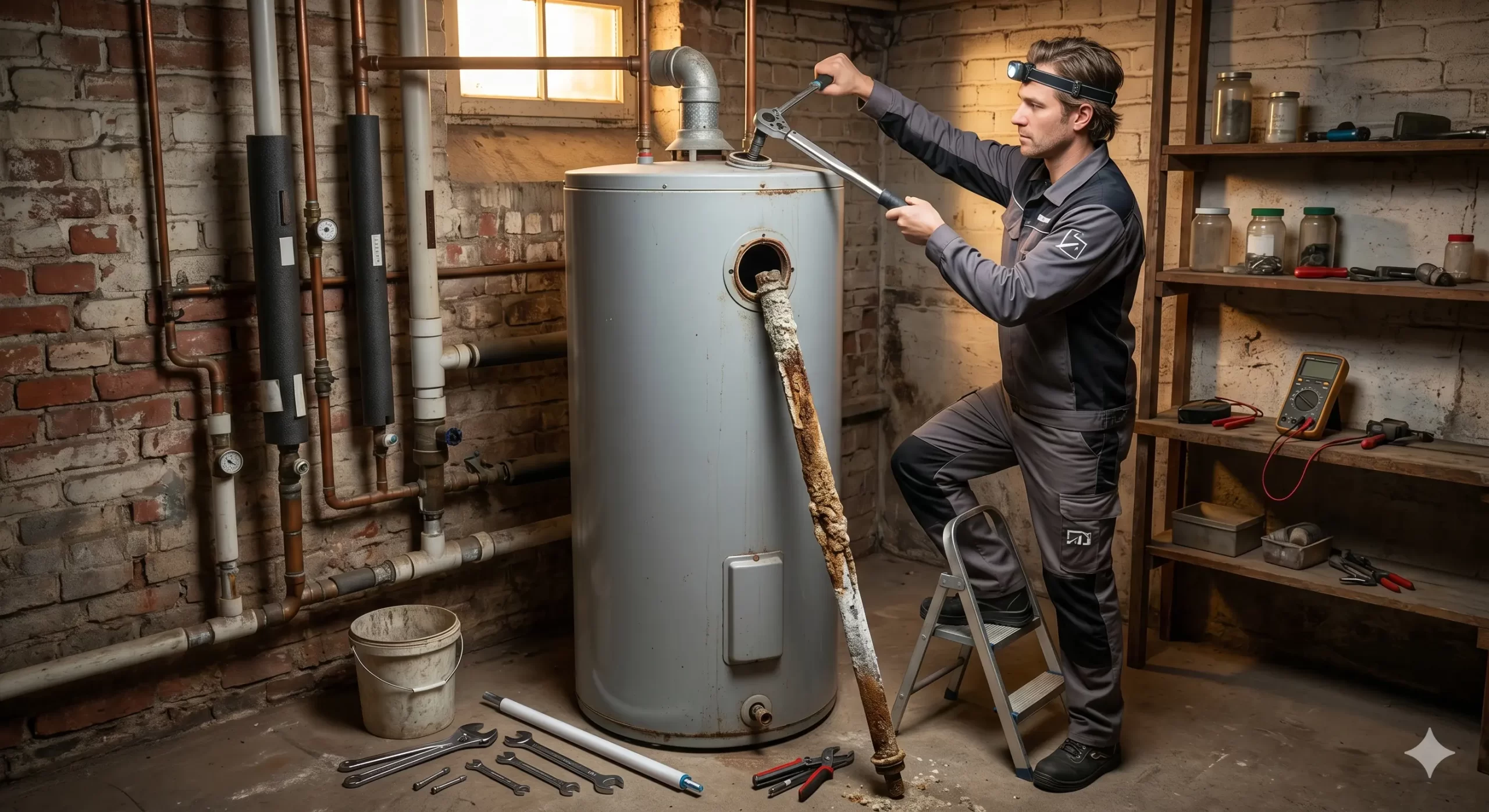
Louisiana’s moderately hard water is the primary enemy of electric water heaters. Over time, minerals like calcium and magnesium precipitate out of the water and form a thick layer of scale directly on the heating elements. The first sign you’ll notice is that it takes much longer to get hot water, or your showers turn lukewarm too quickly. This scale acts as an insulator, forcing the elements to work harder and longer, which dramatically increases your energy consumption and can cause them to burn out prematurely.
As this sediment builds up not just on the elements but also at the bottom of the tank, you may hear popping or crackling sounds as the water trapped beneath the scale boils. This process creates immense stress on the tank itself. You might also notice a drop in water pressure or see chalky white residue clogging your faucet aerators. An annual tank flush is critical maintenance in Louisiana, but once the elements are heavily scaled, they often require professional replacement to restore your hot water supply and prevent a complete tank failure.
🚿 Tankless Systems
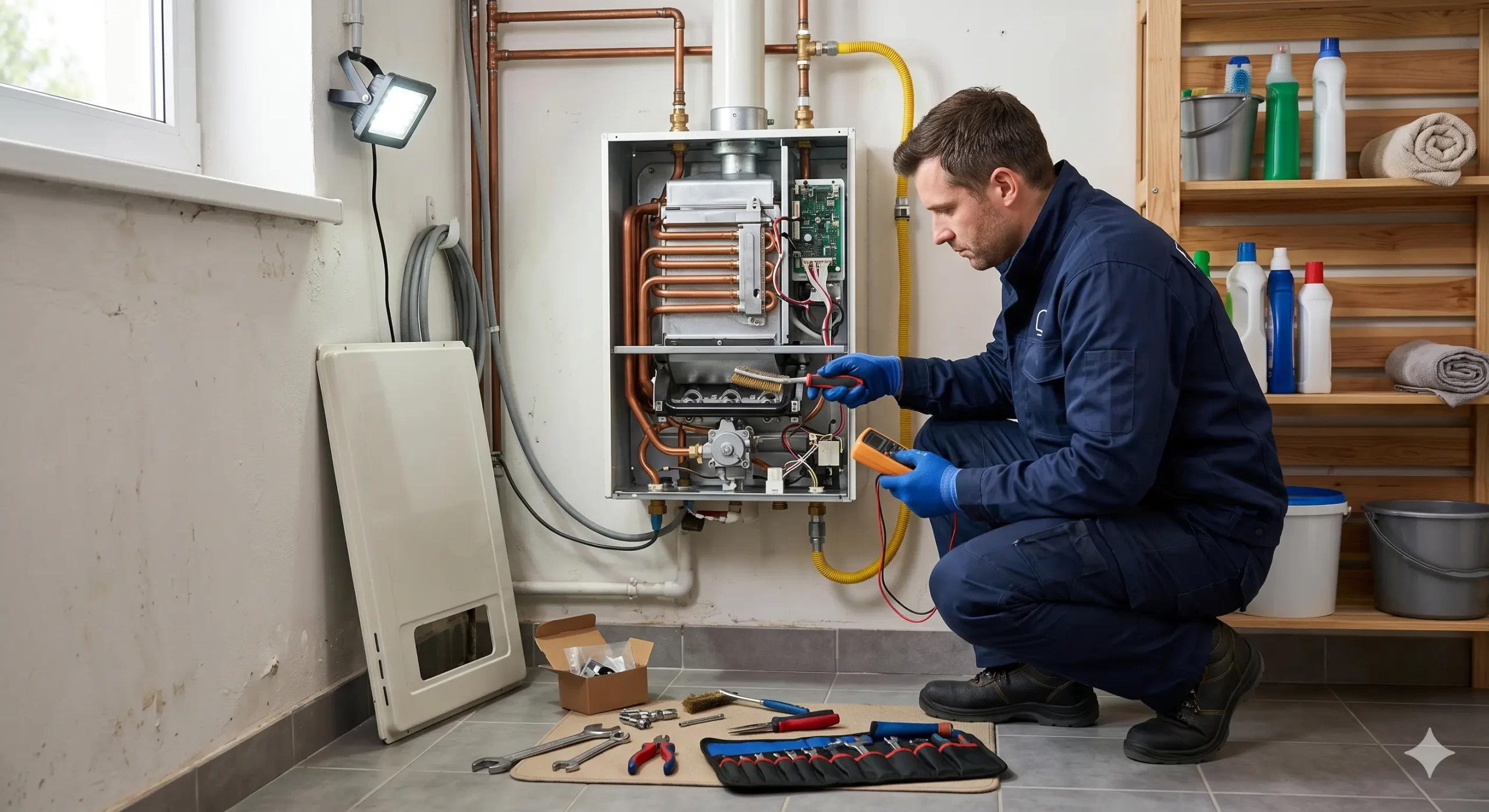
Tankless water heaters are sophisticated machines, and Louisiana’s climate can be tough on their sensitive electronics. The relentless heat and high humidity can lead to moisture intrusion and corrosion on circuit boards, causing confusing error codes to flash on the display or leading to a total system shutdown. Furthermore, the frequent thunderstorms and hurricane-related power surges across the state can easily fry these delicate components, leaving you with no hot water without warning. If your unit is failing to ignite or cycles on and off unexpectedly, environmental factors are often the culprit.
Louisiana’s moderately hard water also affects tankless systems, causing scale to build up within the narrow heat exchanger passageways. This mineral buildup restricts water flow and forces the unit to fire at higher temperatures to heat the water, reducing efficiency and eventually triggering overheating sensors that shut the system down. A professional descaling service is crucial to maintain performance. If you’re experiencing fluctuating water temperatures or a noticeable decrease in flow rate, it’s a clear sign your tankless heater is struggling with Louisiana’s unique environmental challenges.
Average Repair Costs in Louisiana
Louisiana Plumbing Codes & Regulations
🔥 Gas Installation Codes
In a state as vulnerable to flooding as Louisiana, state and parish building codes mandate that gas water heaters in flood-prone areas be elevated. This isn’t just a suggestion; it’s a critical safety requirement. Elevating the unit on a secure, approved platform raises the burner assembly, gas valve, and electronic ignition systems above the typical floodwater level from heavy rains or storm surges. This prevents the catastrophic failure of these components, avoids dangerous gas leaks from submerged lines, and ensures you can get your hot water back on quickly after the water recedes.
⚡ Electric Codes
Securing an electric water heater in a Louisiana garage involves two key safety codes: hurricane strapping and GFCI protection. During a hurricane or severe tropical storm, the high winds and ground pressure changes can cause a heavy, water-filled tank to topple over. Hurricane straps are heavy-duty metal bands that anchor the unit to the wall studs, preventing this dangerous situation which could sever high-voltage electrical lines and flood your home. Additionally, because garages are often damp environments, any outlet powering a water heater must be a Ground Fault Circuit Interrupter (GFCI) to prevent life-threatening electrical shocks.
🚿 Tankless Regulations
When installing a tankless water heater on the exterior of a Louisiana home, it can’t be just any outdoor model. Local codes recognize the challenge of our state’s extreme humidity and require units specifically rated to withstand it. These models feature robust, weather-sealed casings, corrosion-resistant internal components, and specially protected circuit boards. This ensures that the constant moisture doesn’t short out the electronics or rust the burner assembly, guaranteeing safe, reliable performance year-round and preventing premature failure caused by our uniquely steamy climate.
💰 Louisiana Permits & Energy Rebates
Before any water heater replacement begins in Louisiana, a permit must be pulled from your local parish government. This process ensures the installation is performed by a licensed plumber and adheres to all local safety codes, including flood elevation and hurricane strapping requirements, protecting your family and your property. On top of ensuring a safe installation, you can also save money. Utility providers like Entergy Louisiana offer valuable rebates for homeowners who upgrade to a high-efficiency heat pump water heater, helping to offset the initial cost and lower your long-term energy bills.
Ask the Louisiana Plumbing AI Expert
Have specific questions about plumbing codes, permits, or hard water in your local county? Ask our AI assistant below:
🤖 Texas Plumbing Expert AI
Local Codes & Water Quality Dashboard
What are the statewide water heater plumbing codes, safety regulations, and 2026 energy rebates for Texas?
Statewide Water Heater Plumbing Codes and Safety Regulations for Texas (2026)
As a Senior Master Plumber and Inspector for the Great State of Texas, it's my duty to ensure all plumbing installations meet the highest standards for safety and efficiency. For 2026, the foundational plumbing code in Texas remains based on the International Plumbing Code (IPC), specifically the 2021 International Plumbing Code with specific amendments adopted by the Texas State Board of Plumbing Examiners (TSBPE). While there's always a possibility of minor updates, the core principles outlined below are firmly in place.
Here are the critical statewide codes and safety regulations you must adhere to for water heater installations:
-
Permitting:
- Mandatory: A plumbing permit from your local Authority Having Jurisdiction (AHJ) is required for all new water heater installations and replacements. This ensures the work is inspected and complies with local and state codes.
-
Temperature and Pressure Relief (TPR) Valves:
- Essential Safety Device: Every water heater must be equipped with a properly sized and rated TPR valve.
- Discharge Pipe Requirements:
- Must be installed on the TPR valve and discharge to an approved location.
- Must be of approved material (e.g., copper, CPVC, PEX with specific pressure ratings).
- Must have an internal diameter no smaller than the outlet of the valve it serves.
- Must not be trapped, capped, or have any valves or obstructions.
- Must terminate by gravity flow with an air gap and be visible.
- Must terminate within 6 inches of the floor or into a properly drained receptor (like a floor drain or indirectly into a drain pan).
- Must not terminate in a location where it could cause property damage or create a hazard.
-
Water Heater Pan Requirements:
- Location Dependent: A water heater located in an attic, above a ceiling, in a furred space, or in any other location where water leakage could cause damage to the building or its contents, *must* be installed in a water heater pan.
- Drainage: The pan must be drained by an indirect waste pipe to a visible approved location, such as a floor drain, utility sink, or outside to an area that won't cause damage. The drain line must be at least 3/4 inch in diameter.
-
Expansion Tanks:
- Closed Systems: An approved, properly sized expansion tank is required for all water heaters installed in closed water supply systems (where there's a backflow prevention device or pressure reducing valve on the main water line).
- Function: This prevents excessive pressure build-up due to thermal expansion of heated water.
-
Venting (Gas Water Heaters):
- Combustion Air: Adequate combustion air must be supplied to the water heater area to ensure proper and safe operation.
- Vent Connectors: Must be properly sized, sloped upward, securely fastened, and made of approved materials suitable for the appliance's flue gas temperature.
- Termination: Vents must terminate outdoors with required clearances from openings, combustible materials, and other specific building features.
- Carbon Monoxide Safety: While not strictly a plumbing code, installers have a responsibility to ensure proper venting to prevent carbon monoxide accumulation. A CO detector is highly recommended in proximity to gas-fired appliances.
-
Seismic Strapping:
- Best Practice: While Texas isn't a high seismic zone, securing water heaters with approved strapping (typically two straps for tanks over 40 gallons) is considered a best practice for stability and safety, especially against tipping. Many local jurisdictions mandate this.
-
Clearances to Combustibles:
- Water heaters must maintain manufacturer-specified clearances from combustible materials (walls, ceilings, etc.).
-
Accessibility:
- Water heaters must be installed in a location that provides adequate access for inspection, maintenance, and replacement.
-
Water Temperature Setting:
- For residential applications, the default factory setting is often 120°F. While higher temperatures are possible, 120°F is generally recommended to prevent scalding, especially in homes with children or elderly residents.
-
Electrical Connections (Electric Water Heaters):
- Must comply with the National Electrical Code (NEC) as adopted in Texas.
- Proper wiring, grounding, overcurrent protection, and disconnects are mandatory.
2026 Energy Rebates for Water Heaters in Texas
As your inspector, I must provide hard data. Specific statewide and local rebates for 2026 are often not finalized until the end of the preceding year or the beginning of the new year, and they can change based on legislative action, utility company budgets, and federal funding allocations. Therefore, I cannot provide definitive 2026 rebate figures at this moment.
However, I can provide you with the most likely avenues for rebates and the types of water heaters that typically qualify:
-
Federal Tax Credits (Expected to Continue):
- The Inflation Reduction Act (IRA), enacted in 2022, offers significant federal tax credits for energy-efficient home improvements, many of which are expected to continue or be updated for 2026.
- High-Efficiency Heat Pump Water Heaters (HPWHs): These are generally eligible for a tax credit of 30% of the project cost, up to $2,000. This credit is claimed via IRS Form 5695 (Residential Energy Credits) when filing your federal taxes. To qualify, the HPWH must meet specific energy factor (EF) or uniform energy factor (UEF) requirements set by ENERGY STAR.
- It's crucial to consult the IRS website or a tax professional for the most current information and eligibility requirements for the 2026 tax year.
-
Local Utility Company Rebates:
- Many Texas utility companies offer their own incentive programs to encourage energy efficiency among their customers. These programs are highly localized and vary greatly.
- Action Required: You will need to directly contact your specific electric and/or gas utility provider to inquire about any active or anticipated 2026 rebates for energy-efficient water heaters.
- Common Utility Providers in Texas include:
- Oncor Electric Delivery
- CenterPoint Energy
- Texas-New Mexico Power (TNMP)
- AEP Texas
- Austin Energy (City of Austin)
- CPS Energy (San Antonio)
- Reliant Energy
- TXU Energy
- Various Electric Cooperatives (e.g., Pedernales Electric Cooperative - PEC, Bluebonnet Electric Cooperative, GVEC, etc.)
- Various Municipal Utilities
- Typical Qualifying Water Heaters: Heat Pump Water Heaters (HPWHs) and high-efficiency tankless water heaters are most often the focus of these utility programs.
-
Manufacturer Rebates:
- Some water heater manufacturers periodically offer their own rebates on specific high-efficiency models.
- Action Required: Check the websites of major water heater brands (e.g., Rheem, Bradford White, A. O. Smith, Noritz, Rinnai) for any direct rebate programs.
Recommendation: Always verify eligibility requirements, application processes, and deadlines for any rebate program you plan to utilize, as these can be strict and subject to change. For the most accurate and up-to-date information on 2026 rebates, direct contact with the listed sources is essential.
Repair vs. Replace Guidelines
Since my Entergy bill is fairly low, should I just keep repairing my old water heater instead of replacing it?
While our energy costs in Louisiana are manageable, an older, failing water heater can be surprisingly inefficient, wasting energy even if the bill isn’t shocking. More importantly, repeated repairs are often a sign of imminent tank failure. A new, reliable unit provides peace of mind, especially during hurricane season, and upgrading to a heat pump model with an Entergy rebate can lead to significant long-term savings that make the investment worthwhile.
What kind of maintenance does my water heater need to handle Louisiana’s ‘moderately hard’ water?
Moderately hard water contains minerals that build up inside your tank as sediment, or ‘scale.’ This forces your heater to work harder, wastes energy, and can cause loud popping noises. The single most important maintenance task for Louisiana homeowners is to have the tank professionally flushed at least once a year. This removes the sediment, restores efficiency, quiets the unit, and significantly extends the life of your water heater.
Recent Service Feedback in Louisiana
“Our water heater went out right before a tropical storm was supposed to hit. They came out the same day and got it fixed. The technician was professional, explained the problem with our elevated unit in the garage, and the price was fair. A lifesaver!”
— David L., Baton Rouge
“I was getting lukewarm showers and weird noises from my electric heater. The plumber showed me the heating element and it was caked in white scale from our hard water here in Metairie. He replaced both elements and now the water is hotter than ever. Great service.”
— Michelle B., Metairie
“My tankless heater in our Shreveport home kept giving me an error code. They diagnosed the issue as a circuit board failure, likely from all the humidity and a recent power surge. They had the part and got us back up and running fast. Very knowledgeable.”
— Robert P., Shreveport
Fast Local Water Heater Repair & Diagnostics
Calls are routed to a licensed local plumbing professional.