
Water Heater Repair in New York
From Buffalo’s lake-effect snow to a steamy NYC shower, we keep New York’s hot water flowing.
No Hot Water? Get It Fixed Today.
Connect with licensed New York plumbers. Emergency service available.
Fast Local Water Heater Repair & Diagnostics
Calls are routed to a licensed local plumbing professional.
Common Failures We Fix in New York
🔥 Gas Water Heaters
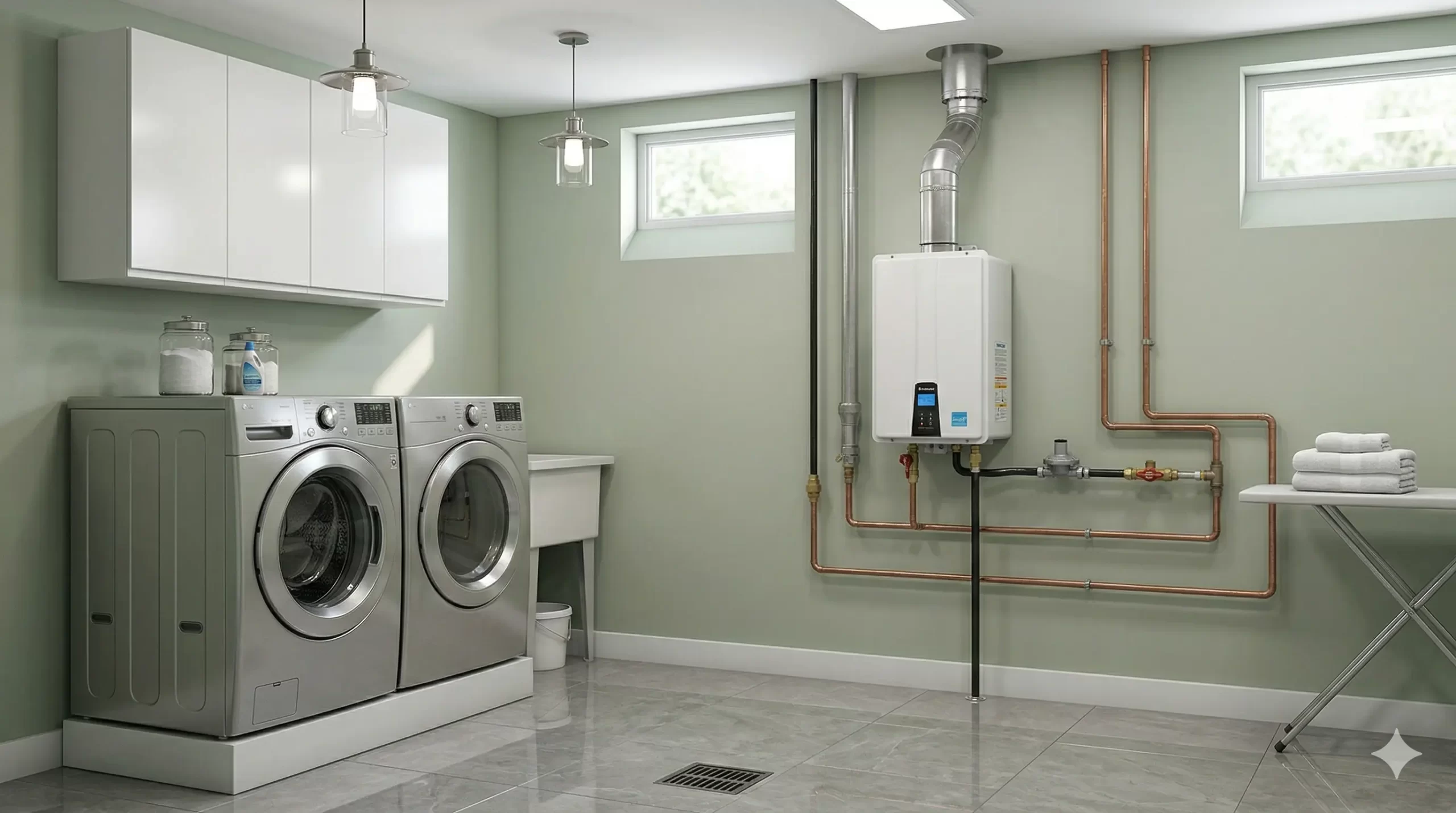
Hearing a rumbling or popping sound from your gas water heater? In many New York homes, these units are tucked away in basements or tight utility closets, where strange noises often indicate a serious sediment buildup. This layer of mineral deposit forces the burner to work harder, superheating the water trapped underneath and creating those unsettling sounds. This not only skyrockets your utility bills but also puts immense stress on the tank, increasing the risk of a leak in a space where water damage can go unnoticed for hours.
Another critical sign is a pilot light that repeatedly extinguishes or burns with a yellow, sooty flame instead of a crisp blue one. This often points to a problem with the thermocouple or a blockage in the gas assembly. Given the close quarters of typical NY installations, any issue with gas combustion is a major safety hazard. A malfunctioning vent in a cramped utility closet can lead to a dangerous buildup of carbon monoxide, making immediate professional inspection an absolute necessity.
⚡ Electric Water Heaters
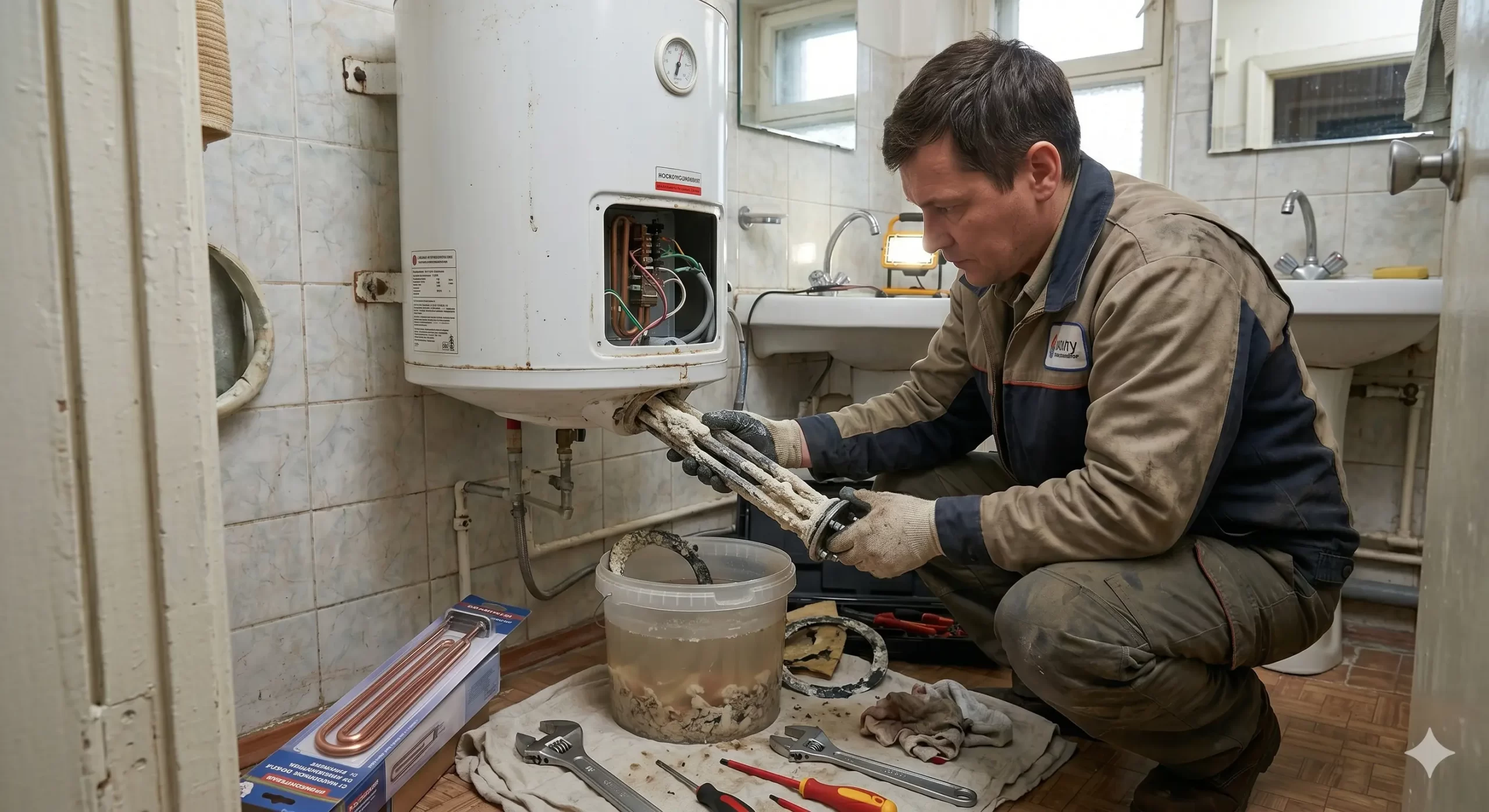
For New Yorkers living upstate in areas like Rochester or Syracuse, the primary enemy of an electric water heater is hard water. The high mineral content leads to thick scale buildup that encases the heating elements. This forces the elements to overheat just to warm the water, causing them to burn out prematurely. If you notice your hot water doesn’t last as long or your electric bill is climbing, a scaled-over element is the likely culprit.
Even if you’re in NYC with its famously soft water, your electric unit isn’t immune. Over time, sediment can still accumulate at the bottom of the tank, and the anode rod will corrode as it protects the tank lining. A completely sacrificed anode rod can lead to rust-colored water and eventual tank failure. If you experience lukewarm water or see discolored water from your taps, it’s a clear signal that the internal components of your electric heater need professional attention.
🚿 Tankless Systems
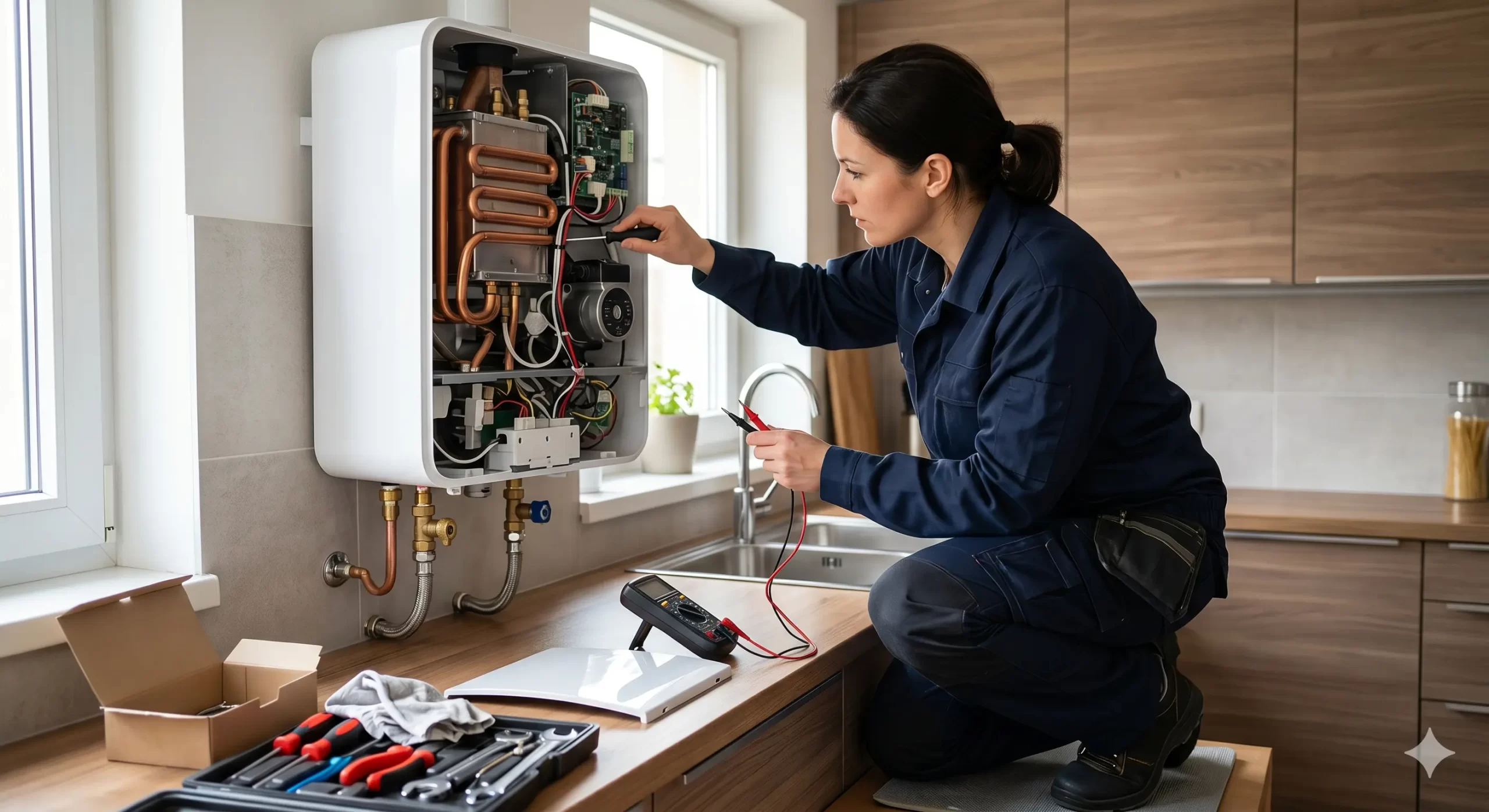
New York’s brutal, freezing winters pose a unique threat to tankless water heaters, especially units installed on exterior walls or in unheated spaces like garages. The most common winter failure is a frozen condensate line. High-efficiency condensing units produce acidic water vapor that must be drained, and if this small pipe freezes solid, the system’s sensors will shut it down completely, leaving you with no hot water during the coldest days of the year.
Beyond frozen lines, extreme cold snaps can cause pressure fluctuations in the main water supply, leading to error codes and shutdowns on sensitive tankless systems. If your unit suddenly stops working after a particularly frigid night, or if you’re getting inconsistent water temperatures, it could be the system protecting itself from internal damage. It’s crucial to have a technician familiar with NY climate challenges diagnose whether it’s a simple freeze-up or a more complex internal component failure.
Average Repair Costs in New York
New York Plumbing Codes & Regulations
🔥 Gas Installation Codes
In New York, safety and efficiency are paramount when it comes to gas water heaters, which is reflected in our stringent building codes. Proper venting is non-negotiable. The state mandates specific materials and configurations to safely expel carbon monoxide, a deadly byproduct of gas combustion. An improperly vented unit, especially in a dense apartment building or a sealed basement, is a life-threatening hazard. Our technicians are experts in NY’s complex venting codes, ensuring your family’s safety.
Furthermore, New York’s energy conservation laws require that new water heater installations include proper insulation for both the tank and the hot water pipes. During our frigid winters, an uninsulated tank and pipes can lose a significant amount of heat, forcing the unit to run constantly. Adhering to these insulation requirements not only makes your home compliant with state law but also directly lowers your heating bills by preventing standby heat loss.
⚡ Electric Codes
Installing or replacing an electric water heater in New York City is not a simple DIY job due to some of the strictest localized electrical codes in the country. The NYC Electrical Code requires most new water heaters to be on a dedicated circuit with specific wire gauges and breaker ratings to handle the high-power draw safely. Using incorrect wiring is a serious fire hazard. All electrical work must be performed by a licensed plumber with the proper certifications or a licensed electrician to ensure it passes inspection.
🚿 Tankless Regulations
With some of the highest utility rates in the nation, New York state and local municipalities strongly encourage the adoption of high-efficiency appliances. This is why condensing tankless water heaters are often the preferred, and sometimes required, choice for new installations and upgrades. These units use a secondary heat exchanger to capture extra heat from the exhaust gas that would otherwise be wasted. This process boosts their efficiency to over 95%, providing significant long-term savings on your energy bills and aligning with the state’s aggressive energy conservation goals.
💰 New York Permits & Energy Rebates
Navigating the installation of a new water heater in New York requires careful attention to local regulations. Municipalities, especially within the five boroughs of NYC, have very strict permitting processes that must be followed to ensure the work is done to code and is properly inspected. While this can seem daunting, the good news is that New York heavily incentivizes energy-efficient upgrades. The New York State Energy Research and Development Authority (NYSERDA) offers substantial rebates for installing high-efficiency models, helping to offset the initial cost and making the investment in a better, safer water heater more affordable for homeowners across the state.
Ask the New York Plumbing AI Expert
Have specific questions about plumbing codes, permits, or hard water in your local county? Ask our AI assistant below:
🤖 New York Plumbing Expert AI
Local Codes & Water Quality Dashboard
What are the statewide water heater plumbing codes, safety regulations, and 2026 energy rebates for New York?
STATEWIDE WATER HEATER PLUMBING CODES AND SAFETY REGULATIONS - NEW YORK (2026)
Alright, as a Senior Master Plumber and Inspector for New York, I can give you the hard facts on what's expected for water heater installations and safety here in 2026. New York State operates under the framework of the New York State Uniform Fire Prevention and Building Code, which incorporates and amends the International Plumbing Code (IPC), International Residential Code (IRC), International Fuel Gas Code (IFGC), and the National Electrical Code (NEC).
1. Plumbing Codes (Referencing the 2021 International Plumbing Code, as adopted and amended by NYS)
- Permits: A plumbing permit is required for the installation, replacement, or alteration of any water heater. This ensures inspection and compliance.
- Installation Location & Clearances (IPC Chapter 5, IFGC Chapter 3):
- Water heaters must be installed in accordance with the manufacturer's instructions and tested listings.
- Adequate clearance for service, operation, and combustion air (for fuel-fired units) must be maintained. Specific clearances to combustible materials are mandated by the manufacturer and code (e.g., 0-inch for listed Type B vents through a fire-rated shaft, but specific appliance clearances vary).
- Water heaters shall not be installed in a room used as a clothes closet or in an unvented room or space that is not large enough to provide the required combustion air.
- Units in garages or basements must be elevated such that the ignition source (for gas models) is at least 18 inches (457 mm) above the floor, unless specifically designed and listed for garage installation.
- Temperature and Pressure (T&P) Relief Valve Discharge Piping (IPC 504.6):
- A T&P relief valve is mandatory on all storage-type water heaters.
- The discharge pipe must be made of approved materials (e.g., copper, CPVC, polypropylene, stainless steel, galvanized steel).
- It must be sized to the valve's outlet, run full size to the point of discharge, and terminate within 6 inches (152 mm) of the floor or into an indirect waste receptor (e.g., a properly air-gapped floor drain or laundry sink).
- No valves, obstructions, or thread reducers are permitted in the discharge line.
- It must discharge in a manner that prevents scalding and property damage, and be readily visible.
- Water Heater Drain Pans (IPC 504.7):
- For water heaters located in areas where leakage could cause damage (e.g., attics, over finished ceilings, garages with finished spaces below), a pan is required.
- The pan must be minimum 1.5 inches (38 mm) deep and extend at least 2 inches (51 mm) beyond the water heater's sides.
- A separate drain line, at least 3/4-inch (19 mm) nominal diameter, must connect to an approved indirect waste receptor or discharge outside the building. This drain cannot be connected to the T&P discharge line.
- Thermal Expansion Tanks (IPC 607.3):
- An approved, properly sized thermal expansion tank is required for closed-loop potable water systems (i.e., any system with a backflow preventer or pressure-reducing valve on the main supply line).
- The tank must be installed on the cold water supply line to the water heater, typically upstream of any shutoff valve, and securely supported.
- Venting (Gas/Oil Water Heaters) (IFGC Chapter 5, IPC Chapter 5, M1307):
- Vent systems must be properly sized, installed, and constructed of approved materials for the appliance type.
- Vent connectors must have adequate rise and minimum offsets.
- Proper termination clearances from windows, doors, and other openings are critical.
- Mechanical draft systems must interlock with the burner.
- Combustion air must be supplied as per IFGC Chapter 3, either by direct outdoor air, mechanical means, or adequate room volume.
- Water Heater Shutoff Valves:
- A full-port isolation valve must be installed on the cold water supply line to the water heater.
- For gas water heaters, an approved manual shutoff valve must be installed on the gas supply line to the appliance.
- Seismic Bracing/Strapping (IRC R1006.1):
- While New York is not a high-seismic zone, strapping water heaters to prevent tipping is considered good practice and may be mandated locally or by manufacturer instructions, particularly for taller units. At least two straps, one in the upper one-third and one in the lower one-third of the tank, are recommended.
2. Safety Regulations
- Carbon Monoxide (CO) Alarms (NY Executive Law, Art. 6-C, § 378(5)(a)):
- Mandatory installation of carbon monoxide alarms within 15 feet of all sleeping areas in residential buildings that have fuel-burning appliances (which includes gas or oil water heaters) or an attached garage.
- Alarms must be hard-wired or have a 10-year sealed battery.
- Electrical Connections (2023 National Electrical Code, as adopted by NYS):
- All electrical wiring must conform to the NEC.
- Properly sized overcurrent protection (circuit breakers/fuses) and wire gauges are required.
- Electric water heaters must be properly grounded.
- Dedicated circuits are typically required for electric water heaters.
- Fuel Gas Piping (2021 International Fuel Gas Code, as adopted by NYS):
- Gas piping must be properly sized, installed, and tested for leaks before the system is put into operation.
- Sediment traps ("drip legs") are required immediately upstream of the gas control valve for all fuel-fired appliances.
- Proper bonding of gas piping for CSST systems is critical.
- Lead-Free Plumbing (Federal Safe Drinking Water Act & NY Public Health Law Article 11):
- All new plumbing fixtures, including water heaters, sold and installed for potable water use must meet federal and state lead-free requirements, meaning they must contain no more than a weighted average of 0.25% lead.
2026 ENERGY REBATES FOR NEW YORK
For 2026, New York State continues to heavily incentivize energy efficiency, particularly through the New York State Energy Research and Development Authority (NYSERDA) programs. It's important to note that specific dollar amounts for rebates are subject to legislative approval and budget allocations, but the *types* of programs and their general focus are well-established and projected to continue. Federal incentives also play a significant role.
1. NYSERDA State Rebates (Projected for 2026)
NYSERDA is the primary administrator for state-level energy efficiency rebates. Their focus remains on reducing energy consumption and transitioning to cleaner heating technologies, with a strong emphasis on heat pump water heaters (HPWHs).
- Heat Pump Water Heater (HPWH) Rebates:
- Program Focus: NYSERDA offers substantial incentives for the installation of ENERGY STAR certified HPWHs. These are highly efficient electric water heaters that move heat from the surrounding air to the water, significantly reducing electricity use compared to conventional electric resistance models.
- Typical Rebate Structure (Based on current trends, projected for 2026):
- Standard Rebates: Expected to range from $700 to $1,000+ for qualifying ENERGY STAR HPWHs, available to all homeowners. Specific amounts can vary based on unit efficiency and contractor participation in NYSERDA programs.
- Increased Rebates for Low-to-Moderate Income (LMI) Households: Programs like "EmPower New York" and "Assisted Home Performance with ENERGY STAR" are expected to provide significantly higher incentives, potentially covering a large portion or even the full cost of installation for eligible households, ranging from $2,000 to $3,000+ depending on income level and project scope.
- Eligibility: Must be an ENERGY STAR certified HPWH, installed by a participating contractor. Rebates are often processed through the contractor, reducing the upfront cost.
- Home Performance with ENERGY STAR:
- This comprehensive program helps homeowners identify and implement energy-saving upgrades, which can include high-efficiency water heaters (including HPWHs). Rebates and financing options are available for eligible improvements.
- Commercial/Multifamily Programs: NYSERDA also offers incentives for larger-scale installations in commercial and multifamily buildings, promoting high-efficiency water heating systems.
Recommendation: Always check the official NYSERDA website (www.nyserda.ny.gov) or consult with a NYSERDA-participating contractor for the most current and specific 2026 rebate amounts and eligibility requirements closer to the installation date, as programs evolve.
2. Federal Tax Credits (Inflation Reduction Act - IRA, Projected for 2026)
The federal Inflation Reduction Act of 2022 includes significant tax credits that complement state incentives and are expected to be fully in effect through 2026.
- Energy Efficient Home Improvement Credit (25C):
- Applicability: Covers qualified energy efficiency improvements for existing homes.
- Water Heaters: For qualifying highly efficient electric or natural gas water heaters (must meet specific efficiency tiers set by the IRS, usually requiring an ENERGY STAR certification).
- Credit Amount: Up to 30% of the cost, capped at $600 for traditional tankless or storage water heaters that meet efficiency requirements.
- Heat Pump Water Heaters (HPWHs): For ENERGY STAR certified HPWHs, the credit is 30% of the cost, capped at $2,000.
- Annual Limit: There is a combined annual limit of $3,200 for all 25C home energy credits, with specific limits per type of improvement (e.g., $600 for most water heaters, $2,000 for HPWHs). This credit can be claimed annually.
- Effective Date: Applies to items placed in service starting January 1, 2023, through December 31, 2032.
- Residential Clean Energy Credit (25D):
- While primarily for solar, wind, and geothermal, this credit can sometimes apply if a water heater is part of a larger renewable energy system (e.g., solar hot water heating).
- Credit Amount: 30% of the cost of new, qualified clean energy property for your home.
- Effective Date: Applies to items placed in service starting January 1, 2022, through December 31, 2032.
Recommendation: Consult with a qualified tax professional regarding eligibility for federal tax credits. Retain all purchase receipts and contractor invoices for tax purposes.
Repair vs. Replace Guidelines
With ConEd and National Grid rates so high in NY, should I repair my old water heater or just replace it?
It’s a crucial question for any New Yorker. For a minor, inexpensive fix on a unit that’s only a few years old, a repair makes sense. However, if your water heater is over 8-10 years old, you’re likely paying a premium on your high NY energy bills due to its inefficiency. Investing those repair dollars into a new, high-efficiency or tankless model can lead to significant monthly savings that, over time, pay for the unit itself. We can help you calculate the potential energy savings to see if a replacement is the smarter financial move.
My family is in Albany with hard water, but my friend in Brooklyn has soft water. Do our water heaters need different maintenance?
Absolutely. Your Albany water heater is battling mineral scale buildup from hard water. It needs to be professionally flushed and descaled annually to keep the heating elements or burner efficient. The anode rod also works harder and may need more frequent inspection. Your friend in Brooklyn deals with softer water, so aggressive scaling is less of a concern. However, they should still have their tank flushed every 1-2 years to clear out any sediment and have their anode rod checked to prevent corrosion inside the tank.
Recent Service Feedback in New York
“Our basement water heater started leaking during that big storm. They were here within two hours, diagnosed a cracked tank, and had a new, code-compliant unit installed by the evening. Professional, fast, and knew all the specific Albany permit requirements. Lifesavers!”
— David P., Albany
“My tankless unit froze up during that deep freeze we had. I thought it was done for. The technician came out, thawed the condensate line safely, and showed me how to insulate it properly for the future. Honest service that saved me from buying a new unit.”
— Maria G., Buffalo
“Living in a Brooklyn brownstone, space is tight and the rules are stricter. They expertly replaced our ancient electric water heater in a tiny closet, handled all the complicated NYC electrical code requirements, and even helped me file the NYSERDA rebate paperwork. Highly recommend!”
— Kevin T., Brooklyn
Fast Local Water Heater Repair & Diagnostics
Calls are routed to a licensed local plumbing professional.