
Diagnosis: Blue-green stains on fixtures indicate acidic water (low pH) is corroding your well pump’s copper and brass components. This leads to check valve failure, motor damage, and system malfunction. The solution requires replacing damaged parts in the well and installing a calcite neutralizing filter to correct the water chemistry.
In this Guide:
What Causes the Water Quality Blue-green stains on sinks Issue?
The underlying cause of blue-green staining and subsequent pump failure is an electrochemical reaction driven by aggressive, low pH (acidic) water. Water with a pH below 6.8 acts as an active electrolyte, dramatically accelerating galvanic corrosion within the submersible pump and motor assembly. The motor’s copper stator windings are continuously bathed in this acidic water, which leaches copper ions from the windings and dissolves them into the water supply. These ions are then oxidized upon contact with air at your fixtures, creating the tell-tale blue-green copper sulfate stains. This process not only contaminates the water but critically compromises the integrity of the motor’s insulation, creating pathways for electrical shorts and eventual ground faults.
This corrosive action precipitates a cascade of mechanical failures. The pump’s bearings, whether sleeve or ball bearings, are precision components that rely on a stable water lubricant film. Acidic water etches their finely machined surfaces, introducing pitting and friction. This leads to increased operational amperage draw, excessive heat generation, and ultimately, bearing seizure. The motor must work harder to overcome this resistance, leading to overheating and thermal overload trips. Furthermore, internal mechanical seals, which depend on perfectly lapped carbide or ceramic faces to prevent water intrusion into the oil-filled motor housing, are compromised. The acidic water chemically attacks these faces, creating microscopic channels that allow well water to contaminate the motor’s dielectric oil, shorting out the windings from the inside.
The most common point of failure directly attributable to low pH water is the brass check valve. These valves are essential for holding pressure in the system, preventing backspin, and protecting the pump from water hammer. However, the zinc in the brass alloy is preferentially attacked by the acidic water in a process called dezincification, leaving behind a porous, structurally weak copper shell. The valve’s internal spring and poppet assembly weaken, corrode, and eventually fail to seal. A failed check valve allows the entire water column in the drop pipe to drain back into the well after each cycle, causing the pump to short-cycle rapidly. This constant start-stop sequence inflicts massive stress on the motor, starting capacitor, and pressure switch contacts, leading to premature and catastrophic system failure.
DIY Troubleshooting Steps
- Conduct a Static Water pH Test: Purchase a water quality test kit from a hardware store. Test a sample of your water taken directly from a tap that has been running for 2-3 minutes. A pH reading below 6.8 confirms an acidic condition that is the root cause of the problem.
- Monitor Pump Cycle Time: Use a stopwatch to time how long the pump runs and how long it is off. A healthy system should have a run time of at least 60-90 seconds. Consistently short run times (under 30 seconds) strongly indicate a failed check valve or a waterlogged pressure tank.
- Measure Motor Amperage (Advanced): If you are comfortable and qualified, use a clamp-on ammeter at the pump control box. Measure the amperage on one of the hot legs (typically red or black wire) during both startup and continuous run. Compare this reading to the Full Load Amps (FLA) rating printed on the motor or control box label. A reading significantly higher than the FLA indicates excessive strain from failing bearings or compromised windings.
- Inspect the Thermal Overload Reset: Check the pump’s control box for a thermal overload button. If this button has been tripping, it’s a definitive sign the motor is overheating due to mechanical binding, electrical faults, or excessive cycling caused by the acidic water damage.
- Perform a System Pressure Bleed-Down Test: With the pump at its cut-out pressure (e.g., 60 PSI), close the main ball valve located immediately after your pressure tank. Watch the pressure gauge closely. If the pressure drops steadily, it confirms that water is leaking back down into the well through a corroded and failed check valve in the pump column. A stable pressure reading would point to other issues.
- Listen for Atypical Noises: During pump operation, listen near the wellhead for any unusual sounds like grinding, rattling, or excessive vibration. These noises can indicate advanced bearing failure or that an impeller has been damaged by the corrosive environment.
When to Call a Professional Well Service
A professional technician’s first step is to confirm the diagnosis with specialized electrical test equipment. They will disconnect power at the control box and use a megohmmeter (or ‘megger’) to perform an insulation resistance test. This test applies a high voltage (500-1000V) to the motor windings to measure the integrity of the insulation relative to ground. A low megohm reading is a definitive indicator of insulation breakdown or water intrusion into the motor housing, confirming that the acidic environment has caused irreversible damage. This test prevents the costly mistake of replacing only a check valve when the motor itself is already compromised.
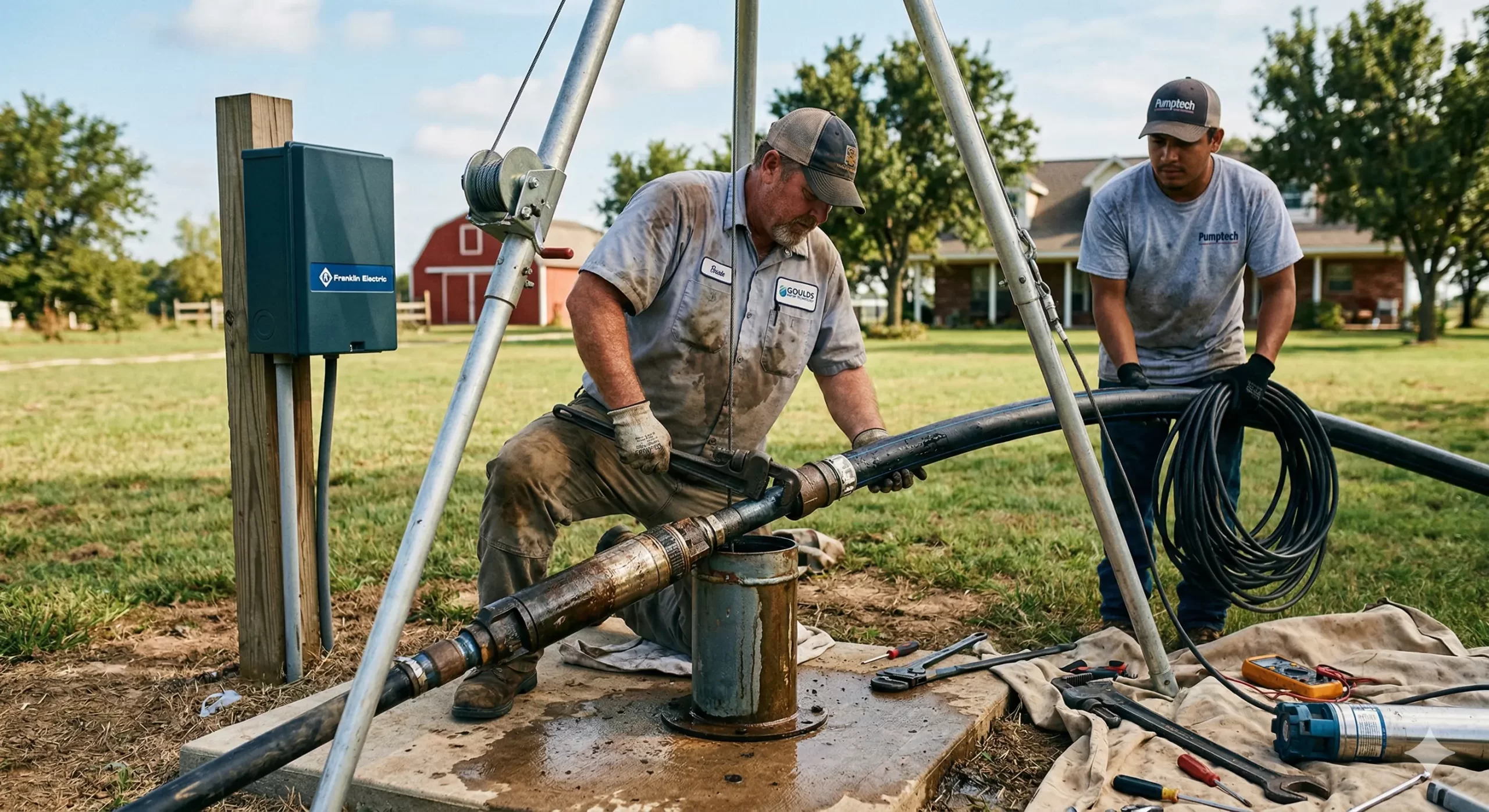
Following diagnosis, the technician will proceed with pulling the pump. This is a hazardous operation that requires purpose-built equipment. A hydraulic pump hoist or a heavy-duty pulling rig is positioned over the wellhead. A special T-handle pitless adapter key is lowered down the casing to engage and release the pump assembly from the watertight connection on the side of the casing. The combined weight of the pump, motor, hundreds of feet of water-filled pipe, and heavy gauge submersible cable can easily exceed 500 pounds. Attempting this manually is exceptionally dangerous and risks dropping the entire assembly, potentially destroying the well itself.
Safety Protocol
The 240-volt circuit breaker supplying the pump must be shut off, locked, and tagged in accordance with formal Lockout-Tagout (LOTO) procedures. The work area must be secured. The use of a properly rated mechanical hoist is mandatory; it provides the controlled power and braking needed to safely lift and lower the heavy, cumbersome assembly without risk of injury or catastrophic equipment loss. Once the pump is at the surface, the corroded brass check valves are cut out and replaced with superior, corrosion-resistant stainless steel models. If the megohmmeter test indicated motor failure, the entire motor is replaced. New waterproof heat-shrink splices are meticulously installed to connect the motor leads to the main submersible cable. The entire assembly is then sanitized with a chlorine solution before being carefully lowered and re-seated in the well. The final, critical step is the installation of a calcite-based acid neutralizing filter at the home’s point of entry to permanently resolve the low pH water chemistry and protect the new components.
Repair Cost & Time Assessment
The cost for a professional pump and check valve replacement due to acidic water damage typically ranges from $1,800 to $4,500 in the United States. This price variance is determined by the depth of the well (which dictates labor time and pipe length), the horsepower of the pump, and whether the motor itself requires replacement in addition to the check valves. A straightforward check valve replacement on a shallow well might be at the lower end of the range, while a full pump and motor replacement on a 500-foot well will be at the higher end.
This cost covers several critical components: the labor for two licensed technicians for 4-8 hours, a service charge for the specialized pump hoist rig, and the cost of premium replacement parts like stainless steel check valves, a new submersible motor (if needed), professional-grade heat-shrink splice kits, and potentially new pitless adapter components. Critically, this repair cost does not typically include the solution to the root problem. The installation of a whole-house calcite acid neutralizing filter system is a separate job, usually costing an additional $900 to $2,500. While it’s a significant added expense, it is an essential investment to prevent a costly repeat of the same failure in a few years.
Fast Local Service & Diagnostics
Calls are routed to a licensed local well professional.