
Diagnosis: A strong sulfur odor indicates dissolved hydrogen sulfide (H₂S) in your well water, which causes severe corrosion to your pump’s metal components and electrical systems. This guide explains how H₂S damages the pump motor, bearings, and seals, provides DIY diagnostic checks, and details the professional repair process involving corrosion-resistant materials.
In this Guide:
What Causes the Water Quality Strong sulfur odor Issue?
The primary engineering failure mechanism originates from the chemical properties of dissolved hydrogen sulfide (H₂S) gas. In an aqueous environment, H₂S is weakly acidic and highly corrosive to ferrous metals like iron and steel, which are common in standard pump housings, motor casings, and galvanized drop pipes. The H₂S directly attacks these metals, forming iron sulfide—a black, flaky precipitate that contaminates the water and indicates active corrosion. Furthermore, in the presence of certain iron-related bacteria and oxygen, H₂S can be oxidized to form sulfuric acid (H₂SO₄), a far more aggressive compound. This acid dramatically accelerates the degradation of all metallic components, leading to pitting corrosion on the well casing, catastrophic failure of drop pipe threads, and embrittlement of high-carbon steel parts within the pump itself.
Internally, the damage extends to the motor and electrical components. H₂S gas, being highly permeable, can migrate past seals and saturate the motor cavity. Here, it attacks the copper motor windings. The corrosion degrades the thin enamel insulation coating on the magnet wire, reducing its dielectric strength. Over time, this leads to microscopic shorts between windings or a direct phase-to-ground fault, causing the motor to draw excessive amperage, overheat, and ultimately burn out. The submersible power cable is also a primary target. H₂S can make the cable’s outer jacket brittle and prone to cracking, allowing water intrusion. Once water reaches the copper conductors, the corrosive process is accelerated, often causing failure at the heat-shrink splices, which are critical weak points in any submersible installation.
The mechanical systems of the pump are equally vulnerable. Mechanical seals, which prevent water from entering the oil-filled motor, are precision components often made of carbon-ceramic or silicon carbide composites bonded to a stainless steel housing. H₂S attacks the metal housing and can micro-pit the seal faces, compromising their ability to maintain a perfect seal. This allows water to displace the dielectric cooling oil, leading to rapid bearing failure and motor burnout. The pump’s bearings and shaft sleeves, critical for maintaining rotational stability, are also subject to accelerated wear from both direct chemical attack and the abrasive action of iron sulfide particles circulating through the pump stages. This increases friction, load, and power consumption, culminating in a seized motor or a shattered shaft.
DIY Troubleshooting Steps
- Visual & Olfactory Check at Fixtures: Run cold water at a tap for 2-3 minutes. Note the intensity of the ‘rotten egg’ smell. A strong, persistent odor confirms high H₂S levels. Collect a water sample in a clear glass; look for a black, sooty precipitate (iron sulfide) which indicates advanced corrosion of iron components in your system.
- Amperage Draw Test at the Control Box: (WARNING: RISK OF ELECTRIC SHOCK. PROCEED ONLY IF QUALIFIED.) Turn off the two-pole breaker supplying the pump. Open the pump control box. Clamp a reliable clamp-on ammeter around one of the main power leads going to the pump (typically black or red). Turn the breaker back on and force the pump to run. Compare the running amperage to the motor’s nameplate Full Load Amps (FLA). A reading significantly higher than the FLA indicates the pump is straining due to internal corrosion, bearing failure, or an electrical fault.
- Inspect Control Box Components: With the power locked out, visually inspect the internal components. Look for signs of corrosion on wire terminals, arcing marks or melted plastic on the contactor/relay, and check the start/run capacitors for bulging, leaking oil, or corrosion on their terminals. These are secondary signs that the pump motor is failing.
- Monitor Pump Cycle & Pressure Switch: Time how long the pump runs to build pressure (cut-out) and how long it rests before restarting (cut-in). Abnormally short cycles can point to a corroded check valve failing to hold pressure or a leak in the drop pipe. Listen for chattering or excessive arcing at the pressure switch contacts as the pump cycles, which can be caused by the high inrush current of a failing motor.
- Check Thermal Overload Status: Many control boxes and some motors have a manual thermal overload reset button. If this button has popped, or if the main circuit breaker is tripping, it’s a definitive sign of an over-current or overheating condition. Do not repeatedly reset it, as this can cause a complete motor burnout. A single trip under normal weather conditions warrants a full professional diagnosis.
- Wellhead and Exposed Plumbing Inspection: Examine the well cap, pitless adapter connection, and any exposed piping near the pressure tank. Check for weeping leaks or advanced rust on any galvanized steel fittings. This surface-level corrosion is a strong indicator of much more severe damage occurring downhole on the pump and drop pipe.
When to Call a Professional Well Service
A professional service call begins not with pulling the pump, but with a comprehensive electrical diagnosis at the surface. The technician will disconnect the pump’s power leads at the wellhead or control box and connect a megohmmeter (often called a ‘megger’). This instrument applies a high voltage (500-1000V) to test the insulation resistance between the motor windings and ground. A healthy motor will read hundreds or thousands of megohms; a motor compromised by water and H₂S corrosion will read low, often less than one megohm, confirming a critical insulation failure. This test definitively proves the pump must be pulled and eliminates guesswork.
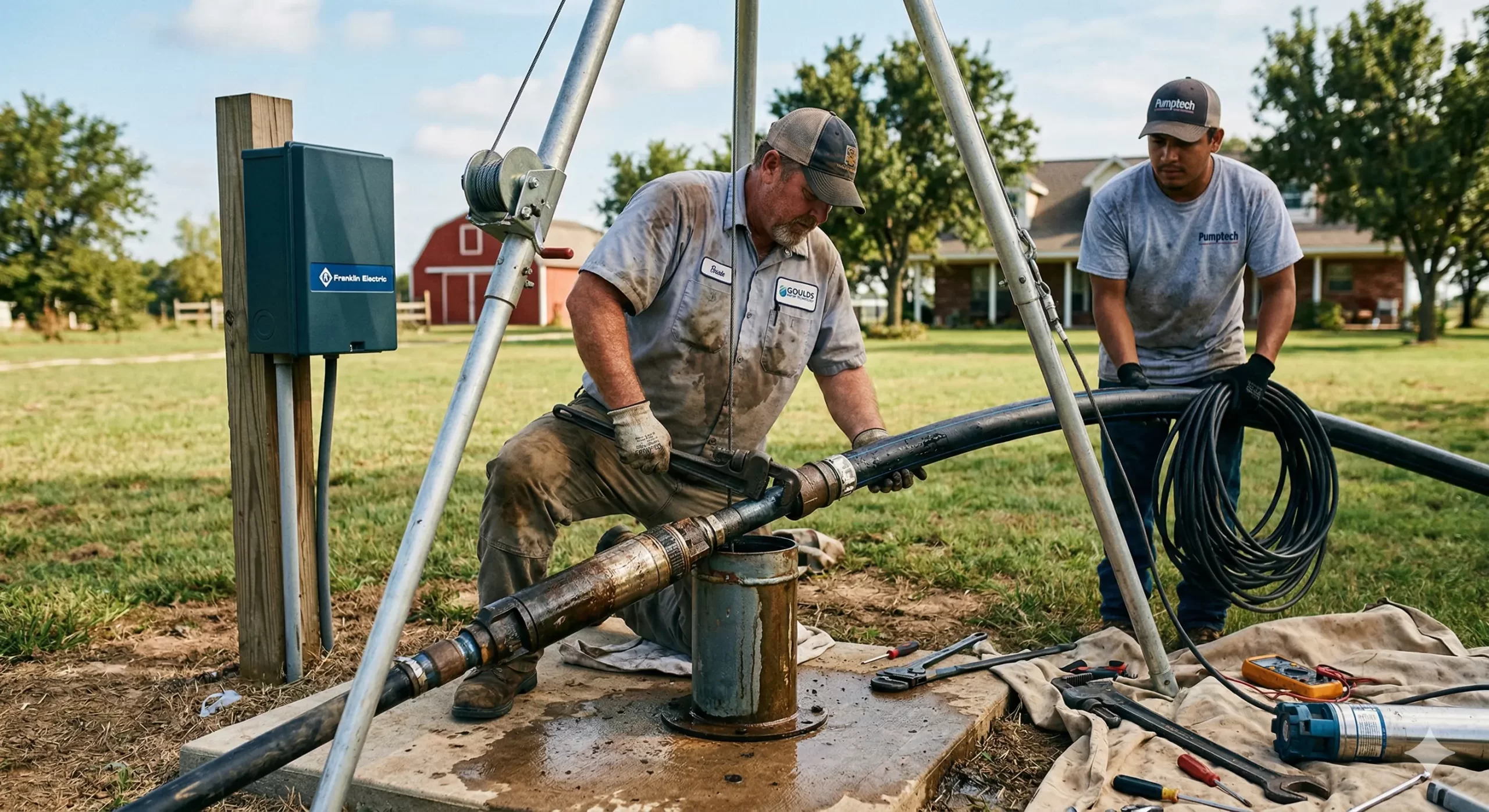
Safety Protocol and Extraction: The extraction of a deep-set submersible pump is a hazardous operation that demands specialized equipment. First, the technician implements strict lock-out/tag-out (LOTO) procedures on the 240V circuit breaker to ensure the system cannot be energized. A dedicated pump hoist or pulling rig is then positioned over the wellhead. This equipment is non-negotiable; a 300-foot column of 1.25-inch pipe filled with water, plus the pump and motor, can easily exceed 500 pounds of dead weight. Attempting a manual pull risks back injury, equipment damage, or the catastrophic loss of the entire assembly down the well. Using the hoist, the technician uses a pitless adapter key to disengage the pump from the well casing and carefully raises the assembly, managing the drop pipe, safety rope, and submersible cable simultaneously to prevent kinking or abrasion against the casing.
Once the pump is on the surface, a full forensic analysis is conducted. The technician will identify all points of failure—the corroded motor housing, the seized impellers, the compromised cable splice, and the rotten galvanized fittings. The repair involves a complete upgrade to corrosion-resistant materials. The new pump and motor will typically be of 304 or 316 stainless steel construction. The galvanized drop pipe will be replaced with Schedule 80 PVC or stainless steel pipe. All fittings, including the pitless adapter, check valves, and torque arrestors, will be upgraded to brass or stainless steel. Crucially, the technician will also advise on and potentially install a permanent water treatment solution, such as an aeration system with a carbon filter or an oxidation/filtration system, to remove the H₂S from the water *before* it can damage the new, expensive equipment.
Repair Cost & Time Assessment
The cost for a comprehensive pump replacement due to hydrogen sulfide damage typically ranges from $2,800 to $6,500 in the United States. The final price is heavily dependent on well depth, pump horsepower, and the grade of materials selected. A shallower well (under 200 feet) requiring a standard 1 HP stainless steel pump and PVC drop pipe will be at the lower end of the range. A deep well (300+ feet) demanding a heavy-duty pump hoist for several hours, a premium all-316-stainless-steel pump, and stainless steel drop pipe and fittings will push the cost toward the upper end.
The customer’s investment covers several critical line items. Labor typically includes two certified technicians for half a day to a full day (4-8 man-hours) to ensure a safe and efficient pull and re-installation. Specialized Equipment Fees account for the transport and use of the pump hoist/rig. The bulk of the cost is in Premium Materials: the new pump/motor assembly, hundreds of feet of new drop pipe and 10/3 or 12/3 submersible cable, brass or stainless steel check valves and fittings, a new safety rope, and potentially a new pitless adapter assembly. This investment not only restores water service but also hardens the system against future corrosion, providing a long-term solution rather than a temporary fix.
Fast Local Service & Diagnostics
Calls are routed to a licensed local well professional.