
When you turn on the faucet and nothing happens, your household routine comes to a halt. If your property relies on private groundwater, a failing well pump or pressure tank is an urgent issue. Our service connects you with a network of local, licensed well water professionals who are ready to diagnose the problem, pull the broken pump if necessary, and help restore your water pressure as quickly as possible.
Fast Local Service & Diagnostics
Calls are routed to a licensed local well professional.
🚨 No Water? Typical Culprits
A "no water" situation doesn't always mean your well has run dry. In fact, it is often a mechanical or electrical issue. Before you panic, local technicians typically check these three main components:
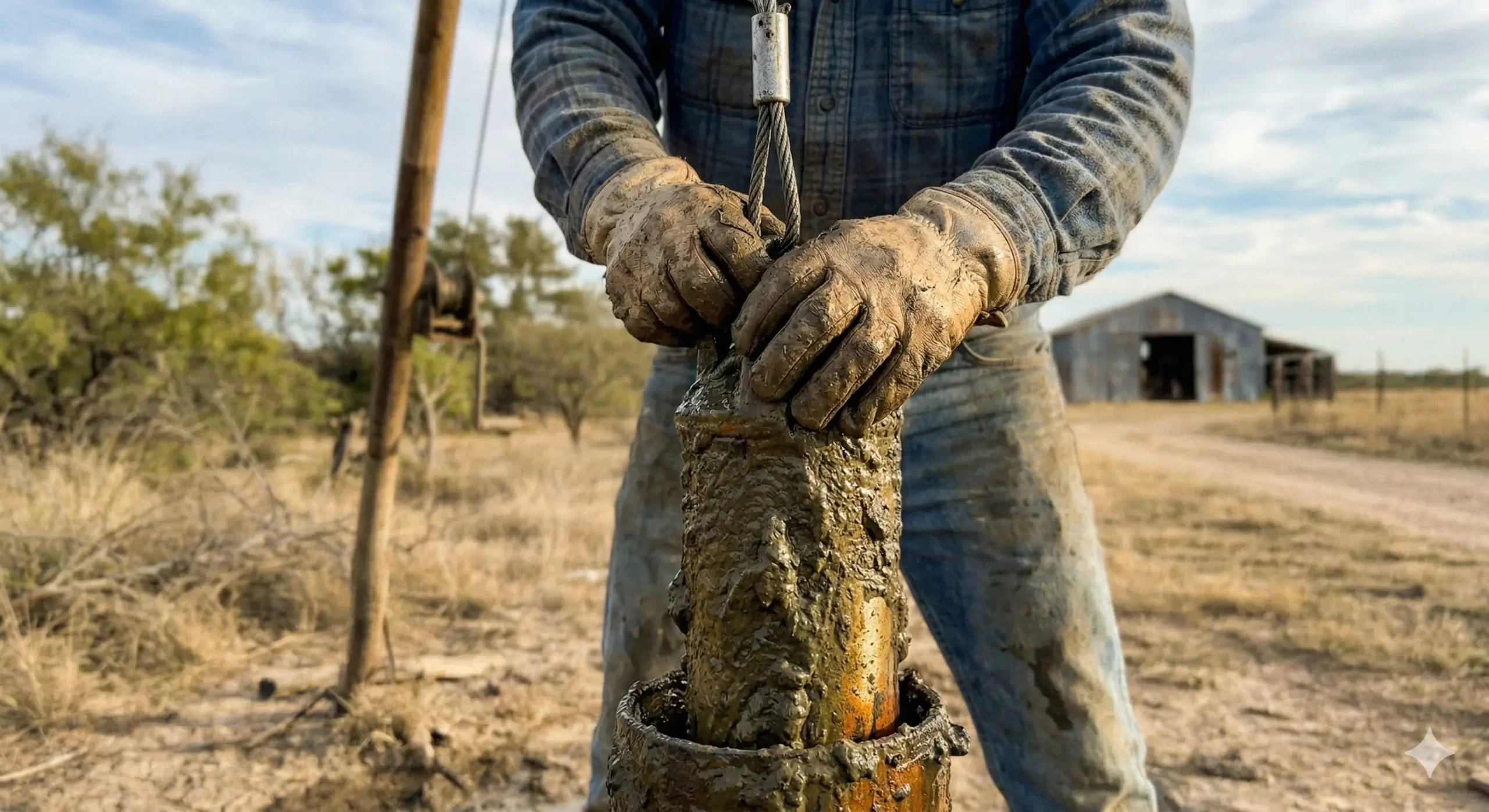
- The Submersible Pump: Located deep underground. It can burn out due to old age, power surges, or hard water calcification.
- The Pressure Tank: Located in your basement or pump house. If the internal bladder ruptures (waterlogged), your pump will short-cycle and eventually fail.
- The Pressure Switch & Control Box: The "brain" of the system. Burned contacts or a blown starting capacitor will prevent the pump from receiving power.
⚠️ Crucial First Step: Turn Off the Breaker
If you suddenly lose water pressure, immediately locate your electrical panel and turn off the breaker dedicated to the well pump. If the issue is a broken pipe or a loss of prime, the pump will continue to run continuously trying to build pressure. A dry-running pump will overheat and completely melt the internal motor in a matter of hours, turning a minor repair into a major replacement.
Average Well Pump Repair Costs (2026 Estimates)
Homeowners often fear the worst when the water stops flowing. While pulling a deep submersible pump is a major job, many repairs are simpler electrical fixes above ground. Here is a general estimate of what you might expect to pay:
| Service Type | Average Cost Range | Typical Service Time |
|---|---|---|
| System Diagnostics (Site visit & electrical testing) | $150 - $250 | 1 - 2 Hours |
| Pressure Switch Replacement | $150 - $350 | 1 Hour |
| Control Box / Capacitor Repair | $250 - $450 | 1 - 2 Hours |
| Pressure Tank Replacement (Standard residential size) | $800 - $1,600 | 2 - 4 Hours |
| Submersible Pump Replacement (Includes pulling pipe) | $1,800 - $3,500+ | Half to Full Day |
Fast Local Service & Diagnostics
Calls are routed to a licensed local well professional.
Submersible vs. Jet Pumps: Knowing Your System
When requesting service, identifying your pump type helps technicians dispatch the right equipment:
- Submersible Pumps: You won't see the pump itself; it is submerged deep inside the well casing in your yard. You will only see the pressure tank and control box inside your home. These are standard for deep wells.
- Jet Pumps: These are mounted above ground, usually resting directly on top of the pressure tank in the basement or in a dedicated pump house. They pull water up through suction and are typically used for shallow wells (less than 25 feet deep).
4 Warning Signs Your Well Pump is Failing
It's always best to catch a problem before you completely lose water. Look out for these early indicators of well system failure:
- Fluctuating Water Pressure: The water pressure in your shower drops significantly before surging back up.
- Spitting Faucets: Air is getting into your plumbing lines. This could indicate a crack in the drop pipe or a lowering water table.
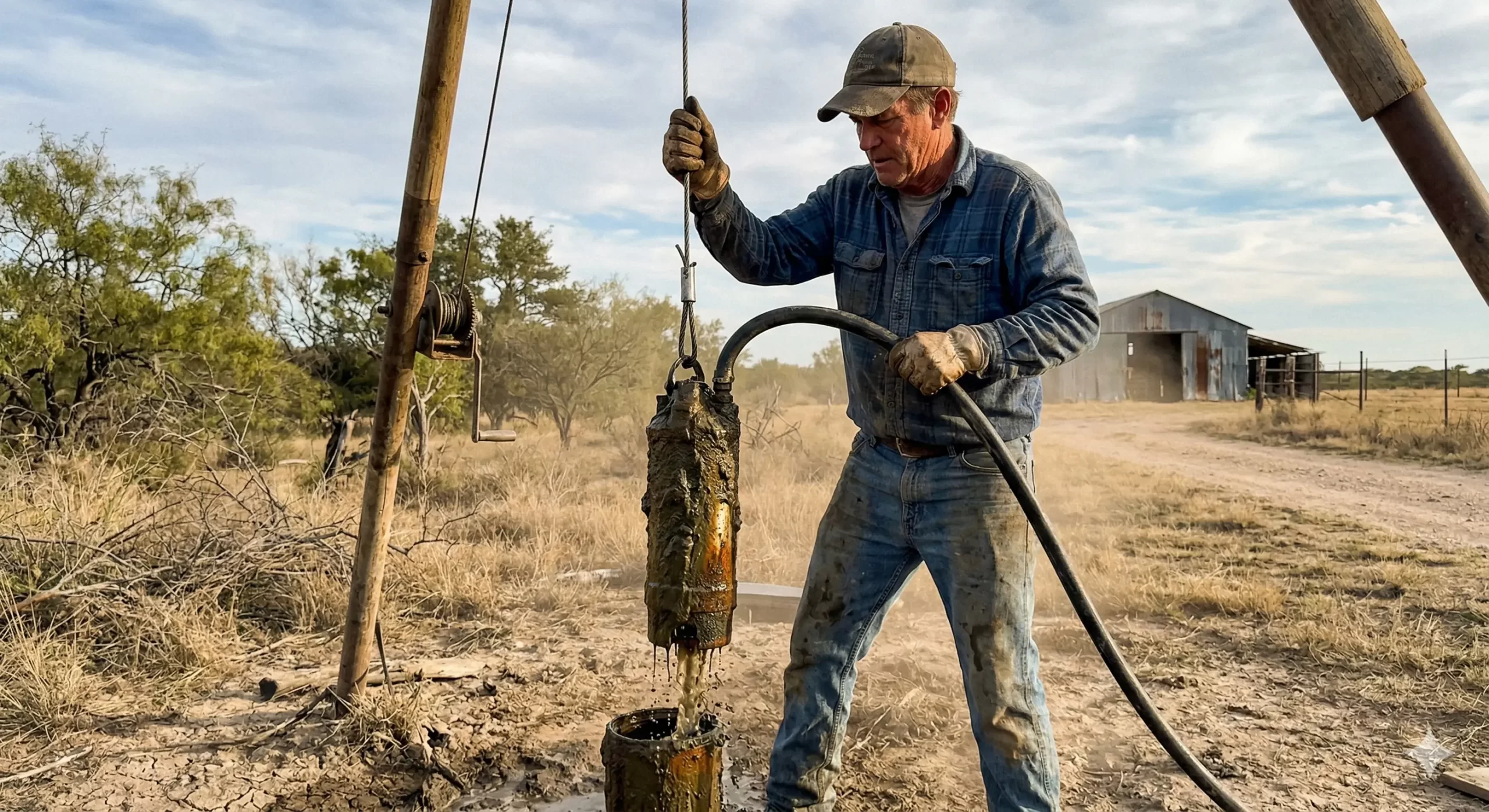
- Muddy or Murky Water: Your pump might be sitting too low and pulling silt from the bottom of the well.
- High Electric Bills: If your pump runs continuously without shutting off (often due to a leak or bad pressure switch), your electricity usage will spike.
Ask the Blix Well Pump Expert AI
Not sure what's wrong with your water pressure? Ask our specialized AI assistant about typical problems, local regulations, and component lifespans below:
Well Pump Intelligence AI: USA
What is the maximum depth a shallow well jet pump can pull water from?
Understanding the Maximum Suction Depth of a Shallow Well Jet Pump
As a Global Expert on Water Wells and Groundwater Systems, I can provide a definitive answer regarding the maximum depth a shallow well jet pump can pull water from. This is a crucial distinction for any homeowner reliant on a private well system, particularly in the USA in 2026 where water table fluctuations and system efficiency are increasingly important considerations.
The fundamental limitation for any suction-based pump, including a shallow well jet pump, is dictated by the principles of atmospheric pressure. In theory, at sea level, atmospheric pressure can support a column of water approximately 33.9 feet (about 10.3 meters) high. However, to operate a pump effectively and account for vapor pressure of water, pump design, and system losses, the practical maximum suction lift is significantly less.
For a shallow well jet pump, the absolute theoretical maximum depth it can "pull" water from is typically around 25 feet (approximately 7.6 meters) at sea level. This is the practical limit for consistent, reliable operation, even under ideal conditions.
However, it is crucial for homeowners to understand that several factors will reduce this effective maximum lift in real-world scenarios:
- Elevation Above Sea Level: For every 1,000 feet (approx. 305 meters) of elevation above sea level, the atmospheric pressure decreases, which in turn reduces the maximum suction lift by approximately 1 foot (0.3 meters). If you live at 5,000 feet elevation, your effective maximum could be closer to 20 feet.
- Friction Loss: The resistance caused by water flowing through the suction pipe, fittings, valves, and any horizontal runs will reduce the effective lift. Longer pipes, smaller diameters, or numerous bends increase friction loss.
- Pump Efficiency and Condition: An older, worn, or improperly sized pump may not be able to achieve its theoretical maximum lift.
- Water Temperature: Hotter water has a higher vapor pressure, which slightly reduces the maximum suction lift.
Considering these practicalities, for reliable long-term performance, a shallow well jet pump is generally recommended only for wells where the static water level (the level of the water when the pump is not running) is consistently 20-22 feet (6-6.7 meters) or less below the pump's intake.
Homeowner Maintenance, Prevention, and Replacement Considerations:
-
No-Water Emergency Prevention:
Understanding this depth limitation is paramount for preventing a "no water" emergency. If your local water table drops due to drought, increased usage, or seasonal changes, and the static water level falls below the shallow well jet pump's practical limit, your pump will begin to "short cycle" (turn on and off frequently), lose prime, or simply fail to deliver water. Monitor your well's performance: listen for excessive pump cycling, check for reduced water pressure, or strange noises. These are early warning signs.
Regularly check the static water level in your well, especially if you notice these symptoms or are in an area prone to water table fluctuations. Consult a local well professional for assistance in accurately measuring your static water level and assessing your well's yield.
-
Well Pump Replacement:
If your shallow well jet pump is consistently struggling or failing, and you confirm your static water level has dropped below its effective suction limit, a replacement with a different pump type may be necessary. For wells with water levels deeper than 25 feet, two primary alternatives exist:
- Deep Well Jet Pumps: These utilize an "ejector" or "packer" assembly placed down inside the well, below the water line, which uses a portion of the pumped water to create pressure and push the remaining water up. While still having a surface motor, they can lift water from depths generally up to 100-150 feet.
- Submersible Well Pumps: These are the most common and efficient solution for deeper wells (anywhere from 25 feet to over 1,000 feet). The pump and motor are entirely submerged within the well, pushing water directly to the surface, which eliminates the suction lift limitation. They are generally more energy-efficient and quieter than jet pumps.
When considering pump replacement, always consult a qualified local well contractor. They can assess your specific well depth, static water level, well yield, and household water demands to recommend the most appropriate, efficient, and reliable pump system for your property in 2026, factoring in any local regulations or incentives for energy-efficient systems.
-
Pressure Tanks:
Regardless of the pump type (shallow well jet, deep well jet, or submersible), a pressure tank is an integral component of your well system. It stores a reserve of water under pressure, preventing the pump from cycling on and off every time a faucet is opened. This significantly extends the life of your pump motor, reduces energy consumption, and provides a more consistent water pressure throughout your home. Ensure your pressure tank is properly sized and maintained; a failing pressure tank can also lead to excessive pump cycling and premature pump failure.
-
Local Relevance (USA, 2026):
The specific conditions of your well can vary drastically even within the same state or county. Factors like geology, aquifer characteristics, drought conditions, and local groundwater usage patterns (which can be influenced by climate change in 2026) all impact your well's static water level and yield. It is imperative to engage with local, licensed well drilling and pump professionals in your specific region of the USA. They possess the knowledge of local well logs, geological data, and water regulations to provide tailored advice and ensure your water system is compliant, sustainable, and reliable.