
Emergency Well Pump Repair in Pennsylvania
From the historic, rolling farmlands of Lancaster County to the rugged, heavily forested peaks of the Appalachian and Pocono Mountains, over three million Pennsylvanians rely entirely on private groundwater systems. The Keystone State presents a uniquely harsh environment for well pumps. Sub-zero winters drive frost lines deep into the rocky soil, threatening to freeze and shatter unprotected wellheads, while the region’s notoriously corrosive, iron-heavy water can rapidly destroy submersible motors from the inside out. Whether you are dealing with a waterlogged pressure tank in a suburban Philadelphia basement, a frozen drop pipe in the dead of a Scranton winter, or a failing submersible pump struggling against acidic Appalachian groundwater, our statewide network of licensed technicians is ready. We provide immediate, cold-weather-equipped emergency well pump repair near you to secure your home’s most essential utility.
Fast Local Service & Diagnostics
Calls are routed to a licensed local well professional.
Well Pump Repair in
Pennsylvania
Pennsylvania Well Service Costs & Stats
Pennsylvania has the second-highest number of private water wells in the United States, with over 1 million active wells supplying clean drinking water to roughly 20% of the state’s population. Because PA has historically lacked statewide private well construction codes—leaving regulation up to individual municipalities—the ongoing maintenance, professional inspection, and upgrading of these aging rural water systems are heavily dependent on proactive homeowners and licensed local contractors.
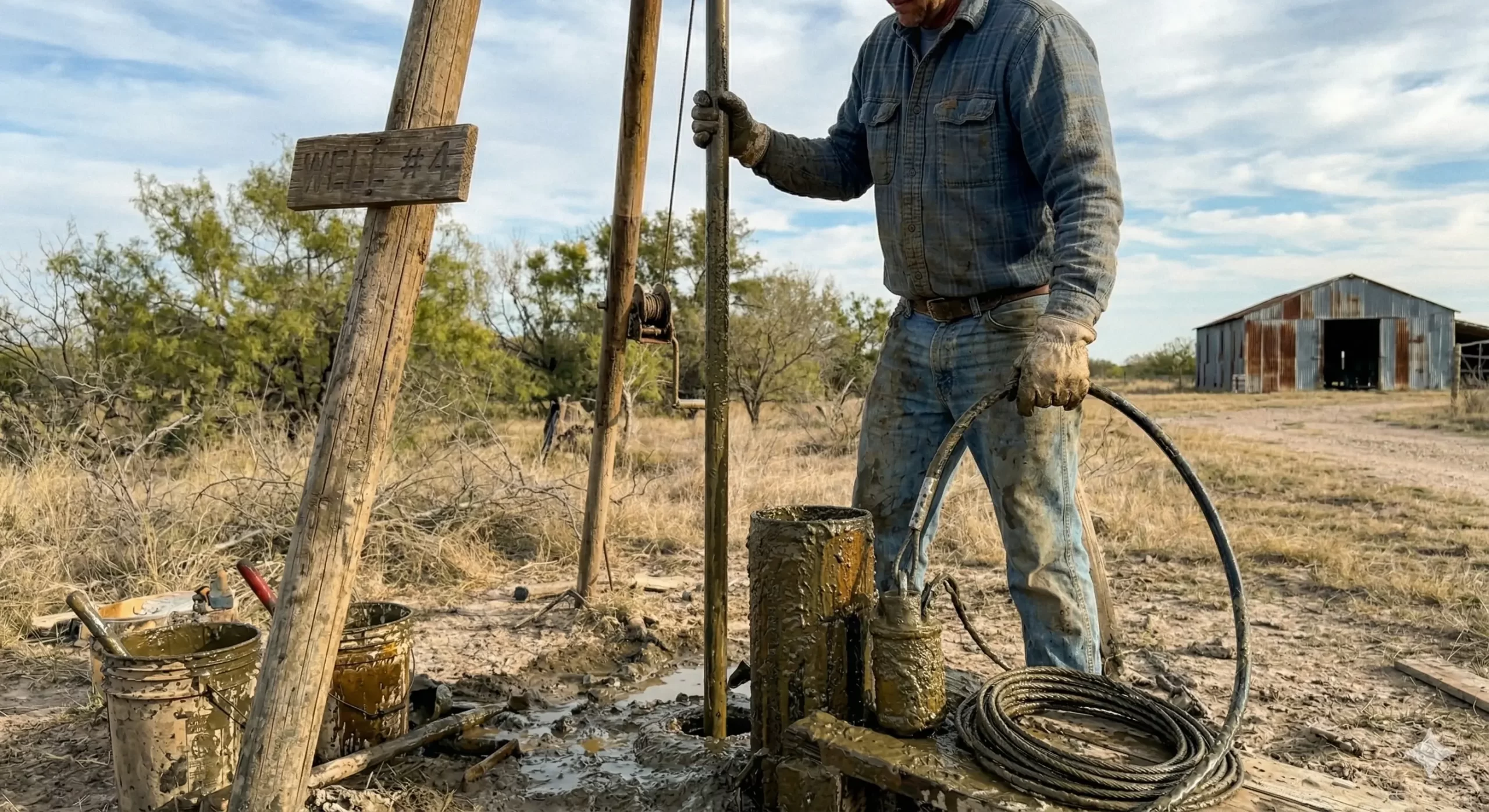
- Bedrock Extraction Fees: Replacing a deep submersible pump in the mountainous regions often requires heavy-duty pump hoists to pull water-filled pipes from 300-600 feet of solid rock. This labor-intensive process drives replacement costs to $2,000 – $4,800+.
- Pitless Adapter & Winterization: Pennsylvania’s frost line requires plumbing to be buried 36-48 inches deep. Repairing a leaking pitless adapter or excavating frozen, shattered underground lines can add $800 – $1,800 to a repair bill.
- Corrosion & Iron Bacteria Mitigation: PA groundwater is infamous for “acid mine drainage” and iron bacteria sludge. Pumps destroyed by acidic water or iron buildup often require the installation of specialized chemical-resistant pumps and well sanitization, adding $400 – $900.
- Pressure Tank Upgrades: A basement well pressure tank replacement cost typically ranges from $500 to $1,300. Upgrading to advanced fiberglass tanks is highly recommended in damp PA basements to prevent exterior rusting.
- VFD Constant Pressure Systems: Upgrading a traditional 40/60 PSI system to a Variable Frequency Drive (VFD) for “city-like” constant pressure is incredibly popular for large rural estates, costing between $1,500 and $3,200.
- Electrical & Control Box Replacements: Summer thunderstorms rolling over the mountains frequently cause power surges. Replacing a fried control box or a well pump pressure switch is a fast, common fix averaging $200 – $450.
42°F in Pennsylvania
Save $300+ on Replacements
Via the PA Keystone Water Efficiency Grant
Average Well Pump Repair Costs by Pennsylvania Region (2026)
Pricing across the Keystone State is heavily influenced by terrain and local labor markets. Pulling a pump in the rocky, steep Poconos demands much heavier equipment than servicing a well in the rolling farmlands of Lancaster.
| Region / Major Cities | Aquifer & Avg. Depth | Minor Repair (Switches, Tanks) | Pump Replacement (Parts + Labor) |
|---|---|---|---|
| SE PA & Philly Suburbs West Chester, Doylestown, Bucks Co. | 100 – 300 ft Piedmont Crystalline Rock | $250 – $450 | $2,200 – $3,800 |
| South Central (Dutch Country) Lancaster, York, Harrisburg | 150 – 400 ft Karst Limestone (Ag. Runoff Risk) | $200 – $380 | $1,800 – $3,500 |
| Poconos & NE PA Scranton, Wilkes-Barre, Stroudsburg | 300 – 600+ ft Glaciated Sandstone / Shale | $300 – $550 | $2,800 – $4,800+ |
| Pittsburgh & SW PA Pittsburgh, Washington, Butler | 200 – 500 ft Appalachian Plateaus (Mining Zones) | $250 – $450 | $2,400 – $4,200 |
| Erie & NW PA Erie, Meadville, Warren | 100 – 350 ft Glacial Deposits | $200 – $400 | $1,800 – $3,600 |
The Cost of Ignoring Symptoms
Fixing a short-cycling pump early saves thousands in Pennsylvania.
Data reflects average well contractor estimates in Pennsylvania.
Groundwater Threat Level
Current aquifer and mineral impact on pumps in Pennsylvania.
Dropping water tables cause pumps to suck air and overheat.
Hard water calcifies pump impellers, reducing lifespan.
Pump Lifespan Estimator
Select household size in Pennsylvania to see strain impact.
Groundwater & Aquifers
The primary groundwater sources in Pennsylvania include the The Appalachian Plateaus aquifers, the Valley and Ridge aquifers, and the Piedmont crystalline-rock aquifers.. Drilling through the local Dense Appalachian shale, sandstone, and fractured karst limestone in the central valleys. means that average well depths range from Averages 100 to 300 feet in the valleys, but commonly extends to 400-600+ feet on the mountain ridges..
Due to these geological factors, local homeowners frequently struggle with Submersible motor failure due to thick iron sludge buildup, and rapid short-cycling caused by waterlogged indoor pressure tanks..
Drilling Depth Comparison
Deeper wells require heavy-duty crane hoists for pump extraction.
Climate & Water Quality
Pump systems in Pennsylvania face severe environmental stressors. The most significant threat is Deep winter freezes bursting surface plumbing, heavy spring snowmelts causing surface water contamination, and severe summer lightning storms.
Additionally, the raw groundwater often presents issues with Severe iron bacteria, manganese, corrosive low pH (acidic water), and localized methane or heavy metals from historic mining..
Regional Groundwater Advisory
Known primary contaminant threat to submersible pumps and pipes in this area:
Common Well Systems
VFD Upgrade Savings
Constant Pressure vs StandardReplacing a standard single-speed pump with a Variable Frequency Drive (VFD) eliminates hard starts and drastically reduces energy draw in Pennsylvania.
Compliance & Authority
Top Pump Brands in Pennsylvania
Most frequently installed hardware based on local geology (2026 data).
Standard PA Technician Diagnostic Checklist
Pulling a pump from 400 feet of solid Appalachian rock is an expensive, labor-intensive process. Therefore, our certified contractors follow a stringent diagnostic protocol to rule out above-ground electrical and pressure tank issues first:
- Electrical & Amp Draw Audit: Using a multimeter at the control box to check the voltage and amperage draw, specifically looking for a shorted motor or a blown start capacitor.
- Pressure Tank Bladder Calibration: Draining the basement system completely to test the internal tank bladder for ruptures, and adjusting the air pre-charge to exactly match the pressure switch.
- Winterization & Pitless Inspection: Utilizing a downhole camera to inspect the pitless adapter below the frost line to ensure it isn’t leaking or compromised by freezing temperatures.
- Switch & Contactor Cleaning: Inspecting the mechanical water well pressure switch contacts, which frequently pit or become coated in basement moisture and dust.
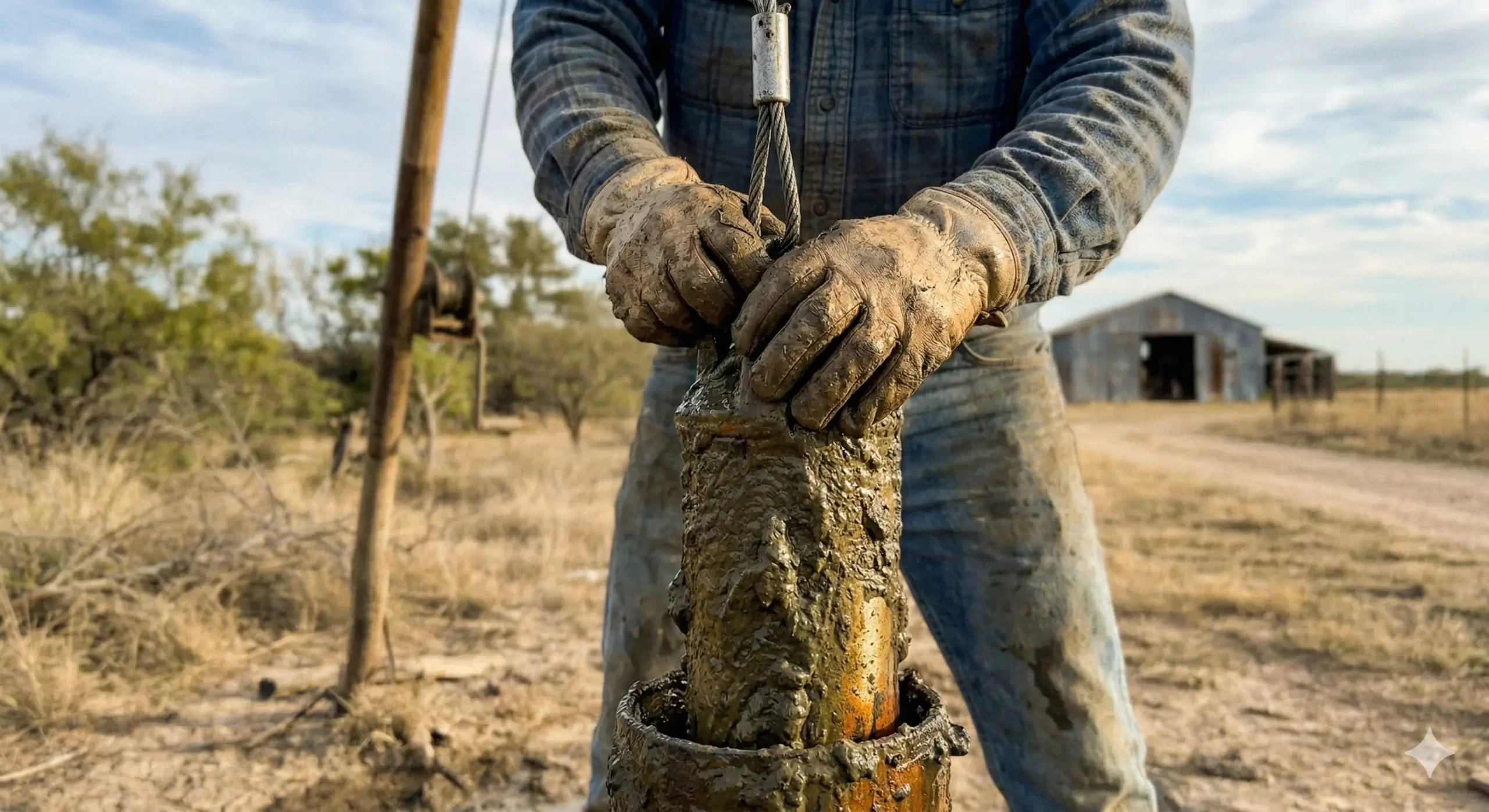
- Iron & Scale Assessment: Visually inspecting the pulled drop pipe and pump housing for severe iron bacteria sludge, which dictates whether the well needs aggressive chemical shock chlorination.
- Static Water Level Sonic Test: Using specialized sonic equipment to measure exactly how far the water table has dropped to see if the pump is cavitating (sucking air).
- Transparent Code Review: Providing a complete, upfront breakdown of repair costs, ensuring all modifications adhere strictly to local county health department regulations.
Top Well Pump Brands Serviced in Pennsylvania
Pennsylvania’s rocky, iron-heavy aquifers and freezing temperatures require the absolute toughest hardware available. Our licensed technicians are fully equipped to install and repair the industry’s most resilient brands:
- Goulds Water Technology: The undeniable favorite in PA. Their heavy-duty cast iron and stainless steel submersible pumps are legendary for surviving highly corrosive, mineral-rich Appalachian water.
- Franklin Electric: The absolute industry standard for deep-well submersible motors, rugged control boxes, and advanced constant pressure (VFD) drive systems.
- Grundfos: Premium innovators known for their ultra-efficient SQE series, offering quiet, constant pressure delivery for large suburban estates in SE PA.
- Amtrol (Well-X-Trol): The gold standard for indoor hydro-pneumatic pressure tanks. Their thick steel and robust bladders are essential for damp PA basements.
- Myers (Pentair): A highly reliable brand frequently found in older Pennsylvania properties, offering excellent longevity for both jet and submersible applications.
- Flint & Walling: Renowned for their high-capacity submersible pumps and dependable systems capable of pushing water up steep mountain inclines.
- Sta-Rite (Pentair): Highly trusted for dependable, long-lasting performance in both residential pressure tanks and heavy-duty centrifugal pumps.
Critical Warning Signs Your PA Well Pump is Failing
Between brutal winter freezes and the corrosive nature of Appalachian groundwater, pump systems in Pennsylvania endure massive punishment. Ignoring early symptoms almost always leads to a completely dry house and a severely expensive emergency. Watch closely for these 7 critical warning signs:
- Rapid Clicking in the Basement: Hearing the pressure switch violently click on and off every few seconds means you urgently need to fix a waterlogged pressure tank before the pump motor burns out.
- Red or Brown Sludge in Water: A massive spike in iron bacteria (common in PA) creates a thick, rusty slime that coats the pump intake, causing it to overheat and fail prematurely.
- Complete Loss of Water in Winter: A sudden outage during a January freeze usually indicates a failed pitless adapter, uninsulated wellhead, or a shattered drop pipe buried above the frost line.
- Sputtering Faucets (Air in Lines): This indicates the pump is cavitating (pulling air) because the water table has dropped, or the underground pipe connecting the well to the house has a severe leak.
- Unexplained High Electric Bills: An aging submersible pump struggling against thick mineral scale, or a pump that never shuts off due to an underground leak, will draw massive amounts of electricity.
- Extremely Low Water Pressure: Often the first sign of a clogged sediment filter, a failing pressure switch, or a dying pump motor that has lost its hydraulic lifting power.
- Tripping the Dedicated Circuit Breaker: If the well pump breaker in your electrical panel keeps tripping, the motor is either shorted out, locked up with rust, or the underground wiring has degraded.
Real Estate Regulations & Inspections
- Volume & Yield Testing: Measuring the precise Gallons Per Minute (GPM) to ensure the bedrock aquifer can support modern household appliances without the pump running dry.
- Basement Pressure System Audit: A meticulous check of the indoor pressure tank to ensure it isn’t waterlogged, and verifying the pressure switch calibration to prevent the pump from short-cycling.
- Pitless Adapter & Frost Line Check: Using downhole cameras to ensure the casing and pitless adapter are completely intact below the freezing mark, preventing winter burst pipes.
- Electrical Resistance Testing: Checking the amperage draw of the submersible motor. High amp draw indicates the pump is dying, often choked by Pennsylvania’s notorious iron bacteria.
The second, arguably most critical phase in Pennsylvania, is comprehensive water quality testing. Due to historic coal mining, active natural gas fracking, and intense agriculture, PA groundwater carries unique risks:
- Total Coliform & E. coli: Crucial for ensuring the well cap and casing haven’t been breached by agricultural runoff or melting snow.
- Acid Mine Drainage Panels: Testing for low pH, iron, and manganese, which are rampant in SW and NE PA and will rapidly corrode plumbing if left untreated.
- Methane & Fracking Byproducts: Highly recommended in regions like the Marcellus Shale, to ensure the water supply hasn’t been impacted by deep-earth gas extraction.
- Nitrate Testing: Absolutely essential in heavy farming regions like Lancaster and York counties to detect fertilizer leaching.
Executing this deep-dive due diligence is the only way to ensure your new Pennsylvania home has a safe, reliable, and mechanically sound water supply.
⚠️ Pennsylvania Regulatory Warning: Abandoned Wells
- Licensed Decommissioning: A well must be permanently sealed from the bottom of the aquifer to the surface using specialized bentonite clay or neat cement, performed strictly by a licensed well contractor.
- DCNR Reporting: A formal “Water Well Abandonment Form” must be submitted to the PA Department of Conservation and Natural Resources to update the state’s groundwater records.
- Casing Removal: In many local jurisdictions, the top section of the steel casing must be cut off below the frost line and capped before the final layer of soil is applied.
- Local Municipal Codes: Because state law is minimal, contractors must rigorously check and adhere to any overlapping county or township ordinances regarding well destruction.
Furthermore, when drilling a new well or relocating a septic system, local PA health departments enforce uncompromising sanitary setback distances to prevent biological disasters:
- Septic Tanks & Drain Fields: A potable water well must maintain an absolute minimum setback of 100 feet from any part of a sewage disposal system.
- Property Boundaries: Strict setbacks (often 10-25 feet) are required to prevent your well’s cone of depression from stealing a neighbor’s water supply.
- Agricultural Storage: Wells must be heavily distanced from manure pits, silos, and fertilizer storage to prevent nitrate contamination.
- Driveways & Roadways: Setbacks from paved surfaces are enforced to prevent winter road salt and chemical runoff from seeping into the wellhead.
Navigating this patchwork of state and local laws requires hiring highly experienced, regionally knowledgeable water well professionals.
Spring Well Maintenance in Pennsylvania
Heavy spring rains can cause surface runoff to breach well caps. We strongly recommend testing your water for coliform bacteria and inspecting the sanitary seal.
Local Pennsylvania
Well Pros
Fast Local Service & Diagnostics
Calls are routed to a licensed local well professional.
Live Dispatch: Pennsylvania
Updated Just Now⚠️ High demand. Call now to secure the next available technician.
Homeowner Feedback
“In the dead of a brutal February freeze in the Poconos, we woke up to absolutely no water. I assumed the pump was dead. The dispatcher was a lifesaver and got a crew out to us by noon. They tested the electricals and realized the pump was fine—our drop pipe had frozen solid right at the pitless adapter. They carefully thawed the line, replaced the damaged brass fitting, and heavily insulated the wellhead. Honest, fast, and didn’t try to sell me a $3000 pump I didn’t need.”

Local Homeowner
✓ Verified PA
“Our basement pressure switch kept clicking like a machine gun every time we flushed a toilet, and the water pressure was terrible. The tech from this network came out to our home in Bucks County and immediately diagnosed a completely waterlogged pressure tank. The bladder had torn. They swapped it out for a massive, high-quality Well-X-Trol tank in under two hours. The water pressure in the house is better than when we moved in!”

Local Homeowner
✓ Verified PA
“We live on an old farm property in Lancaster County. Our submersible pump finally gave out after 18 years, totally choked with iron bacteria sludge. The repair crew was incredible. They brought in a massive pump hoist, pulled 350 feet of pipe, installed a heavy-duty Goulds stainless steel pump, and performed a massive shock chlorination to clean out the aquifer. True Pennsylvania groundwater experts.”

Local Homeowner
✓ Verified PA
your city Groundwater Expert AI
What are the specific groundwater regulations, average well depths, and the local conservation district for your city, your county?
Groundwater Regulations, Well Depths, and Conservation for Residential Wells in Lancaster County, Pennsylvania (2026)
As a Senior Hydrogeologist and Local Groundwater Regulatory Expert for Pennsylvania, I can provide you with specific information regarding residential water wells in Lancaster County, Pennsylvania. The year 2026 brings no significant changes to the established regulatory framework for private wells in this region.
Specific Groundwater Regulations for Residential Wells in Lancaster County, PA
In Pennsylvania, the regulatory landscape for private residential water wells differs significantly from states with dedicated Groundwater Conservation Districts. Here in Lancaster County, the primary regulatory oversight for residential wells operates on a tiered system:
- State-Level Oversight (Pennsylvania Department of Environmental Protection - PADEP):
PADEP's primary role regarding groundwater is focused on public water supply systems, water quality standards, and permitting large-scale withdrawals under the Water Resources Planning Act (Act 220). For individual residential wells, PADEP does not mandate a statewide drilling permit or construction standard, nor does it require registration of private wells. However, water quality standards from 25 Pa. Code Chapter 93 (Water Quality Standards) and 25 Pa. Code Chapter 16 (Water Quality Toxics Management) indirectly apply to ensuring the quality of groundwater resources.
While PADEP does not directly regulate private well construction, it strongly encourages best management practices to protect groundwater quality and quantity. Information can be found on their main portal: Pennsylvania Department of Environmental Protection.
- Regional River Basin Commissions:
Lancaster County falls within the jurisdiction of the Susquehanna River Basin Commission (SRBC). The SRBC has a comprehensive water resources management program that requires approval for new or expanded water withdrawals exceeding certain thresholds (e.g., averaging 10,000 gallons per day over any 30-day period). Individual residential wells typically fall below these thresholds and do not require SRBC approval, but their presence underscores a commitment to regional water resource planning. More information is available at: Susquehanna River Basin Commission.
- Local-Level Oversight (Municipalities):
The most direct regulation for residential well construction and siting in Lancaster County occurs at the municipal level. Each township, borough, or city within the county typically has its own ordinances governing the permitting, location, and sometimes construction of private wells. These local ordinances are crucial for ensuring proper setbacks and preventing contamination.
Common requirements across Lancaster County municipalities for private wells include:
- Obtaining a drilling permit from the local township or borough prior to construction.
- Specific Setback Rules: These vary slightly by municipality but generally include minimum distances from potential contamination sources. Typical setbacks often mandate:
- A minimum of 100 feet from septic tanks, septic absorption areas (drainfields), and subsurface sewage disposal systems.
- A minimum of 50 feet from property lines, stormwater infiltration facilities, and public roads.
- A minimum of 10 feet from buildings, structures, and non-sewage wastewater disposal systems.
- Greater distances (e.g., 200-500 feet) from known sources of significant contamination such as agricultural waste storage, petroleum storage tanks, and cemeteries.
- Adherence to generally accepted drilling standards for casing, grouting, and wellhead protection, often referencing guidance from the Pennsylvania Department of Health or industry best practices.
- Mandatory water quality testing (e.g., for coliform bacteria, nitrates) upon completion of the well, prior to occupancy.
To determine the exact local regulations for your specific property within Lancaster County, you must contact your township or borough’s zoning and/or code enforcement office. For example, if you are in Manheim Township, you would consult the Manheim Township Zoning Ordinance regarding wells.
Average Well Depths in Lancaster County, PA
Based on historical state well logs and geological surveys across Lancaster County, the estimated average well depth for residential water wells is approximately 300 feet. It is important to note that well depths can vary significantly across the county, ranging from less than 100 feet in areas with abundant shallow groundwater or specific geological formations to over 600 feet in areas with deeper bedrock or lower water tables. Factors influencing depth include local geology, groundwater demand, and the presence of fractures and yields within the bedrock.
Specific Aquifer Beneath Lancaster County, PA
Lancaster County is underlain by a complex geology that primarily yields water from fractured bedrock aquifers. These are not large, unconsolidated sand and gravel aquifers like the Ogallala, but rather systems where groundwater flows and is stored within fractures, joints, and bedding planes of consolidated rock formations. The specific formations tapped can vary significantly across the county and include:
- Carbonate Rock Aquifers: Limestones and dolomites (e.g., Conestoga Formation, Stonehenge Formation) are common, often yielding significant water, but also susceptible to karst topography and potential surface contamination.
- Clastic Sedimentary Rock Aquifers: Shales and sandstones (e.g., Martinsburg Formation, Cocalico Shale) provide water where fractures are present.
- Metamorphic Rock Aquifers: Crystalline metamorphic rocks (e.g., Wissahickon Formation, Chickies Quartzite) are also present, with water yields dependent on fracture density and connectivity.
Wells in Lancaster County typically obtain water from these heterogeneous fractured bedrock systems, with yields being highly dependent on local geological conditions and fracture networks.
Local Conservation District for Lancaster County, PA
The relevant local body is the Lancaster County Conservation District (LCCD). Their mission focuses on the conservation of natural resources, primarily through programs related to erosion and sediment control, stormwater management, agricultural best management practices, and watershed protection. While the LCCD plays a vital role in protecting water quality throughout the county, it does not directly regulate the permitting or construction of private residential water wells. Their activities indirectly benefit groundwater quality by reducing runoff and pollution. You can find more information about their programs at: Lancaster County Conservation District.
Expert Pennsylvania Well System FAQ
Why is my well pump rapidly clicking on and off every few seconds?
This condition is called “short-cycling,” and it is an absolute emergency. It is almost always caused by a waterlogged pressure tank in your basement. Inside the tank is a rubber bladder filled with air. If that bladder tears, the tank fills entirely with water, eliminating the air cushion. Without that cushion, the pressure switch senses an immediate drop in pressure the second you open a tap, forcing the submersible pump to instantly turn on and off. You need a well pressure tank replacement immediately before the pump motor burns out.
Why did my well pump stop working during a deep Pennsylvania freeze?
In sub-zero PA winters, the most common issue is that the water inside the upper casing or the pipe leading to your house has frozen solid. This usually happens if the pitless adapter (which connects the well pipe to your house below the frost line) fails, or if the buried pipe isn’t deep enough. When the pipe freezes, the pump tries to push water against a solid block of ice, which will instantly blow the circuit breaker or burn out the pump motor. You need a technician to safely thaw the lines and inspect the motor.
What is this red, rusty slime clogging my well water filter?
That thick, rusty slime is caused by Iron Bacteria, an incredibly common nuisance in Appalachian groundwater. While not generally harmful to your health, iron bacteria feed on the iron in the water, leaving behind a thick sludge that can completely choke a submersible pump, clog your pipes, and ruin your water softener. If your pump fails due to this buildup, the well contractor will need to perform a heavy chemical “shock chlorination” of the entire well casing after replacing the pump to mitigate the bacteria.
Do I need a permit to replace my well pump in Pennsylvania?
Pennsylvania is unique because it lacks a uniform, statewide private well construction code. However, the state DCNR requires all well drillers to be officially licensed. When it comes to replacing a pump or modifying a casing, the permit requirements fall entirely on your local county or township health department. Some counties require strict permitting and inspections for any well modification, while others have virtually no oversight. A licensed local contractor will handle all regional compliance and paperwork for you.
Fast Local Service & Diagnostics
Calls are routed to a licensed local well professional.
Septic System Services in Pennsylvania
Do you have a septic tank on your property? Proper maintenance is critical to protecting your well water quality.