
Emergency Well Pump Repair in Sealy, TX
Folks around Sealy know that drilling for water in Austin County means dealing with the unique and often challenging realities of the Gulf Coast region. We’re talking about humid subtropical conditions, heavy clay soils, and groundwater that can be high in minerals, iron, and sometimes sand. It’s a demanding environment that puts a lot of stress on your well system, and understanding these local factors is key to keeping your water flowing.
Your well draws from the vast Gulf Coast Aquifer System, primarily tapping into the Chicot and Jasper aquifers. These are not solid rock formations, but rather unconsolidated layers of sand, silt, and clay. While they provide abundant water, their sandy nature means well construction and pump selection are critical to minimize sediment intake, and water quality can be quite variable from one property to the next.
In this region, a cheap well pump is almost always a costly mistake. Pumps not specifically designed or robust enough for the Sealy area’s conditions—namely the prevalent sand, high iron content, and the constant demand placed on rural wells—will fail prematurely. They’ll quickly suffer from impeller abrasion, motor burnout due to running in sandy water or fluctuating electrical loads, or simply lack the durability to handle the humid climate and hard water conditions common here. Investing in quality upfront saves you significant money and headaches down the line.
Fast Local Service & Diagnostics
Calls are routed to a licensed local well professional.
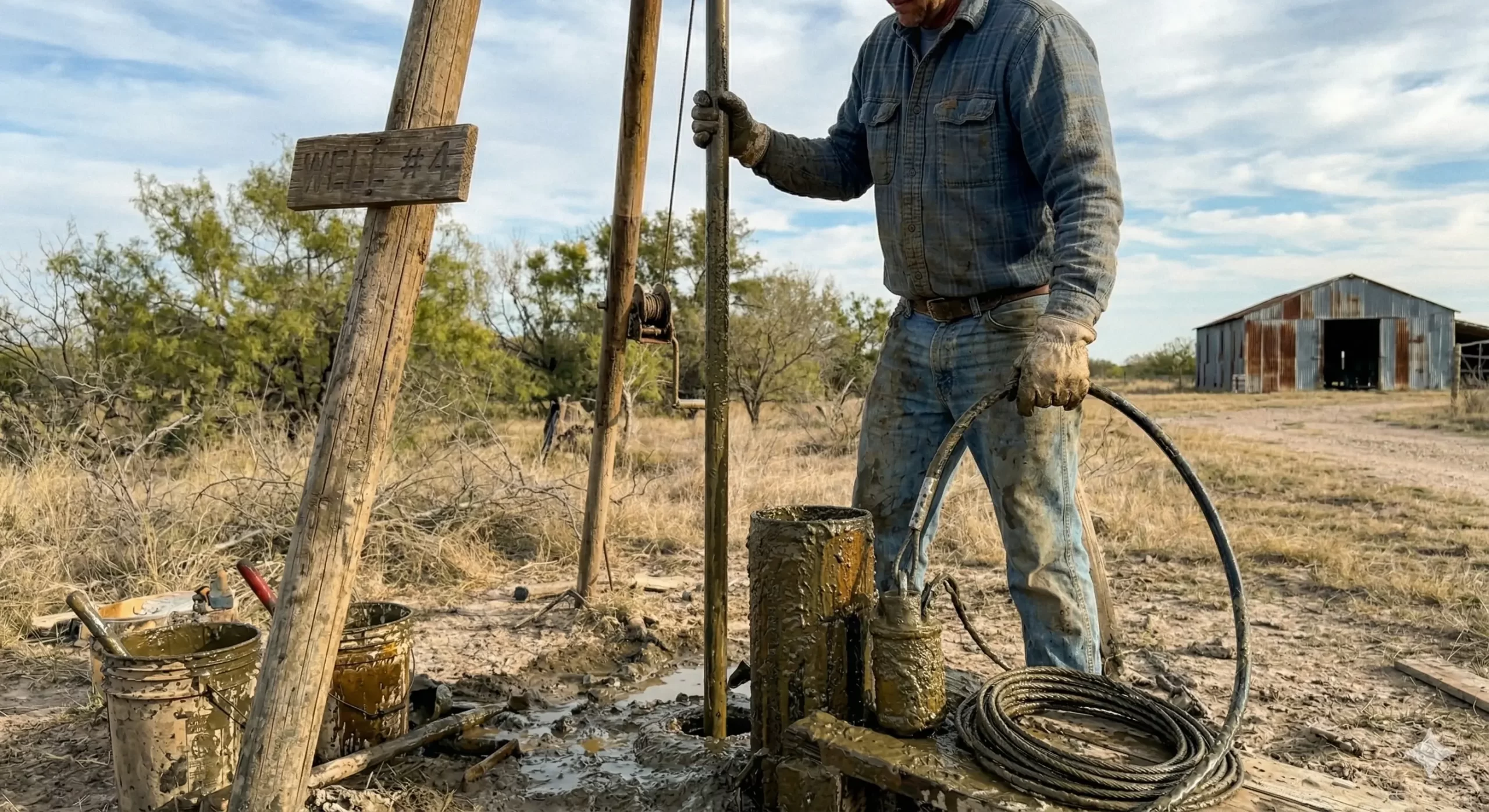
Well Pump Repair in
Sealy
Sealy & Austin County Well Stats
Austin County features a diverse array of water wells, ranging from older, shallower domestic wells to deeper, high-capacity irrigation wells. The average well depth for domestic use typically falls between 200 and 500 feet, though some can be shallower or significantly deeper depending on the specific aquifer unit targeted and water demand. Many wells are cased with steel, though newer installations often utilize PVC. Water production rates vary, but most domestic wells provide sufficient flow for household needs, typically 5-15 gallons per minute (GPM).
Pulling a pump in Austin County, especially around Sealy, often means contending with the sticky, expansive clay soils of the Lissie Formation or Goliad Sand. These geological conditions can make a pump pull more difficult and time-consuming than in other parts of Texas. Caving boreholes and older well constructions that weren’t designed for easy service add complexity. Furthermore, many rural properties have limited or challenging access for the specialized well service rigs needed, which can increase labor time and overall costs.
A proper well pump repair or replacement requires significant specialized equipment. This includes a heavy-duty truck-mounted pump hoist or puller capable of safely lifting hundreds of feet of pipe, wire, and pump from the well. We also utilize specialized pump wrenches, pipe stands, electrical diagnostic tools for control boxes and wiring, and often, well cameras for internal inspections. This isn’t a job for a pickup truck and a chain; it demands purpose-built machinery and highly trained operators.
Spring Well Maintenance in Texas
Heavy spring rains can cause surface runoff to breach well caps. We strongly recommend testing your water for coliform bacteria and inspecting the sanitary seal.
Save $500+ on Replacements
Via the TX Energy Co-op VFD Upgrade Program
76°F in Sealy
Local Aquifers & Geology
The primary groundwater sources in Sealy include the The Gulf Coast Aquifer System, specifically its Chicot and Jasper units. The Chicot (also known as the Evangeline aquifer in some areas) is typically the shallower source, providing water to many domestic wells. The Jasper aquifer lies beneath it and can offer a deeper, sometimes more consistent, water supply. Both are characterized by unconsolidated layers of sand, silt, and clay. Water quality can vary, but commonly exhibits elevated levels of iron, manganese, and hardness. The unconsolidated nature of these aquifers means sand intrusion into wells is a persistent concern if not properly managed during drilling and pump installation.. Drilling through the local The soil profile around Sealy in Austin County is predominantly characterized by deep, often poorly drained clay soils, typical of the Gulf Coast Prairie. Specific series like Lake Charles and Bernard clays are common, known for their high shrink-swell potential. These soils are dense, sticky when wet, and very hard when dry, making excavation challenging. Along the major waterways like the Brazos and San Bernard rivers, you’ll find alluvial deposits of loamy and sandy clays. The underlying geology, particularly the Lissie and Goliad formations, consists of interbedded clays, silts, and fine sands. means that average well depths range from 200 ft – 600 ft.
Due to these geological factors, local homeowners frequently struggle with Sand abrasion on pump impellers and motor burnout. The unconsolidated nature of the Chicot/Jasper aquifers means fine sand and silt can enter the well, causing significant wear on pump components. Coupled with low voltage issues common in rural areas or pumps running dry during droughts, motor burnout is a frequent and costly failure..
Drilling Depth Comparison
Deeper wells require heavy-duty crane hoists for pump extraction.
Climate & Water Quality
Pump systems in the Sealy area face severe environmental stressors. The most significant threat is Sealy’s humid subtropical climate presents several risks to well equipment. Prolonged summer heat significantly stresses submersible pump motors, especially if they are undersized or constantly running. Severe thunderstorms & hurricanes common in the region bring power surges and lightning strikes, which can instantly fry well control boxes and pump motors. While less frequent, hard freezes can burst exposed pipes, pressure tanks, and above-ground components. Additionally, extended droughts lower the water table, causing pumps to run dry, cavitate, and ultimately burn out if not monitored.
Additionally, the raw groundwater often presents issues with Hardness (from dissolved minerals), high iron & manganese (leading to staining & taste issues), hydrogen sulfide (rotten egg smell), and persistent sand or sediment..
Regional Groundwater Advisory
Known primary contaminant threat to submersible pumps and pipes in this area:
Common Area Systems
VFD Upgrade Savings
Constant Pressure vs StandardReplacing a standard single-speed pump with a Variable Frequency Drive (VFD) eliminates hard starts and drastically reduces energy draw in Texas.
Compliance & Local Permits
Austin County Level: Austin County falls under the jurisdiction of the Brazos Valley Groundwater Conservation District (BVGCD). Any new well construction or significant alteration (e.g., re-drilling, deepening) requires a permit from the BVGCD. While most domestic and livestock wells on tracts larger than 10 acres are exempt from permitting fees, they still require registration with the district. The BVGCD aims to manage and conserve groundwater resources, enforce well spacing rules to prevent over-pumping of adjacent wells, and ensure compliance with state well construction standards. All wells, regardless of exemption, must adhere to Texas Department of Licensing & Regulation (TDLR) well construction standards (16 TAC Chapter 76) for casing, grouting, and wellhead completion.
Top Pump Brands in Texas
Most frequently installed hardware based on local geology (2026 data).
- Electrical System Check: Verify voltage, amperage draw, wire integrity, & condition of control box components (capacitors, relays).
- Pressure Tank Inspection: Check air charge, bladder integrity, relief valve function, and overall condition for proper operation.
- Pump Performance Assessment: Measure discharge pressure, flow rate (GPM), and listen for unusual noises to detect cavitation or wear.
- Wellhead & Casing Integrity: Inspect well seal, casing condition, sanitary protection, and vent pipe for any breaches or damage.
- Water Quality Visual & Basic Test: Check for visible sand/sediment, unusual odors, & perform a basic mineral test if indicated.
- Leak & Connection Audit: Thoroughly inspect all visible plumbing, valves, and fittings for leaks, corrosion, or loose connections.
Premium Well Pump Brands We Service
Our licensed technicians in Sealy are certified to repair, replace, and install high-quality groundwater equipment from industry-leading manufacturers, including:
- Complete loss of water pressure or no water coming from any faucet.
- Water sputtering, spitting air, or inconsistent flow at fixtures.
- The pressure tank rapidly cycling on and off (short-cycling) or the pump running constantly.
- Sudden appearance of discolored water (muddy, rusty, or noticeably sandy).
- Unusual grinding, humming, or rattling noises emanating from the well area or pressure tank.
- An unexpected and significant increase in your electricity bill without a corresponding increase in water usage.
Sealy Real Estate Well Regulations
Local Dispatch & Response Times
Live Dispatch: Texas
Updated Just Now⚠️ High demand. Call now to secure the next available technician.
- For critical ‘no water’ emergencies in Sealy, we strive for same-day or next-morning response, depending on the time of your call and current service demand.
- Due to the rural nature of Austin County, travel time to specific properties can vary, affecting total response time.
- Initial diagnostics are often quicker, while extensive repairs like pump pulls & replacements require more time and specialized equipment.
- After-hours, weekend, and holiday emergency calls typically incur additional service fees.
- Availability of specific pump components or specialized parts, especially for older or less common systems, can sometimes extend the repair timeline beyond the initial service call.
⚠️ Austin County & State Regulatory Warning: Abandoned Wells
The Cost of Ignoring Symptoms
Fixing a short-cycling pump early saves thousands in Sealy.
Data reflects average well contractor estimates in Sealy.
Pump Lifespan Estimator
Select household size in Sealy to see strain impact.
Groundwater Threat Level
Current aquifer and mineral impact on pumps in Sealy.
Dropping water tables cause pumps to suck air and overheat.
Hard water calcifies pump impellers, reducing lifespan.
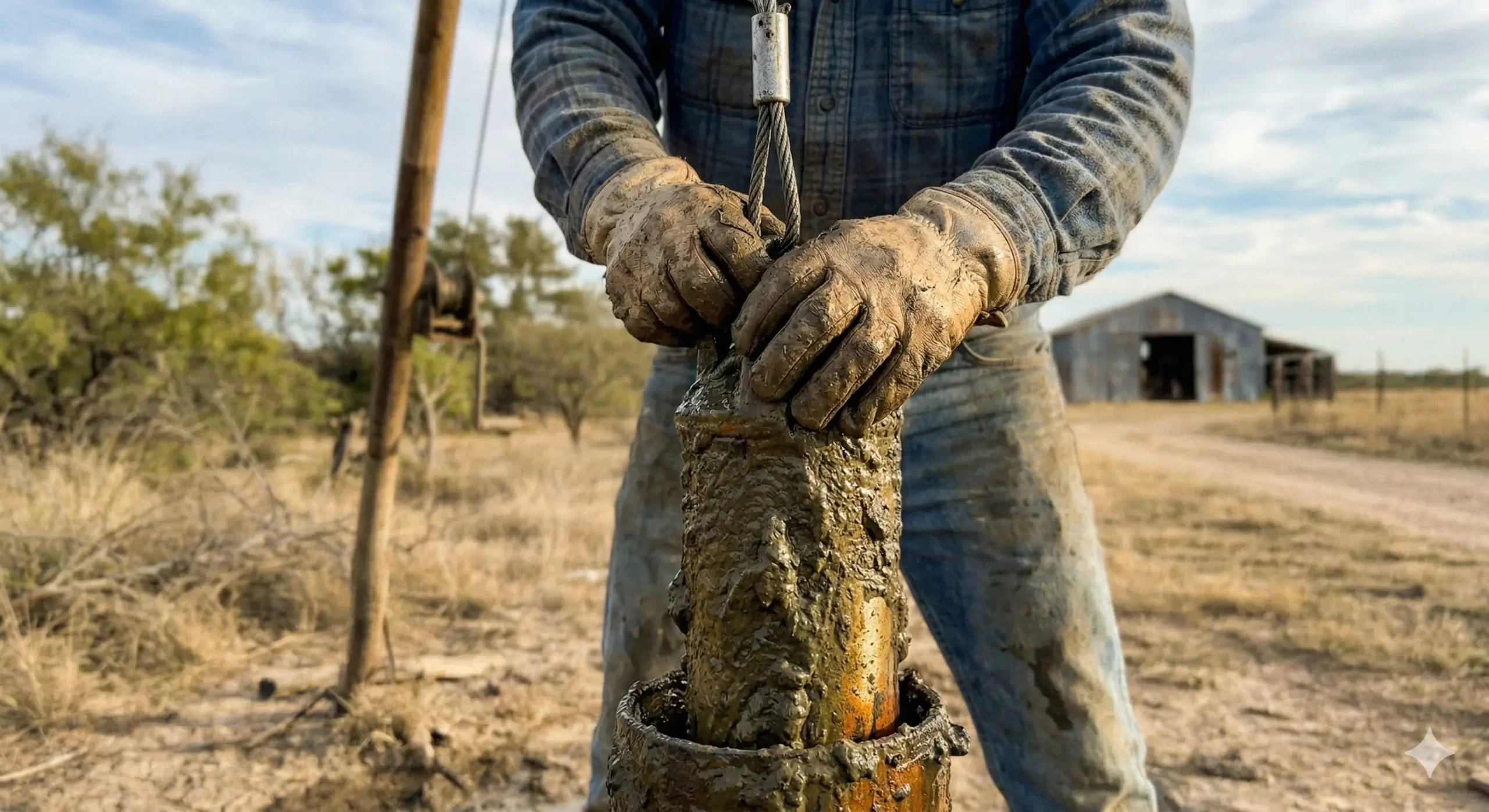
Local Sealy
Well Pros
Fast Local Service & Diagnostics
Calls are routed to a licensed local well professional.
Septic System Services in Sealy, TX
Do you have a septic tank on your property? Proper maintenance is critical to protecting your well water quality.
Sealy Homeowner Feedback
“Had a pump go out on a Saturday. Called ’em up, and they were out here by noon. Got us fixed right, no fuss. Good folk.”

Local Homeowner
✓ Verified TX
“Our well pump started acting real funny, sputtering water and then nothing. I figured the pump was shot, but the fella who came out really knew his stuff. Turns out it wasn’t the pump itself but a worn out check valve way down the line and some corroded wiring in the pressure switch box. He had all the parts on his truck and got it swapped out. Water’s been flowing strong ever since. Real professional and didn’t try to upsell me on a whole new pump like some other guys would’ve done. I’d use ’em again in a heartbeat for sure.”

Local Homeowner
✓ Verified TX
“Lost water in the middle of a heat wave. Called at 7 AM, and they had a tech here by 9. He worked quick and got us back up and running. Lifesavers when you’ve got livestock to water. Absolutely top-notch service when it mattered most.”

Local Homeowner
✓ Verified TX
Expert Sealy Well System FAQ
My well water in Sealy is sandy, especially after heavy rain. What’s causing this, and what can be done?
Sandy water is a very common complaint in Austin County, mainly due to the unconsolidated sands and silts of the Chicot & Jasper aquifers. Heavy rain can sometimes increase hydrostatic pressure, causing fine particles to shift and enter the well. The primary causes are often a poorly developed well, a compromised well screen (cracked or corroded), or the pump being set too low in the well, sucking up sediment from the bottom. We’d start by inspecting the well with a camera to check the screen and casing integrity. Depending on findings, solutions range from raising the pump, cleaning/redeveloping the well, installing a sand separator filter system at the wellhead, or in extreme cases, a new well screen or deeper casing might be required.
How often should I have my well system in Sealy inspected, and what does a typical maintenance visit include?
For peace of mind and to prevent costly breakdowns, we strongly recommend an annual inspection for most private well systems in our area. A typical maintenance visit includes checking your pressure tank’s air charge and bladder integrity, verifying the pump’s electrical draw (amps/volts) to ensure it’s operating efficiently, inspecting the wellhead for sanitary defects, testing your water pressure and flow rate, and a basic water quality check for obvious issues like sand or odors. We also look for any visible leaks, corrosion, or wear on pipes and fittings. Proactive maintenance helps catch small problems before they become major emergencies, especially with our area’s challenging water conditions.
With recent droughts and water restrictions in Texas, how does this affect my private well in Austin County, and what should I be doing?
Drought conditions significantly impact private wells by lowering the regional water table. For wells in Austin County, this means your pump has to work harder to draw water from a greater depth. You might notice reduced flow, longer pump run times, or even the pump cycling on and off if the water level drops too close to the pump intake. During a drought, we advise conserving water wherever possible, even with a private well. Monitor your well’s performance closely. If your pump starts running dry or short-cycling, it’s critical to call us immediately to avoid motor damage. We can assess your well’s static water level and advise on potential solutions, such as lowering the pump, if safe and feasible, or checking for sediment accumulation that might be restricting flow.
What are the main factors that determine the cost of a well pump repair or replacement in the Sealy area?
Several key factors influence the cost of well pump repair or replacement here in Sealy. First is the **depth of the well** – deeper wells mean more pipe, wire, and labor to pull and install. Second is the **type and horsepower of the pump**; a larger, more powerful pump costs more. Third, the **complexity of the issue**; a simple pressure switch replacement is far less than a full submersible pump/motor replacement. Fourth, **well construction**; older, poorly constructed wells or those with issues like caving formations can be more challenging and time-consuming to work on, increasing labor. Fifth, **site access**; difficult terrain or limited access for our pump rig adds time and effort. Finally, **material costs** (pipe, wire, fittings, control box components) and whether it’s an **emergency call** (after-hours/weekends) also play a significant role. We always provide a clear estimate after a thorough diagnosis.
Sealy Groundwater Expert AI
What are the specific groundwater regulations, average well depths, and the local conservation district for Sealy, Austin County?
Groundwater Regulations, Well Depths, and Conservation District for Residential Wells in Sealy, Austin County, TX (2026)
As a Senior Hydrogeologist and Local Groundwater Regulatory Expert for Texas, I can provide you with specific, up-to-date information regarding residential water wells in Sealy, Austin County, TX, as of 2026.
1. Local Groundwater Conservation District (GCD) for Sealy, Austin County
The local Groundwater Conservation District that has jurisdiction over Sealy and all of Austin County is the Fayette County Groundwater Conservation District (FCGCD). While its name might suggest otherwise, the FCGCD was established to cover both Fayette and Austin Counties.
- Fayette County Groundwater Conservation District (FCGCD)
- Website: https://fcgcd.org/ (Always refer to their official website for the most current rules and forms.)
The FCGCD is responsible for developing and implementing a management plan to conserve, preserve, protect, and recharge groundwater in its jurisdiction, and to prevent waste of groundwater. This includes regulating well spacing, production, and setting permitting requirements.
2. Specific Groundwater Regulations for Residential Wells in Sealy, Austin County
While the FCGCD regulates groundwater use, residential wells (often termed "exempt" wells) typically have different requirements than high-volume industrial or agricultural wells. However, specific state and local regulations still apply:
A. Fayette County Groundwater Conservation District (FCGCD) Regulations:
- Exempt Wells: Most residential wells in Austin County that are used solely for domestic purposes (household use, watering of livestock, or non-commercial lawn and garden irrigation) and do not exceed a pumping rate of 25,000 gallons per day are generally considered "exempt" from requiring an operating permit from the FCGCD.
- Drilling Permit Required: Even for exempt wells, the FCGCD typically requires a drilling permit to be obtained *before* any new well construction begins. This allows the GCD to track groundwater usage and ensure proper well spacing. You will need to contact the FCGCD directly to obtain the necessary application forms and understand their current fee structure.
- Well Spacing Rules: The FCGCD has rules regarding minimum distances between new wells and existing wells, as well as property lines. These rules are designed to prevent undue interference between wells and ensure equitable access to the groundwater resource. Refer to the FCGCD's adopted Rules and Management Plan on their website for precise setback distances.
- Well Plugging: If an old well is no longer in use, it must be properly plugged in accordance with FCGCD and TDLR rules to prevent contamination of the aquifer.
B. State Regulations (Texas Department of Licensing and Regulation - TDLR):
All water wells drilled in Texas, including residential wells in Sealy, must adhere to statewide regulations enforced by the Texas Department of Licensing and Regulation (TDLR). These regulations ensure proper well construction standards to protect groundwater quality.
- Licensed Drillers: All water wells must be drilled by a driller licensed by the TDLR, and pumps must be installed by a licensed pump installer. You can search for licensed professionals on the TDLR website.
- Notification and Reporting: Licensed drillers are required to notify TDLR before drilling commences and submit a "Water Well Driller's Report" (often called a 'well log') to TDLR and the Texas Water Development Board (TWDB) within 30 days after a well is completed or plugged. This report includes critical information such as well depth, casing details, and geological formations encountered.
- Construction Standards: TDLR rules dictate specific standards for well construction, including casing materials, cementing requirements, and sealing to prevent contamination. These standards are outlined in the Texas Water Well Drillers and Pump Installers Act and Rules (Texas Water Code Chapter 32 and 16 Texas Administrative Code Chapter 76).
- Setback Requirements: TDLR also has statewide setback requirements for water wells to protect them from potential contamination sources. For example, a new water well must typically be a minimum of:
- 50 feet from a property line.
- 50 feet from a septic system absorption field.
- 100 feet from a septic system tank.
- 150 feet from a feedlot, animal waste disposal system, or other known contamination sources.
- TDLR Website: https://www.tdlr.texas.gov/wwd/wwd.htm (For drillers, pump installers, rules, and forms.)
It is crucial to coordinate with both the FCGCD and a TDLR-licensed driller when planning a new residential well.
3. Average Well Depths for Residential Wells in Sealy, Austin County
Based on historical state well logs for the Sealy area, most residential water wells typically draw from the shallower units of the Gulf Coast Aquifer System. For a reliable and consistent water supply for residential use, average well depths in Sealy range from approximately 300 to 600 feet, with many wells often falling in the 400-500 foot range.
- Depth Variability: The exact depth can vary based on specific location within Sealy, the desired yield, and the preferred water quality. Some shallower wells exist, but deeper wells often provide more consistent supply and better water quality by penetrating into more confined units of the aquifer system.
You can investigate specific well depths for your immediate area by checking the Texas Water Development Board's (TWDB) Groundwater Data viewer, which archives well driller's reports:
- TWDB Groundwater Data: https://www.twdb.texas.gov/groundwater/data/gwddata.asp (Search by county, specific location, or even GPS coordinates to view nearby well logs.)
4. Specific Aquifer Beneath Sealy, Austin County
Sealy, Austin County, lies within the geological region underlain by the extensive Gulf Coast Aquifer System. For residential wells, the primary producing aquifer unit is typically the Jasper Aquifer, which is part of this larger system.
- Gulf Coast Aquifer System: This system consists of several hydraulically connected sand and clay units, including (from youngest/shallowest to oldest/deepest) the Chicot, Evangeline, and Jasper aquifers.
- Jasper Aquifer: The Jasper Aquifer is a significant source of groundwater in this region, characterized by interbedded sand, silt, and clay. It generally provides good quality water suitable for domestic use, often with lower salinity than shallower units.
Understanding these regulations and local conditions is crucial for the proper planning, permitting, and construction of a residential water well in Sealy, Austin County.
Fast Local Service & Diagnostics
Calls are routed to a licensed local well professional.
Blix
provides official
Emergency Well Pump Repair services for the
Sealy
area.