
Emergency Well Pump Repair in Los Fresnos, TX
Folks often don’t realize the harsh realities of groundwater here in the Lower Rio Grande Valley until their well pump gives out. We’re dealing with a dynamic system, heavily influenced by our geology and proximity to the coast. Salinity intrusion is a constant threat, and many wells pull from shallower, less protected zones that are prone to sediment and quality fluctuations. It ain’t like up in the Hill Country where you hit solid rock; down here, it’s mostly sand, silt, and clay.
Our local water comes predominantly from the Gulf Coast Aquifer system, which is a complex network of sands, silts, and clays. While the deeper Evangeline and Jasper aquifers provide better quality water further inland, many domestic wells in Los Fresnos draw from shallower, unconfined sections of the Chicot aquifer. This means your water source is often closer to the surface and more susceptible to local land use, runoff, and the ever-present fine sediments.
This unique geology is precisely why those cheap, big-box store pumps just don’t cut it down here. They’re not built for the constant abrasion from fine sand, the corrosive effects of mineral-rich water, or the continuous duty cycles required to keep up with household and irrigation demands. A pump that might last a decade up north could fail in a few years, or even months, if it’s not designed and installed correctly for our specific conditions. Always invest in quality; it pays off in the long run.
Fast Local Service & Diagnostics
Calls are routed to a licensed local well professional.
Well Pump Repair in
Los Fresnos
Los Fresnos & Cameron County Well Stats
Cameron County’s wells generally range from 150 to 500 feet deep for domestic use, with irrigation wells potentially going deeper. The water often exhibits high total dissolved solids (TDS), hardness, and can have elevated levels of iron, manganese, and occasional sulfur. Sand production is a common issue, leading to premature pump wear. The average static water level can fluctuate significantly depending on local rainfall and regional pumping demands.
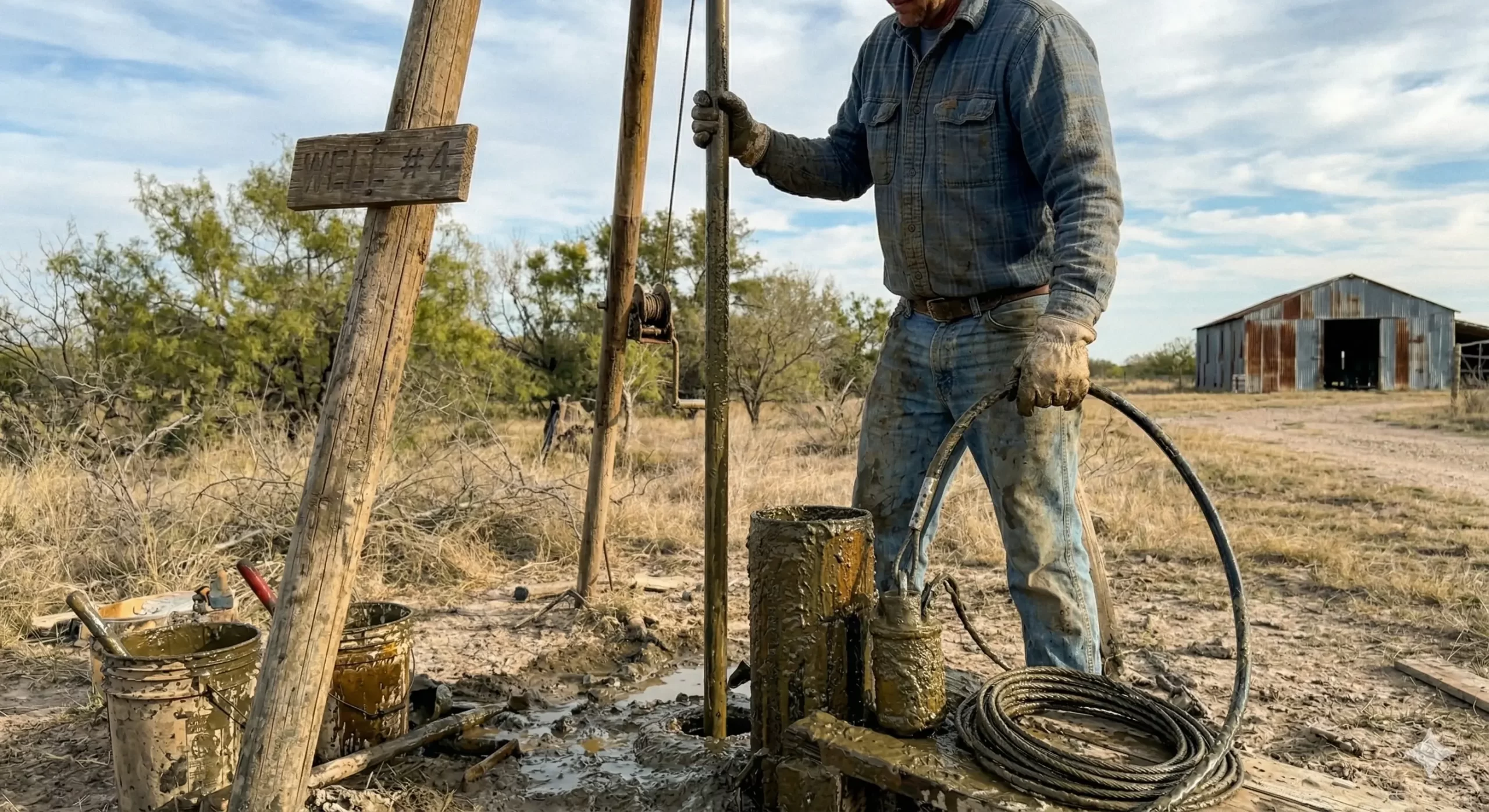
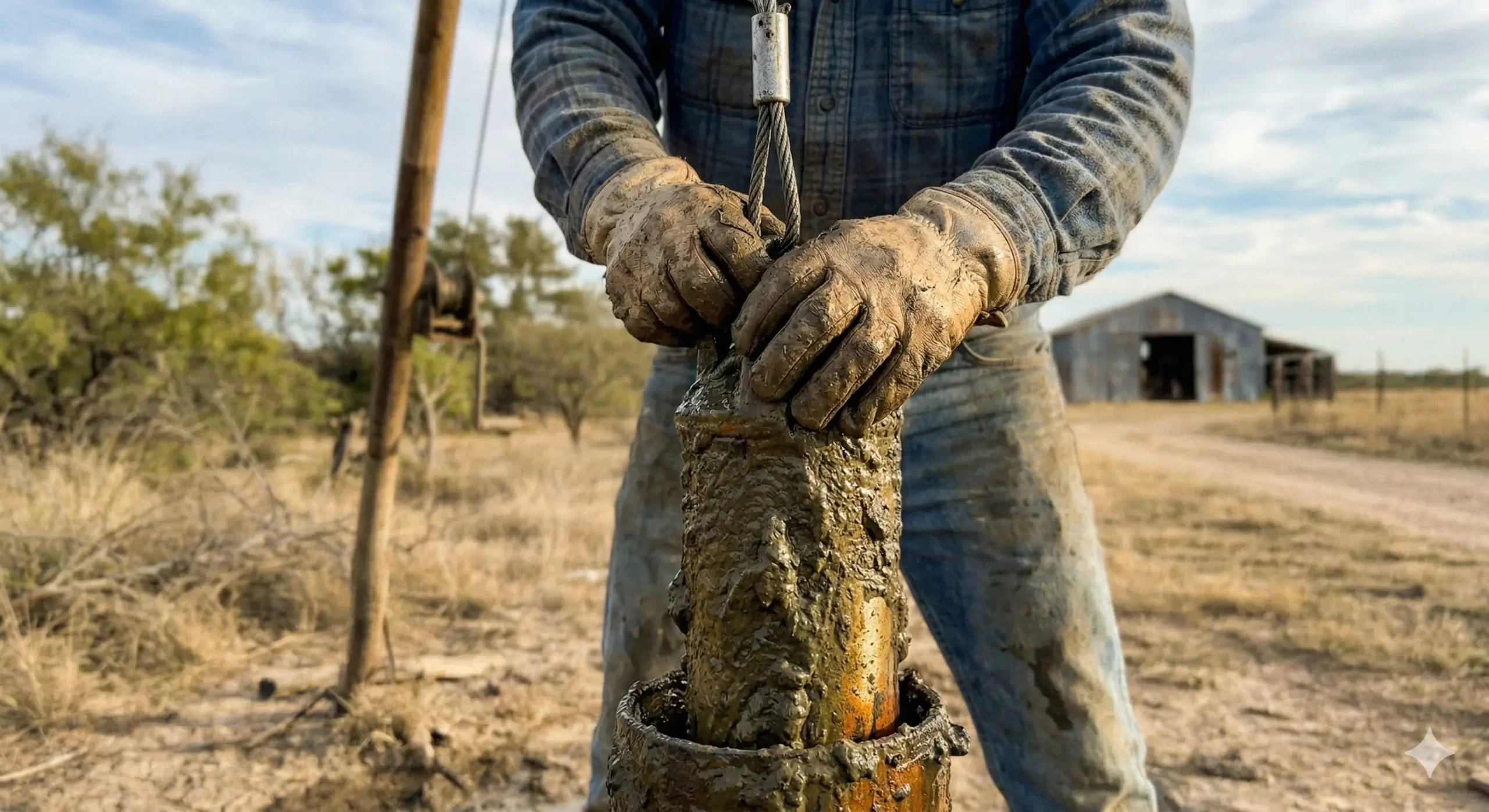
Pulling a pump in Los Fresnos presents its own set of challenges, though it’s rarely due to deep rock like in other parts of Texas. Here, we battle sticky, expansive clays and fine, unconsolidated sands that can make getting a pump out a real chore. Old, corroded steel casing can bind up a pump, and often, well sites are on rural properties with limited, muddy access, or surrounded by established landscaping or structures that complicate rig placement.
The necessary equipment for a proper well pump repair or replacement is substantial. We’re talking about heavy-duty pump hoists or full-blown well rigs capable of safely handling hundreds of feet of pipe and heavy submersible pumps. You’ll need specialized pipe wrenches, fusion splicers for submersible cables, robust generators for power on remote sites, and a variety of diagnostic tools. Sometimes, a backhoe is even required for trenching new water lines or replacing old pressure tanks.
Spring Well Maintenance in Texas
Heavy spring rains can cause surface runoff to breach well caps. We strongly recommend testing your water for coliform bacteria and inspecting the sanitary seal.
Save $500+ on Replacements
Via the TX Energy Co-op VFD Upgrade Program
80°F in Los Fresnos
Local Aquifers & Geology
The primary groundwater sources in Los Fresnos include the The primary source for most domestic wells in Los Fresnos is the Chicot Aquifer, which is the shallowest and youngest component of the greater Gulf Coast Aquifer System in this region. It’s composed primarily of unconsolidated to poorly consolidated sands, silts, and clays. While providing a readily accessible water source, the Chicot Aquifer in Cameron County is known for elevated salinity, high hardness, and a propensity for fine sand production, which directly impacts pump longevity and water quality.. Drilling through the local The soil profile in Los Fresnos and surrounding Cameron County is characterized by deep, fertile, clay loams, silty clays, and fine sandy loams. These are largely alluvial soils, deposited by the Rio Grande, and tend to be poorly drained with moderate to high shrink-swell potential. This means the ground can get incredibly soft and muddy after rain, posing challenges for well rig access, but also compacts tightly, which can affect well casing stability over time. means that average well depths range from 150 ft – 400 ft (domestic & light irrigation).
Due to these geological factors, local homeowners frequently struggle with The #1 mechanical failure for pumps here is sediment abrasion. Fine sand and silt, common in the local aquifer, acts like sandpaper on impellers, diffusers, and motor seals, leading to reduced efficiency and eventual pump failure. This is often exacerbated by improper pump sizing or poor well screen design..
Drilling Depth Comparison
Deeper wells require heavy-duty crane hoists for pump extraction.
Climate & Water Quality
Pump systems in the Los Fresnos area face severe environmental stressors. The most significant threat is Our specific local weather, especially the extreme heat and the occasional tropical storm or hurricane, wreaks havoc on well equipment. Prolonged high temperatures can overheat control boxes, pressure switches, and even the submersible motors themselves if they’re not adequately cooled by water flow. Power surges from lightning strikes during thunderstorms or grid fluctuations after hurricanes can instantly fry motor controls and electrical components. While infrequent, hard freezes can also burst exposed pipes and damage pressure tanks if not properly insulated.
Additionally, the raw groundwater often presents issues with High hardness (leading to scale buildup), significant iron (staining and taste issues), and prevalent sand/silt are the most common water quality problems faced by well owners in Los Fresnos. Occasional sulfur odors can also be detected, indicating anaerobic bacterial activity..
Regional Groundwater Advisory
Known primary contaminant threat to submersible pumps and pipes in this area:
Common Area Systems
VFD Upgrade Savings
Constant Pressure vs StandardReplacing a standard single-speed pump with a Variable Frequency Drive (VFD) eliminates hard starts and drastically reduces energy draw in Texas.
Compliance & Local Permits
Cameron County Level: Currently, Cameron County, including Los Fresnos, does not have an active local Groundwater Conservation District (GCD) with specific permitting authority for private domestic water wells. This means that while state regulations from the Texas Department of Licensing & Regulation (TDLR) and the Texas Commission on Environmental Quality (TCEQ) apply to well construction and driller licensing, there aren’t additional, localized permitting requirements for new or repaired domestic wells from a GCD. However, any new well must still be registered with the TDLR, and adherence to state well construction standards, including casing and grouting, is mandatory for licensed drillers. It’s always wise to check with the County Clerk’s office for any potential local ordinances regarding well placement or septic system proximity.
Top Pump Brands in Texas
Most frequently installed hardware based on local geology (2026 data).
- Perform full electrical diagnostic: check voltage at control box & motor, verify amp draw against specifications, inspect all wiring for corrosion or damage.
- Test and calibrate pressure switch; inspect contacts for pitting or burning, ensure correct cut-in/cut-out pressures.
- Check pressure tank pre-charge (air pressure) and integrity of the bladder; test for waterlogging.
- Visually inspect well casing for signs of corrosion, holes, or damage above ground; note any concerns about well head integrity.
- Collect a water sample for visual inspection of clarity, sediment content, and initial assessment of any noticeable odors (sulfur, iron).
- Examine all plumbing connections, valves, and exposed piping for leaks or signs of wear, especially near the well head and pressure tank.
Premium Well Pump Brands We Service
Our licensed technicians in Los Fresnos are certified to repair, replace, and install high-quality groundwater equipment from industry-leading manufacturers, including:
- No water at all, or significantly reduced flow/pressure from all faucets.
- Pump runs continuously, cycles on and off too frequently, or only runs for very short periods.
- Water appears cloudy, rusty, or contains visible sand, silt, or debris.
- Strange noises coming from the well head, pressure tank area, or inside the well itself (grinding, humming, clicking).
- Noticeable increase in your electricity bill without a change in water usage.
- Water tastes metallic, earthy, or has an unusual smell (e.g., rotten eggs from sulfur).
Los Fresnos Real Estate Well Regulations
Local Dispatch & Response Times
Live Dispatch: Texas
Updated Just Now⚠️ High demand. Call now to secure the next available technician.
- Our emergency response is prioritized for ‘no water’ situations, especially for homes with critical needs like livestock or medical equipment.
- Geographic distance and current weather conditions (e.g., heavy rain making rural roads impassable) are the primary factors affecting response time.
- Typically, we aim for dispatch within 1-2 hours of an emergency call during business hours, and as quickly as possible outside of those hours for critical issues.
- On-site arrival in Los Fresnos for an emergency is usually within 2-4 hours, assuming no other critical calls are ahead and weather permits safe travel.
- Our goal is to diagnose the problem and provide at least a temporary fix or a clear plan for repair within the first few hours of arrival, often restoring water service the same day.
⚠️ Cameron County & State Regulatory Warning: Abandoned Wells
Pump Lifespan Estimator
Select household size in Los Fresnos to see strain impact.
Groundwater Threat Level
Current aquifer and mineral impact on pumps in Los Fresnos.
Dropping water tables cause pumps to suck air and overheat.
Hard water calcifies pump impellers, reducing lifespan.
The Cost of Ignoring Symptoms
Fixing a short-cycling pump early saves thousands in Los Fresnos.
Data reflects average well contractor estimates in Los Fresnos.
Local Los Fresnos
Well Pros
Fast Local Service & Diagnostics
Calls are routed to a licensed local well professional.
Septic System Services in Los Fresnos, TX
Do you have a septic tank on your property? Proper maintenance is critical to protecting your well water quality.
Los Fresnos Homeowner Feedback
“These fellas know wells. My old pump died and they had a new one in faster than I thought possible. Good honest work, didn’t try to pull a fast one. Much obliged.”

Local Homeowner
✓ Verified TX
“My old pump was acting real funny, kept cutting out and making this grinding noise. Thought I was gonna have to drill a new well. But ole’ Billy came out, pulled the pump, and showed me how the impellers were just worn plumb out from all the sand. Replaced it with a heavy-duty submersible, and now my water pressure is better than ever. Even helped me with a few tips on my irrigation system. Really knows his stuff, didn’t try to upsell me on anything I didn’t need. My watter is clear as a bell now. Thanks!”

Local Homeowner
✓ Verified TX
“Lost water on a Sunday morning, and with all our cattle, that’s an emergency. Called these guys, and they were out here by noon, ready to work. Diagnosed a bad pressure switch and a failing pump motor. Had us up and running with a new setup before supper. Lifesavers, pure and simple. Highly recommend for any well issues, especially when time is of the essence.”

Local Homeowner
✓ Verified TX
Expert Los Fresnos Well System FAQ
My well water in Los Fresnos has a lot of sand, what’s causing it & what can be done?
Sand in your well water is a common complaint here in Los Fresnos, primarily due to the unconsolidated sandy and silty nature of our local Chicot Aquifer. Causes can range from a poorly designed or damaged well screen, a pump that’s too powerful for the well (oversized), or simply the natural characteristics of the geological formation from which you’re drawing water. When a pump pulls water too aggressively, it can draw fine sediment through the well screen. To address this, we first inspect the well for casing and screen integrity. Solutions can include installing a proper sand separator, which removes sediment before it enters your home, or in more severe cases, adjusting the pump’s depth, flow rate, or even replacing the pump with one better suited for sandy conditions, perhaps with sand-handling capabilities. Sometimes, a well rehabilitation process can improve the situation by cleaning out accumulated sand and improving the well’s efficiency.
Is the well water in Los Fresnos safe to drink, or should I be worried about contaminants?
While many well owners in Los Fresnos safely drink their well water, it’s always prudent to be aware of potential contaminants specific to our region. Common concerns include bacterial contamination (especially coliforms, which can indicate surface water intrusion), nitrates from agricultural runoff, elevated salinity due to our coastal proximity and aquifer characteristics, and sometimes heavy metals like iron and manganese, which, while not always a health risk, can affect taste and cause staining. Given the shallower nature of many local wells, proximity to septic systems or agricultural operations can also pose risks. The only way to truly know if your water is safe is to have it tested regularly by a certified lab. We recommend annual testing for bacteria and nitrates, and a comprehensive mineral analysis every few years, especially if you notice changes in taste, odor, or appearance. Treatment options are available for most issues, from UV purification for bacteria to reverse osmosis for salinity and specialized filters for minerals.
What’s the typical lifespan of a well pump in Los Fresnos with our local conditions?
The typical lifespan of a well pump in Los Fresnos can vary significantly based on the pump’s quality, the specific water conditions, and how well the system is maintained. For a high-quality submersible pump (like a Grundfos or Goulds) properly sized and installed in ideal conditions, you might expect 10-15 years, sometimes more. However, with our local challenges—predominantly high sand content, hard water, and often corrosive conditions—that lifespan can be shortened. Pumps constantly grinding on sand will wear out impellers and seals much faster. Scale buildup from hard water can also reduce efficiency and put strain on the motor. We often see pumps needing replacement within 5-8 years due to these factors. Regular maintenance, proper filtration (like sand separators), and correctly sizing the pump for your well’s yield can help maximize its longevity.
I’m buying property in Los Fresnos with an old well. What should I check before closing?
When buying property in Los Fresnos with an existing well, a thorough inspection is crucial to avoid future headaches and unexpected costs. First, demand a comprehensive well inspection from a licensed professional, including a detailed evaluation of the pump (submersible or jet), pressure tank, well casing integrity, and all electrical components. Second, request a flow test to determine the well’s sustained yield – how many gallons per minute it can consistently produce, which is vital for irrigation or larger households. Third, arrange for professional water quality testing. At a minimum, test for coliform bacteria, nitrates, and salinity, but a full mineral analysis is highly recommended given our local water quality issues. Fourth, ask for any existing well logs or maintenance records; these provide invaluable historical data about the well’s construction and past issues. Finally, ensure the well meets current TDLR well construction standards, particularly regarding well head protection and separation from potential contamination sources. Don’t rely solely on the seller’s disclosure; independent verification is your best defense.
Los Fresnos Groundwater Expert AI
What are the specific groundwater regulations, average well depths, and the local conservation district for Los Fresnos, Cameron County?
Groundwater Regulations and Information for Residential Wells in Los Fresnos, Cameron County, TX (2026)
As a Senior Hydrogeologist and Local Groundwater Regulatory Expert for Texas, I can provide you with specific and hard data regarding residential water wells in Los Fresnos, Cameron County, for the year 2026. It's important to understand the regulatory landscape unique to this area.
Local Groundwater Conservation District (GCD)
First and foremost, it is critical to note that as of 2026, Cameron County is NOT located within the jurisdiction of a Groundwater Conservation District (GCD). This means that while Texas Water Code Chapter 36 establishes GCDs as the preferred method for local groundwater management, there is no local district authority directly regulating groundwater withdrawals or well permitting in Los Fresnos beyond state-level requirements for drilling and construction.
Therefore, the primary regulatory oversight for water well drilling and construction in Los Fresnos falls under state agencies, primarily the Texas Department of Licensing and Regulation (TDLR).
Specific Groundwater Regulations and Regulatory Bodies
Without a local GCD, the following state regulations and bodies govern residential water wells:
- Texas Department of Licensing and Regulation (TDLR): This is the primary state agency responsible for the licensing of water well drillers and pump installers, and for establishing minimum standards for well construction, completion, and abandonment.
- Texas Water Code Chapter 32: This chapter governs the licensing and regulation of water well drillers and pump installers in Texas.
- 16 Texas Administrative Code Chapter 76 (16 TAC Chapter 76): These are the detailed rules adopted by TDLR, specifying requirements for well drilling, casing, cementing, disinfection, reporting, and setbacks. All licensed drillers must adhere to these standards.
- Well Registration/Reporting: Any new water well drilled must be reported to the TDLR by the licensed driller. The driller submits a "Water Well Driller's Report" (TDLR Form 011WW) to both the well owner and the TDLR, which is then forwarded to the Texas Water Development Board (TWDB). This report details well depth, casing, geology, and yield.
- Texas Commission on Environmental Quality (TCEQ): While TDLR handles drilling and construction, the TCEQ has authority over groundwater quality protection, particularly concerning potential contamination sources. For individual residential wells, it typically applies indirectly through regulations on septic systems (On-Site Sewage Facilities) or other potential contaminant sources.
Key Setback Requirements (from 16 TAC Chapter 76):
For residential water wells, specific setback distances from potential contamination sources are mandated:
- At least 50 feet from a septic tank or collection/distribution box.
- At least 100 feet from a septic system drain field, absorption bed, or spray area.
- At least 5 feet from a property line (unless specific agreements or easements are in place).
- Greater distances (often 150 feet or more) are required from certain contaminant sources such as animal feedlots, waste disposal sites, or chemical storage facilities, depending on the nature of the potential contaminant.
Average Well Depths for Los Fresnos
Based on historical state well logs from the Texas Water Development Board (TWDB) and TDLR, residential water wells in the Los Fresnos area of Cameron County typically tap into the shallower portions of the Gulf Coast Aquifer System. For reliable domestic supply and reasonable water quality, average well depths generally range from 150 to 300 feet. Some wells may be shallower (under 100 feet), but these can be more susceptible to drought impacts and surficial contamination. Deeper wells (300-500 feet) may be drilled for higher yields or to access specific zones within the aquifer with better water quality, but for a typical residential well, the 150-300 ft range is a robust estimate.
Specific Aquifer Beneath Los Fresnos
Los Fresnos, Cameron County, is situated over the Gulf Coast Aquifer System. This extensive aquifer system consists of a thick sequence of sands, silts, clays, and gravels. Specifically, residential wells in the Los Fresnos area most commonly draw water from the shallow to intermediate units of the Gulf Coast Aquifer, which include the **Chicot and Evangeline Aquifers**. These are productive sandy zones within the larger system.
Official Resources and Forms
Here are some realistic URLs to official resources for further information:
- TDLR Water Well Driller Program: For general information on regulations and licensing.
https://www.tdlr.texas.gov/wwd/wwd.htm - Search for a Licensed Water Well Driller: Essential for finding a qualified professional.
https://www.tdlr.texas.gov/LicenseSearch/ - TDLR Water Well Driller's Report Viewer: To view historical well logs (TDLR Form 011WW) which can provide insight into local geology and well depths.
https://www.tdlr.texas.gov/LicenseSearch/wwdisp.asp - Texas Water Code Chapter 32 (Water Well Drillers):
https://statutes.capitol.texas.gov/Docs/WA/htm/WA.32.htm - 16 Texas Administrative Code Chapter 76 (Water Well Drillers and Pump Installers Rules):
https://texreg.sos.state.tx.us/public/readtac$ext.ViewTAC?tac_view=5&ti=16&pt=4&ch=76 - TWDB Gulf Coast Aquifer Information: For detailed hydrogeological data on the aquifer system.
https://www.twdb.texas.gov/groundwater/aquifer/GCoast.asp
Given the absence of a local GCD in Cameron County, it is paramount to engage a TDLR-licensed water well driller who is intimately familiar with the specific geological conditions and regulatory requirements for drilling residential wells in the Los Fresnos area. They will be responsible for ensuring your well meets all state construction standards and reporting requirements.
Fast Local Service & Diagnostics
Calls are routed to a licensed local well professional.
Blix
provides official
Emergency Well Pump Repair services for the
Los Fresnos
area.