
Emergency Well Pump Repair in Port Isabel, TX
Folks down here in Port Isabel know a thing or two about harsh realities, and groundwater is no exception. Between the salty air, sandy soil, and the constant threat of saltwater intrusion from the Gulf, your well pump systems face extreme stress year-round. It ain’t like the inland areas where you just drill deep and hit clean water; here, every well is a delicate balance.
The primary aquifer system serving this area is the Gulf Coast Aquifer. While it’s vast, near the coast, we’re often drawing from shallow, unconfined sands that are highly susceptible to contamination and changes in the water table. This means even a good well can turn bad in a hurry if not properly managed or if the pump isn’t suited for these conditions.
That’s why those cheap pumps and DIY fixes rarely last long around here. They just can’t handle the high mineral content, the grit of the sand, or the corrosive salty air. You need a system built to withstand coastal Texas, and more importantly, installed and serviced by someone who understands these unique challenges.
Fast Local Service & Diagnostics
Calls are routed to a licensed local well professional.
Well Pump Repair in
Port Isabel
Port Isabel & Cameron County Well Stats
Cameron County data shows a significant number of shallow domestic wells, particularly on the barrier islands and coastal areas. Water levels in these shallow wells are highly influenced by rainfall and tidal fluctuations. Data also indicates a higher incidence of total dissolved solids (TDS) and chloride contamination in wells closer to the coast, necessitating careful monitoring and often specialized filtration for potable use. Many agricultural wells are deeper, targeting more stable freshwater lenses.
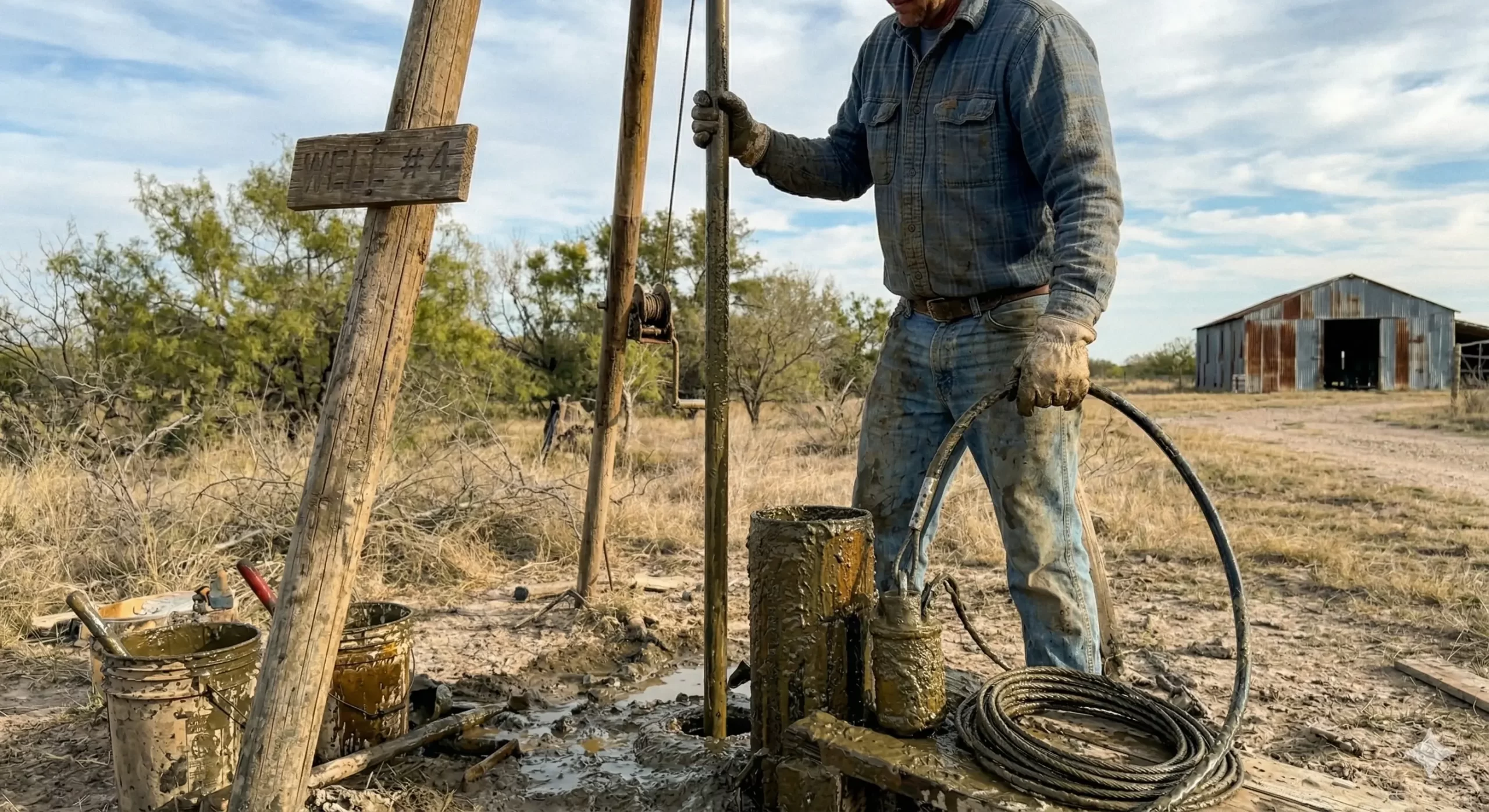
Pulling a pump in Port Isabel carries its own set of challenges that directly impact costs. While we don’t typically hit deep rock formations like in Central Texas, the sandy formations are unstable and prone to collapsing, making casing repair or replacement a common issue. Furthermore, many older wells here are in tight spots on properties, sometimes even under structures, making rig access a real headache.
We’re often dealing with highly corroded wellheads and piping due to the salt air, which means more time and specialized cutting equipment. You also have to factor in the logistics of working on a barrier island, sometimes requiring longer travel times and specific permits for equipment transport. All this adds up to needing robust, well-maintained pump pulling rigs and a crew that knows how to handle coastal conditions.
Spring Well Maintenance in Texas
Heavy spring rains can cause surface runoff to breach well caps. We strongly recommend testing your water for coliform bacteria and inspecting the sanitary seal.
Save $500+ on Replacements
Via the TX Energy Co-op VFD Upgrade Program
80°F in Port Isabel
Local Aquifers & Geology
The primary groundwater sources in Port Isabel include the The primary water source here is the Chicot Aquifer, which is part of the larger Gulf Coast Aquifer system. It consists mainly of sand, silt, and clay layers. Near Port Isabel, the Chicot is relatively shallow and unconfined, making it highly vulnerable to saltwater intrusion from the Gulf of Mexico. This leads to elevated chloride and TDS levels, especially during drought conditions or excessive pumping. Freshwater lenses are often thin and require careful management.. Drilling through the local The dominant soil profiles in and around Port Isabel are composed of very fine sandy loam, loamy sand, and sandy clay loam. These are typical coastal plain and barrier island soils, characterized by high sand content, poor drainage in some areas due to shallow water tables, and susceptibility to erosion. Permeability is generally high, allowing for rapid infiltration but also making groundwater sources vulnerable to surface contamination and saltwater intrusion. means that average well depths range from 80 ft – 250 ft (for domestic wells).
Due to these geological factors, local homeowners frequently struggle with Saltwater intrusion & sand abrasion on pump impellers..
Drilling Depth Comparison
Deeper wells require heavy-duty crane hoists for pump extraction.
Climate & Water Quality
Pump systems in the Port Isabel area face severe environmental stressors. The most significant threat is The high humidity and omnipresent salt spray from the Gulf of Mexico wreak havoc on all above-ground well components, leading to rapid corrosion of metal wellheads, pressure tanks, and electrical conduits. Hurricanes and tropical storms bring storm surges and heavy rainfall, causing well inundation, electrical damage, and increased risk of bacterial contamination from compromised well seals or floodwaters.
Additionally, the raw groundwater often presents issues with High levels of chlorides (saltwater intrusion), hardness, and noticeable sand in the water are the most common complaints here. Iron staining is also prevalent due to anoxic conditions in some shallow formations..
Regional Groundwater Advisory
Known primary contaminant threat to submersible pumps and pipes in this area:
Common Area Systems
VFD Upgrade Savings
Constant Pressure vs StandardReplacing a standard single-speed pump with a Variable Frequency Drive (VFD) eliminates hard starts and drastically reduces energy draw in Texas.
Compliance & Local Permits
Cameron County Level: While Cameron County does not have a dedicated Groundwater Conservation District with its own permitting for private domestic wells, homeowners are still bound by state regulations enforced by the Texas Department of Licensing & Regulation (TDLR). New well construction or major alterations generally require a licensed well driller or pump installer to file a Notice of Intent to Drill and a Well Log and Completion Report with TDLR. Local city ordinances in Port Isabel itself may have requirements regarding setbacks or connections to public water systems, but for the well itself, it’s primarily TDLR and the state rules governing casing, grouting, and sealing to prevent contamination.
Top Pump Brands in Texas
Most frequently installed hardware based on local geology (2026 data).
- Verify power supply to pump & control box, checking breakers & wiring integrity.
- Test pump motor winding resistance and insulation for shorts or open circuits.
- Check pressure switch operation, cut-in/cut-out settings, & diaphragm condition.
- Inspect pressure tank for proper air charge (pre-charge) & bladder integrity.
- Measure system amp draw against manufacturer specifications to detect overload or worn pump components.
- Perform a thorough water quality analysis for sand, sediment, chloride, & iron content.
Premium Well Pump Brands We Service
Our licensed technicians in Port Isabel are certified to repair, replace, and install high-quality groundwater equipment from industry-leading manufacturers, including:
- No water coming out of the faucets.
- Low water pressure, especially when multiple fixtures are used.
- Pump constantly cycles on and off, even when no water is being used.
- Cloudy, sandy, or discolored water suddenly appearing.
- Loud, grinding, or humming noises coming from the wellhead or pressure tank area.
- Increased electric bills without changes in water usage.
Port Isabel Real Estate Well Regulations
Local Dispatch & Response Times
Live Dispatch: Texas
Updated Just Now⚠️ High demand. Call now to secure the next available technician.
- Our target response for no-water emergencies within Port Isabel is typically 2-4 hours, depending on current call volume & accessibility.
- For urgent but non-critical issues (low pressure, weird noises), we aim for same-day or next-day service.
- Severe weather conditions (hurricanes, flooding) will impact response times due to safety and access restrictions.
- We prioritize elderly & families with young children during widespread outages.
- Clients with maintenance contracts often receive priority dispatch.
⚠️ Cameron County & State Regulatory Warning: Abandoned Wells
Groundwater Threat Level
Current aquifer and mineral impact on pumps in Port Isabel.
Dropping water tables cause pumps to suck air and overheat.
Hard water calcifies pump impellers, reducing lifespan.
Pump Lifespan Estimator
Select household size in Port Isabel to see strain impact.
The Cost of Ignoring Symptoms
Fixing a short-cycling pump early saves thousands in Port Isabel.
Data reflects average well contractor estimates in Port Isabel.
Local Port Isabel
Well Pros
Fast Local Service & Diagnostics
Calls are routed to a licensed local well professional.
Septic System Services in Port Isabel, TX
Do you have a septic tank on your property? Proper maintenance is critical to protecting your well water quality.
Port Isabel Homeowner Feedback
“Had my old well pump quit on me last week. Called ’em up, and they were out here quick. Got me fixed right up without any fuss. Good honest folks.”

Local Homeowner
✓ Verified TX
“Our water flow was gettin’ weaker and weaker, then just stopped. Figured it was the pump after 15 years. Called these guys and they pulled the old submersible. Turns out the impellers were just chewed up with sand, and the casing had a small hole letting more silt in. They replaced the pump with a new Grundfos, put a proper screen on it, and even patched the casing. The water is clearer than it’s been in years, and the pressure is fantastic. Really appreciate the thorough job, the old pump would’ve just broke again if they hadn’t seen that casing issue. Great work, didn’t even try to upsale me on stuff I didn’t need.”

Local Homeowner
✓ Verified TX
“Woke up to no water, completely dry. Called them in a panic, and they had a tech out to Port Isabel within a couple hours. He diagnosed the problem fast, had the parts on the truck, and got us back up and running before lunch. Can’t beat that kind of emergency service, especially out here.”

Local Homeowner
✓ Verified TX
Expert Port Isabel Well System FAQ
How often should I test my well water for salt in Port Isabel?
Given Port Isabel’s proximity to the Gulf of Mexico and the constant threat of saltwater intrusion, we highly recommend annual testing for chlorides and total dissolved solids (TDS). If you notice any changes in taste, odor, or clarity, or if there’s been excessive local pumping or a significant drought, more frequent testing (quarterly) is advisable. Early detection of increasing salinity can help in managing your well’s usage and potentially prolonging its freshwater viability, sometimes by adjusting pumping depths or rates.
My pump seems to be sucking air or cavitating, what’s causing this near the coast?
Pump cavitation, or the sound of it ‘sucking air,’ is a common issue here and is often indicative of several problems. Near the coast, the most frequent culprits are a falling water table (possibly due to drought or increased demand), a clogged well screen reducing water intake, or excessive sand entering the well, which creates turbulence and damages pump components. It can also point to a leak in the drop pipe or well casing above the pump. Ignoring cavitation will rapidly destroy your pump’s impellers and motor, leading to complete system failure.
Is it worth it to install a Variable Frequency Drive (VFD) system on my well pump in Port Isabel?
For many homes and businesses in Port Isabel, a Variable Frequency Drive (VFD) system can be a significant upgrade. VFDs allow your pump to operate at variable speeds, precisely matching water demand, which can dramatically reduce energy consumption and extend the life of your pump by eliminating constant on/off cycling and reducing wear and tear. They also provide constant water pressure, even with multiple fixtures running. Given the higher electricity costs and the desire for pump longevity in our challenging coastal environment, the initial investment often pays for itself over time through energy savings and reduced repair frequency.
What are the common causes of corrosion in my well system components here?
Corrosion is a major headache for well systems in Port Isabel. The primary culprits are the high humidity and pervasive salt spray from the Gulf, which aggressively attack exposed metal components like pressure tanks, wellheads, electrical conduit, and even pump control boxes. Inside the well, aggressive water chemistry, including high chloride levels and naturally occurring iron, can accelerate corrosion of pump components, drop pipe, and well casing. Using stainless steel or specialized corrosion-resistant alloys for all system parts is not just a luxury here; it’s a necessity for longevity.
Port Isabel Groundwater Expert AI
What are the specific groundwater regulations, average well depths, and the local conservation district for Port Isabel, Cameron County?
As a Senior Hydrogeologist and a local groundwater regulatory expert for Texas, I can provide you with specific and up-to-date information regarding residential water wells in Port Isabel, Cameron County, for the year 2026.
Local Groundwater Conservation District (GCD)
The primary local regulatory authority for groundwater in Port Isabel and the rest of Cameron County is the Cameron County Groundwater Conservation District (CCGCD). Established to conserve, preserve, protect, and recharge the groundwater resources within its jurisdiction, the CCGCD has specific rules and permitting requirements that often supplement state regulations.
- Cameron County Groundwater Conservation District (CCGCD) Official Website: http://www.cameroncountygcd.org/ (Please note: As of my last update, this URL is commonly used. Always verify with a current search for the most up-to-date website.)
Specific Groundwater Regulations
Residential water wells in Port Isabel are subject to regulations at both the state and local levels:
State-Level Regulations (Texas Department of Licensing and Regulation - TDLR)
All water well drilling and plugging in Texas, including residential wells, is regulated by the Texas Department of Licensing and Regulation (TDLR).
- Well Driller Licensing: Only licensed water well drillers are permitted to construct a new well in Texas.
- Well Registration: All new wells, including residential wells, must be registered with TDLR by the licensed driller within 30 days of completion. A "Well Report" (also known as a "Driller's Log") is filed, which becomes part of the state's official groundwater database.
- Minimum Construction Standards: TDLR enforces specific construction standards to ensure well integrity and protect groundwater quality. This includes requirements for casing, cementing, and wellhead completion.
-
Setback Rules: State regulations mandate minimum distances for water wells from potential contamination sources. Key setbacks include:
- Property Line: Typically 50 feet.
- Septic System (Absorption Field): At least 50 feet.
- Septic System (Tank/Pump Tank): At least 50 feet.
- Feedlots/Waste Disposal Sites: 150 feet or more, depending on type.
These are general state minimums; local CCGCD rules may impose stricter setback requirements.
- Texas Water Code Chapter 32: This chapter outlines the regulations for water well drillers and pump installers.
- Texas Administrative Code, Title 16, Chapter 76: This chapter provides detailed rules for water well drillers and pump installers, including well construction standards and reporting requirements.
- TDLR Water Well Driller and Pump Installer Program Information: https://www.tdlr.texas.gov/wwp/wwp.htm
Local Regulations (Cameron County Groundwater Conservation District - CCGCD)
The CCGCD implements local rules and regulations that homeowners must adhere to in addition to state requirements. These typically include:
- Permitting: The CCGCD generally requires a permit for drilling new water wells, including residential wells, and for operating existing wells. This process involves submitting an application, potentially paying a fee, and adhering to district rules regarding spacing and production.
- Well Spacing Rules: The CCGCD will have rules regarding the minimum distance between new wells and existing wells, as well as property lines, to prevent excessive drawdown and protect the aquifer. These can vary based on the well's planned production rate.
- Production Limits: While less common for typical residential wells (which are usually low-volume), the CCGCD has the authority to regulate the amount of groundwater that can be pumped from wells to ensure the sustainable management of the aquifer.
- Water Quality Monitoring: The district may engage in water quality monitoring, especially in coastal areas like Port Isabel, to detect and manage issues such as saltwater intrusion.
- Reporting: Well owners may be required to report annual water usage to the CCGCD.
- CCGCD Rules: It is imperative to consult the official rules of the Cameron County GCD directly for the most precise and current requirements for residential wells. These rules are usually available on their official website or by contacting their office directly.
Average Well Depths in Port Isabel
Port Isabel, being a coastal community, is situated over the Gulf Coast Aquifer System, specifically tapping into the **Chicot and Evangeline aquifers**. These aquifers consist of interbedded sands, silts, and clays. Due to the proximity to the Gulf of Mexico, saltwater intrusion is a significant concern for shallower wells.
Based on historical state well logs and hydrogeological conditions in Port Isabel, a typical residential water well aiming for reliable, potable water will generally need to target sands that are sufficiently deep to avoid saline intrusion and surface contamination. While some very shallow, lower-quality wells may exist, a well designed for long-term domestic use in Port Isabel would typically have an average depth ranging from 275 to 325 feet. Wells tapping into the upper Chicot aquifer may be shallower, but deeper zones within the Chicot or even the upper Evangeline aquifer are often preferred for better water quality and sustained yield.
Specific Aquifer
The primary aquifer system beneath Port Isabel, Cameron County, is the Gulf Coast Aquifer System, with residential wells primarily drawing from the **Chicot Aquifer** and, less commonly for residential use, potentially the upper portions of the **Evangeline Aquifer** at greater depths.
Summary of Actions for a Prospective Well Owner:
- Contact the Cameron County GCD: Before any drilling begins, contact the Cameron County Groundwater Conservation District to understand their specific permitting requirements, spacing rules, and any fees for residential wells.
- Hire a Licensed Driller: Ensure you engage a Texas-licensed water well driller. You can verify their license through the TDLR website.
- Well Report (Driller's Log): The licensed driller will file the required Well Report with TDLR upon completion of your well.
I strongly recommend contacting both the TDLR and the Cameron County GCD directly for the most current forms, fees, and rules applicable to your specific property and well project.
Fast Local Service & Diagnostics
Calls are routed to a licensed local well professional.
Blix
provides official
Emergency Well Pump Repair services for the
Port Isabel
area.