
Emergency Well Pump Repair in Flower Mound, TX
Denton County, particularly Flower Mound, sits on some tricky geology. We’re not like East Texas with its shallow, sandy aquifers. Here, you’re often punching through limestone, shale, and even some harder rock formations. This means deeper wells, more wear on equipment, and higher costs when things go sideways. The water table isn’t as predictable as folks moving from out of state might expect, especially with urban sprawl affecting recharge.
Our primary water source often comes from the Paluxy or Glen Rose formations, part of the Trinity Aquifer system. These are confined aquifers, meaning the water is under pressure, but also means deeper drilling to reach the productive zones. It’s not a simple dirt hole; you’re dealing with fractured rock and sometimes isolated pockets of water. This makes well development & long-term performance a craft, not just a job.
Folks try to save a buck on pumps, but in these conditions, a cheap pump is a false economy. The motor windings aren’t built for the higher ambient temperatures found at greater depths, the impellers can’t handle the occasional sand or sediment, and the overall construction just doesn’t stand up to the constant stress of pulling water from hundreds of feet down through tight formations. You’ll replace it twice as often, costing more in the long run.
Fast Local Service & Diagnostics
Calls are routed to a licensed local well professional.
Well Pump Repair in
Flower Mound
Flower Mound & Denton County Well Stats
Denton County has a significant number of private domestic wells, particularly in the more rural and exurban areas like parts of Flower Mound. Depths typically range from 200 to 600 feet, with some going deeper, especially for older wells or those targeting specific formations. The groundwater quality is generally good, but localized issues with hardness, iron, and occasional sand are common. The average yield for domestic wells is usually sufficient, ranging from 5-20 gallons per minute, but this can vary greatly depending on the specific geology & well construction.
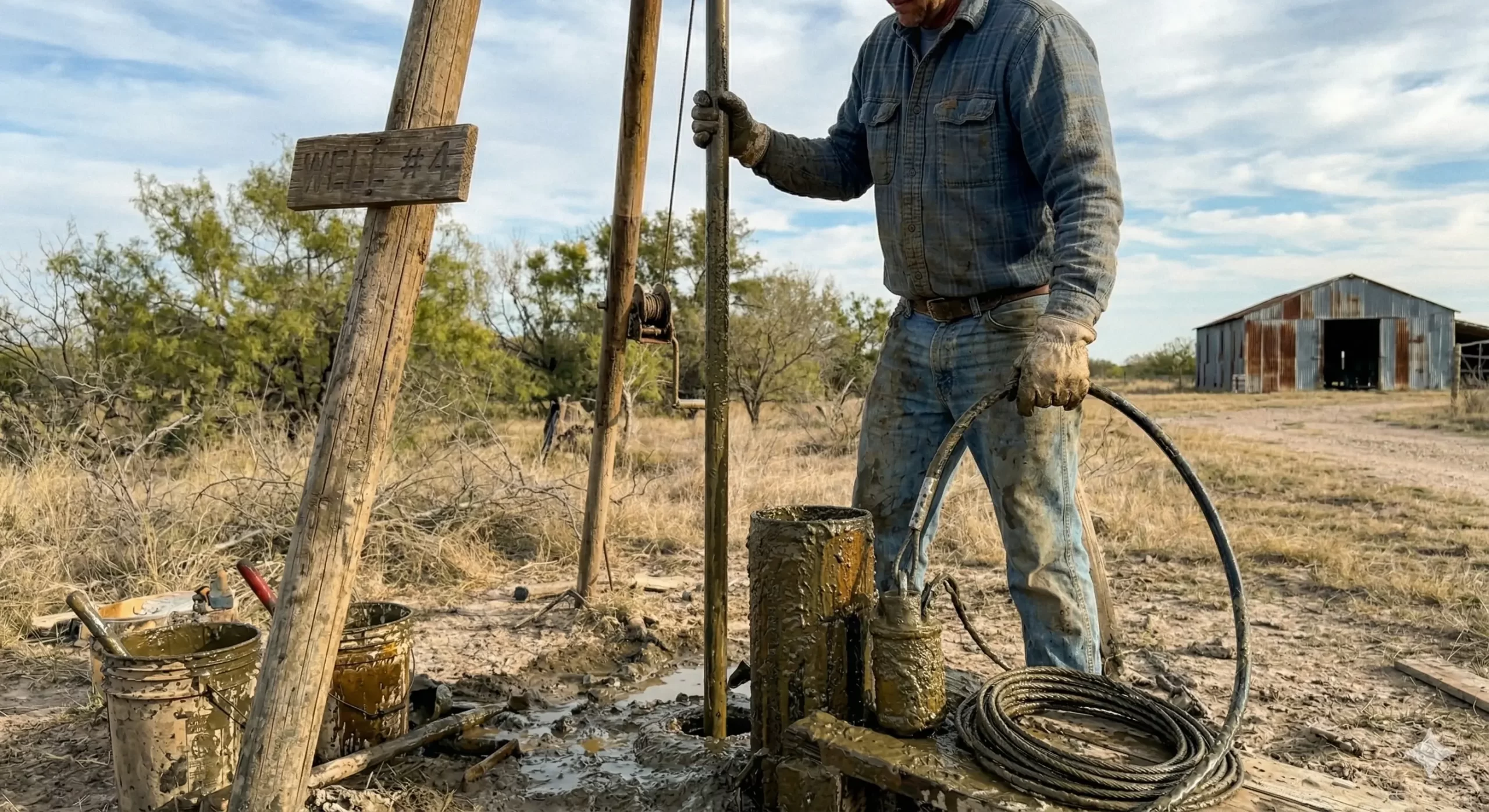
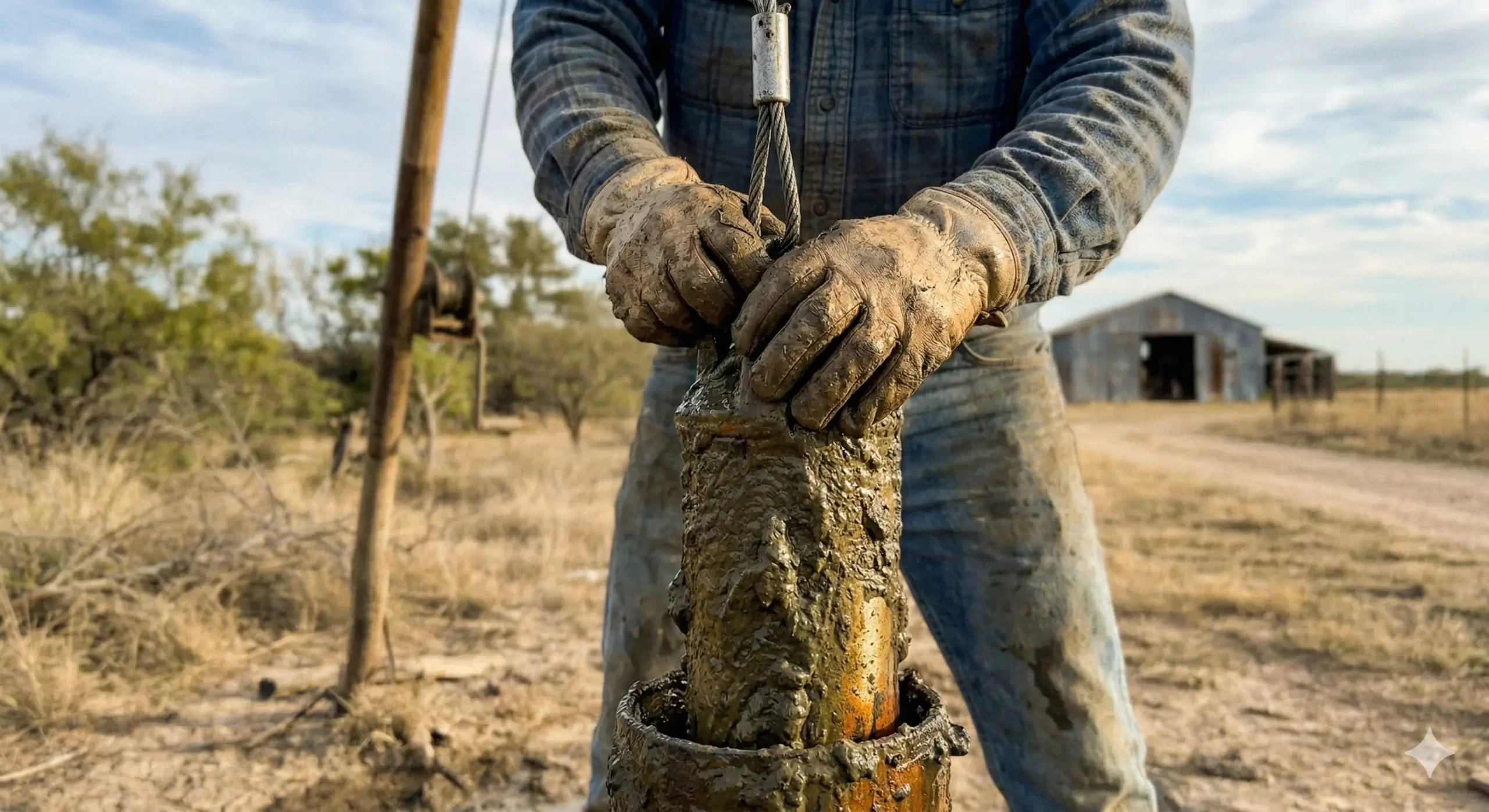
Pulling a pump in Flower Mound ain’t like pulling a rope out of a bucket. We’re talking hundreds of feet of steel or heavy PVC drop pipe, often through tight, rocky boreholes. Many of these wells are drilled into limestone and shale formations, which means the casing can be abrasive, and sometimes you hit a tight spot or a collapsed section that makes extraction a real bear. Access can be an issue too, with homeowners building fences or landscaping right up to the wellhead, requiring extra maneuvering for the service rig.
For these jobs, you need serious equipment: a dedicated well service rig with a boom & winch capable of lifting thousands of pounds, specialized pipe wrenches, heavy-duty safety equipment, and sometimes even a crane if access is particularly rough. It’s not a job for a pickup truck & a chain. The sheer weight and depth involved require a professional crew trained in safely handling these loads.
Spring Well Maintenance in Texas
Heavy spring rains can cause surface runoff to breach well caps. We strongly recommend testing your water for coliform bacteria and inspecting the sanitary seal.
Save $500+ on Replacements
Via the TX Energy Co-op VFD Upgrade Program
85°F in Flower Mound
Local Aquifers & Geology
The primary groundwater sources in Flower Mound include the The Paluxy Formation, part of the greater Trinity Aquifer system, is a primary water-bearing unit beneath Flower Mound. It’s a significant source for domestic and agricultural supply across North Texas. The Paluxy consists mainly of fine- to coarse-grained sandstones interbedded with shales and minor limestones. Water quality is generally good, but hardness can be an issue due to calcium carbonate content in the surrounding rock. Wells tapping into the Paluxy typically provide moderate yields and are often artesian or semi-artesian, meaning the water level can be relatively high in the borehole, sometimes even flowing to the surface in lower elevations, though this is less common now due to heavy pumping.. Drilling through the local Flower Mound sits primarily on Blackland Prairie soils, which are deep, dark, calcareous clays, specifically the Houston Black and Wilson series. These clays are highly expansive, meaning they swell significantly when wet and shrink when dry. Beneath these surface clays, you’ll encounter underlying Cretaceous limestones, shales, and sandstones from the Woodbine, Eagle Ford, and then the Paluxy/Glen Rose formations. The expansive clay can cause issues with surface well infrastructure, cracking concrete pads, and stressing buried lines, while the deeper rock formations require specialized drilling techniques. means that average well depths range from 250 ft – 550 ft, with some deeper for irrigation or older properties..
Due to these geological factors, local homeowners frequently struggle with Overheating submersible pump motors due to insufficient water flow (low water table or partially plugged screens) or continuous duty cycles without proper rest periods, leading to premature winding failure..
Drilling Depth Comparison
Deeper wells require heavy-duty crane hoists for pump extraction.
Climate & Water Quality
Pump systems in the Flower Mound area face severe environmental stressors. The most significant threat is The extreme heat of Texas summers puts immense stress on well systems. High ambient temperatures affect the cooling efficiency of submersible motors, which rely on the surrounding water to dissipate heat. When the water table drops in drought conditions, pumps can run dry or cycle excessively, exacerbating overheating. Additionally, the freeze-thaw cycles in winter, while less severe than northern states, can still crack exposed wellheads, pressure tanks, and above-ground plumbing if not properly insulated, leading to leaks & system pressure loss.
Additionally, the raw groundwater often presents issues with Hardness is almost universal due to the limestone geology, causing scale buildup in pipes & appliances. We also see elevated iron content in some areas, leading to staining and metallic tastes. Occasional sand or sediment, especially in older wells or those with deteriorating screens, can abrade pump impellers & motor components..
Regional Groundwater Advisory
Known primary contaminant threat to submersible pumps and pipes in this area:
Common Area Systems
VFD Upgrade Savings
Constant Pressure vs StandardReplacing a standard single-speed pump with a Variable Frequency Drive (VFD) eliminates hard starts and drastically reduces energy draw in Texas.
Compliance & Local Permits
Denton County Level: The Flower Mound area falls within the Upper Trinity Groundwater Conservation District (UTGCD). Any new well drilling, significant alteration, or plugging of an existing well typically requires a permit from the UTGCD *before* work begins. This includes a drilling permit application, well spacing requirements (to prevent interference with neighboring wells), and adherence to construction standards. They also require well registration for existing wells, even if no new drilling is occurring. The UTGCD aims to conserve, protect, & prevent waste of groundwater resources within its jurisdiction, so they’re pretty strict on adherence to rules about casing, grouting, and well location. Property owners need to be aware of these district regulations as much as state-level TDLR requirements.
Top Pump Brands in Texas
Most frequently installed hardware based on local geology (2026 data).
- Verify incoming power supply & circuit breaker status at the panel.
- Test pressure switch operation & settings (cut-in/cut-out).
- Check pressure tank air charge & diaphragm integrity.
- Perform amperage & voltage tests at the control box & wellhead.
- Conduct a draw-down test to assess well recovery rate & pump performance.
- Inspect visible piping, connections, & wiring for leaks or damage.
Premium Well Pump Brands We Service
Our licensed technicians in Flower Mound are certified to repair, replace, and install high-quality groundwater equipment from industry-leading manufacturers, including:
- No water at all, sudden loss of pressure.
- Pump constantly cycling on & off, even when no water is being used.
- Weak or fluctuating water pressure, especially during high demand.
- Discolored water, muddy water, or increased sediment in the water.
- Unusual noises coming from the wellhead or pressure tank area.
- Higher than normal electricity bills without increased water usage.
Flower Mound Real Estate Well Regulations
Local Dispatch & Response Times
Live Dispatch: Texas
Updated Just Now⚠️ High demand. Call now to secure the next available technician.
- Typically within 2-4 hours for complete water outages, depending on call volume & distance.
- We prioritize emergency calls, especially those affecting residential water supply.
- After-hours & weekend service available, though emergency rates apply.
- Our crews are strategically located to cover Denton County efficiently.
- We’ll give you an estimated arrival time & keep you updated if there are delays.
⚠️ Denton County & State Regulatory Warning: Abandoned Wells
The Cost of Ignoring Symptoms
Fixing a short-cycling pump early saves thousands in Flower Mound.
Data reflects average well contractor estimates in Flower Mound.
Pump Lifespan Estimator
Select household size in Flower Mound to see strain impact.
Groundwater Threat Level
Current aquifer and mineral impact on pumps in Flower Mound.
Dropping water tables cause pumps to suck air and overheat.
Hard water calcifies pump impellers, reducing lifespan.
Local Flower Mound
Well Pros
Fast Local Service & Diagnostics
Calls are routed to a licensed local well professional.
Septic System Services in Flower Mound, TX
Do you have a septic tank on your property? Proper maintenance is critical to protecting your well water quality.
Flower Mound Homeowner Feedback
“Had no water last Tuesday mornin’. Called these fellas up, and they were out quick. Fixed my well pump right up. Good honest work, didn’t try to upsell me. Highly recommend.”

Local Homeowner
✓ Verified TX
“My water pressure had been acting up for weeks, getting worse & worse until it was just a trickle. I called these guys after my neighbor recomended them, and they sent a tech out the same day. Turns out my pressure tank bladder was shot, and the pump was cycling like crazy, overheating itself. They replaced the tank and a faulty pressure switch, and also pulled the pump a bit to inspect it, cleaning some crud off the intake. The fella also noticed my well cap wasn’t properly sealed, so he fixed that too. Now I’ve got strong, steady pressure again. Real proffessionals, explained everything clear. Definitely saving their number.”

Local Homeowner
✓ Verified TX
“We woke up to no water, completely dry. With three kids, that’s an emergency! Called them, and they had a rig on-site within a few hours. Diagnosed a bad submersible pump motor and replaced it that same afternoon. Water back on by dinner. Super fast service when it mattered most. Thank you!”

Local Homeowner
✓ Verified TX
Expert Flower Mound Well System FAQ
How often should I have my well pump system inspected in Flower Mound, considering our local conditions?
Given the mineral content in our local Paluxy aquifer and the stress of Texas summers, I recommend a professional well system inspection every 2-3 years, or annually if your well is older than 15 years or if you notice any changes in water pressure or quality. This isn’t just about the pump; it includes checking your pressure tank’s air charge, verifying electrical connections, assessing the wellhead for integrity against surface contamination, and performing a flow test. Regular maintenance can catch small issues before they become expensive failures, prolonging the life of your pump and ensuring reliable water supply. It’s peace of mind, especially when you’re drawing from deep rock formations.
My well water in Flower Mound seems hard, and I’m seeing orange stains. What’s causing this, and what can I do about it?
That sounds like classic hard water combined with iron, both common issues in Flower Mound due to our geology. The hardness comes from high concentrations of calcium and magnesium minerals picked up as water moves through limestone. This causes scale buildup on fixtures, inside pipes, and shortens the life of water heaters. The orange staining is almost certainly iron, which is also naturally occurring here. For hardness, a water softener is your best bet, using salt to exchange calcium and magnesium ions. For iron, if it’s primarily dissolved (clear water that stains upon exposure to air), a softener might help, but sometimes a dedicated iron filter or even an aeration system is needed, especially if the iron levels are high. We can perform a water test to pinpoint the exact levels and recommend the most effective, localized solution for your specific well.
What are the specific requirements for plugging an old, unused well in Flower Mound or Denton County?
Plugging an abandoned well is critical for preventing groundwater contamination and is legally mandated by the TDLR and often supervised by the Upper Trinity GCD. You can’t just throw dirt in it. The process involves filling the wellbore from bottom to top with an approved sealing material, typically bentonite grout or cement, to prevent vertical migration of contaminants. A licensed well driller or pump installer is required to perform the work. Before plugging, you must notify the UTGCD and TDLR, and after completion, a well plugging report must be submitted to both agencies. Proper plugging ensures that the well doesn’t become a conduit for surface pollutants to reach the aquifer, protecting our shared groundwater resources. Skipping this step can lead to significant fines and environmental hazards.
My well pump seems to run fine, but my water bill has spiked dramatically. Could this be related to my well system, even though I’m on a private well?
Absolutely, it could be related, even for private well owners. While you don’t get a ‘water bill’ for the volume of water used from your private well, you certainly pay for the electricity to pump that water. A significant spike in your electricity bill, without a corresponding increase in household usage, is a strong indicator of an issue with your well system. Common culprits include a failing submersible pump motor drawing excessive amperage, a leaky well casing, a constantly running toilet, or an underground leak in your water lines between the well and your house. The pump tries to maintain pressure, but if there’s a constant leak, it will run much more often than it should, consuming a lot more power. We can perform a comprehensive diagnostic to identify the source of the extra run time, checking for leaks both above and below ground, and evaluating your pump’s electrical efficiency.
Flower Mound Groundwater Expert AI
What are the specific groundwater regulations, average well depths, and the local conservation district for Flower Mound, Denton County?
Residential Water Well Information for Flower Mound, Denton County, TX (2026)
As a Senior Hydrogeologist and Local Groundwater Regulatory Expert for Texas, I can provide you with precise information regarding residential water wells in Flower Mound, Denton County, for the year 2026. Understanding your local regulations and hydrogeology is critical for responsible groundwater use.
Specific Groundwater Regulations and Regulatory Bodies
In Flower Mound, Denton County, groundwater resources are primarily managed at two levels:
- Local Groundwater Conservation District (GCD): The primary local regulatory authority for groundwater in Denton County is the Upper Trinity Groundwater Conservation District (UTGCD). The UTGCD is responsible for developing and implementing rules to protect and conserve groundwater within its jurisdiction. For residential wells, this typically involves:
- Well Permitting: You will be required to obtain a permit from the UTGCD prior to drilling any new well, or for certain modifications to existing wells. This permit ensures compliance with district rules regarding well spacing, construction, and sometimes, production limits (though residential wells are often exempt from volumetric metering requirements unless they exceed a certain pumping capacity or use).
- Well Spacing Rules: The UTGCD will have specific setback requirements from property lines, septic systems, existing wells, and other features to prevent contamination and minimize interference between wells. These rules are crucial for protecting water quality and quantity.
- Reporting: Well drillers are required to submit drillers' logs and well completion reports to both the UTGCD and the state.
You can find their official information and rules at their website: Upper Trinity Groundwater Conservation District
- State-Level Regulation (Well Drilling & Construction): The drilling, alteration, and capping of water wells in Texas are regulated statewide by the Texas Department of Licensing and Regulation (TDLR) under the authority of the Texas Occupations Code, Chapter 1901. Key aspects include:
- Licensed Drillers: All water wells must be drilled and completed by drillers licensed by the TDLR.
- Well Construction Standards: TDLR dictates minimum well construction standards (e.g., casing depth, grouting, sanitary well caps) to prevent contamination and ensure well integrity. These standards are outlined in 16 Texas Administrative Code Chapter 76 (Water Well Drillers and Pump Installers).
- Well Registration: All newly drilled wells must be registered with the TDLR, and a well log submitted by the licensed driller. This data is vital for statewide groundwater resource management.
You can verify a driller's license or find more information on state regulations at the TDLR website: TDLR Water Well Drillers and Pump Installers
State law, specifically Texas Water Code Chapter 36, provides the framework for the creation and operation of Groundwater Conservation Districts like the UTGCD, empowering them with local regulatory authority over groundwater.
Average Well Depths in Flower Mound, Denton County
Based on historical state well logs and hydrogeological mapping of the area, residential water wells in Flower Mound, Denton County, typically tap into the various formations of the Trinity Aquifer System. The average depths can vary significantly depending on the specific location within Flower Mound and the desired production capacity, but generally range from 350 to 650 feet.
- Most residential wells aim to penetrate into the deeper, more productive units of the Trinity Aquifer.
- It is common for wells to target the Paluxy, Glen Rose, and Hensell Sand formations. Wells requiring higher yields or encountering less favorable conditions in the shallower units may extend deeper into the Travis Peak Formation.
- A realistic average depth for a modern, reliable residential well in Flower Mound that consistently produces from the lower Trinity Group would be approximately 450-550 feet. However, drillers often bid based on "depth to water" and "depth to good producing sand," which can push actual drilled depths higher.
Specific Aquifer Beneath Flower Mound
The primary aquifer system supplying groundwater to Flower Mound, Denton County, is the Trinity Aquifer System. This extensive aquifer complex is comprised of several geological formations that outcrop to the west and dip eastward, including:
- The Paluxy Formation
- The Glen Rose Limestone (containing some water-bearing sands)
- The Hensell Sand (often the most productive unit in the upper Trinity Group)
- The Travis Peak Formation (the deepest and generally most productive unit of the Trinity Group in this area, also known as the Antlers Formation where undifferentiated)
These formations collectively form a vital source of groundwater for much of North Central Texas, including Flower Mound.
Fast Local Service & Diagnostics
Calls are routed to a licensed local well professional.
Blix
provides official
Emergency Well Pump Repair services for the
Flower Mound
area.