
Emergency Well Pump Repair in Bellaire, TX
Groundwater in the greater Houston area, including Bellaire, ain’t like out in the country. We’re dealing with a high water table and the ever-present threat of land subsidence. It means your well’s design, depth, & maintenance are critical, not just for water, but for the very ground beneath your feet.
Most folks here draw from the Chicot & Evangeline aquifers. These are primarily sand & clay layers that are relatively shallow compared to some of the deep wells out west. Water quality is usually decent, but they’re prone to iron, hardness, & especially sand intrusion if a well isn’t properly constructed or maintained.
That’s why I’ll tell ya straight: a cheap pump just ain’t gonna cut it here. The constant cycling, the sand, the mineral content & humidity in our water—it grinds down inferior components fast. You’ll spend more on repairs & replacements than if you’d invested in quality from the start.
Fast Local Service & Diagnostics
Calls are routed to a licensed local well professional.
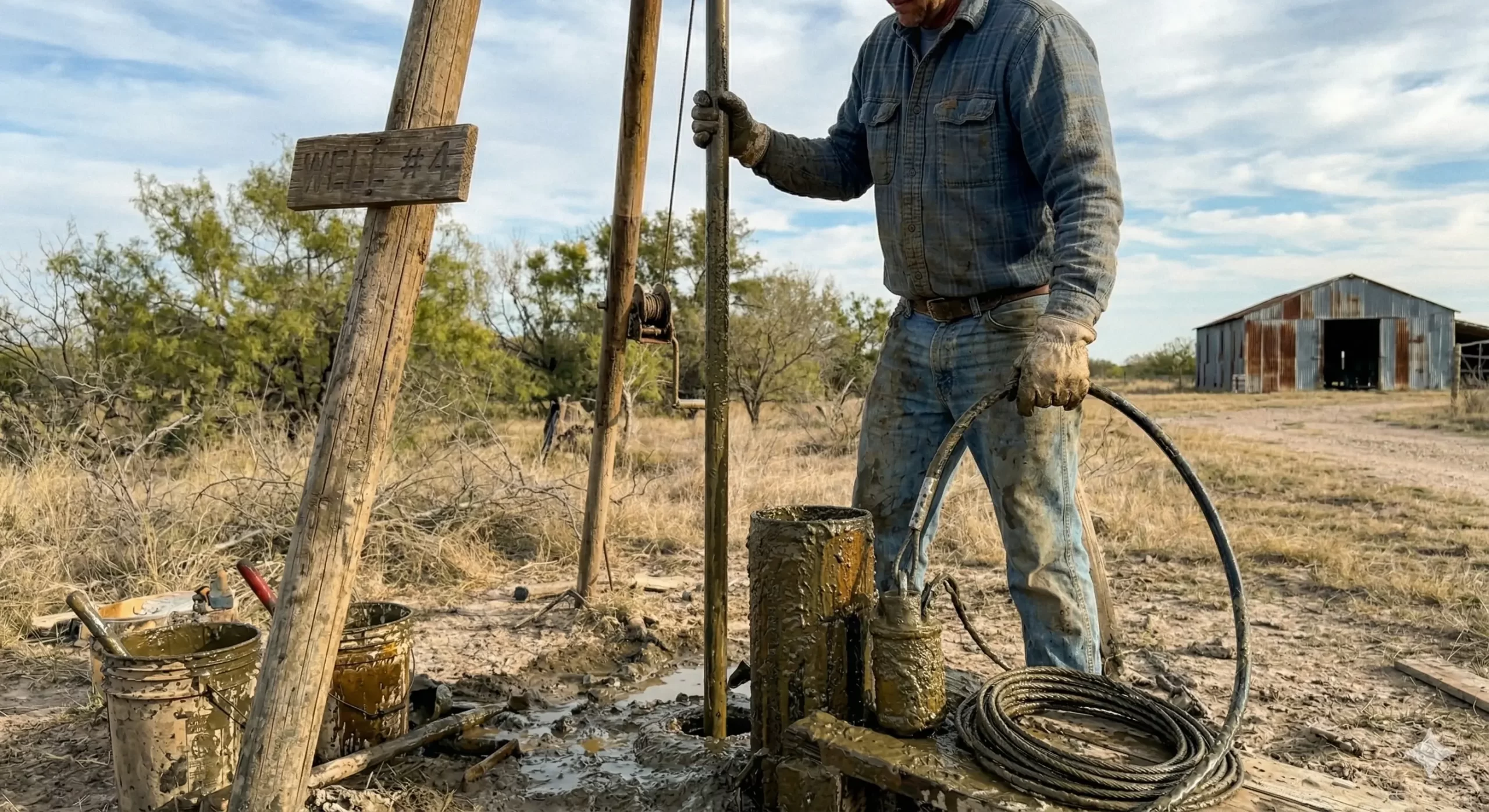
Well Pump Repair in
Bellaire
Bellaire & Harris County Well Stats
Harris County has thousands of private & public supply wells. Due to subsidence concerns, residential well installations have decreased significantly over the past decades in urbanized areas, but many older wells remain. Newer wells often need specific permits from HGSD. Average residential well depth can range from 150 to 500 feet, depending on the specific location & water demands, though many older ones are shallower. Groundwater withdrawals are heavily regulated to manage subsidence.
Pulling a pump in Bellaire ain’t cheap, & it’s rarely because of “deep rock”—we’re mostly sand & clay here. What drives the cost is often the access. We’re in a dense urban environment. Getting a hoist truck into a tight backyard, navigating mature landscaping, & dealing with buried utilities can add serious time & complexity. Traffic alone can eat up hours of labor.
We don’t just show up with a wrench. We’re bringing specialized pump hoists, well cameras to inspect casing integrity, electrical diagnostic equipment, fusion splicers, & sometimes even mini-excavators for tricky underground pipe issues. It’s an investment in tools to get your water flowing right & safely.
Spring Well Maintenance in Texas
Heavy spring rains can cause surface runoff to breach well caps. We strongly recommend testing your water for coliform bacteria and inspecting the sanitary seal.
Save $500+ on Replacements
Via the TX Energy Co-op VFD Upgrade Program
77°F in Bellaire
Local Aquifers & Geology
The primary groundwater sources in Bellaire include the The Chicot & Evangeline aquifers. These are unconfined to semi-confined aquifer systems consisting of interbedded sand, silt, & clay layers. The Chicot is shallower, often found within the first few hundred feet, while the Evangeline lies beneath it, extending to depths of over 1,500 feet. Water quality varies but generally exhibits moderate to high hardness, with elevated iron & manganese concentrations being common, along with occasional sand production, especially in older, uncased wells.. Drilling through the local Predominantly expansive clays, particularly the “Houston Black clay” series. These soils are characterized by their high plasticity, meaning they swell significantly when wet & shrink when dry. This cyclic expansion & contraction can exert considerable stress on well casings & surface infrastructure, potentially leading to casing failures or misalignment over time. means that average well depths range from 200 ft – 500 ft.
Due to these geological factors, local homeowners frequently struggle with Sand abrasion & mineral buildup (iron/calcium scaling). The sandy nature of our aquifers, coupled with potential for improper well construction or aging well screens, means sand is a constant enemy to pump impellers & motor seals. Iron & calcium in the water also lead to scaling, clogging components & reducing efficiency..
Drilling Depth Comparison
Deeper wells require heavy-duty crane hoists for pump extraction.
Climate & Water Quality
Pump systems in the Bellaire area face severe environmental stressors. The most significant threat is Our hot, humid climate is tough on electrical components, leading to premature insulation breakdown. Frequent & intense thunderstorms bring lightning strikes that can fry pump controls & motors. Heavy rainfall & localized flooding can inundate well pits or damage surface infrastructure, & the expansive clay soils stress well casings with their shrink-swell cycles.
Additionally, the raw groundwater often presents issues with Hardness (calcium & magnesium), iron, manganese, & sand are the most prevalent issues. Sulfur (hydrogen sulfide) is also occasionally present, giving water a “rotten egg” smell. These contaminants contribute to staining, foul odors, & significant wear & tear on pump components & plumbing fixtures..
Regional Groundwater Advisory
Known primary contaminant threat to submersible pumps and pipes in this area:
Common Area Systems
VFD Upgrade Savings
Constant Pressure vs StandardReplacing a standard single-speed pump with a Variable Frequency Drive (VFD) eliminates hard starts and drastically reduces energy draw in Texas.
Compliance & Local Permits
Harris County Level: Bellaire falls under the jurisdiction of the Harris-Galveston Subsidence District (HGSD). HGSD has strict rules regarding well construction, registration, & pumping. Any new well (even for residential use) requires a permit & must meet specific casing & cementing standards to prevent subsidence & aquifer contamination. Well abandonment also has specific permitting & procedural requirements to ensure proper sealing. Failing to comply can result in significant fines.
Top Pump Brands in Texas
Most frequently installed hardware based on local geology (2026 data).
- Perform full electrical diagnostic on pump motor & control box.
- Test voltage, amperage, & continuity at all relevant points.
- Sound well for static water level & pumping water level.
- Inspect wellhead integrity, cap, conduit, & grounding.
- Check pressure switch settings, bladder tank pressure, & air volume control.
- Pull pump & inspect for sand damage, corrosion, wiring integrity, & screen condition if indicated.
Premium Well Pump Brands We Service
Our licensed technicians in Bellaire are certified to repair, replace, and install high-quality groundwater equipment from industry-leading manufacturers, including:
- No water at all, or very low water pressure.
- Pump runs continuously without shutting off.
- Water tastes sandy or looks cloudy/muddy.
- Sputtering or air coming out of faucets.
- Strange noises coming from the wellhead or pressure tank area.
- Repeatedly tripping circuit breakers for the well pump.
Bellaire Real Estate Well Regulations
Local Dispatch & Response Times
Live Dispatch: Texas
Updated Just Now⚠️ High demand. Call now to secure the next available technician.
- Typically within 2-4 hours for genuine no-water emergencies in Bellaire.
- Our service vehicles are strategically located to minimize travel time through Houston’s traffic.
- We prioritize emergency calls, understanding that a lack of water is a critical situation.
- Sometimes, severe weather or widespread outages can extend these times slightly.
- We aim to provide an estimated arrival time as soon as a technician is dispatched.
⚠️ Harris County & State Regulatory Warning: Abandoned Wells
The Cost of Ignoring Symptoms
Fixing a short-cycling pump early saves thousands in Bellaire.
Data reflects average well contractor estimates in Bellaire.
Groundwater Threat Level
Current aquifer and mineral impact on pumps in Bellaire.
Dropping water tables cause pumps to suck air and overheat.
Hard water calcifies pump impellers, reducing lifespan.
Pump Lifespan Estimator
Select household size in Bellaire to see strain impact.
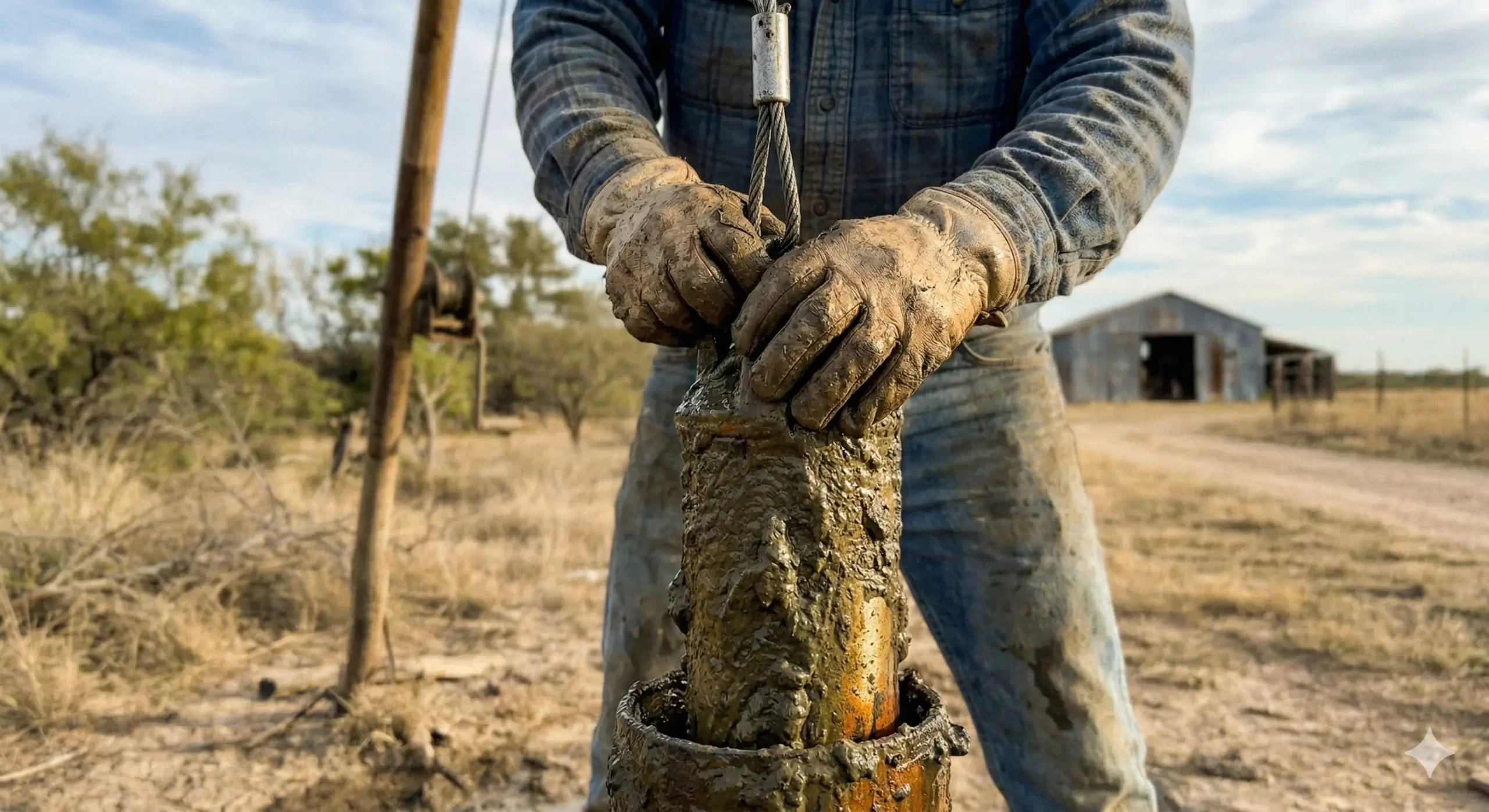
Local Bellaire
Well Pros
Fast Local Service & Diagnostics
Calls are routed to a licensed local well professional.
Septic System Services in Bellaire, TX
Do you have a septic tank on your property? Proper maintenance is critical to protecting your well water quality.
Bellaire Homeowner Feedback
“Had a well pump quit on a Saturday. Thought we were in for a long wait. Called these folks & they had someone out quick. Got us fixed up good as new. Appreciate the honest work.”

Local Homeowner
✓ Verified TX
“Our well had been acting up for months, real low pressure & lots of sandy water, especially when the sprinklers ran. Other guys just wanted to replace the whole pump without even looking. These fellas came out, did a full camera inspection, & turns out the bottom few sections of our well casing had shifted & a screen was clogged BAD. They recommended pulling the pump, cleaning the screen, & installing a new sand filter system upstream. It was a bigger job, but they explained everything clearly. Water’s clear now, pressure’s back to normal, & no more crunchy ice. My wife’s happy, which means I’m happy. These guys know their stuff, no dought.”

Local Homeowner
✓ Verified TX
“Woke up to no water before work. Panic set in. Called these guys at 6 AM & they had a crew dispatched before I even left for the office. By lunchtime, we had water again. You can’t beat that kind of fast, reliable service in an emergency. Total lifesavers.”

Local Homeowner
✓ Verified TX
Expert Bellaire Well System FAQ
I’ve heard about ‘subsidence’ in Houston. How does that affect my well in Bellaire, & do I need special permits from the Harris-Galveston Subsidence District?
Subsidence is a serious concern in the greater Houston area, including Bellaire, caused by extensive groundwater withdrawal. It leads to the land sinking, which can increase flood risk & damage infrastructure. The Harris-Galveston Subsidence District (HGSD) was created specifically to manage & regulate groundwater use to mitigate this. Yes, if you have a private well, you absolutely need to be aware of HGSD regulations. Any new well construction, significant modification, or abandonment requires a permit from HGSD, & existing wells generally need to be registered & adhere to pumping regulations. They dictate casing requirements, well spacing, & often even the allowable pumping rates to ensure we protect our aquifers & prevent further land sinking. Ignoring these rules can lead to substantial fines & environmental issues.
My water from the well in Bellaire sometimes has a rusty color or a weird smell. What causes that, & what can I do about it?
That rusty color & sometimes a metallic taste or even a “rotten egg” smell are common complaints with well water in our area, stemming from the geology of the Chicot & Evangeline aquifers. The rusty color is almost always due to elevated iron, & sometimes manganese, naturally dissolved in the groundwater. When this water is exposed to air, the iron oxidizes, turning it red or brown. The “rotten egg” smell is hydrogen sulfide gas. For iron & manganese, we often recommend aeration systems followed by filtration, or chemical oxidation & filtration systems. For hydrogen sulfide, aeration or a specialized carbon filtration system can usually clear it right up. A proper water analysis is the first step to determine the exact contaminants & design the most effective treatment solution for your specific well.
I’m thinking of abandoning an old, unused well on my Bellaire property. Are there specific steps I need to follow, or can I just fill it in?
Absolutely do not just fill it in! Proper well abandonment is not only critical for environmental safety but is also strictly regulated by the Texas Department of Licensing & Regulation (TDLR) & the Harris-Galveston Subsidence District (HGSD). An improperly abandoned well can become a direct conduit for surface contaminants to reach our drinking water aquifers, posing a serious health & environmental risk. You’ll need to obtain permits from HGSD & potentially other local authorities. The well must be permanently sealed by a licensed well driller using specific grouting materials from the bottom of the well to the surface, ensuring there are no pathways for contamination. This prevents cross-contamination between aquifer zones & removes a potential hazard on your property. It’s a job for licensed professionals to ensure it’s done right & legally.
Given Bellaire’s climate & water quality, how long can I expect my submersible pump to last, & what’s the best way to extend its lifespan?
In Bellaire, with our hot, humid climate, potential for lightning, & water quality issues like sand & mineral content, the lifespan of a submersible pump can vary widely. Generally, a quality submersible pump from a reputable brand (like Grundfos or Franklin Electric) installed correctly might last anywhere from 8 to 15 years, but I’ve seen them go longer or shorter depending on specific well conditions & usage. To extend its lifespan, regular well system maintenance is key: ensure your pressure tank is properly charged, prevent constant short-cycling of the pump, protect electrical components from surges with proper grounding & lightning arrestors, & address any water quality issues (like excessive sand or high iron) with appropriate filtration or well rehabilitation. Avoiding running the pump dry & ensuring the well depth is sufficient for your pumping needs are also crucial factors. An annual system check can identify small problems before they become costly failures.
Bellaire Groundwater Expert AI
What are the specific groundwater regulations, average well depths, and the local conservation district for Bellaire, Harris County?
Groundwater Regulations and Information for Residential Water Wells in Bellaire, Harris County, TX (2026)
As a Senior Hydrogeologist and a local expert on Texas groundwater regulations, I can provide you with specific and hard data regarding residential water wells in Bellaire, Harris County, for the year 2026. This area operates under a unique regulatory framework compared to many other parts of Texas due to its complex hydrogeology and subsidence concerns.
1. Local Groundwater Regulatory Authority: Harris-Galveston Subsidence District (HGSD) and Texas Department of Licensing and Regulation (TDLR)
For Bellaire, Harris County, it is critical to understand that there is **NO traditional Chapter 36 Groundwater Conservation District (GCD)** that directly governs residential well permitting and spacing. Instead, the primary local regulatory authority impacting groundwater withdrawals is the Harris-Galveston Subsidence District (HGSD). The HGSD was established under Chapter 88 of the Texas Water Code specifically to control and prevent land subsidence through groundwater withdrawal regulation in Harris and Galveston counties.
-
Harris-Galveston Subsidence District (HGSD):
While the HGSD regulates groundwater withdrawals to control subsidence, most small domestic residential wells (typically defined as those with a pumping capacity of less than 25,000 gallons per day, or wells used for domestic purposes on lots of 10 acres or less, not for resale) are generally **exempt from HGSD permitting requirements and associated fees for pumpage**. However, it is always prudent to confirm the latest exemption criteria directly with HGSD, as regulations can evolve.
Even if exempt from pumpage permits, the drilling and construction of the well must still comply with state regulations. You can find more information on their official website: Harris-Galveston Subsidence District
-
Texas Department of Licensing and Regulation (TDLR):
Since Bellaire is not within a Chapter 36 GCD that issues drilling permits, the Texas Department of Licensing and Regulation (TDLR) is the primary state agency responsible for the licensing of water well drillers and pump installers, and for regulating the construction, alteration, and plugging of all water wells (including residential) statewide, as outlined in Texas Water Code Chapter 36 and 37.
Before any drilling begins, a licensed water well driller must submit a "Driller's Log and Water Well Completion Report" (Form 024) to the TDLR. This report registers the well with the state. While TDLR does not issue a "permit to drill" in areas without a GCD, it mandates the standards for well construction.
You can verify a driller's license and find well log information through their database:
- TDLR Water Well Driller and Pump Installer Database: TDLR License Search
- TDLR Water Well Driller & Pump Installer Program: TDLR Water Well Program
- Well Log Search (for historical data): Texas Water Development Board (TWDB) Groundwater Data Browser
2. Specific Groundwater Regulations & Setbacks
The key regulations for residential well construction and siting in Bellaire primarily stem from the TDLR rules and state statute:
- Texas Water Code Chapter 36 (for General Provisions) & Chapter 37 (Water Well Drillers): These chapters establish the framework for groundwater management and water well drilling standards in Texas.
- Texas Administrative Code (TAC) Title 16, Part 4, Chapter 76: This chapter details the technical requirements for drilling, casing, cementing, and equipping water wells to protect groundwater quality and prevent contamination.
-
Setback Requirements: Under TAC Title 16, §76.1002 (Minimum Standards for Drilled Wells), specific minimum distances are mandated to protect the well from potential contamination sources. These include, but are not limited to:
- 50 feet from a septic system absorption field.
- 100 feet from a septic tank or cesspool.
- 150 feet from a feedlot, animal waste disposal area, or other concentrated sources of potential contamination.
- 5 feet from property lines, unless an agreement with the adjacent landowner is established.
It is crucial that your licensed driller adheres to these and all other construction standards.
3. Average Well Depths in Bellaire, Harris County
Based on historical well logs and hydrogeological data for the Houston metropolitan area, including Bellaire, residential water wells typically target the shallower portions of the Gulf Coast Aquifer System. For a reliable, potable domestic supply, average well depths in Bellaire generally range from 300 to 600 feet. Some wells may be shallower (200-300 ft), while others might go deeper (up to 800 ft) to ensure adequate yield and water quality, especially to avoid shallower, potentially higher salinity zones or to access specific sand layers.
The exact depth will be determined by your driller based on local stratigraphy, desired yield, water quality objectives, and the driller's experience in the immediate Bellaire area. The TDLR well log search tool, linked above, can provide specific depths of nearby wells.
4. Specific Aquifer Beneath Bellaire
Bellaire, Harris County, is underlain by the Gulf Coast Aquifer System. This extensive aquifer system is comprised of several interconnected sand and clay layers, including:
- The shallower Chicot Aquifer
- The deeper Evangeline Aquifer (formerly Jasper)
- And the even deeper Burkeville Aquifer
Residential wells in Bellaire typically draw water from the Chicot and Evangeline aquifers. These aquifers consist primarily of unconsolidated to poorly consolidated sand, silt, clay, and gravel, which yield significant quantities of fresh to slightly brackish water. The primary concern in this region is the slow, continuous compaction of these sediments due to groundwater withdrawal, leading to land subsidence, which the HGSD is tasked with managing.
Fast Local Service & Diagnostics
Calls are routed to a licensed local well professional.
Blix
provides official
Emergency Well Pump Repair services for the
Bellaire
area.