
Emergency Well Pump Repair in Houston, TX
Situated on the expansive coastal plain of the Gulf of Mexico, Houston (latitude 29.7604, longitude -95.3698) and the sprawling outer suburbs of Harris County present a highly unique and challenging environment for private groundwater systems. While the inner city is heavily municipalized, the vast perimeter communities—stretching from Cypress and Tomball to the semi-rural acreage near Katy and Crosby—depend entirely on private well pumps drawing from the massive Gulf Coast Aquifer System. The Houston terrain is notorious for its dense, shifting “gumbo” clay and its extreme susceptibility to catastrophic weather events. From the devastating flooding of Gulf hurricanes and tropical storms that frequently submerge wellheads, to the relentless, year-round coastal humidity that rapidly corrodes electrical control boxes, maintaining a well pump in Houston requires specialized expertise. Our dedicated network of Texas-licensed well technicians understands these coastal challenges intimately. Equipped with heavy-duty diagnostic gear and flood-resilient replacement components, our local experts are uniquely prepared to handle severe electrical failures, mitigate storm-related contamination, extract sand-locked submersible pumps, and swiftly restore your property’s vital water supply amidst any Houston weather extreme.
Fast Local Service & Diagnostics
Calls are routed to a licensed local well professional.
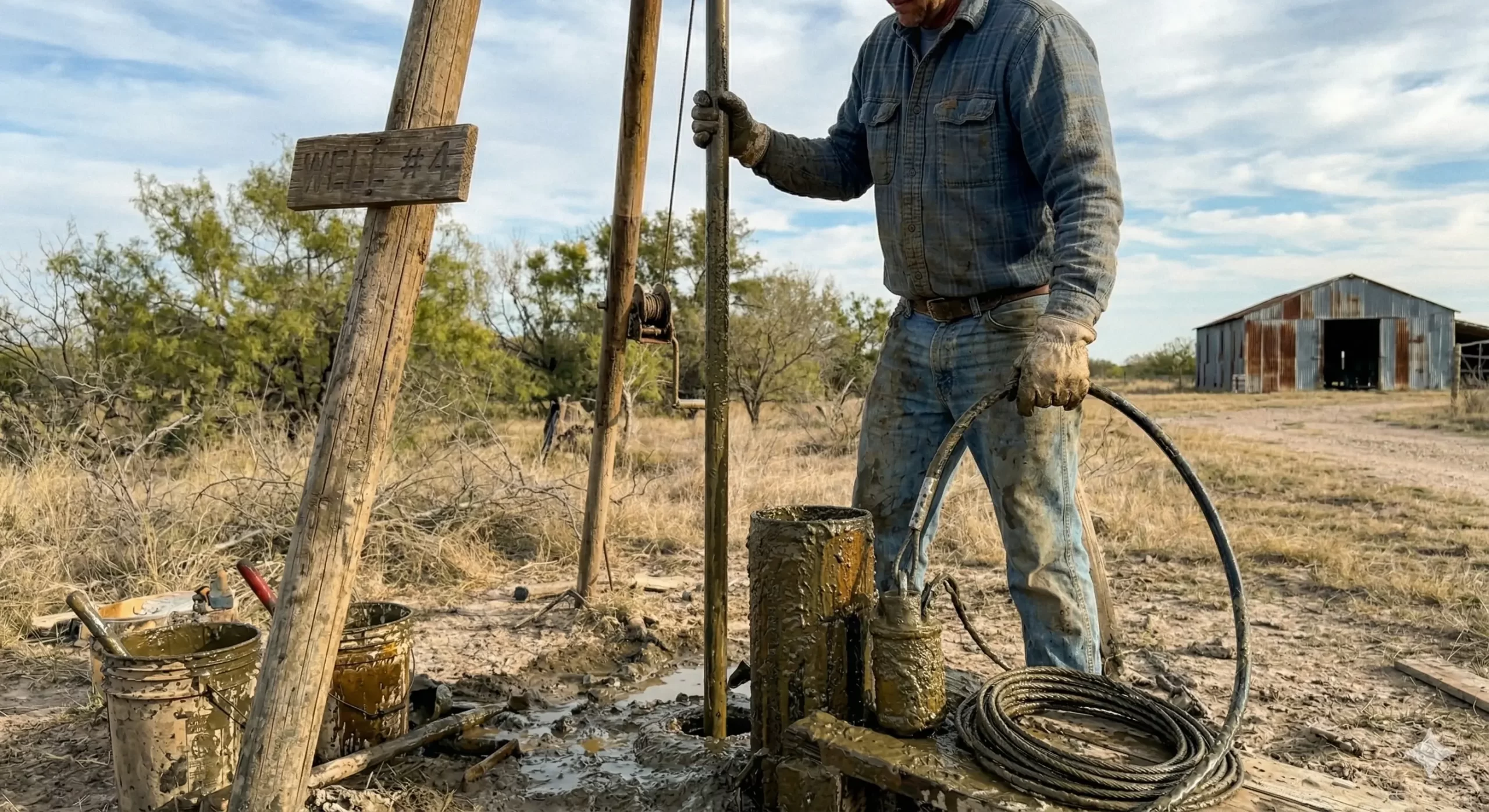
Well Pump Repair in
Houston
Houston & Harris County Well Stats
Across the vast expanse of Harris County, tens of thousands of homes and agricultural properties operating on the suburban fringes rely exclusively on private water wells, primarily tapping into the Chicot and Evangeline layers of the Gulf Coast Aquifer. Because Houston is experiencing rapid outward urban sprawl, the demand on these aquifers has intensified. Due to stringent regulations aimed at preventing land subsidence (the actual sinking of the ground causing structural and flood risks), well drilling and maintenance here are heavily scrutinized. Historical data shows that while a quality well pump can last 10 to 15 years nationally, the average lifespan in the Houston area is often reduced to 7 to 10 years. This accelerated wear is primarily driven by the relentless pumping of fine abrasive coastal sand, extreme year-round moisture attacking electrical contacts, and power grid instability during tropical storm seasons.
- Standard Submersible Pump Replacement (Up to 300 ft): $1,900 – $3,800 (Includes labor, crane service, and high-grade stainless steel pumps engineered for sandy conditions).
- Deep Well Submersible Pump (300 ft to 800+ ft for Evangeline Aquifer): $3,800 – $5,800+ (Requires heavy-duty rigs and specialized reinforced drop pipes to handle dense mud extraction).
- Above-Ground Jet Pump Repair/Replacement: $450 – $1,350 (Frequently found in shallower coastal wells; includes weather-shielding upgrades).
- Pressure Tank Replacement (Fiberglass/Epoxy Coated): $700 – $1,600 (Crucial for preventing short-cycling; anti-corrosion marine-grade coatings are highly recommended in Houston).
- Variable Frequency Drive (VFD) Installation: $1,400 – $3,200 (Ideal for large acreage properties requiring constant pressure for extensive irrigation and sprinkler systems).
- NEMA 3R Weatherproof Control Box Upgrades: $350 – $750 (Essential to protect sensitive relays and capacitors from Houston’s extreme humidity, salt air, and driving rain).
- Lightning Arrestor & Surge Protection Installation: $200 – $450 (A critical add-on to prevent catastrophic motor burnouts during severe Gulf Coast thunderstorms).
- Wellhead Extension & Flood Sealing: $500 – $1,200 (Raising the casing above base flood elevation to prevent surface water contamination during hurricane events).
- Heavy Chlorination and Shock Treatment: $350 – $650 (Mandatory health safety procedure following any major flooding, storm surge, or significant bacterial detection).
Spring Well Maintenance in Texas
Heavy spring rains can cause surface runoff to breach well caps. We strongly recommend testing your water for coliform bacteria and inspecting the sanitary seal.
Save $500+ on Replacements
Via the TX Energy Co-op VFD Upgrade Program
Houston, TX
Local Aquifers & Geology
The primary groundwater sources in Houston include the Gulf Coast Aquifer System (Chicot, Evangeline, and Jasper aquifers). Drilling through the local Heavy, dense Beaumont clay, expansive “gumbo” mud, and loose coastal sandy loam means that average well depths range from 200 to 800+ feet, heavily dependent on the targeted aquifer layer and strict local subsidence regulations.
Due to these geological factors, local homeowners frequently struggle with Severe abrasive wear on pump impellers due to fine sand intrusion, and electrical panel failures caused by extreme humidity and lightning strikes.
Drilling Depth Comparison
Deeper wells require heavy-duty crane hoists for pump extraction.
Climate & Water Quality
Pump systems in the Houston area face severe environmental stressors. The most significant threat is Catastrophic hurricane flooding that can submerge and contaminate wellheads, aggressive year-round humidity that corrodes wiring, and severe tropical thunderstorms causing grid surges that instantly fry pump motors.
Additionally, the raw groundwater often presents issues with High concentrations of dissolved iron and manganese causing severe staining, frequent pumping of fine sediment/silt, and occasional brackish water (saltwater intrusion) in properties closer to the Gulf coast..
Regional Groundwater Advisory
Known primary contaminant threat to submersible pumps and pipes in this area:
Common Area Systems
VFD Upgrade Savings
Constant Pressure vs StandardReplacing a standard single-speed pump with a Variable Frequency Drive (VFD) eliminates hard starts and drastically reduces energy draw in Texas.
Compliance & Local Permits
Harris County Level: Harris County enforces some of the most unique and stringent groundwater regulations in the state due to the region’s history of land subsidence. Any major modification to a well, especially deepening it or increasing the pump’s gallon-per-minute (GPM) yield, requires meticulous permitting, strict inspection, and often mandatory water metering through the Harris-Galveston Subsidence District to ensure the extraction does not contribute to the sinking of the Houston metro area.
Top Pump Brands in Texas
Most frequently installed hardware based on local geology (2026 data).
- Comprehensive Megger Testing: Applying high voltage to the motor windings to detect microscopic insulation breakdowns caused by lightning strikes or ambient moisture accumulation.
- Amp, Voltage & Surge Diagnostics: Verifying that the control box, capacitors, and relays are functioning perfectly, and ensuring lightning arrestors are intact and ready for the next storm.
- Sand & Sediment Evaluation: Testing the water output for fine abrasive grit from the Gulf Coast Aquifer, which can quickly destroy standard pump impellers.
- Flood-Proofing Assessment: Inspecting the wellhead casing height, sanitary seal integrity, and checking for any vulnerabilities to surface water pooling during heavy tropical rains.
- Static & Dynamic Drawdown Checks: Using sonic meters to measure water levels, ensuring the pump remains safely submerged despite regional aquifer fluctuations and heavy neighboring usage.
- Pressure Tank Bladder & Coating Check: Testing the tank for internal ruptures and inspecting the exterior steel for early signs of rust caused by coastal salt air and humidity.
- Downhole Camera Diagnostics: Deploying specialized optics to check PVC or steel casings for structural cracks caused by the extreme shifting of Houston’s expansive clay soils.
- Subsidence Meter Calibration (If Applicable): Ensuring any water meters mandated by the Harris-Galveston Subsidence District are functioning and recording extraction accurately.
- Sanitary Seal & Bug Screen Verification: Confirming the well cap is 100% sealed against the ingress of fire ants, spiders, and vermin seeking refuge from rising floodwaters.
Premium Well Pump Brands We Service
Our licensed technicians in Houston are certified to repair, replace, and install high-quality groundwater equipment from industry-leading manufacturers, including:
- Fine Sand in Toilet Tanks & Filters: If you notice a buildup of fine, gritty sand in your toilet tanks or rapidly clogging whole-house filters, the pump is either set too low or the well screen is failing, meaning your impellers are actively being ground down by abrasive sediment.
- Breaker Tripping During Thunderstorms: If your well pump’s breaker trips frequently during Houston’s intense afternoon thunderstorms, the motor’s insulation is likely compromised, or your exterior control box has absorbed too much atmospheric humidity.
- The “Clicking” Wellhouse: Hearing a rapid, repetitive clicking sound from the pressure switch means your pressure tank is waterlogged. This “short-cycling” forces the pump motor to start and stop dozens of times an hour, guaranteeing a premature, fiery death.
- Sudden Sulfur or “Rotten Egg” Smells: A rapid change in water odor can indicate a shift in the aquifer layer you are drawing from, or worse, surface bacteria breaching the wellhead after a localized flood or heavy rainstorm.
- Sputtering Faucets (Air in the Lines): Water that aggressively spits air signifies a severely dropping water table, a failed check valve allowing water to fall back down the pipe, or a cracked drop pipe inside the casing.
- Unexplained Surges in Power Bills: A pump struggling against heavy sediment, fighting a failing motor bearing, or operating with a damaged impeller will pull massive amounts of electricity before it finally dies, showing up clearly on your CenterPoint energy bill.
- Visible Rust on Above-Ground Pipes: In the humid Houston climate, exterior rust can quickly eat through galvanized fittings. A pinhole leak at the surface can cause the system to lose pressure entirely and flood the pump house.
- Water Pooling Around the Wellhead: If the ground around your well casing remains soggy when it hasn’t rained, you have a breached underground pipe or a cracked pitless adapter shifting in the unstable clay soil.
Houston Real Estate Well Regulations
- Harris-Galveston Subsidence District Transfer: If the property falls under HGSD jurisdiction, the well permit and any associated groundwater extraction allocations MUST be formally transferred to the new owner to avoid severe legal penalties and usage blocks.
- Rigorous Flow and Yield Testing: Buyers typically demand a professional 2-to-4 hour flow test to ensure the well can sustain modern household demands without drawing down excessively in the sandy aquifer.
- Post-Flood Water Quality Certification: Because of Houston’s rich history of flooding, mortgage lenders (especially VA and FHA) mandate strict, recent lab testing to prove the absence of E. coli, coliform bacteria, and industrial runoff contaminants.
- Elevation and Floodplain Verification: Real estate inspectors will heavily scrutinize the height of the well casing relative to the FEMA base flood elevation to ensure the system is protected against future hurricane storm surges and bayou overflows.
- Septic Setback Confirmation: Sellers must provide documentation proving the well is situated at least 100 feet from any septic drain field, ensuring no cross-contamination occurs within the slow-draining local clay soils.
Local Dispatch & Response Times
Live Dispatch: Texas
Updated Just Now⚠️ High demand. Call now to secure the next available technician.
Our estimated emergency arrival times are segmented by Houston’s major zones:
- Northwest Houston (Cypress, Tomball, Spring): 60 to 120 minutes. This is a massive growth sector with high well density; our rapid-response units maintain a heavy, continuous presence along the Hwy 290 and Hwy 249 corridors.
- West Houston & Katy (Katy, Fulshear): 90 to 120 minutes. Fast access via I-10 West and the Grand Parkway allows us to quickly service the sprawling acreage properties in this expanding sector.
- North & Northeast Houston (The Woodlands, Humble, Kingwood): 90 to 150 minutes. Dispatch units utilize I-45 North and Hwy 59, ensuring swift arrivals even during peak commuter hours.
- East Houston & Baytown (Crosby, Highlands, Baytown): 2 to 3 hours. Coastal proximity and heavy industrial traffic can cause delays, but dedicated technicians cover these critical outlying areas daily.
- South & Southwest Houston (Pearland, Sugar Land, Alvin): 2 to 4 hours. Accessing properties south of the city requires navigating Hwy 288 and US-59 South; response times are actively managed to avoid major tollway delays.
- Post-Hurricane & Severe Weather Protocol: During hurricane season or severe flooding events, response times are dictated by road safety and high-water rescues. However, “No Water” calls are triaged and prioritized the moment state authorities declare the roads passable.
We operate a 24/7/365 emergency hotline, ensuring that whether your pump fails on a blistering August Sunday or in the middle of a torrential tropical storm, a Houston-based expert is always ready to deploy.
⚠️ Harris County & State Regulatory Warning: Abandoned Wells
- Strict Prohibition of Unlicensed Work: It is a direct violation of Texas state law for anyone other than a licensed Pump Installer or Well Driller to break a sanitary well seal, handle deep electrical pump wiring, or physically extract a submersible pump from the casing.
- Mandatory Flood Capping: In designated flood zones across Harris County, state regulations require well casings to extend a minimum distance above the base flood elevation, or be equipped with specialized watertight sanitary seals to prevent floodwater intrusion during tropical storms.
- Aggressive Abandoned Well Laws: Any well that has not been used for six months and poses an environmental hazard is classified as “abandoned.” Landowners are legally mandated to hire a licensed driller to permanently plug the well with pressurized bentonite grout to protect the aquifer from surface pollution.
- Mandatory State Reporting: Licensed technicians are legally required to file detailed service logs with the state database every time a pump is pulled, repaired, or a well is modified, creating a permanent, trackable history of the region’s groundwater infrastructure.
Groundwater Threat Level
Current aquifer and mineral impact on pumps in Houston.
Dropping water tables cause pumps to suck air and overheat.
Hard water calcifies pump impellers, reducing lifespan.
Pump Lifespan Estimator
Select household size in Houston to see strain impact.
The Cost of Ignoring Symptoms
Fixing a short-cycling pump early saves thousands in Houston.
Data reflects average well contractor estimates in Houston.
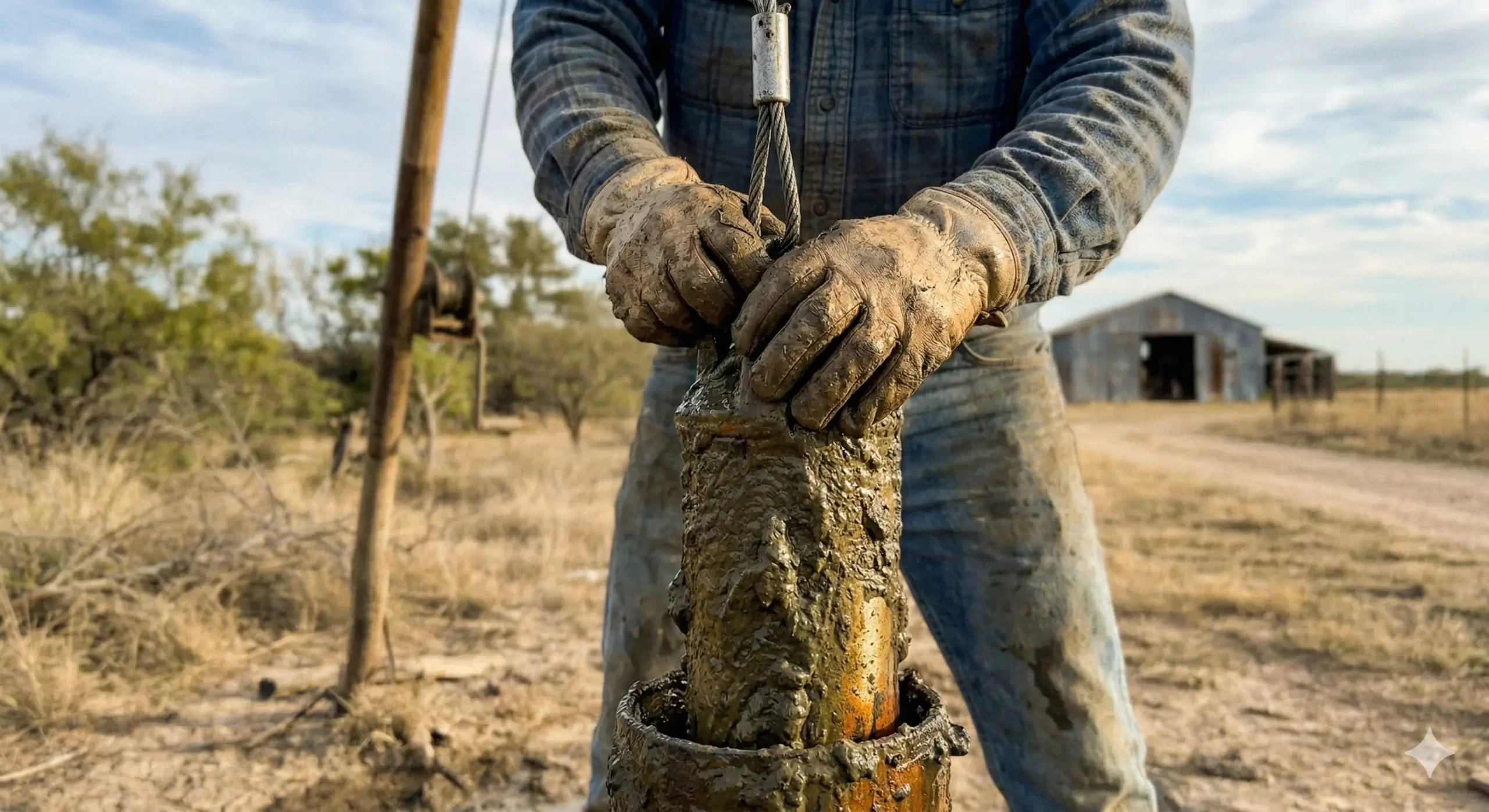
Local Houston
Well Pros
Fast Local Service & Diagnostics
Calls are routed to a licensed local well professional.
Septic System Services in Houston, TX
Do you have a septic tank on your property? Proper maintenance is critical to protecting your well water quality.
Houston Homeowner Feedback
“Our pump got struck by lightning during a massive afternoon thunderstorm in Cypress. We had absolutely no water and the heat was unbearable. The dispatch team was incredible—they sent a tech out the very next morning. He diagnosed a fried control box and a damaged motor, pulled the entire submersible setup, and installed a heavy-duty lightning arrestor along with the new pump. They were professional, fast, and clearly know how to handle Houston weather disasters.”

Local Homeowner
✓ Verified TX
“After Hurricane Beryl rolled through, our wellhead was completely submerged under two feet of floodwater for days. I was terrified our water was contaminated with runoff. These guys came out as soon as the roads cleared, performed a massive shock chlorination treatment, replaced the corroded pressure switch that got soaked, and upgraded our well cap to a watertight sanitary seal. I sleep so much better knowing our family’s water is safe and protected for the next storm.”

Local Homeowner
✓ Verified TX
“Living out in Tomball, our water pressure had been dropping for months, and we started seeing fine sand settling in the toilets. The technicians used a downhole camera and found our old pump’s impellers were completely chewed up by the aquifer grit. They didn’t just replace it; they installed a specialized sand-handling pump and a heavy-duty spin-down filter system for the whole house. The water pressure is phenomenal now, and the water is crystal clear. Worth every penny!”

Local Homeowner
✓ Verified TX
Expert Houston Well System FAQ
Can I safely pull my own submersible well pump out of the ground in Houston?
Under no circumstances should you attempt this, and doing so explicitly violates Texas state regulations for major well modifications. In the Houston area, pulling a pump means hauling up hundreds of feet of water-filled PVC drop pipe, heavy electrical wire, and a solid steel motor. This assembly can easily weigh anywhere from 300 to over 800 pounds. Attempting to pull it by hand or with a makeshift winch usually results in the pipe snapping, dropping the pump permanently to the bottom of the well, and effectively destroying your entire water source. Furthermore, Houston’s wet conditions make the 240-volt electrical connections incredibly dangerous for unlicensed individuals to handle. The TDLR strictly requires a licensed professional.
Why is there so much sand in my water, and is it destroying my well pump?
Sand intrusion is one of the most common and highly destructive issues for wells drawing from the Gulf Coast Aquifer beneath Harris County. Unlike solid rock aquifers found elsewhere, the geology here consists of loose sand, gravel, and layers of clay. If your well screen degrades over time, or if your pump is simply too powerful for the well’s natural yield, it will forcefully suck this abrasive sand into the system. This fine grit acts like liquid sandpaper, rapidly grinding down the plastic impellers inside your submersible pump. If you see sand in your toilet tank or sinks, your pump’s lifespan is actively plummeting, and you urgently need a technician to assess the well screen and install specialized filtration.
How does Houston’s extreme humidity and severe weather affect my well equipment?
Houston’s subtropical climate is absolutely brutal on exposed electrical and mechanical hardware. The constant, suffocating humidity aggressively corrodes the contacts inside your pressure switch and control box, leading to frequent electrical shorts and failure to start. Additionally, the high frequency of intense Gulf Coast lightning storms creates massive power grid surges that can instantly fry a pump motor deep underground. To protect your investment, it is critical to use NEMA 3R weatherproof enclosures, apply marine-grade anti-corrosion treatments to metal components, and install dedicated, heavy-duty lightning arrestors directly at the wellhead.
What exactly is land subsidence, and why does it affect my well permit in Harris County?
Land subsidence is the gradual, permanent sinking of the earth’s surface. In the Houston area, this has historically been caused by the massive over-pumping of groundwater from the underlying aquifers. As water is removed, the layers of clay compact and compress, causing the ground above to sink, which permanently increases the risk of catastrophic flooding during hurricanes. To combat this severe threat, the Harris-Galveston Subsidence District (HGSD) strictly regulates and monitors all groundwater extraction. Depending on your exact location and the size of your well, you may be subject to strict permitting, mandatory installation of water meters, and usage fees designed to limit pumping and encourage the transition to surface water alternatives.
Houston Groundwater Expert AI
What are the specific groundwater regulations, average well depths, and the local conservation district for Houston, Harris County?
Groundwater Regulations, Well Depths, and Conservation for Residential Wells in Houston, Harris County, TX (2026)
As a Senior Hydrogeologist and Local Groundwater Regulatory Expert for Texas, I can provide you with specific, hard data regarding residential water wells in Houston, Harris County. The regulatory landscape here is distinct from many other parts of Texas due to the unique challenge of land subsidence.
Local Groundwater Regulatory Bodies
For groundwater in Harris County, there are two primary regulatory authorities you need to be aware of, operating under different mandates:
- The Harris-Galveston Subsidence District (HGSD): This is the crucial local regulatory body that manages groundwater withdrawals in Harris and Galveston counties to control and prevent land subsidence. Unlike many other Texas counties that fall under a Groundwater Conservation District (GCD) as defined by Texas Water Code Chapter 36, Harris County's groundwater production is primarily regulated by the HGSD. The HGSD issues permits for groundwater wells, sets conditions for their operation, and has a long-term plan to reduce reliance on groundwater.
- The Texas Department of Licensing and Regulation (TDLR): Statewide, the TDLR is responsible for licensing water well drillers and pump installers, and for enforcing minimum well construction standards. This ensures wells are drilled and completed in a manner that protects groundwater quality and quantity, regardless of whether they fall under a local subsidence district or GCD.
Specific Groundwater Regulations for Residential Wells in Harris County
1. Harris-Galveston Subsidence District (HGSD) Requirements:
- Well Permits: Any new residential water well in Harris County requires a permit from the HGSD. This includes domestic wells for household use. HGSD has a permitting process that typically involves an application, review, and approval. You must contact HGSD directly for specific application forms and fee schedules.
- Operating Permits and Reporting: Depending on the well's location within HGSD's regulatory areas (which are divided into Regulatory Plans and Phases) and the amount of groundwater intended to be pumped, you may also be subject to annual operating permits, usage fees, and mandatory reporting of groundwater pumpage. While very low-volume domestic wells might have certain exemptions or simplified processes, it is critical to confirm your specific situation with HGSD.
- Subsidence Mitigation: HGSD’s mission is to convert groundwater use to surface water over time. While individual residential wells are typically not forced to convert, the overall regulatory environment is geared towards reducing groundwater pumping, which can indirectly affect future policy.
For more details, visit the official Harris-Galveston Subsidence District website: https://hgsd.org/
2. Texas Department of Licensing and Regulation (TDLR) Requirements:
- Licensed Drillers: All water wells in Texas, including residential wells in Harris County, must be drilled by a licensed Texas water well driller.
- Construction Standards: Well construction must adhere to the state's minimum standards, as outlined in the Texas Water Well Drillers and Pump Installers Rules. These rules cover casing requirements, cementing, wellhead completion, and proper sealing to prevent contamination.
- Well Driller's Report: The licensed driller is required to file a Well Driller's Report (Form TDLR 002WWD) with the TDLR and the Texas Water Development Board (TWDB) within 30 days of completing a well. This report provides crucial data on well depth, geology encountered, and construction details.
- Setback Rules: TDLR rules (specifically 16 Texas Administrative Code Chapter 76) mandate specific minimum setback distances for water wells from potential contamination sources such as septic systems, property lines, sewage lines, animal feedlots, and waste disposal sites. For instance, a potable well must be at least 50 feet from an absorption field and 100 feet from a septic tank or property line if the property is less than 2 acres. Always consult the full TDLR regulations for exact distances.
For more details on TDLR regulations, visit: https://www.tdlr.texas.gov/wwd/wwd.htm
Average Well Depths for Houston (Harris County)
Residential well depths in Houston and Harris County can vary significantly based on location, desired water quality, and quantity. However, for potable residential use targeting reliable water production, wells commonly range between 300 to 800 feet deep. Shallower wells (100-300 feet) may exist for irrigation or non-potable uses in certain areas, but for consistent household water supply, deeper completion in the more productive and protected zones of the aquifers is typical.
These depths are primarily dictated by the hydrogeology of the underlying aquifers, as well as the need to avoid shallower, potentially poorer quality groundwater and to access formations with sufficient water yield.
Specific Aquifers Beneath Houston
Houston and Harris County draw groundwater primarily from the extensive Gulf Coast Aquifer System. This system is comprised of several hydraulically connected, eastward-dipping sand and clay formations. The main freshwater-bearing units beneath Harris County, from shallowest to deepest, include:
- Chicot Aquifer: The shallowest primary producing unit, often used for irrigation or shallower residential wells.
- Evangeline Aquifer: A major source of potable groundwater for many parts of Houston and Harris County, typically targeted by residential wells.
- Jasper Aquifer: Lies beneath the Evangeline and also serves as a significant source of groundwater, particularly in deeper wells seeking higher quality water.
These aquifers consist of alternating layers of sand, silt, and clay, deposited during repeated sea-level changes.
Relevant Texas Codes and Resources
- Texas Water Code Chapter 32: Pertains to Water Well Drillers and Pump Installers.
- 16 Texas Administrative Code (TAC) Chapter 76: Contains the detailed rules and construction standards enforced by the TDLR for water wells.
- Harris-Galveston Subsidence District Special Act: HGSD operates under its own specific enabling legislation (originally passed in 1975), which outlines its powers and duties.
- TWDB Groundwater Data: You can often look up existing well logs for your specific area to get an idea of depths and geology by using the Texas Water Development Board's Groundwater Data Viewer: https://www.twdb.texas.gov/groundwater/data/gwd.asp
- HGSD Groundwater Withdrawal Permit Application: You will need to obtain the most current forms directly from the HGSD website for any new well construction.
Recommendation: Always contact the Harris-Galveston Subsidence District and consult a licensed water well driller in Harris County before initiating any well drilling project to ensure full compliance with all local and state regulations for your specific property.
Fast Local Service & Diagnostics
Calls are routed to a licensed local well professional.