
Emergency Well Pump Repair in Spring, TX
Folks around Spring and North Harris County know the drill – groundwater’s a lifeline, but it ain’t always easy living. We see a lot of wells struggling with fluctuating water tables, especially after a dry spell or when new developments put extra strain on the aquifer. The ground here is prone to subsidence, too, which means you need to be extra vigilant about your well’s integrity & casing.
Our water largely comes from the Chicot and Evangeline aquifers. These are deep, sandy formations, generally reliable, but they’re not inexhaustible. Understanding how these layers behave is key to diagnosing well issues, from low pressure to sediment problems. We’ve got a good grasp on what makes these local aquifers tick, and how drilling & pump placement impacts long-term reliability.
Now, about those cheap pumps… down here in Spring, they just don’t cut it. The fine sands can abrade impellers, our brutal summer heat can push motors to their limits, and the constant demand from bigger homes means a pump is working harder than it ever did a generation ago. You buy cheap, you pay twice, and often sooner than you’d think in this environment.
Fast Local Service & Diagnostics
Calls are routed to a licensed local well professional.
Well Pump Repair in
Spring
Spring & Harris County Well Stats
Harris County has a mix of rural & suburban wells. Domestic wells vary greatly in depth, typically from 200 ft to over 800 ft, drawing primarily from the Chicot and Evangeline aquifers. Historically, the county has seen significant groundwater withdrawal, leading to substantial land subsidence in certain areas. This makes proper well construction, particularly casing & grouting, absolutely critical. Water quality can vary, often showing moderate hardness & elevated iron.
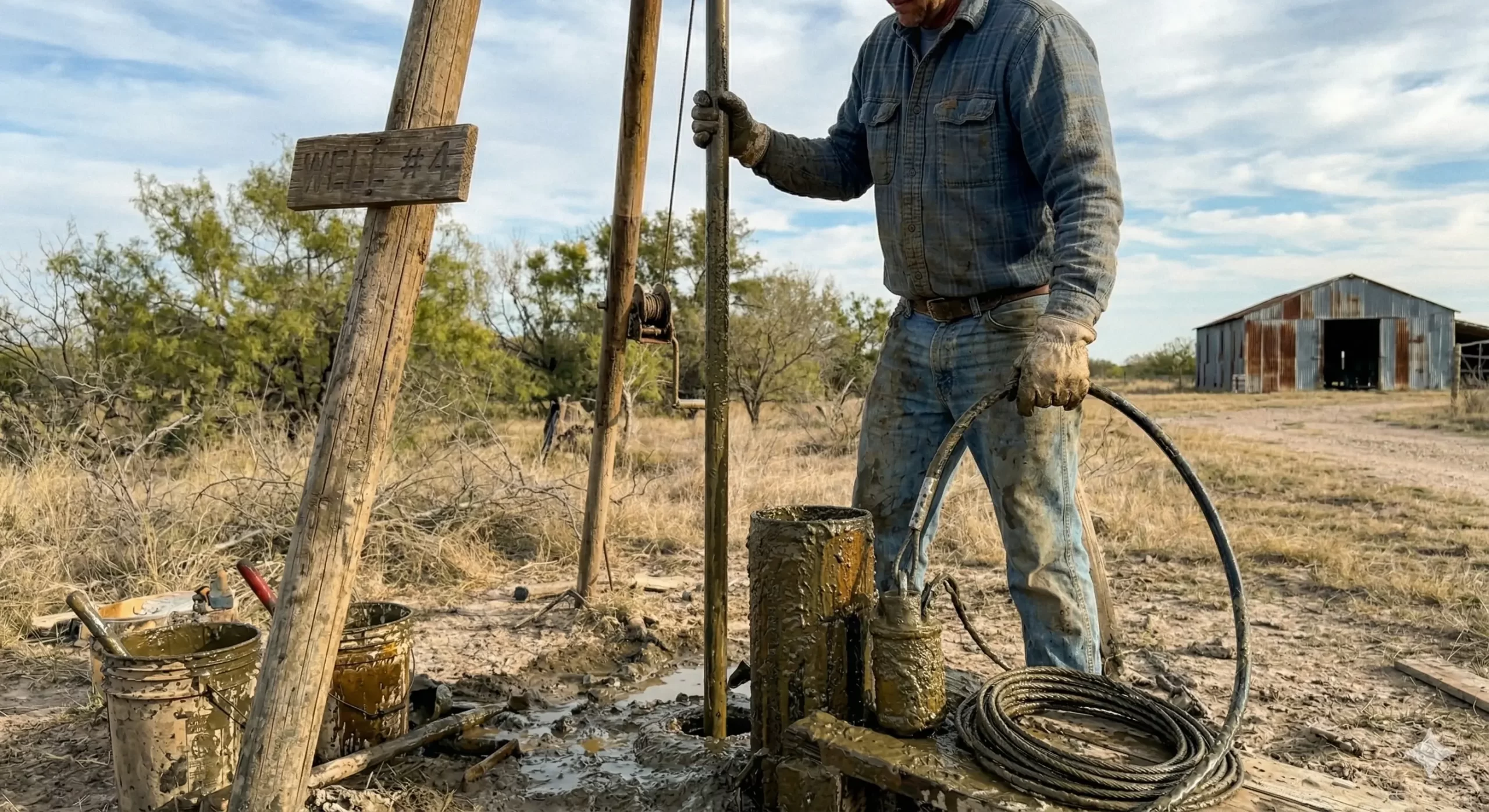
Pulling a pump in Spring, Texas, involves navigating through hundreds of feet of unconsolidated sands and clays. While we don’t typically hit hard rock until much deeper formations, the sheer depth of some domestic wells – often 300 to 600 feet – means significant rig time & specialized equipment. Access to many properties, especially older rural lots or newer suburban areas with tight landscaping, can also pose a challenge for bringing in a full-sized well rig, adding to the complexity & cost.
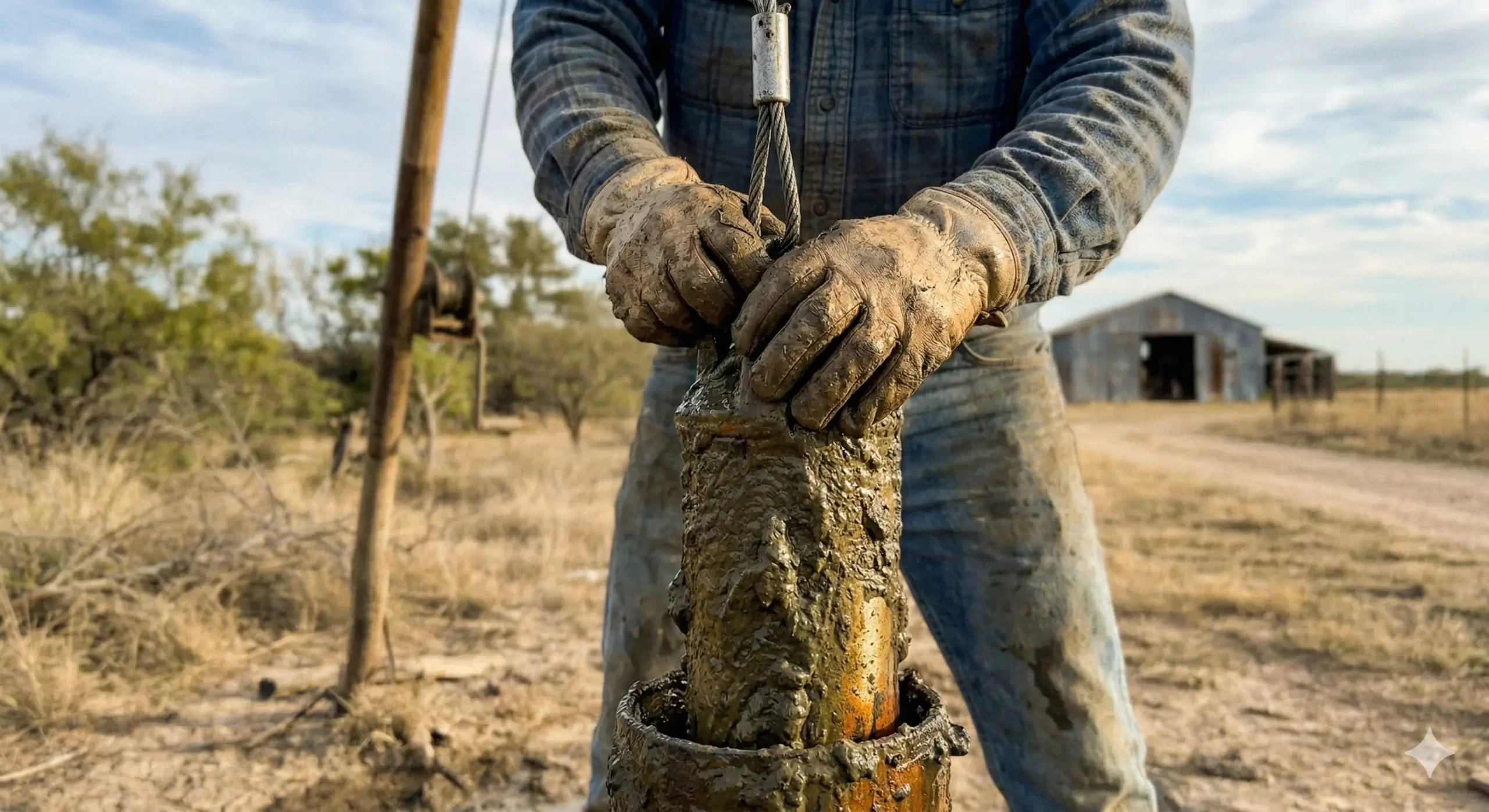
To get a pump out of the ground safely & efficiently, we’re talking about heavy-duty well service rigs, hydraulic pulling machines, specialized pipe wrenches, and sometimes even cranes for those really deep jobs. Add in pressure tanks, control boxes, electrical diagnostics gear, and all the various safety equipment, & you understand why it’s not just a ‘handyman’ job. It’s a precise operation requiring significant investment in tools & expertise.
Spring Well Maintenance in Texas
Heavy spring rains can cause surface runoff to breach well caps. We strongly recommend testing your water for coliform bacteria and inspecting the sanitary seal.
Save $500+ on Replacements
Via the TX Energy Co-op VFD Upgrade Program
80°F in Spring
Local Aquifers & Geology
The primary groundwater sources in Spring include the The Chicot & Evangeline aquifers are the workhorses for domestic wells in Spring. The Chicot is the shallower of the two, generally extending from near the surface to around 1,000 feet, composed mainly of sand, silt, and clay. Below it lies the Evangeline aquifer, which is a deeper, more productive zone, reaching depths of 1,000 to 3,200 feet, primarily composed of sand with interbedded shale. Both are unconfined to semi-confined, and yield good quality potable water, though iron and hardness levels can be noticeable.. Drilling through the local The soil profile in Spring, Texas, is largely characterized by deep, clayey loams over sandy clay & sand. Common surface soils include dark, calcareous clays such as the Houston Black series, intermixed with various sandy loams. Below this, you quickly encounter the geological formations of the Chicot & Evangeline aquifers, consisting of alternating layers of unconsolidated to semi-consolidated sands, silts, & clays. This geology contributes to the subsidence issues when groundwater is heavily drawn. means that average well depths range from 300 ft – 700 ft for domestic wells.
Due to these geological factors, local homeowners frequently struggle with Motor burnout due to continuous running from pressure switch failure, low water table (running dry), or severe sand abrasion shortening pump life..
Drilling Depth Comparison
Deeper wells require heavy-duty crane hoists for pump extraction.
Climate & Water Quality
Pump systems in the Spring area face severe environmental stressors. The most significant threat is Our brutal Texas summers mean higher water demand & elevated temperatures, which can lead to pump motors overheating if not adequately sized or if the water table drops too low. Droughts exacerbate this by lowering the static water level, forcing pumps to work harder or run dry, causing irreversible damage. Conversely, heavy rains & localized flooding can introduce surface contamination to wellheads or cause power surges that fry control boxes & motors.
Additionally, the raw groundwater often presents issues with Common water quality issues in Spring include moderate to high levels of iron, leading to staining & metallic taste; occasional hydrogen sulfide (sulfur) causing a ‘rotten egg’ smell; and general hardness. Sand production is also a frequent problem, especially in older wells or those with compromised screens, which can rapidly wear down pump impellers & internal components..
Regional Groundwater Advisory
Known primary contaminant threat to submersible pumps and pipes in this area:
Common Area Systems
VFD Upgrade Savings
Constant Pressure vs StandardReplacing a standard single-speed pump with a Variable Frequency Drive (VFD) eliminates hard starts and drastically reduces energy draw in Texas.
Compliance & Local Permits
Harris County Level: In Harris County, new well construction, significant modifications, or changes in well use fall under the purview of the Harris-Galveston Subsidence District (HGSD). While a simple pump repair doesn’t typically require a permit, drilling a new well, deepening an existing one, or changing its use (e.g., from domestic to irrigation) absolutely does. HGSD mandates permits to manage groundwater withdrawal & combat land subsidence. Property owners must register their wells & report usage, even for domestic purposes, though domestic wells are often exempt from annual reporting fees if under a certain withdrawal limit. Always check with HGSD before undertaking major well projects.
Top Pump Brands in Texas
Most frequently installed hardware based on local geology (2026 data).
- Verify pressure tank air charge & diaphragm integrity.
- Measure pump amp draw & voltage at the control box & pump head for motor health.
- Check well recovery rate & static water level using a ‘thumper’ or electric sounder.
- Inspect all visible above-ground plumbing for leaks, corrosion, & proper fittings.
- Test water quality for sand, iron, & hardness, which are common issues here.
- Examine electrical connections, pressure switch, & safety controls for proper operation & wear.
Premium Well Pump Brands We Service
Our licensed technicians in Spring are certified to repair, replace, and install high-quality groundwater equipment from industry-leading manufacturers, including:
- No water at all, often a sign of a completely failed pump, tripped breaker, or critical well issue.
- Low water pressure, indicating a failing pump, pressure tank problem, or dropping water table.
- Cloudy, sandy, or discolored water coming from the tap.
- Pump running continuously without cycling off, which can point to a leak, a faulty pressure switch, or a significant drop in the water level.
- Strange noises (grinding, humming, rattling) coming from the wellhead or pump house.
- Unexpectedly high electric bills, often caused by an inefficient or continuously running pump.
Spring Real Estate Well Regulations
Local Dispatch & Response Times
Live Dispatch: Texas
Updated Just Now⚠️ High demand. Call now to secure the next available technician.
- Typically within 2-4 hours for critical ‘no water’ calls during normal business hours.
- After-hours & weekend emergency services are generally available with a slightly extended response time, usually 4-6 hours.
- Holiday emergencies are handled similarly to after-hours, often with a premium service charge.
- Response times can be impacted by distance to more remote properties & current call volume.
- Initial assessment & temporary solutions (like a temporary pump or water delivery) are prioritized for vulnerable residents.
⚠️ Harris County & State Regulatory Warning: Abandoned Wells
The Cost of Ignoring Symptoms
Fixing a short-cycling pump early saves thousands in Spring.
Data reflects average well contractor estimates in Spring.
Pump Lifespan Estimator
Select household size in Spring to see strain impact.
Groundwater Threat Level
Current aquifer and mineral impact on pumps in Spring.
Dropping water tables cause pumps to suck air and overheat.
Hard water calcifies pump impellers, reducing lifespan.
Local Spring
Well Pros
Fast Local Service & Diagnostics
Calls are routed to a licensed local well professional.
Septic System Services in Spring, TX
Do you have a septic tank on your property? Proper maintenance is critical to protecting your well water quality.
Spring Homeowner Feedback
“Had a well go out on my ranch just outside Spring. Called these fellas up, they were out there quick. Had me back in water before I even finished my coffee. Good, honest work.”

Local Homeowner
✓ Verified TX
“Our pump started acting real funny, making a loud hum then just cuttin’ out. Had water pressure like a garden hose. Figured the whole thing was shot. The tech came out, bless his heart, found it was actually a partially plugged screen and a worn-out pressure switch that was making the motor strain. Saved us from a full pump pull & replacement, just needed a good cleanin’ and new switch. Thought I was gonna be without water for days, but they had it fixed up proper in no time. Great service, real knowledgable guys.”

Local Homeowner
✓ Verified TX
“Lost water on a Sunday afternoon, naturally. Called them up and they got a crew out to my place in Spring faster than I expected. Diagnosed the busted control box, had the part on the truck, & got us back with water before dinner. Lifesavers!”

Local Homeowner
✓ Verified TX
Expert Spring Well System FAQ
Why does my well pump keep running constantly in Spring, even when no water is being used?
There are several common reasons for a well pump to run continuously in our area. The most frequent culprits include a leak somewhere in your water system (either underground in the well’s drop pipe, in the house, or irrigation lines), a faulty pressure switch that isn’t signaling the pump to shut off, or a significant drop in the well’s static water level (due to drought or over-pumping) causing the pump to ‘chase’ the water. Less common, but possible, is a worn-out pump impeller that’s lost its ability to build adequate pressure, or a compromised check valve allowing water to fall back into the well. We always start with a leak detection test & a full system diagnostic.
Do I need a permit from Harris County or the state to replace my well pump?
Generally, no, you do not need a permit to simply replace an existing well pump with a new one of similar type & capacity within an existing, permitted well. However, if you are drilling a new well, significantly deepening an existing one, or changing the well’s use (e.g., from domestic to commercial), you absolutely need to contact the Harris-Galveston Subsidence District (HGSD) for permitting. For repairs, ensure your contractor is licensed by the Texas Department of Licensing & Regulation (TDLR). Always confirm with HGSD & your local county planning office if you have any doubts, as rules can sometimes change.
What causes sand in my well water in Spring, and what can be done about it?
Sand in your well water is a common issue in our region due to the sandy nature of the Chicot & Evangeline aquifers. It’s usually caused by one of a few things: a damaged or corroded well screen (common in older wells), the pump being set too deep and ‘sucking’ sand from the bottom of the well, or the well itself simply aging & the surrounding formation becoming unstable. If it’s a minor issue, a sand separator or sediment filter can help. For more severe cases, we might need to pull the pump to inspect the well casing & screen, adjust pump depth, or even recommend a well rehabilitation or re-casing. Ignoring sand can lead to rapid wear & failure of your pump, fixtures, & appliances.
How often should I have my private water well inspected & maintained in Spring, TX?
As a 30-year veteran, I always recommend an annual professional inspection & maintenance check for private water wells in Spring. Our local conditions, including the fine sands, fluctuating water tables, & the demands of the hot Texas climate, put significant stress on well systems. An annual check allows us to catch minor issues like pressure tank air loss, slight changes in pump amp draw, early signs of sand production, or failing electrical components before they become costly, no-water emergencies. It’s truly preventive medicine for your well & ensures a consistent, reliable water supply for your home.
Spring Groundwater Expert AI
What are the specific groundwater regulations, average well depths, and the local conservation district for Spring, Harris County?
Groundwater Regulations for Residential Wells in Spring, Harris County (2026)
As a Senior Hydrogeologist and Local Groundwater Regulatory Expert for Texas, I can provide precise information regarding residential water wells in Spring, Harris County, for the current year, 2026.
1. Local Groundwater Regulatory Authority: Harris-Galveston Subsidence District (HGSD)
In Spring, Harris County, the primary local regulatory body governing groundwater use, including residential wells, is the Harris-Galveston Subsidence District (HGSD). While not a "Groundwater Conservation District" in the traditional Chapter 36 Texas Water Code sense, the HGSD exercises similar powers over groundwater withdrawals with the specific mandate to prevent land subsidence. HGSD's authority is established under Chapter 35 of the Texas Water Code and its enabling legislation.
Specific HGSD Regulations for Residential Wells:
- Well Drilling Permits: Any new residential water well, or the deepening of an existing well, requires a drilling permit from the HGSD *before* construction begins. This is mandatory. The permit application requires information such as the proposed well location, driller's license number, and intended use.
- Well Registration: All groundwater wells, including residential wells, must be registered with the HGSD. Even if a well was drilled historically, it must be registered.
- Setback Requirements: HGSD rules include setback requirements for new wells to prevent contamination and address property line disputes. Typically, a new well must be a minimum of:
- 50 feet from any property line.
- 100 feet from any septic system drainfield or absorption bed.
- 150 feet from a septic tank or cesspool.
- Specific distances from municipal sanitary sewers, water lines, and other potential contamination sources.
- Well Spacing: While more stringent for high-capacity wells, HGSD does consider the cumulative impact of wells. Residential well permits generally proceed smoothly if setback requirements are met.
- Groundwater Withdrawal Fees: For residential wells with a casing diameter of 5 inches or less and used solely for household purposes, there is typically a one-time permit and registration fee, but not an ongoing annual groundwater withdrawal fee based on volume, unlike larger industrial or commercial users.
- Reporting: The licensed well driller is responsible for submitting a "Drillers Log" to both the HGSD and the Texas Department of Licensing and Regulation (TDLR) upon completion of the well.
Relevant HGSD Resources:
- HGSD Official Website: https://www.hgsd.org
- Groundwater Well Permit Information: https://www.hgsd.org/permits/groundwater-well-permits/
- HGSD Rules and Regulations (for detailed setbacks and requirements): https://www.hgsd.org/rules-and-regulations/ (Look for the most recent District Regulatory Plan)
2. State-Level Regulatory Oversight: Texas Department of Licensing and Regulation (TDLR)
Beyond the HGSD, the Texas Department of Licensing and Regulation (TDLR) oversees the licensing of water well drillers and pump installers statewide. All well drillers operating in Spring must be licensed by the TDLR.
- Driller Licensing: TDLR licenses and regulates water well drillers and pump installers under Texas Occupations Code Chapter 1901.
- Well Plugging: When a well is no longer in use, it must be properly plugged by a licensed driller according to TDLR specifications to prevent contamination of the aquifer. A Well Plugging Report must be filed with TDLR. This is codified in 16 TAC Chapter 76.
- Well Reports (Logs): Licensed drillers are required to submit a State of Texas Water Well Report (well log) to TDLR (and TWDB) within 90 days of well completion.
Relevant TDLR Resources:
- TDLR Water Well Driller and Pump Installer Program: https://www.tdlr.texas.gov/waterwells/default.htm
- Search for Licensed Water Well Drillers: https://www.tdlr.texas.gov/LicenseSearch/ (Select "Water Well Drillers and Pump Installers" as the profession)
3. Average Well Depths in Spring, Harris County
Based on historical state well logs from the Texas Water Development Board (TWDB) and local drilling records, residential water wells in Spring, Harris County, typically tap into the shallower to intermediate sands of the Gulf Coast Aquifer System.
- Primary Aquifer: The main producing aquifers in Spring are the Chicot Aquifer and the upper sands of the Evangeline Aquifer, both components of the larger Gulf Coast Aquifer System.
- Average Well Depth: For residential use in the Spring area, wells generally range from 150 to 400 feet deep. A realistic average well depth for a new residential well is approximately 275 feet, aiming for sufficient yield and good water quality, while minimizing drilling costs. Deeper wells (400-800+ feet) are typically for municipal or large industrial users requiring higher volumes.
Additional Resource for Well Log Data:
- Texas Water Development Board Groundwater Database: https://www.twdb.texas.gov/groundwater/data/gwdbrpt.asp (You can search for well logs by county and location)
In summary, anyone planning a residential water well in Spring must first obtain a permit from the Harris-Galveston Subsidence District, ensure a TDLR-licensed driller is used, and adhere to all setback and construction requirements to stay compliant with state and local regulations.
Fast Local Service & Diagnostics
Calls are routed to a licensed local well professional.
Blix
provides official
Emergency Well Pump Repair services for the
Spring
area.