
Emergency Well Pump Repair in Granbury, TX
Granbury sits on tough ground. The Balcones Fault Zone isn’t far, meaning plenty of limestone & hard rock. Groundwater here ain’t always easy to come by, and when you do hit it, it’s often deep. This ain’t like drilling in the coastal plains where you hit sand & clay all the way down.
We’re primarily tapping into the Trinity Aquifer system, specifically the Paluxy, Glen Rose, & Travis Peak formations. These layers are fractured limestone & sandstone, and water movement can be tricky. Some spots have better yield than others, but generally, you’re looking at moderate production.
Cheap pumps just don’t cut it. The deep settings, mineral content, and often abrasive conditions from fine sand or silt in these formations will chew through a flimsy pump in no time. You need a robust, heavy-duty unit designed to withstand these specific challenges, not some off-the-shelf bargain.
Fast Local Service & Diagnostics
Calls are routed to a licensed local well professional.
Well Pump Repair in
Granbury
Granbury & Hood County Well Stats
Hood County has a significant number of private wells. Texas Water Development Board (TWDB) data shows thousands of registered wells in Hood County. Many are for domestic use, some for irrigation. The average static water level can vary greatly, from 100 feet to over 300 feet, depending on location and aquifer draw. Well yields typically range from 5 to 30 gallons per minute (GPM) for domestic use, but some deeper wells can hit higher numbers. The median age of wells in the county is often 20+ years, meaning aging infrastructure is a common issue.
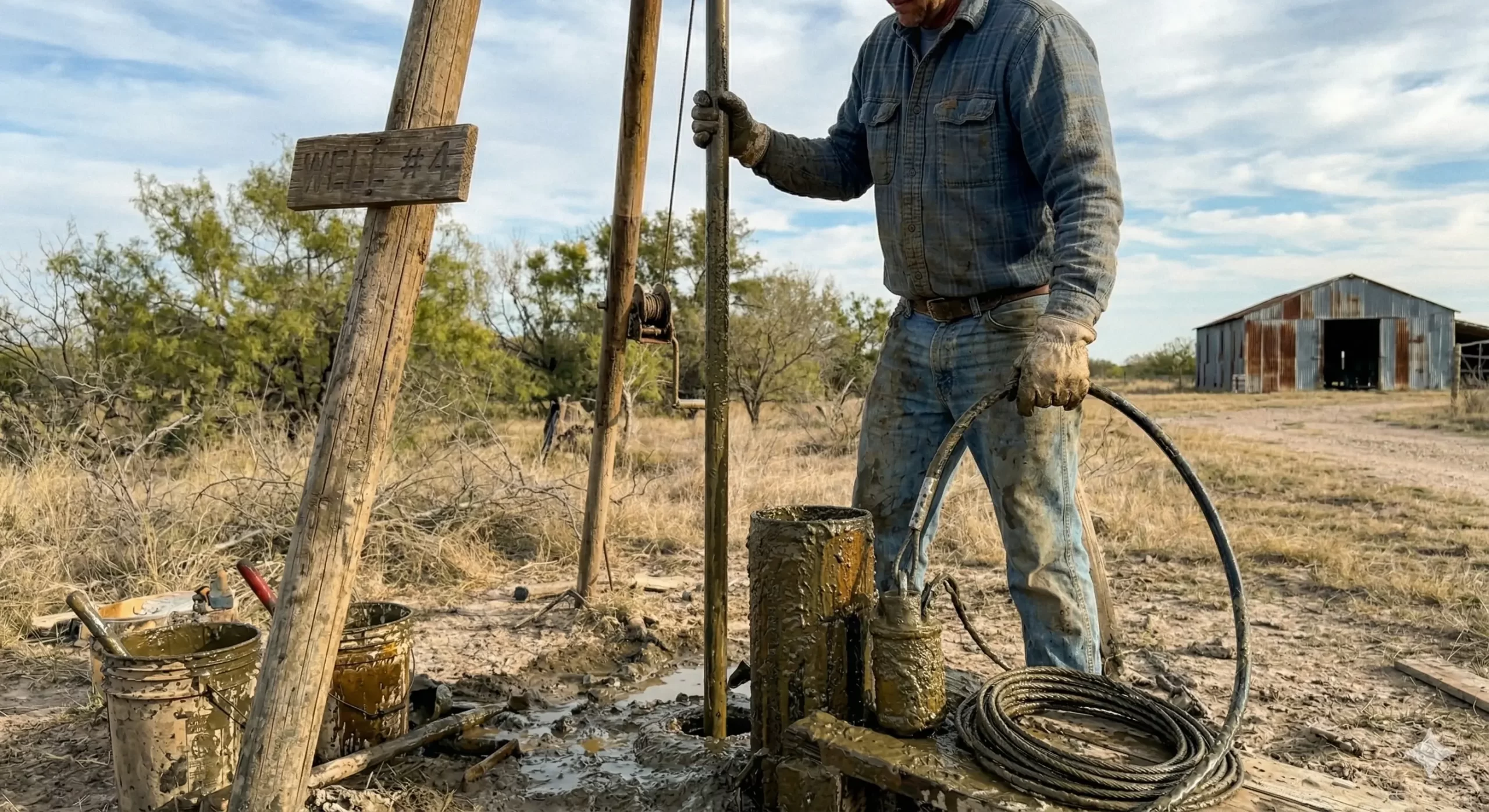
Pulling a pump here ain’t like pulling a fish out of a barrel. We’re dealing with deep wells, often 400-600 feet, sometimes even deeper. That means heavy lift rigs are mandatory, and sometimes access to the wellhead can be a bear, especially on older properties with overgrown trees or tight spaces. The bedrock, mostly limestone, means drilling new wells is expensive, and troubleshooting existing ones often involves specialized sonic or camera tools.
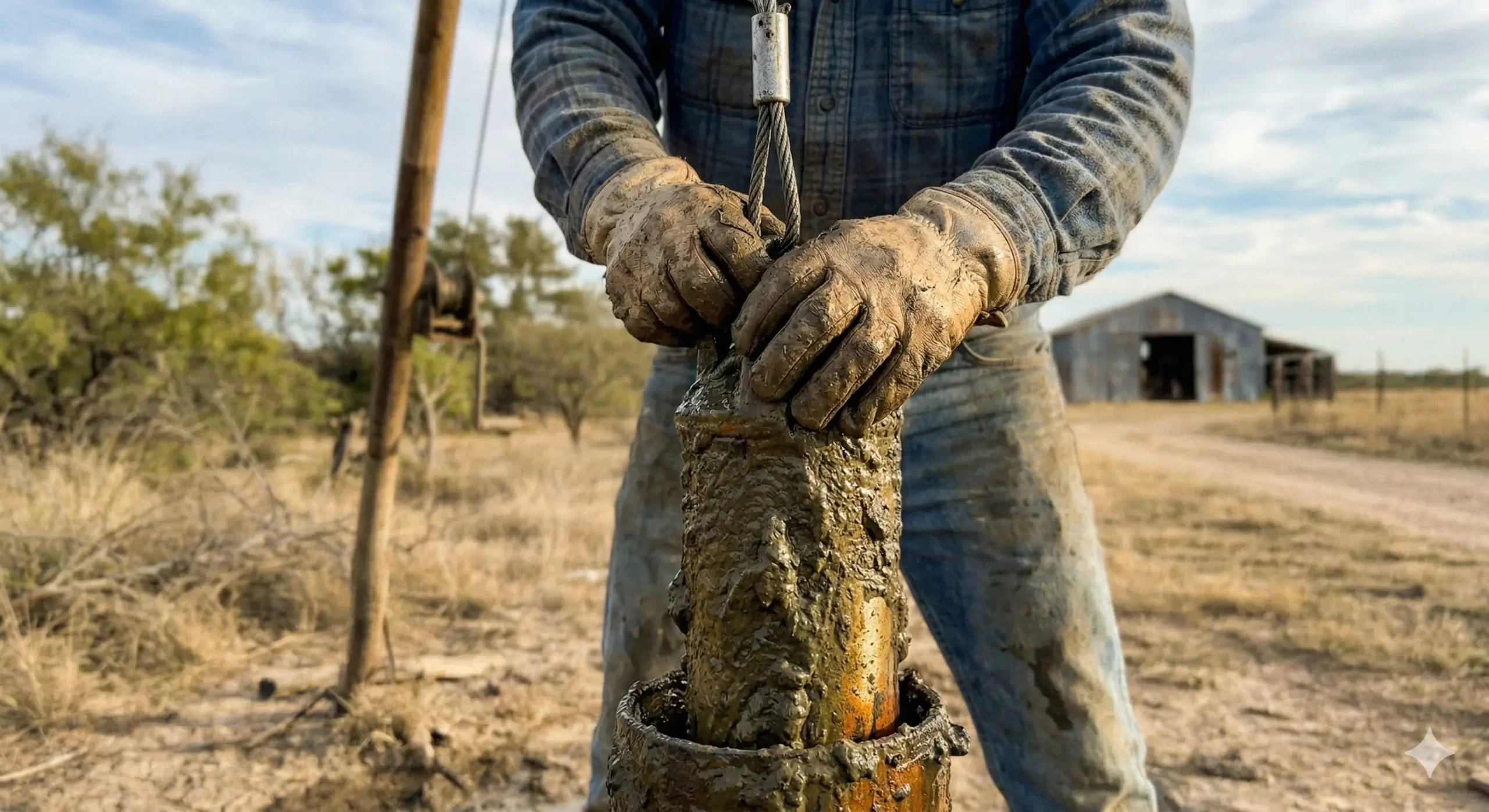
The equipment needed for a typical pump pull includes a heavy-duty pump hoist truck, often equipped with a crane or mast. We’re talking thousands of pounds of pipe & wire coming out of the ground. Specialized wrenches, pipe jacks, and even welding gear might be needed for older wellheads. Plus, diagnostic equipment to test motor windings, cable integrity, & pressure switches. This ain’t a pickup truck & a toolbox job; it’s a full-on rig operation.
Spring Well Maintenance in Texas
Heavy spring rains can cause surface runoff to breach well caps. We strongly recommend testing your water for coliform bacteria and inspecting the sanitary seal.
Save $500+ on Replacements
Via the TX Energy Co-op VFD Upgrade Program
74°F in Granbury
Local Aquifers & Geology
The primary groundwater sources in Granbury include the Trinity Aquifer System (Paluxy, Glen Rose, & Travis Peak formations). This system is a major source of groundwater for much of Central Texas. In Granbury, water is typically sourced from the Glen Rose & Paluxy formations, which are primarily limestone and sandstone with interbedded shales. The water is generally good quality but can be hard and often contains elevated levels of dissolved solids due to the limestone. Yields are moderate, and proper well design is critical to ensure sustainable supply. The Travis Peak formation, deeper down, can offer higher yields but at greater drilling costs.. Drilling through the local The predominant soils in Hood County are derived from limestone, sandstone, & shale bedrock. This results in mostly clayey soils (like Tarrant, Denton, & Doss series) and loamy soils. These soils are often shallow to moderately deep over bedrock, with significant rock outcroppings, especially closer to the Paluxy River and Brazos River valleys. The clay content can lead to expansive soils, which can affect well casings if not properly grouted, and cause issues with surface drainage around the wellhead. means that average well depths range from 300 ft – 700 ft.
Due to these geological factors, local homeowners frequently struggle with Pump motor burnout due to low voltage or mineral buildup on impellers & diffusers. The high mineral content (hardness) often causes scale to build up inside the pump, increasing friction and motor load, leading to overheating & failure..
Drilling Depth Comparison
Deeper wells require heavy-duty crane hoists for pump extraction.
Climate & Water Quality
Pump systems in the Granbury area face severe environmental stressors. The most significant threat is Granbury experiences hot, dry summers and occasional freezing winters. The extreme temperature swings stress electrical components, causing insulation to degrade faster. Droughts lead to lower water tables, making pumps work harder and longer, increasing the risk of overheating. Heavy rains after prolonged dry spells can cause soil shifting around wellheads, potentially damaging surface piping or electrical conduits. Freezes can burst exposed pipes or pressure tanks.
Additionally, the raw groundwater often presents issues with Hardness (calcium & magnesium) is the most prevalent issue, leading to scale buildup. Moderate iron levels are also common, causing staining and taste issues. Sulfur (hydrogen sulfide gas) can occur, giving a “rotten egg” smell. Fine sand or silt can be an issue in certain geological formations, causing abrasive wear on pumps..
Regional Groundwater Advisory
Known primary contaminant threat to submersible pumps and pipes in this area:
Common Area Systems
VFD Upgrade Savings
Constant Pressure vs StandardReplacing a standard single-speed pump with a Variable Frequency Drive (VFD) eliminates hard starts and drastically reduces energy draw in Texas.
Compliance & Local Permits
Hood County Level: Hood County falls under the jurisdiction of the Hood County Groundwater Conservation District (HCGCD).
* **Permit for New Wells:** A permit is required from the HCGCD before drilling any new water well, including domestic, livestock, irrigation, or commercial wells.
* **Driller’s Report:** The well driller must be licensed by TDLR and submit a driller’s log and well completion report to the HCGCD and TDLR within 30 days of completion.
* **Well Spacing & Production Limits:** The district has rules regarding minimum well spacing from property lines and other wells, as well as potential production limits to conserve the aquifer. These rules can vary based on the intended use and aquifer being tapped.
* **Plug & Abandonment:** A permit is also required to plug and abandon an old well, ensuring it’s done correctly to prevent contamination.
* **Registration of Existing Wells:** All wells, even older ones, are encouraged to be registered with the HCGCD.
Top Pump Brands in Texas
Most frequently installed hardware based on local geology (2026 data).
- Verify incoming power supply & voltage at control box & pressure switch.
- Check pressure tank air charge & integrity for proper system cycling.
- Perform amp draw test on pump motor to diagnose potential overload or short.
- Inspect all visible plumbing connections, valves, & fittings for leaks or corrosion.
- Test water quality for hardness, iron, and sediment (if applicable).
- Cycle pump & check cut-in/cut-out pressure settings on the pressure switch.
Premium Well Pump Brands We Service
Our licensed technicians in Granbury are certified to repair, replace, and install high-quality groundwater equipment from industry-leading manufacturers, including:
- No water at all, even with the pump running or trying to run.
- Low water pressure or inconsistent water flow.
- Pump cycling on & off rapidly (short cycling).
- Strange noises coming from the wellhead or pressure tank area.
- Murky, sandy, or discolored water suddenly appearing.
- Unusually high electric bills, indicating the pump is working overtime.
Granbury Real Estate Well Regulations
1. **Water Potability Test:** Required for FHA/VA loans, but wise for all, testing for coliform bacteria, nitrates, & lead.
2. **Flow Rate Test:** To determine the well’s yield (GPM) & static/pumping water levels.
3. **System Functionality:** Inspection of pump, pressure tank, controls, wiring, & visible plumbing for proper operation & safety.
4. **Wellhead Integrity:** Check for proper sealing, casing condition, & separation from potential contamination sources.
It’s critical to ensure the well meets current health & safety standards & can adequately supply the property. Any identified deficiencies should be addressed before closing.
Local Dispatch & Response Times
Live Dispatch: Texas
Updated Just Now⚠️ High demand. Call now to secure the next available technician.
- Average response time is 2-4 hours for emergency no-water calls within Granbury city limits & immediate surrounding areas.
- For calls further out in Hood County, it can extend to 4-6 hours depending on travel & current workload.
- Weekend & holiday emergencies typically add 1-2 hours to the response time.
- We prioritize calls based on immediate need, such as no water vs. low pressure.
- Our goal is to have a technician on-site or in contact within 4 hours to assess the situation & provide an ETA for repair.
⚠️ Hood County & State Regulatory Warning: Abandoned Wells
* **Casing:** Wells must be cased with new, clean, non-reused steel or PVC casing. The casing must extend a minimum of 18 inches above the natural ground surface and at least 2 inches above the finished floor level if inside a pump house. For domestic wells, 40 feet of surface casing is generally required, properly sealed. The casing must be strong enough to withstand installation and geological forces.
* **Grouting:** The annular space (the space between the borehole and the casing) must be properly grouted from the land surface down to the top of the producing aquifer or a minimum of 40 feet, whichever is greater, using neat cement or bentonite grout. This prevents surface contaminants from migrating down the well bore & contaminating groundwater.
* **Wellhead Completion:** The wellhead must be properly capped & sealed to prevent the entry of insects, rodents, & surface water. Backflow prevention devices are often required.
These regulations are designed to protect the integrity of the aquifer & ensure safe drinking water. Ignoring them can lead to significant contamination risks & legal penalties.
The Cost of Ignoring Symptoms
Fixing a short-cycling pump early saves thousands in Granbury.
Data reflects average well contractor estimates in Granbury.
Pump Lifespan Estimator
Select household size in Granbury to see strain impact.
Groundwater Threat Level
Current aquifer and mineral impact on pumps in Granbury.
Dropping water tables cause pumps to suck air and overheat.
Hard water calcifies pump impellers, reducing lifespan.
Local Granbury
Well Pros
Fast Local Service & Diagnostics
Calls are routed to a licensed local well professional.
Septic System Services in Granbury, TX
Do you have a septic tank on your property? Proper maintenance is critical to protecting your well water quality.
Granbury Homeowner Feedback
“Had a pump go out sudden like on a Saturday. Called ’em up, they were out by dinner. Got us fixed right, honest fellas. Much obliged.”

Local Homeowner
✓ Verified TX
“Our old well pump started acting real funny, making this grinding noise like a rusty coffee grinder, and then the water pressure just dropped off a cliff. I thought it was done for good. The tech, a fella named Billy, came out and spent a good hour diagnosing it. Turned out the impellers were all gunked up with mineral deposits and some sand, which was putting a huge strain on the motor. He had to pull the whole pump, which was a job & a half at 450 feet, but he got it done efficiently. Replaced the pump with a stronger unit designed for our water quality, and now we’ve got better pressure than ever. Didn’t even try to upsell us on stuff we didn’t need, just explained everything clearly. Good service, even with the typo on the invoice – ‘pump replacemnt’ instead of ‘replacement’, haha.”

Local Homeowner
✓ Verified TX
“Lost water in the middle of the night. Called first thing in the morning, & they had a crew out to Granbury faster than I expected. They diagnosed a bad pressure switch & had it swapped out, getting us back up & running by lunchtime. Couldn’t ask for quicker or more professional service when you’re without water.”

Local Homeowner
✓ Verified TX
Expert Granbury Well System FAQ
My well pump in Granbury keeps cycling on and off every few minutes, but I still have good water pressure. What’s going on?
That’s a classic sign of a waterlogged pressure tank, often referred to as ‘short cycling.’ Your pressure tank is designed to hold an air cushion that acts like a spring, compressing as water enters & expanding as water leaves, regulating pressure and reducing pump starts. If that air cushion is gone, usually because the bladder has failed or the air charge is too low, the pump will turn on every time you open a faucet, even briefly. We’d typically check the air pressure in the tank, and if that doesn’t fix it, it likely means the bladder has ruptured, and the tank needs replacement. Ignoring it will burn out your pump prematurely.
My water smells like rotten eggs, especially when I use hot water. Is this a well issue, and what can be done in Hood County?
That ‘rotten egg’ smell is almost certainly hydrogen sulfide gas, which is quite common in groundwater from the Trinity Aquifer, especially around Granbury. It’s often more noticeable with hot water because heating the water releases the dissolved gas more readily. While generally not a health risk at typical domestic concentrations, it’s certainly unpleasant. The good news is it’s treatable. We often recommend aeration systems, activated carbon filters, or sometimes a chlorine injection system followed by a filter to remove it. A professional water test will confirm the sulfur levels & help us recommend the most effective and cost-efficient treatment for your specific situation and water usage.
I’m looking to buy property outside Granbury city limits with an old, unused well. What should I be concerned about?
An old, unused well on a property presents several concerns here in Hood County. Firstly, its condition is unknown. The casing might be compromised, the pump seized, or the wiring faulty. It could even be an improperly abandoned well, which is a potential pathway for surface contaminants to enter the aquifer. You’ll need a thorough inspection to determine if it’s salvageable or if it needs proper plugging & abandonment according to Hood County GCD & TDLR regulations. Abandoning a well improperly can lead to fines & environmental hazards. It’s essential to factor in the cost of either rehabilitating the well or properly plugging it, which can range from a few hundred to several thousand dollars depending on depth and materials.
What’s the typical lifespan of a well pump in Granbury, considering our local water conditions and depths?
The typical lifespan of a quality submersible well pump in Granbury, operating in our local Trinity Aquifer conditions, is usually between 8 to 15 years. However, this can vary significantly based on several factors. The quality of the pump installed initially plays a huge role; cheaper pumps might only last 3-5 years. Our hard water and occasional sand content can cause premature wear on impellers and motors. Also, how often the pump cycles, the depth it’s set at, and whether the pressure tank is properly maintained all affect longevity. Regular maintenance, including checking water quality and proper pressure tank air charge, can help maximize your pump’s life, but eventually, the mineral wear & tear will take its toll.
Granbury Groundwater Expert AI
What are the specific groundwater regulations, average well depths, and the local conservation district for Granbury, Hood County?
Groundwater Regulations, Well Depths, and Conservation District for Granbury, Hood County, TX (2026)
As a Senior Hydrogeologist and Local Groundwater Regulatory Expert for Texas, I can provide you with the precise information regarding residential water wells in Granbury, Hood County.For the year 2026, the regulatory framework and hydrogeological conditions in Granbury remain consistent with the established oversight bodies and aquifer systems.
Local Groundwater Conservation District
The primary local groundwater regulatory authority for Granbury and all of Hood County is the Upper Trinity Groundwater Conservation District (UTGCD). The UTGCD is responsible for conserving, preserving, protecting, and recharging groundwater within its jurisdiction, and for preventing waste of groundwater. They establish rules for drilling, spacing, and operating water wells to protect the resource for all users.
- Official Website: https://uppertrinitygcd.com/
Specific Groundwater Regulations
Residential water well regulations in Granbury are governed by both state and local rules:
-
State Regulations (Texas Department of Licensing and Regulation - TDLR):
All water well drilling and pump installation in Texas, including for residential wells in Granbury, must be performed by drillers and pump installers licensed by the Texas Department of Licensing and Regulation (TDLR). This is mandated by Texas Occupations Code Chapter 1901. TDLR sets minimum well construction standards to protect groundwater quality and public health (e.g., casing requirements, wellhead completion). Well drillers are required to submit a State Water Well Driller's Report (also known as a "well log") to the TDLR and the Texas Water Development Board (TWDB) within 90 days of well completion.
- Relevant State Code: Texas Occupations Code Chapter 1901
- Relevant State Rules: 16 Texas Administrative Code (TAC) Chapter 76 (Water Well Drillers and Pump Installers)
- TDLR Well Driller & Pump Installer Program: https://www.tdlr.texas.gov/wwpd/wwpd.htm
- TDLR License/Well Log Search: https://www.tdlr.texas.gov/LicenseSearch/ (You can search for licensed drillers and existing well logs here)
-
Local Regulations (Upper Trinity Groundwater Conservation District - UTGCD):
The UTGCD has its own set of rules, established under the authority of Texas Water Code Chapter 36. For residential water wells in Granbury, these typically include:
- Permitting: You will generally need to obtain a drilling permit from the UTGCD before commencing drilling a new water well. This ensures the well meets district standards and is properly registered.
- Well Spacing Requirements: The UTGCD rules will specify minimum distances between new wells and existing wells, as well as property lines, to prevent undue interference between wells and protect the overall aquifer. These specific setback distances are detailed in the UTGCD rules.
- Well Construction Standards: While generally mirroring TDLR standards, the UTGCD may have additional requirements to ensure the protection of local groundwater resources.
- Well Reporting: In addition to the state well log, the UTGCD may require copies of the well log and other specific information directly submitted to them.
- Conservation Measures: Although less common for individual residential wells, the district has the authority to implement conservation measures if groundwater levels become a concern.
It is crucial to consult the latest UTGCD Rules, available on their website, before planning any well activities.
Average Well Depths for Granbury
Based on historical state well logs and hydrogeological studies of Hood County, the average depth for a residential water well in Granbury targeting a reliable and sustainable water supply from the primary aquifer is approximately 450 feet. However, depths can vary significantly depending on the specific location, local geology, and the desired yield, typically ranging from 300 to 600 feet. Shallower wells might exist but often encounter less reliable or lower-yielding zones, especially for newer installations seeking long-term supply.
Specific Aquifer Beneath Granbury
The primary aquifer system supplying groundwater to Granbury and Hood County is the Trinity Aquifer. This aquifer is a major groundwater source for a large portion of Central Texas. In the Granbury area, the Trinity Aquifer is comprised of three main formations, from shallowest to deepest:
- Paluxy Formation
- Glen Rose Formation
- Travis Peak Formation (often the target for deeper, more prolific residential wells)
Wells in Granbury typically draw water from one or more of these formations within the Trinity Aquifer, with the Glen Rose and Travis Peak being common targets for reliable residential supply.
Fast Local Service & Diagnostics
Calls are routed to a licensed local well professional.
Blix
provides official
Emergency Well Pump Repair services for the
Granbury
area.