
Emergency Well Pump Repair in Bay City, TX
Bay City sits right on the edge of the Texas Gulf Coast, and that brings a unique set of challenges for groundwater. We’re dealing with a dynamic environment where water demand from agriculture, industry, and growing populations puts real stress on the aquifer. The constant threat of saltwater intrusion, especially closer to the coast or with over-pumping, means folks here can’t afford to cut corners on their well systems.
Our primary source of drinking water comes from the Chicot Aquifer, which is part of the larger Gulf Coast Aquifer system. This aquifer is mostly composed of unconsolidated sands, silts, and clays. While it’s generally productive, the sandy nature of the formation means well screens and pump intakes are constantly bombarded with abrasive particles, leading to premature wear if not properly designed and maintained.
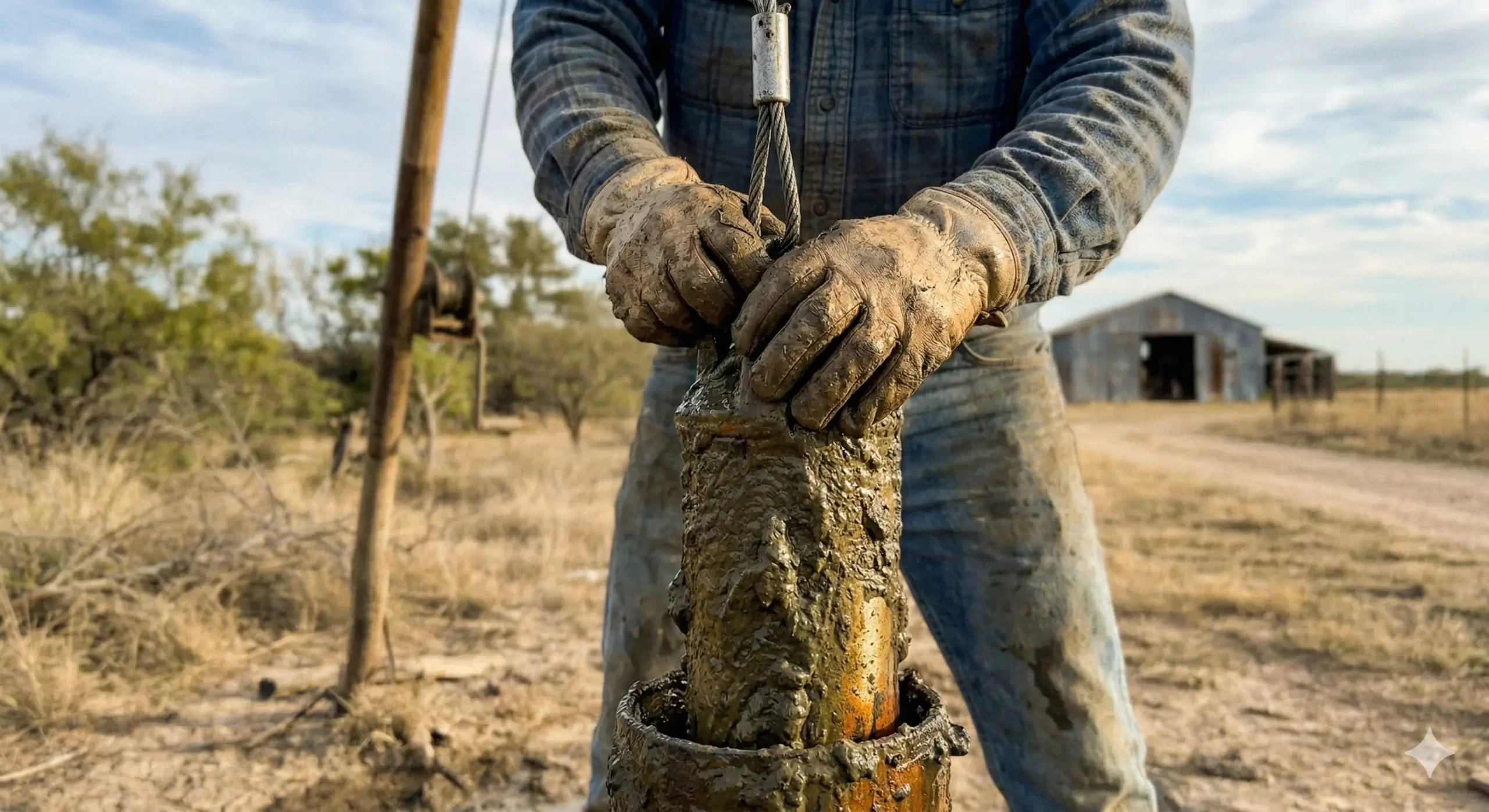
I’ve seen it a thousand times: someone tries to save a buck on a cheap pump or opts for a quick-fix repair, and within a year or two, they’re calling me again. In Matagorda County, where water quality can be tough on equipment—think iron, sulfur, and sand—a cheap pump just can’t stand up to the daily grind. It’s a false economy, plain and simple, and usually ends up costing more in the long run when that low-grade motor burns out or the impellers get eaten away by sand.
Fast Local Service & Diagnostics
Calls are routed to a licensed local well professional.
Well Pump Repair in
Bay City
Bay City & Matagorda County Well Stats
Matagorda County has a significant number of private domestic wells, especially outside of Bay City proper. Agriculture is a huge water user (rice, row crops), drawing heavily from the aquifer. Municipal wells also contribute significantly. Many older wells may not meet current casing standards, and subsidence due to groundwater withdrawal is a long-term concern for the region. Wells here typically produce moderate to high yields, often requiring larger capacity pumps than what you’d see in dryer regions.
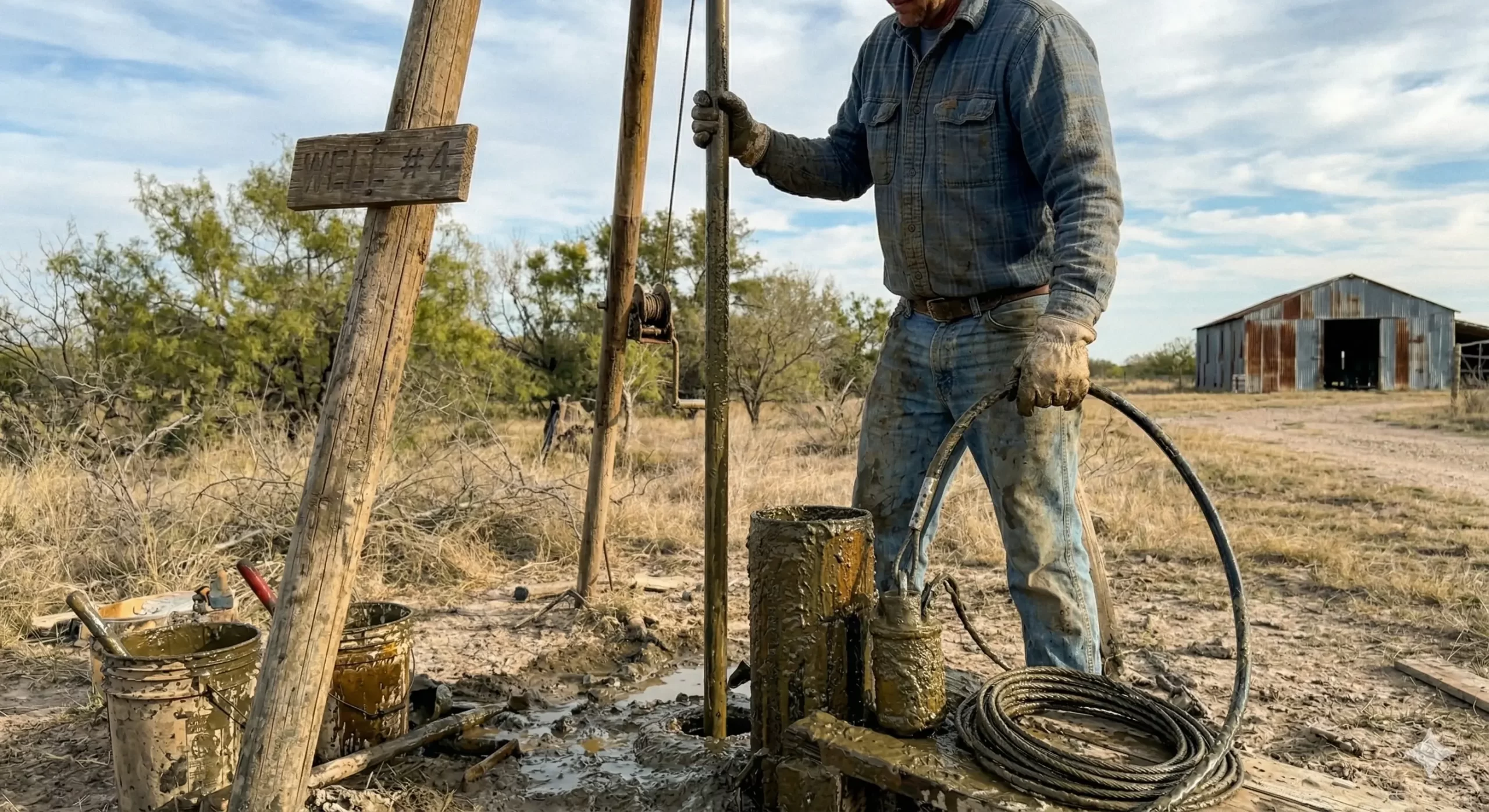
Pulling a pump here in Matagorda County isn’t like working in solid rock country, but it has its own challenges. Most wells are drilled into unconsolidated sand and clay formations, which means well casings need to be properly set to prevent collapse. While we don’t often encounter bedrock at typical domestic well depths, the sheer depth of some wells, coupled with the potential for sand to bridge around the pump or column pipe, can make extraction tricky and time-consuming. Access to rural properties, especially those with tight gates or overhead lines, also dictates the type of rig we can bring in, sometimes requiring smaller, more specialized equipment.
For most pump replacements, we need a heavy-duty well service rig, capable of lifting thousands of pounds of pipe and pump from depths often exceeding 300 feet. We also bring specialized pipe wrenches, pump hoists, and diagnostic equipment to check the motor’s insulation and windings, as well as the well’s integrity. For larger irrigation or commercial wells, a crane might even be necessary, adding to the complexity and cost.
Spring Well Maintenance in Texas
Heavy spring rains can cause surface runoff to breach well caps. We strongly recommend testing your water for coliform bacteria and inspecting the sanitary seal.
Save $500+ on Replacements
Via the TX Energy Co-op VFD Upgrade Program
80°F in Bay City
Local Aquifers & Geology
The primary groundwater sources in Bay City include the Chicot Aquifer. This aquifer is primarily composed of unconsolidated Quaternary sands, silts, and clays, acting as an unconfined to semi-confined aquifer across much of the Texas Gulf Coast. It’s known for moderate to high yields, making it an excellent source for irrigation, municipal, and domestic uses. However, its proximity to the coast means it’s susceptible to saltwater intrusion from the Gulf, and the sandy nature of the formation often leads to issues with sand production in wells if not properly screened and developed. Water quality varies but commonly exhibits elevated iron and manganese, and sometimes hydrogen sulfide.. Drilling through the local The predominant soil types in Matagorda County are largely influenced by its coastal plain geography. We primarily see deep, loamy soils, silty clays, and sandy loams, often with a high water table. These soils are typically dark and fertile, derived from Quaternary sediments. Drainage can be poor in some areas, especially closer to the coast, leading to saturated conditions. The underlying geology consists of thick sequences of unconsolidated sands, clays, and gravels, which is what our wells are drilled into. means that average well depths range from 150 ft – 500 ft.
Due to these geological factors, local homeowners frequently struggle with Sand abrasion of pump impellers and housings, leading to reduced flow and eventual pump failure. This is often compounded by inadequate well screen design or deterioration of older screens..
Drilling Depth Comparison
Deeper wells require heavy-duty crane hoists for pump extraction.
Climate & Water Quality
Pump systems in the Bay City area face severe environmental stressors. The most significant threat is The intense humidity and corrosive salt air (especially for wells closer to the Gulf or during strong southerly winds) can significantly shorten the lifespan of exposed well components, including control boxes, pressure switches, and wellheads. Furthermore, Bay City is highly susceptible to tropical storms and hurricanes, which bring heavy rainfall and potential flooding. Submerged wellheads can become contaminated, and prolonged power outages necessitate reliable backup power solutions for pumps. Extreme summer heat also stresses pump motors, especially if ventilation is poor.
Additionally, the raw groundwater often presents issues with High levels of dissolved iron and manganese are very common, leading to staining, foul odors, and bacterial growth. Hydrogen sulfide (sulfur) is also prevalent, causing a distinct rotten egg smell. Sand production from the aquifer is a continuous problem, contributing to pump wear and system clogging. Hardness is present but usually not as severe a primary concern as iron, manganese, and sulfur..
Regional Groundwater Advisory
Known primary contaminant threat to submersible pumps and pipes in this area:
Common Area Systems
VFD Upgrade Savings
Constant Pressure vs StandardReplacing a standard single-speed pump with a Variable Frequency Drive (VFD) eliminates hard starts and drastically reduces energy draw in Texas.
Compliance & Local Permits
Matagorda County Level: The Matagorda County Groundwater Conservation District (MCGCD) is the governing body for well permitting here. Any new well, or significant modification to an existing well, generally requires a permit from the MCGCD *before* drilling commences. This includes domestic, livestock, irrigation, and public supply wells. They have rules regarding well spacing to prevent interference between wells, casing and cementing requirements to protect the aquifer from contamination, and often production limits for larger wells. It’s critical to check with the MCGCD directly for the latest regulations, as they are actively managing the aquifer resources in our county, particularly concerning potential subsidence and saltwater intrusion.
Top Pump Brands in Texas
Most frequently installed hardware based on local geology (2026 data).
- Verify electrical supply, voltage, and amperage at the control box.
- Check pressure tank air charge and bladder integrity.
- Inspect wellhead for proper sealing, vermin entry, and integrity of electrical conduit.
- Measure static and pumping water levels if possible, and check for sand production.
- Examine pump control box components for wear, corrosion, or burnt contacts.
- Test water quality for iron, sulfur, and pH, offering solutions for prevalent issues.
Premium Well Pump Brands We Service
Our licensed technicians in Bay City are certified to repair, replace, and install high-quality groundwater equipment from industry-leading manufacturers, including:
- No water at all, or very low pressure when running.
- Pump running continuously without building pressure.
- Spitting or cloudy water from faucets, often indicating sand.
- Frequent cycling of the pump (turning on and off rapidly).
- Unusual noises coming from the wellhead or pressure tank area.
- High electric bills, suggesting the pump is working harder than it should or has a short.
Bay City Real Estate Well Regulations
Local Dispatch & Response Times
Live Dispatch: Texas
Updated Just Now⚠️ High demand. Call now to secure the next available technician.
- Getting a crew mobilized usually takes 1-3 hours, depending on the time of day and current workload.
- Travel time to rural Matagorda County properties can add another 30 minutes to 1.5 hours.
- We prioritize no-water emergencies, but peak season (summer) can mean a bit longer wait.
- If specialized parts aren’t on the truck, sourcing them from suppliers can add 24-48 hours.
- Complex issues like well bore obstruction or collapsed casing can extend repair times significantly, sometimes days.
⚠️ Matagorda County & State Regulatory Warning: Abandoned Wells
The Cost of Ignoring Symptoms
Fixing a short-cycling pump early saves thousands in Bay City.
Data reflects average well contractor estimates in Bay City.
Groundwater Threat Level
Current aquifer and mineral impact on pumps in Bay City.
Dropping water tables cause pumps to suck air and overheat.
Hard water calcifies pump impellers, reducing lifespan.
Pump Lifespan Estimator
Select household size in Bay City to see strain impact.
Local Bay City
Well Pros
Fast Local Service & Diagnostics
Calls are routed to a licensed local well professional.
Septic System Services in Bay City, TX
Do you have a septic tank on your property? Proper maintenance is critical to protecting your well water quality.
Bay City Homeowner Feedback
“Had a problem with my well not pullin’ water. Called ’em up, they were out here quick. Fixed it right up, no fuss. Good folks.”

Local Homeowner
✓ Verified TX
“My old pump started acting real funny, making a terrible grinding sound, and then just stopped pumping enough water for the house and barn. I called these guys, and they sent a fella named Billy. Billy got here, listened to my description, and then hooked up his diagnostic gear. He said it was classic sand abrasion, and that my impellers were likely shot. Turns out, the well screen was also partly clogged up. They pulled the old pump, showed me the damage – you could see where the sand had just eaten away at it. They recommended a new, heavy-duty stainless steel submersible, and explained why it was better for our sandy soil. The price was fair for what they did, and the new pump works like a charm. No more grindin’, and the water pressure is better than ever. Billy even gave me some tips to help with the iron stains. Great service, even with my old well.”

Local Homeowner
✓ Verified TX
“We woke up to no water on a Sunday morning, and with two little ones, that’s a disaster. Called these guys, and they had a tech dispatched within the hour. He was at our place in Bay City faster than I expected for a weekend. He diagnosed the pressure switch quickly and had it replaced in no time. We had water back before lunch! Lifesavers.”

Local Homeowner
✓ Verified TX
Expert Bay City Well System FAQ
My well water in Bay City always seems to have sand, and it’s ruining my washing machine and making my pump work too hard. What can be done?
Sand production is a very common issue in Matagorda County due to our unconsolidated aquifer formations. The first step is to accurately diagnose the source: is it a new well that wasn’t properly developed, or an older well with a failing screen, or is the pump set too low? We start by measuring sand content and checking the well’s physical integrity with a downhole camera if necessary. Solutions can range from raising the pump intake, installing a higher-quality well screen with an appropriate slot size, or installing a robust centrifugal sand separator at the surface. For severe cases, a new well might be the only long-term solution. Ignoring sand will lead to premature pump failure, clogged plumbing, and damaged appliances.
My well water smells like rotten eggs and stains everything orange in my home near Sargent. Is this fixable, and what causes it?
That ‘rotten egg’ smell is almost certainly hydrogen sulfide gas, and the orange staining is due to high levels of dissolved iron and sometimes manganese, both of which are very common in the groundwater here, especially closer to the coast and in areas like Sargent. These issues are definitely fixable. For hydrogen sulfide, we often recommend aeration systems, chemical oxidation (like chlorine injection followed by filtration), or activated carbon filters. For iron and manganese, an iron filter (either greensand, birm, or a proprietary media system) or an oxidation/filtration system is usually the most effective. The specific solution depends on the concentration of contaminants, your water usage, and your budget. We’d perform a detailed water analysis to recommend the most efficient and cost-effective treatment system for your specific well.
I’m concerned about saltwater intrusion into my well, especially with all the talk about coastal issues. How can I tell if it’s happening, and what should I do?
Saltwater intrusion is a serious concern for wells in Matagorda County, especially those closer to the Gulf or in heavily pumped areas. The most obvious sign is a noticeable change in water taste—it’ll become distinctly salty or brackish. You might also notice increased corrosion on plumbing fixtures or scale buildup that’s different from typical hard water. The best way to detect it early is through regular water quality testing, specifically monitoring chloride levels. If chloride levels start to rise consistently, it’s a red flag. Unfortunately, reversing saltwater intrusion in an aquifer is extremely difficult. Mitigation strategies often involve reducing pumping rates, considering a deeper well if a freshwater zone exists below the affected one, or in severe cases, abandoning the well. Protecting our freshwater resources is why local groundwater districts have strict rules.
With hurricane season always a threat, what should I do to protect my wellhead from flooding in Bay City?
Protecting your wellhead from floodwaters is critical to prevent contamination of your drinking water supply, especially in a flood-prone area like Bay City. First, ensure your wellhead extends at least 12-18 inches above the highest known flood level for your property. The casing should be properly sealed with a watertight cap and electrical conduit. Consider building a protective berm or concrete pad around the wellhead to elevate it further. In anticipation of a flood, turn off the power to your well pump at the breaker. After a flood recedes, do NOT turn the pump back on until the wellhead area has been thoroughly disinfected and visually inspected for damage or submersion. It’s crucial to have your well disinfected and tested for bacteria (like E. coli) by a professional well contractor before resuming water use, as floodwaters can introduce harmful pathogens.
Bay City Groundwater Expert AI
What are the specific groundwater regulations, average well depths, and the local conservation district for Bay City, Matagorda County?
Residential Water Well Information for Bay City, Matagorda County (2026)
As a Senior Hydrogeologist and Local Groundwater Regulatory Expert for Texas, I can provide you with specific information regarding residential water wells in Bay City, Matagorda County. It's important to understand the regulatory landscape in areas without a dedicated local Groundwater Conservation District, as state-level regulations take precedence.
Local Groundwater Conservation District
As of 2026, Matagorda County does not have an active, locally-created Groundwater Conservation District (GCD). This means that the primary regulatory authority for water well drilling, construction, and plugging for residential wells falls under state jurisdiction, specifically the Texas Department of Licensing and Regulation (TDLR).
Specific Groundwater Regulations
Since there is no local GCD for Matagorda County, residential water wells are primarily governed by state regulations enforced by the Texas Department of Licensing and Regulation (TDLR). These regulations are found in:
- Texas Water Code Chapter 36: While primarily establishing the authority for GCDs, it also underpins general state policy on groundwater.
- Texas Water Code Chapter 35: Pertains to Water Well Drillers and Pump Installers, mandating their licensing and defining their responsibilities.
- Title 16, Texas Administrative Code, Part 4, Chapter 76 (Water Well Drillers and Pump Installers): These rules set forth the specific requirements for drilling, casing, cementing, and plugging water wells, as well as the licensing of drillers and pump installers. Key regulatory aspects for residential wells include:
- Driller Licensing: All individuals drilling or plugging water wells must be licensed by the TDLR.
- Well Construction Standards: Wells must be constructed to minimum standards to prevent contamination, including requirements for casing, cementing, and wellhead completion.
- Well Registration: Licensed drillers are required to submit a well log and drilling report to the TDLR within 60 days of completion or alteration of any water well, which registers the well with the state. This log contains vital information such as well depth, casing details, and geological formations encountered.
- Well Plugging: Abandoned or deteriorated wells must be properly plugged by a licensed driller to prevent contamination of groundwater.
- Setback Requirements: While not explicitly detailed in the same way a GCD might impose spacing rules, state health codes and environmental regulations (e.g., related to septic systems) establish minimum separation distances between water wells and potential sources of contamination like septic fields, feedlots, or waste disposal sites. For example, a minimum of 50 feet is often cited for septic drainfields, but specific site conditions and local ordinances (if any) could require more.
Average Well Depths for Bay City
For residential water wells in Bay City, Matagorda County, targeting a reliable and potable water supply from the local aquifers, the estimated average well depth is generally between 150 and 200 feet. Some wells may be shallower (e.g., 80-120 feet) if targeting non-potable irrigation or specific localized lenses, while deeper wells (up to 300 feet) may be drilled to ensure better water quality or quantity, or to avoid shallower saline intrusion which can be a concern closer to the coast. This range accounts for variability in the water table and specific aquifer conditions in the Bay City area.
Specific Aquifer
The primary aquifer system underlying Bay City, Matagorda County, is the Gulf Coast Aquifer System. This extensive system comprises several distinct hydrogeologic units, with residential wells in your area typically drawing water from the shallower to intermediate portions, specifically the Chicot and Evangeline aquifers.
Official Resources and URLs
- Texas Department of Licensing and Regulation (TDLR) - Water Well Drillers and Pump Installers Program: This is your primary state regulatory body.
- TDLR Online Well Log Search: You can search for existing well logs in your area to see actual reported depths and construction details of nearby wells. This is a highly valuable tool for understanding local conditions.
- Texas Water Code Chapter 35 (Water Well Drillers):
- Title 16, Texas Administrative Code, Chapter 76 (Water Well Drillers and Pump Installers): These are the detailed rules for well construction and licensing.
For any specific project, always consult with a licensed water well driller experienced in the Matagorda County area. They will have the most current information regarding local drilling conditions and requirements.
Fast Local Service & Diagnostics
Calls are routed to a licensed local well professional.
Blix
provides official
Emergency Well Pump Repair services for the
Bay City
area.