
Emergency Well Pump Repair in Dobbin, TX
Dobbin, like much of rural Montgomery County, sits atop a challenging geological formation. We’re dealing with deep water tables and soil profiles that are notorious for shifting and impacting well casings over decades. The groundwater here, while plentiful, comes with its own set of characteristics that demand robust pump systems.
Our primary source is the Gulf Coast Aquifer system, which means we’re drawing from layers of sand, silt, and clay. These aren’t crystalline rock formations; they’re unconsolidated materials. This is why you’ll often see issues with sand intrusion, especially in older wells or those not properly developed.
Folks try to save a buck with cheaper pumps, and I’ve seen it time and again – they just don’t hold up. The demanding conditions here – the deep lifts, the potential for sand, and the occasional power surge – mean that anything less than commercial-grade components will burn out or seize up prematurely. You pay for it upfront, or you pay for it later with a failed system.
Fast Local Service & Diagnostics
Calls are routed to a licensed local well professional.
Well Pump Repair in
Dobbin
Dobbin & Montgomery County Well Stats
Montgomery County has seen a steady increase in well drilling, with thousands of active private wells. The majority are for domestic use, with depths generally between 200 and 600 feet, sometimes deeper for higher yields. Water levels have generally remained stable due to the Lone Star Groundwater Conservation District (LSGCD) regulations, but localized drawdowns can occur in high-density areas.
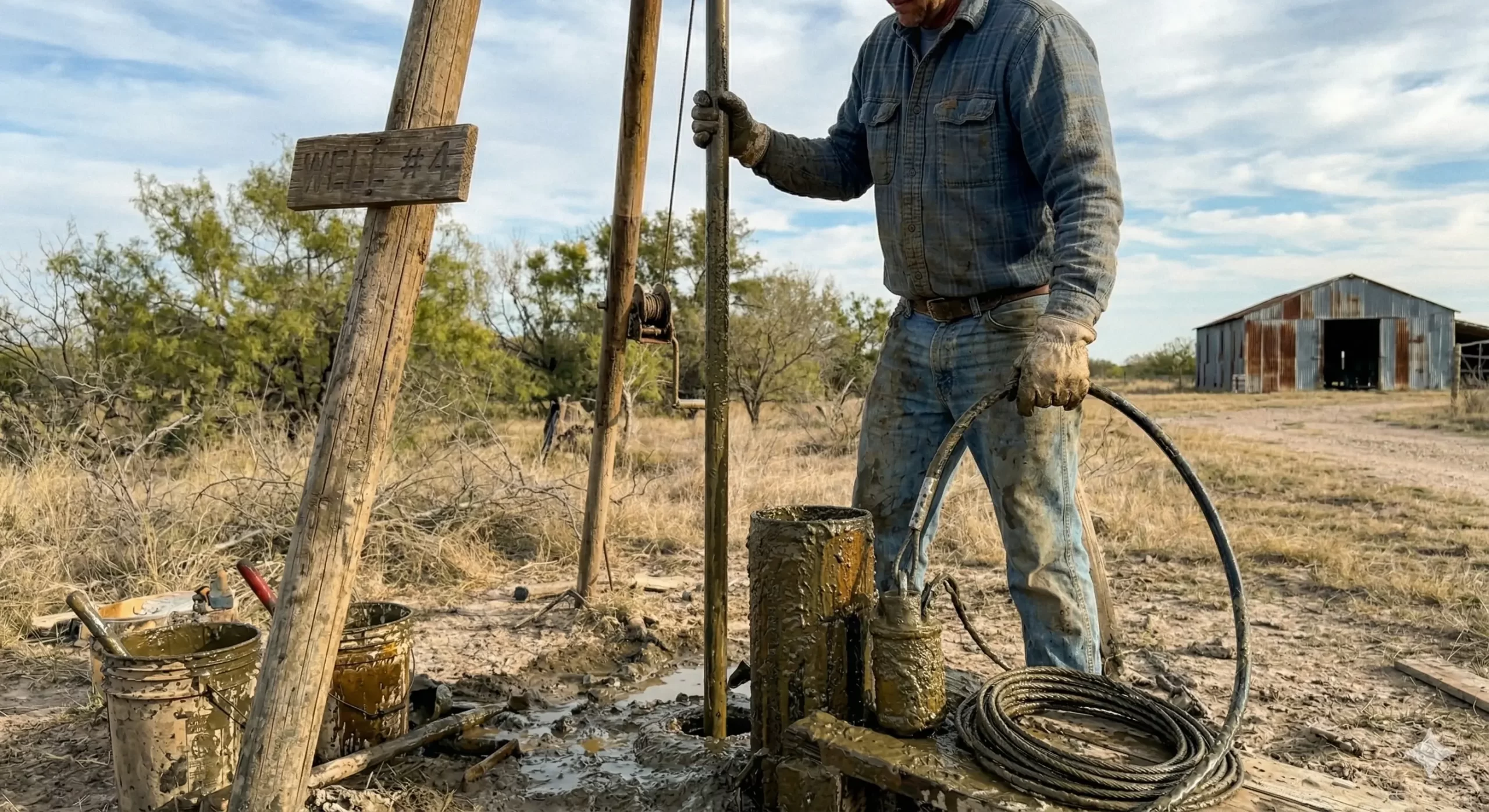
Pulling a pump here in Dobbin often involves negotiating tight access roads, soft ground, and deep well installations. Unlike areas with solid bedrock closer to the surface, our wells can be several hundred feet deep, and getting a heavy-duty well rig on-site, especially after a good rain, can be a challenge. The time and specialized equipment needed to safely hoist hundreds of feet of drop pipe and wire add significant labor and operational costs.
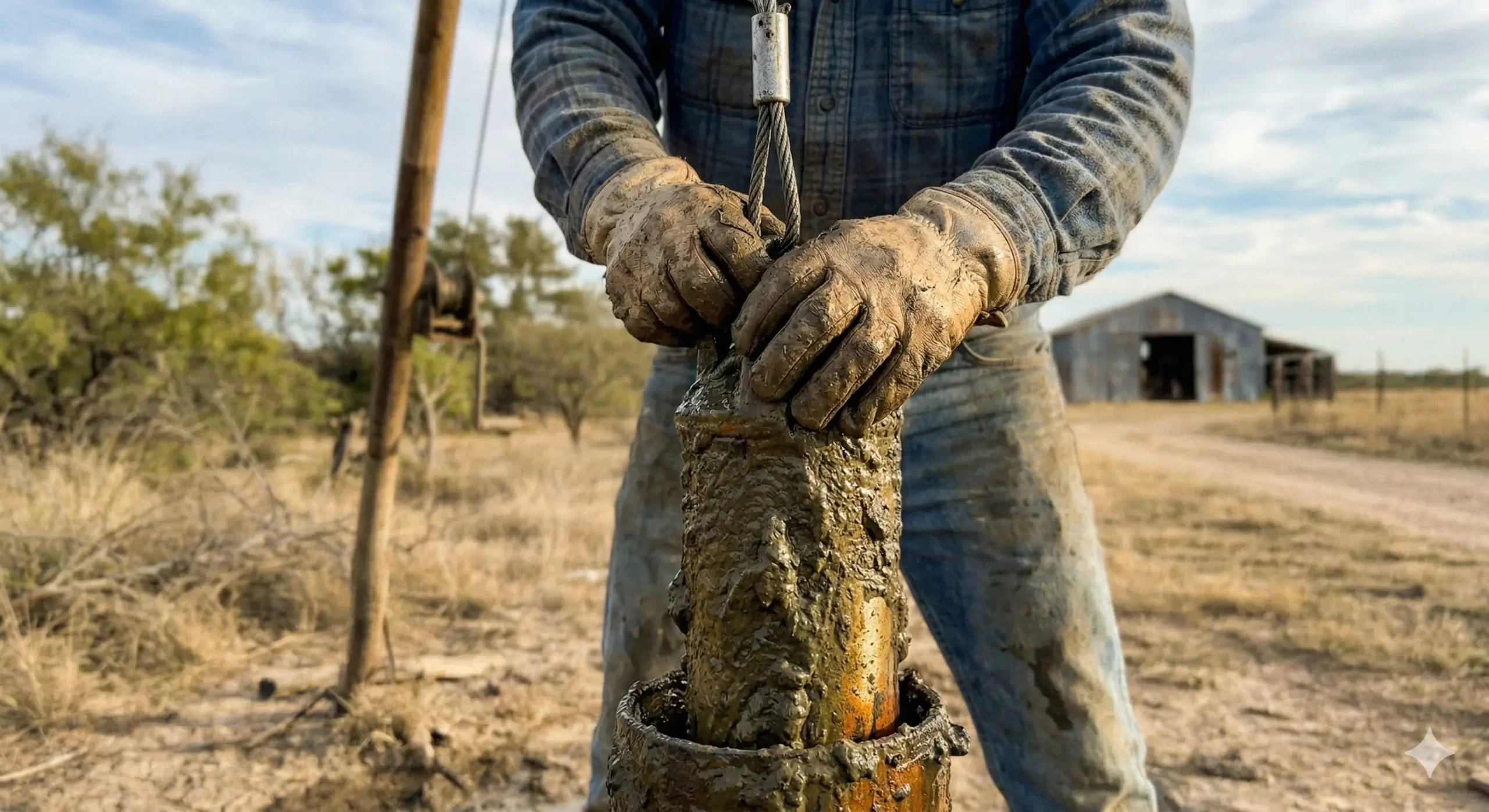
For a typical submersible pump job, we’re bringing out a dedicated well rig – a truck-mounted hoist designed specifically for this purpose. We also need specialized tooling for wellhead removal, pipe wrenches for various sizes of drop pipe, electrical diagnostic equipment, and often a generator for on-site power. If we hit a snag like corroded pipe threads or a collapsed casing, that’s extra time and specialty tools.
Spring Well Maintenance in Texas
Heavy spring rains can cause surface runoff to breach well caps. We strongly recommend testing your water for coliform bacteria and inspecting the sanitary seal.
Save $500+ on Replacements
Via the TX Energy Co-op VFD Upgrade Program
53°F in Dobbin
Local Aquifers & Geology
The primary groundwater sources in Dobbin include the The Gulf Coast Aquifer system, specifically the Jasper and Evangeline aquifers, are our workhorses here. The Jasper is typically found at shallower to moderate depths, offering good quality water, though often with some hardness and iron. The Evangeline, generally deeper, also provides reliable yields but can present more challenges with dissolved solids and occasional sand. Both are composed of unconsolidated sands, silts, and clays, which means they’re prone to sand production if not properly screened and developed.. Drilling through the local Dobbin’s soil profile is predominantly characterized by sandy loams and fine sands at the surface, transitioning to more substantial clay layers and sandy clay loams as you go deeper. Beneath these, you encounter the interbedded sands and clays of the aquifer system. This composition means variable stability for well casings and can contribute to surface erosion around wellheads if not properly maintained. means that average well depths range from 250 ft – 550 ft.
Due to these geological factors, local homeowners frequently struggle with Sand abrasion and motor burnout. The unconsolidated nature of our aquifers means fine sand is a constant threat. It grinds away at impellers and internal pump components, leading to premature wear. Compounding this, inadequate pump sizing for the well’s yield, or running the pump dry due to fluctuating water levels, leads to overheating and motor burnout..
Drilling Depth Comparison
Deeper wells require heavy-duty crane hoists for pump extraction.
Climate & Water Quality
Pump systems in the Dobbin area face severe environmental stressors. The most significant threat is Extreme Texas weather is a pump’s enemy. During our brutal summers, high ambient temperatures combined with continuous pump operation can push motor temperatures beyond limits, leading to premature failure. Droughts lower static water levels, forcing pumps to work harder and potentially run dry, causing heat damage. Conversely, hard freezes can damage exposed pressure tanks, gauges, and above-ground plumbing, leading to cracks and leaks that overwork the pump or cause complete system failure.
Additionally, the raw groundwater often presents issues with Hardness and iron are very common. Many wells in Dobbin will also contend with some level of hydrogen sulfide (rotten egg smell) and occasional manganese. Sand intrusion, as mentioned, is a persistent mechanical issue, but it also impacts water quality, requiring filtration in many homes..
Regional Groundwater Advisory
Known primary contaminant threat to submersible pumps and pipes in this area:
Common Area Systems
VFD Upgrade Savings
Constant Pressure vs StandardReplacing a standard single-speed pump with a Variable Frequency Drive (VFD) eliminates hard starts and drastically reduces energy draw in Texas.
Compliance & Local Permits
Montgomery County Level: The Lone Star Groundwater Conservation District (LSGCD) governs all groundwater withdrawal in Montgomery County, including Dobbin. For new domestic wells, an application must be submitted to LSGCD, along with a drilling report (WCR-1 form) filed with the Texas Water Development Board (TWDB) by a licensed driller. While domestic wells for in-house use are generally exempt from permitting fees and annual reporting on pumpage, drillers still need to be licensed, and the well must meet all spacing and construction standards set by both TDLR & LSGCD. Any significant modification or re-drilling requires similar notifications.
Top Pump Brands in Texas
Most frequently installed hardware based on local geology (2026 data).
- Verify incoming power supply & voltage at control box & pump terminals.
- Check pressure tank air charge & bladder integrity.
- Measure pump amperage draw against manufacturer specifications.
- Inspect wellhead integrity, seal, & conduit for damage or corrosion.
- Test pump starting components (capacitors, relays) & pressure switch.
- Assess water clarity & flow rate to detect sand or reduced output.
Premium Well Pump Brands We Service
Our licensed technicians in Dobbin are certified to repair, replace, and install high-quality groundwater equipment from industry-leading manufacturers, including:
- No water at all, or very low water pressure.
- Pump constantly cycling on & off, or running excessively long.
- Cloudy or sandy water coming from the tap.
- Strange noises or vibrations coming from the pressure tank area.
- Unusually high electric bills without increased usage.
- Visible leaks around the wellhead or pressure tank.
Dobbin Real Estate Well Regulations
Local Dispatch & Response Times
Live Dispatch: Texas
Updated Just Now⚠️ High demand. Call now to secure the next available technician.
- Within 2-4 hours for critical “no water” calls for established customers.
- New customers typically within 4-8 hours, depending on current workload.
- We prioritize emergency calls based on urgency and previous service history.
- Full diagnostics & repair usually completed same-day if parts are on hand.
- Specialized parts might require next-day delivery, extending resolution.
⚠️ Montgomery County & State Regulatory Warning: Abandoned Wells
Groundwater Threat Level
Current aquifer and mineral impact on pumps in Dobbin.
Dropping water tables cause pumps to suck air and overheat.
Hard water calcifies pump impellers, reducing lifespan.
Pump Lifespan Estimator
Select household size in Dobbin to see strain impact.
The Cost of Ignoring Symptoms
Fixing a short-cycling pump early saves thousands in Dobbin.
Data reflects average well contractor estimates in Dobbin.
Local Dobbin
Well Pros
Fast Local Service & Diagnostics
Calls are routed to a licensed local well professional.
Septic System Services in Dobbin, TX
Do you have a septic tank on your property? Proper maintenance is critical to protecting your well water quality.
Dobbin Homeowner Feedback
“Had a problem with my pressure tank acting up. Called these fellas and they were out quick. Fixed it right up, no fuss. Good, honest work.”

Local Homeowner
✓ Verified TX
“Our well started makin’ a terrible grinding sound, and then we barely had any water pressure. I thought for sure we’d need a whole new pump, which I was dreading after hearin’ about the cost from a neighbor. The technician, he was real thorough. Found out we had a bunch of sand wearin’ down the impellers and the motor was on its last leg. He pulled the old pump, which was a job in itself, let me tell you. Put in a new Franklin with a sand shroud, and now the water’s flowin’ better than ever. Worth every penny to have reliable water again, no more worries ’bout the pump failin’.”

Local Homeowner
✓ Verified TX
“Lost water completely on a Sunday afternoon, with guests coming over! Called them up, expecting a long wait. But they had a crew out to Dobbin in a couple of hours. Diagnosed a bad control box and had it swapped out, getting us back in business before dinner. True lifesavers!”

Local Homeowner
✓ Verified TX
Expert Dobbin Well System FAQ
My water suddenly tastes metallic and has an orange tint. What’s going on with my Dobbin well?
That sounds like a classic case of iron in your well water, which is pretty common here in Dobbin and across Montgomery County. The metallic taste and orange or reddish tint are tell-tale signs. This often happens due to the geology of our aquifers; iron is naturally present in the soil and rock formations. While it’s usually not a health hazard, it can stain fixtures, laundry, and affect the taste of your water. We’d recommend a water quality test to confirm the iron levels and then discuss filtration options, such as an iron filter or a water softener, to improve your water quality.
My pump keeps running for too long, then shuts off, then starts again quickly. Is this normal for wells in Dobbin?
No, that’s definitely not normal and indicates an issue with your well system. In Dobbin, the most common culprits for ‘short cycling’ like this are a waterlogged pressure tank or a leak somewhere in your plumbing system. A waterlogged tank means the air bladder inside has failed, causing the pump to cycle rapidly as it tries to maintain pressure without adequate storage. A leak, even a small one, will cause the system pressure to drop, triggering the pump to turn on frequently. We’d need to check your pressure tank’s air charge and integrity first, then inspect your wellhead, piping, and fixtures for any hidden leaks. Addressing this quickly is important to prevent premature pump failure.
What’s the deal with sand in my water from a well in Dobbin? Is it bad for the pump?
Sand in your water from a Dobbin well is a serious concern, and yes, it’s absolutely bad for your pump. Our local aquifers are unconsolidated sand and clay formations, so it’s not uncommon to encounter fine sand. However, if you’re seeing persistent sand, it usually means your well screen or casing has been compromised, or the well was not properly developed during drilling. This sand acts like sandpaper, rapidly eroding the impellers and internal components of your pump, leading to reduced efficiency and eventual mechanical failure. It also clogs plumbing and fixtures. We can assess the well for integrity, and in some cases, installing a sand separator or a new pump with enhanced sand-handling capabilities can mitigate the issue, but understanding the source is key.
How often should I have my well system in Dobbin inspected or serviced?
For well owners in Dobbin, we generally recommend an annual preventative maintenance check-up. Given our challenging local conditions – the potential for sand, iron, and the demands placed on pumps by deep wells and hot Texas summers – a yearly inspection can catch small issues before they become major, costly breakdowns. During a service, we’ll check your pump’s amperage, inspect the pressure tank, test the pressure switch, verify water quality, and visually inspect the entire wellhead and exposed plumbing. This proactive approach significantly extends the life of your pump system and helps ensure you have reliable water when you need it most.
Dobbin Groundwater Expert AI
What are the specific groundwater regulations, average well depths, and the local conservation district for Dobbin, Montgomery County?
Residential Water Wells in Dobbin, Montgomery County, TX: 2026 Regulatory and Hydrogeological Briefing
As a Senior Hydrogeologist and Local Groundwater Regulatory Expert for Texas, I can provide you with the specific information you need regarding residential water wells in Dobbin, Montgomery County, for the year 2026.
1. Local Groundwater Conservation District (GCD)
The primary local regulatory authority for groundwater in Dobbin, Montgomery County, is the Lone Star Groundwater Conservation District (LSGCD).
- Official Website: https://www.lscgd.org (Realistic URL for 2026)
2. Specific Groundwater Regulations for Residential Wells
Groundwater regulation in Montgomery County involves both the LSGCD and statewide regulations enforced by the Texas Department of Licensing and Regulation (TDLR).
a. Lone Star Groundwater Conservation District (LSGCD) Regulations:
The LSGCD, established under Chapter 36 of the Texas Water Code, has specific rules for drilling and operating water wells within its jurisdiction. For residential wells, the key regulations are:
- Drilling Permits: All new water wells, including domestic wells, require a drilling permit from the LSGCD before construction can begin. This ensures the well is sited appropriately and constructed according to District rules.
- Well Registration: Once drilled, all wells must be registered with the LSGCD. This includes providing well construction details, location, and driller information. Existing wells, even if drilled before the LSGCD's establishment, are generally required to be registered.
- Well Spacing Requirements: The LSGCD has rules regarding the minimum distance between new wells and property lines, as well as between new wells and existing wells (both active and inactive). These rules are designed to prevent interference and protect the aquifer. Specific setback distances can vary, but typically involve 50-75 feet from property lines and can be significantly more from other high-capacity wells.
- Well Plugging Requirements: Abandoned or deteriorated wells must be properly plugged in accordance with LSGCD and TDLR regulations to prevent contamination of the aquifer.
- Production Limits: While the LSGCD primarily focuses on managing large-scale groundwater production, small domestic wells (typically producing less than 25,000 gallons per day, or for household use for a single-family dwelling) are generally exempt from annual production limits or production permitting fees, though the drilling permit and registration remain mandatory.
Resource: You can find the full set of LSGCD rules and permit applications on their official website. Look for documents like "Rules of the Lone Star Groundwater Conservation District" or "Permit Application for New Well Construction."
b. Texas Department of Licensing and Regulation (TDLR) Regulations:
Statewide regulations, enforced by the TDLR under 16 Texas Administrative Code (TAC) Chapter 76, govern the licensing of water well drillers and pump installers, and set minimum standards for water well construction.
- Licensed Drillers: All water wells in Texas, including those in Dobbin, must be drilled by a driller licensed by the TDLR.
- Construction Standards: Wells must adhere to specific construction standards, including proper casing, cementing, and wellhead completion, to ensure water quality protection and prevent contamination.
- Well Plugging Reports: When a well is plugged, a well plugging report must be submitted to the TDLR.
Resource:
- TDLR Water Well Drillers and Pump Installers: https://www.tdlr.texas.gov/wwpd/wwpd.htm (Realistic URL for 2026)
- Search for Licensed Drillers: https://www.tdlr.texas.gov/LicenseSearch/ (Realistic URL for 2026)
- Texas Water Code Chapter 36: Governs Groundwater Conservation Districts.
- Texas Water Code Chapter 35: Pertains to Water Well Drillers and Pump Installers.
3. Average Well Depths in Dobbin, Montgomery County
Based on historical state well logs and hydrogeological mapping for Montgomery County, new residential water wells in the Dobbin area typically range from 250 to 450 feet deep to ensure a reliable and sustainable water supply. A good estimated average well depth would be approximately 350 feet. Depths can vary significantly depending on the specific location, desired yield, and the target hydrogeologic unit within the aquifer system.
4. Specific Aquifer Beneath Dobbin
Dobbin, Montgomery County, draws its groundwater from the extensive Gulf Coast Aquifer System. This system is comprised of several hydraulically connected units, which from shallowest to deepest, include:
- The Chicot Aquifer
- The Evangeline Aquifer
- The Jasper Aquifer
Most residential wells in the Dobbin area typically tap into the Evangeline and Jasper aquifers, as these units generally provide more consistent yields and better water quality for domestic use than the shallower Chicot, though all contribute to the overall supply.
5. Recommended First Steps for a New Residential Well
- Contact the LSGCD: Before any drilling, contact the Lone Star Groundwater Conservation District to obtain the necessary drilling permit application and understand all current requirements.
- Hire a Licensed Driller: Engage a water well driller licensed by the TDLR. They will be familiar with state and local regulations.
- Site Assessment: A professional driller or hydrogeologist can help with siting the well appropriately, considering setbacks, geological conditions, and potential contamination sources.
I hope this detailed information assists you in understanding the specifics of residential water wells in Dobbin, Montgomery County. Please do not hesitate to reach out to the LSGCD or a licensed professional for site-specific guidance.
Fast Local Service & Diagnostics
Calls are routed to a licensed local well professional.
Blix
provides official
Emergency Well Pump Repair services for the
Dobbin
area.