
Emergency Well Pump Repair in New Caney, TX
Folks in New Caney, listen up. The groundwater situation out here in Montgomery County ain’t for the faint of heart. We deal with significant water table fluctuations, and with all the growth, there’s a heavy demand on our aquifers. What might work fine in other parts of Texas just won’t cut it here when it comes to keeping your well running reliably.
Our primary water sources, mainly the Evangeline & Jasper aquifers, are deep and consist of layers of sand & clay. While they provide good water, these geological conditions mean your pump is often working hard to lift water from hundreds of feet, and it’s dealing with varying levels of sediment.
That’s why those cheap, off-brand pumps you might find online or at a big box store often fail prematurely out here. They’re simply not built to withstand the continuous demand, the abrasive sand content, or the mineral-rich water found in our local wells. You’ll end up paying for it twice, usually with an emergency call-out.
Fast Local Service & Diagnostics
Calls are routed to a licensed local well professional.
Well Pump Repair in
New Caney
New Caney & Montgomery County Well Stats
Montgomery County, particularly around New Caney, has a high density of private water wells due to its rural & suburban growth. The Lone Star Groundwater Conservation District (LSGCD) manages groundwater resources, requiring registration for all wells and permits for new drilling. Many wells in the area are older, some still utilize galvanized drop pipe, & several show signs of age-related issues like casing corrosion or sand production. The average well depth reflects the need to tap into deeper, more reliable aquifers to meet household demands.
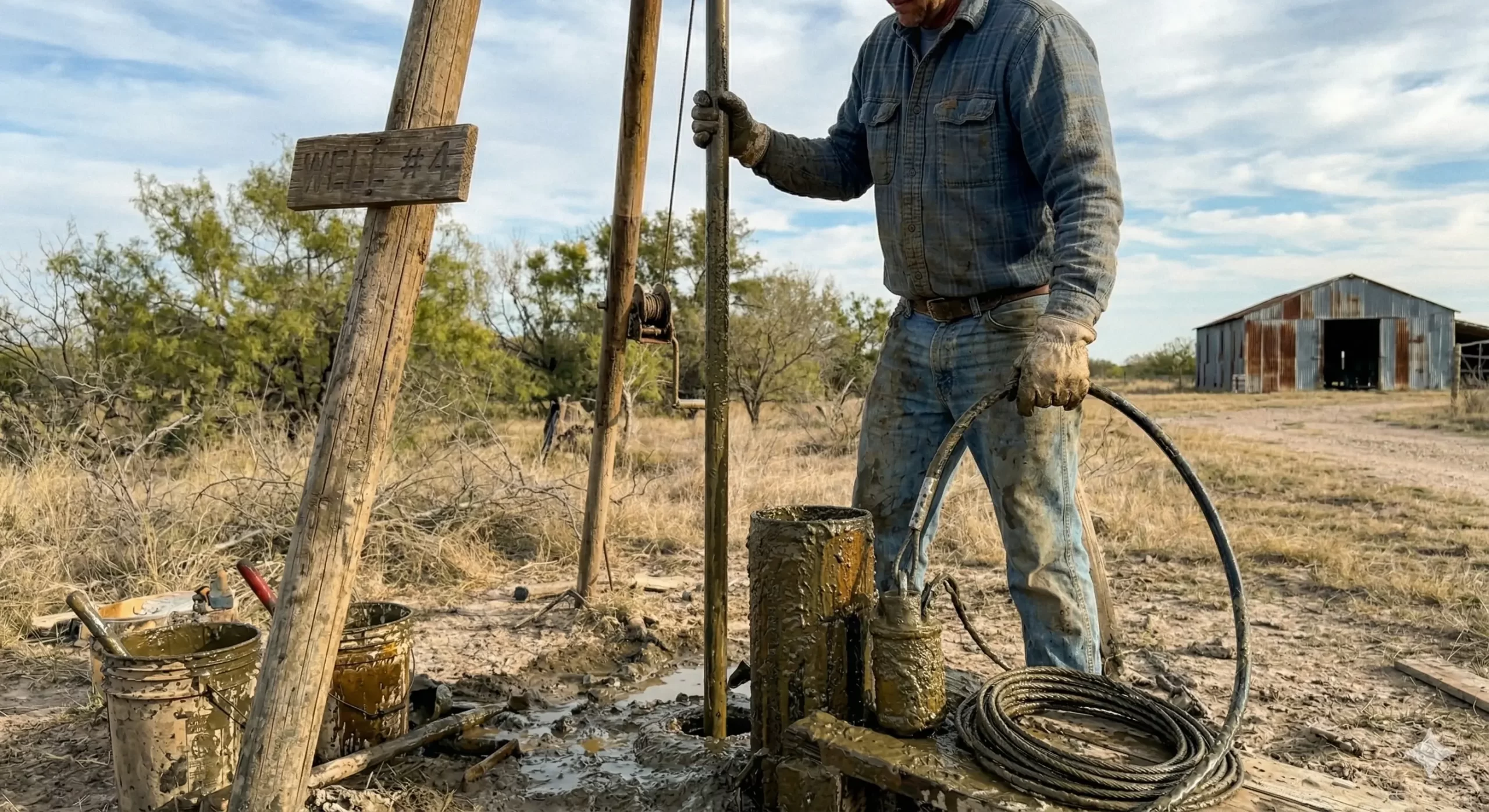
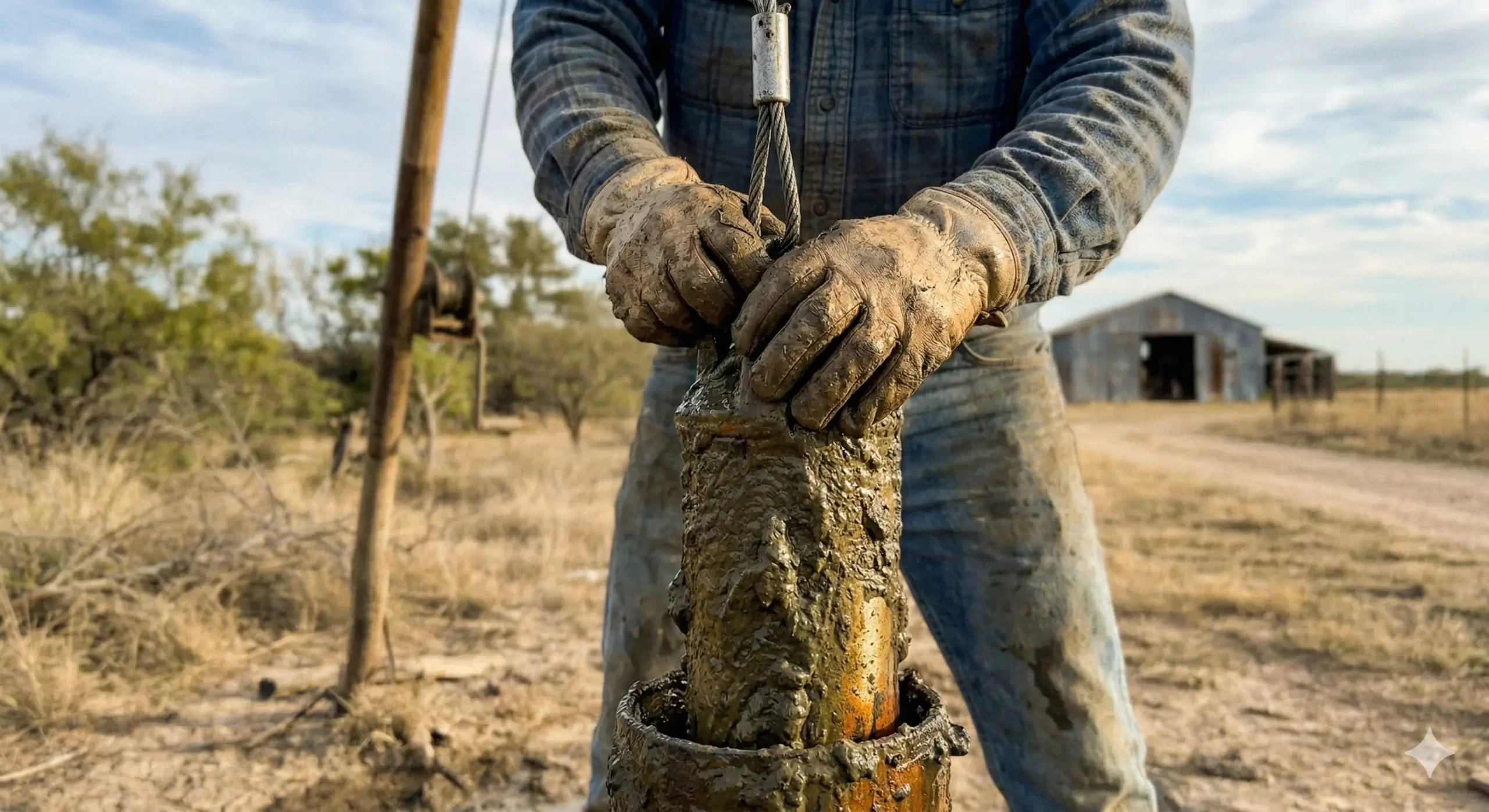
Pulling a pump in New Caney costs what it does because our wells are typically deep, often 300 to 700 feet. Many wells penetrate sandy formations that can be unstable, sometimes even requiring specialized techniques to prevent sand bridges or collapse during pump retrieval. Access can also be a challenge, with tight driveways, mature trees, & fencing often limiting the approach for heavy equipment. This isn’t a job for a simple tripod; it requires a heavy-duty, truck-mounted well-pulling rig to safely lift hundreds of feet of pipe and wiring.
The equipment needed goes beyond just the rig. We use specialized pipe wrenches, powerful winches, & safety harnesses for deep lifts. When dealing with older steel casing, we might even need pressure welding equipment for repairs. Factor in the skilled crew required to safely & efficiently manage these complex operations, and you start to understand why the cost reflects the specialized labor and machinery involved.
Spring Well Maintenance in Texas
Heavy spring rains can cause surface runoff to breach well caps. We strongly recommend testing your water for coliform bacteria and inspecting the sanitary seal.
Save $500+ on Replacements
Via the TX Energy Co-op VFD Upgrade Program
80°F in New Caney
Local Aquifers & Geology
The primary groundwater sources in New Caney include the Evangeline Aquifer (also accessing the Jasper Aquifer in deeper zones). The Evangeline is a major source for residential wells here, characterized by interbedded sands, silts, & clays. It’s an unconfined to confined aquifer system. Water quality is generally good, but local conditions can lead to issues with hardness, iron, & occasional sand intrusion, especially in shallower or poorly maintained wells. It’s subject to significant drawdown from regional pumping.. Drilling through the local The New Caney area’s soil profile is predominantly composed of sandy loams, clayey sands, & some heavier clay formations, typical of the Western Gulf Coastal Plain. These soils can be challenging for well construction; sandy layers are prone to caving, and heavy clays can put lateral stress on well casings. Proper well development & screening are crucial to prevent sand production from these geological conditions. means that average well depths range from 300 ft – 700 ft.
Due to these geological factors, local homeowners frequently struggle with Abrasive wear on pump impellers & bowls due to fine sand & sediment intrusion..
Drilling Depth Comparison
Deeper wells require heavy-duty crane hoists for pump extraction.
Climate & Water Quality
Pump systems in the New Caney area face severe environmental stressors. The most significant threat is Our Texas heat forces pumps to work harder, increasing motor strain. Frequent summer lightning strikes are notorious for damaging pump controls, motors, & associated electrical systems. Heavy rainfall can increase sediment flow into wells & affect water tables. And don’t forget the occasional hard freeze, which can burst exposed pipes & pressure tanks if not properly protected.
Additionally, the raw groundwater often presents issues with Significant issues with water hardness (calcium & magnesium), iron content (causing reddish-brown staining & metallic taste), & persistent sand production that can damage plumbing fixtures & appliances..
Regional Groundwater Advisory
Known primary contaminant threat to submersible pumps and pipes in this area:
Common Area Systems
VFD Upgrade Savings
Constant Pressure vs StandardReplacing a standard single-speed pump with a Variable Frequency Drive (VFD) eliminates hard starts and drastically reduces energy draw in Texas.
Compliance & Local Permits
Montgomery County Level: In New Caney, any new well drilling or major alteration falls under the jurisdiction of the Lone Star Groundwater Conservation District (LSGCD) for Montgomery County. You’ll need to apply for a drilling permit from LSGCD before construction. They focus on managing & conserving the groundwater resources and require all wells to be registered. Additionally, Montgomery County has local regulations concerning well setbacks from septic systems, property lines, & other potential contamination sources. It’s critical to check with both LSGCD & the county’s environmental health services before planning any well work.
Top Pump Brands in Texas
Most frequently installed hardware based on local geology (2026 data).
- Check pump amp draw & voltage at the control box & wellhead for proper motor operation.
- Verify pressure switch cut-in/cut-out settings & inspect for wear or debris.
- Inspect pressure tank pre-charge, integrity, & ensure no waterlogging.
- Perform static & pumping water level measurements (if possible) to monitor well yield & aquifer conditions.
- Test for ground faults & insulation resistance on pump motor leads to prevent electrical damage.
- Inspect all visible plumbing connections, valves, & filtration housings for leaks, corrosion, or blockages.
Premium Well Pump Brands We Service
Our licensed technicians in New Caney are certified to repair, replace, and install high-quality groundwater equipment from industry-leading manufacturers, including:
- Complete loss of water, or extremely low water pressure throughout the property.
- Pump runs continuously without shutting off, or cycles on & off very frequently.
- Sudden appearance of cloudy, sandy, or discolored water from faucets.
- Unusual or loud grinding, rattling, or humming noises coming from the wellhead or pressure tank area.
- Noticeable spike in electric bills without a corresponding increase in other usage.
- Lights flickering or dimming noticeably when the well pump kicks on.
New Caney Real Estate Well Regulations
Local Dispatch & Response Times
Live Dispatch: Texas
Updated Just Now⚠️ High demand. Call now to secure the next available technician.
- On-call technicians are available 24/7 for ‘no water’ emergencies.
- Typical response time for diagnosis in New Caney is within 2-4 hours, depending on current call volume & traffic.
- We stock common pump sizes, motors, & control components on our trucks or at our local shop to minimize delays.
- Most full pump replacements, even for deep wells, can be completed within 12-24 hours from initial diagnosis.
- Prioritization is given to homes with no alternative water source & critical facilities.
⚠️ Montgomery County & State Regulatory Warning: Abandoned Wells
Pump Lifespan Estimator
Select household size in New Caney to see strain impact.
The Cost of Ignoring Symptoms
Fixing a short-cycling pump early saves thousands in New Caney.
Data reflects average well contractor estimates in New Caney.
Groundwater Threat Level
Current aquifer and mineral impact on pumps in New Caney.
Dropping water tables cause pumps to suck air and overheat.
Hard water calcifies pump impellers, reducing lifespan.
Local New Caney
Well Pros
Fast Local Service & Diagnostics
Calls are routed to a licensed local well professional.
Septic System Services in New Caney, TX
Do you have a septic tank on your property? Proper maintenance is critical to protecting your well water quality.
New Caney Homeowner Feedback
“Had a pump go out right before Thanksgiving. These folks came out quick, fixed it right. Good honest work, didn’t try to upsell me. Much appreciated.”

Local Homeowner
✓ Verified TX
“My water pressure had been droppin’ for months, then one mornin’ the pump just hummed but no water. Called ’em up. Turns out, the old check valve down the well had failed, and the impellers on the submersible pump were pretty worn out from all the sand we get in our part of New Caney. The tech, a fella named Billy, explained it all real clear. He had to pull the whole thing, which took most of the day, but he got a new Grundfos in there. Water pressure’s better than ever, wish I’d called sooner. Good job.”

Local Homeowner
✓ Verified TX
“Lost water completely late on a Saturday. Called them, & they had a crew out within a few hours. Diagnosed the issue quickly – a failed pressure switch. Had it replaced & water flowing again before supper. Lifesavers when you’ve got a house full of kids & no water.”

Local Homeowner
✓ Verified TX
Expert New Caney Well System FAQ
My water suddenly turned sandy after a heavy rain. What’s going on with my well in New Caney?
This is a common issue around New Caney, especially if your well is older or wasn’t properly developed. Heavy rains can sometimes cause the water table to rise, stirring up fine sediments in the aquifer, particularly in the shallower, sandier zones of the Evangeline aquifer. If your well screen is damaged, corroded, or if the gravel pack around the screen has settled, it allows these fines to enter the well. It could also indicate a breach in the well casing near the surface from poor grouting. We’d need to inspect the well, potentially camera it, & assess if it’s a temporary issue, a compromised well screen, or even a casing integrity problem. Sometimes, a simple well surging & bailing can clean it out, but often it points to a more significant well structural issue that needs addressing to prevent future sand intrusion & pump damage.
How often should I have my well pump system inspected or serviced in Montgomery County?
Given the specific conditions in Montgomery County, particularly the potential for hard water, iron, & sand, we strongly recommend a comprehensive well system inspection every 3-5 years. This isn’t just about the pump; it includes checking your pressure tank’s air charge, inspecting the wellhead for proper sealing & pest intrusion, testing the water for basic parameters like hardness & iron, & verifying the electrical components are in good working order. Regular maintenance helps catch minor issues before they become major, costly failures. For example, ignoring a slight increase in sand can lead to premature pump wear, costing you thousands in premature replacement. Proactive care is key to longevity here.
I’m looking to buy a property in New Caney with an old well. What should I be concerned about?
When buying property with an older well in New Caney, your main concerns should be the well’s construction integrity, water quality, & the overall condition of the pump system. Many older wells may not meet current TDLR construction standards for casing depth or grouting, making them more susceptible to surface contamination or sand intrusion. You absolutely need a comprehensive well inspection, including a flow test to assess pump performance, a water quality test for bacteria, nitrates, & potentially iron/hardness, & a thorough visual inspection of the wellhead & pressure tank. We often recommend a downhole camera inspection for very old wells to check casing integrity, screen condition, & total depth. Budget for potential upgrades, as an old system might need a new pump, pressure tank, or even well rehabilitation.
Is drilling a new water well in New Caney subject to any local regulations beyond state permits?
Yes, absolutely. While the Texas Department of Licensing & Regulation (TDLR) handles the licensing of drillers & pump installers & enforces state minimum well standards, the Lone Star Groundwater Conservation District (LSGCD) is the primary local authority in Montgomery County. You’ll need to obtain a drilling permit from the LSGCD *before* starting any new well construction. They have rules regarding well spacing, production limits (though residential wells are typically exempt from severe limits unless they are part of a larger system), & require registration of all wells. Additionally, Montgomery County has regulations concerning setback distances from septic systems, property lines, & potential sources of contamination. Always check with both the LSGCD & the county health department before planning a new well.
New Caney Groundwater Expert AI
What are the specific groundwater regulations, average well depths, and the local conservation district for New Caney, Montgomery County?
Groundwater Regulations and Residential Wells in New Caney, Montgomery County, TX (2026)
As a Senior Hydrogeologist and Local Groundwater Regulatory Expert for Texas, I can provide you with precise information regarding residential water wells in New Caney, Montgomery County, for the year 2026. The groundwater landscape in this region involves specific state oversight and a dedicated local Groundwater Conservation District.
Local Groundwater Conservation District (GCD)
For New Caney and the entirety of Montgomery County, the primary local regulatory body for groundwater is the Lone Star Groundwater Conservation District (LSGCD).
- Role: The LSGCD is responsible for conserving, preserving, protecting, and recharging groundwater resources within its jurisdiction, and for preventing waste of groundwater. It operates under the authority granted by the Texas Legislature and Texas Water Code Chapter 36.
- Website: For their official rules, regulations, and permit applications, you should consult the LSGCD website: https://www.lscgd.org/
Specific Groundwater Regulations for Residential Wells
Residential water wells in New Caney are subject to both statewide regulations and local rules enforced by the LSGCD.
1. Statewide Regulations (Texas Department of Licensing and Regulation - TDLR)
- Authority: The construction and plugging of all water wells in Texas are regulated by the Texas Department of Licensing and Regulation (TDLR) under Texas Water Code Chapter 35 and 16 Texas Administrative Code (TAC) Chapter 76.
- Driller Licensing: All water well drillers and pump installers must be licensed by the TDLR. It is imperative that you engage a TDLR-licensed professional for any well drilling or maintenance.
- Well Construction Standards: TDLR sets minimum well construction standards to protect groundwater quality, including casing requirements, cementing, and sanitary wellhead completion.
- Well Reports: Licensed drillers are required to submit a completed "Water Well Report" (also known as a "Driller's Log") to the TDLR and the Texas Water Development Board (TWDB) within 30 days of well completion. This report details the well's construction, depth, and encountered geology.
- TDLR Water Well Program: For more information and to verify driller licenses, visit the TDLR website: https://www.tdlr.texas.gov/wwd/wwd.htm
2. Lone Star Groundwater Conservation District (LSGCD) Regulations
The LSGCD has additional requirements for residential wells (often categorized as exempt wells, but still subject to specific rules) in Montgomery County:
- Well Registration: Even exempt domestic wells (those used for household purposes or watering livestock/poultry on tracts of land 10 acres or less, not for commercial use) must typically be registered with the LSGCD. While they might not require a permit for drilling, registration is crucial for the District to monitor groundwater use and ensure compliance. Check the current LSGCD rules for specific registration requirements.
- Well Spacing/Setbacks: The LSGCD enforces spacing requirements, often called setbacks, to prevent interference between wells and to protect water quality. Typical setbacks include:
- Property Lines: Wells must be a minimum distance from property lines (e.g., 25-50 feet, check current LSGCD rules).
- Contamination Sources: Significant setbacks are required from potential sources of contamination, such as septic systems (e.g., 50-100 feet from a septic tank, 150 feet from a drainfield), feedlots, and waste disposal sites. These are often aligned with state health department regulations as well.
- Plugging of Abandoned Wells: The LSGCD, in conjunction with TDLR, requires the proper plugging of abandoned or deteriorated wells to prevent contamination of aquifers and to eliminate safety hazards.
- LSGCD Rules: It is highly recommended to review the most current LSGCD Management Plan and District Rules, which are available on their website, as these can be updated.
Average Well Depths in New Caney, Montgomery County
Based on historical state well logs from the Texas Water Development Board (TWDB) for the New Caney area in Montgomery County, residential water wells typically target the productive zones of the Gulf Coast Aquifer system.
- Primary Aquifers: The main aquifers accessed by residential wells in New Caney are the Jasper Aquifer and the underlying Evangeline Aquifer, both part of the multi-layered Gulf Coast Aquifer system. Deeper commercial or municipal wells may tap the Chicot Aquifer or the underlying Carrizo-Wilcox Aquifer.
- Average Well Depth: For residential use, average well depths in New Caney generally range from 350 to 550 feet. A reasonable average to estimate would be approximately 450 feet. However, the exact depth will depend on the specific location, the desired yield, and the depth to suitable water-bearing sands, which can fluctuate.
- Variability: Some wells may be shallower (around 250-300 feet) if targeting perched zones or localized shallower sands with sufficient yield, while others might go deeper (600+ feet) to ensure sustained production or higher water quality, though this is less common for typical residential wells.
- Well Log Data: You can research existing well logs in your specific vicinity using the TWDB's Water Well Search tool, which provides data submitted by licensed drillers: https://www.twdb.texas.gov/groundwater/data/well_data.asp
When planning a residential well in New Caney, always consult with a TDLR-licensed water well driller and ensure compliance with both TDLR and LSGCD regulations to safeguard your investment and the region's precious groundwater resources.
Fast Local Service & Diagnostics
Calls are routed to a licensed local well professional.
Blix
provides official
Emergency Well Pump Repair services for the
New Caney
area.