
Emergency Well Pump Repair in Gilmer, TX
Folks around Gilmer know the harsh realities of pulling water from the ground here in Upshur County. We ain’t talking about shallow, easy pickings. This region’s got its challenges, from abrasive sand to fluctuating water tables, and if your well ain’t built right or your pump ain’t tough, you’ll be calling me quicker than a hiccup.
Our primary water source is typically the Carrizo-Wilcox Aquifer, but depending on your property’s elevation and how deep your well went, you might be pulling from the shallower Queen City or Sparta aquifers. Each has its own quirks, but the common thread is often fine sand particles that’ll chew up an inferior pump faster than you can say ‘water pressure’.
That’s why I always tell folks, a cheap pump installed in East Texas is an invitation for trouble. Those bargain-bin pumps just aren’t designed for the constant wear and tear our well conditions dish out. You put one of them in, you’re looking at short-term savings but long-term headaches and bigger repair bills down the line, often sooner than you’d think.
Fast Local Service & Diagnostics
Calls are routed to a licensed local well professional.
Well Pump Repair in
Gilmer
Gilmer & Upshur County Well Stats
Wells in Upshur County typically range from 250 to 800 feet deep, with yields varying from 5 to 50 gallons per minute (GPM), depending heavily on the specific aquifer zone tapped and well construction. Water quality often shows moderate hardness, with common issues being iron, manganese, and a consistent presence of fine sand. Static water levels can fluctuate significantly with seasonal rainfall and regional pumping demands.
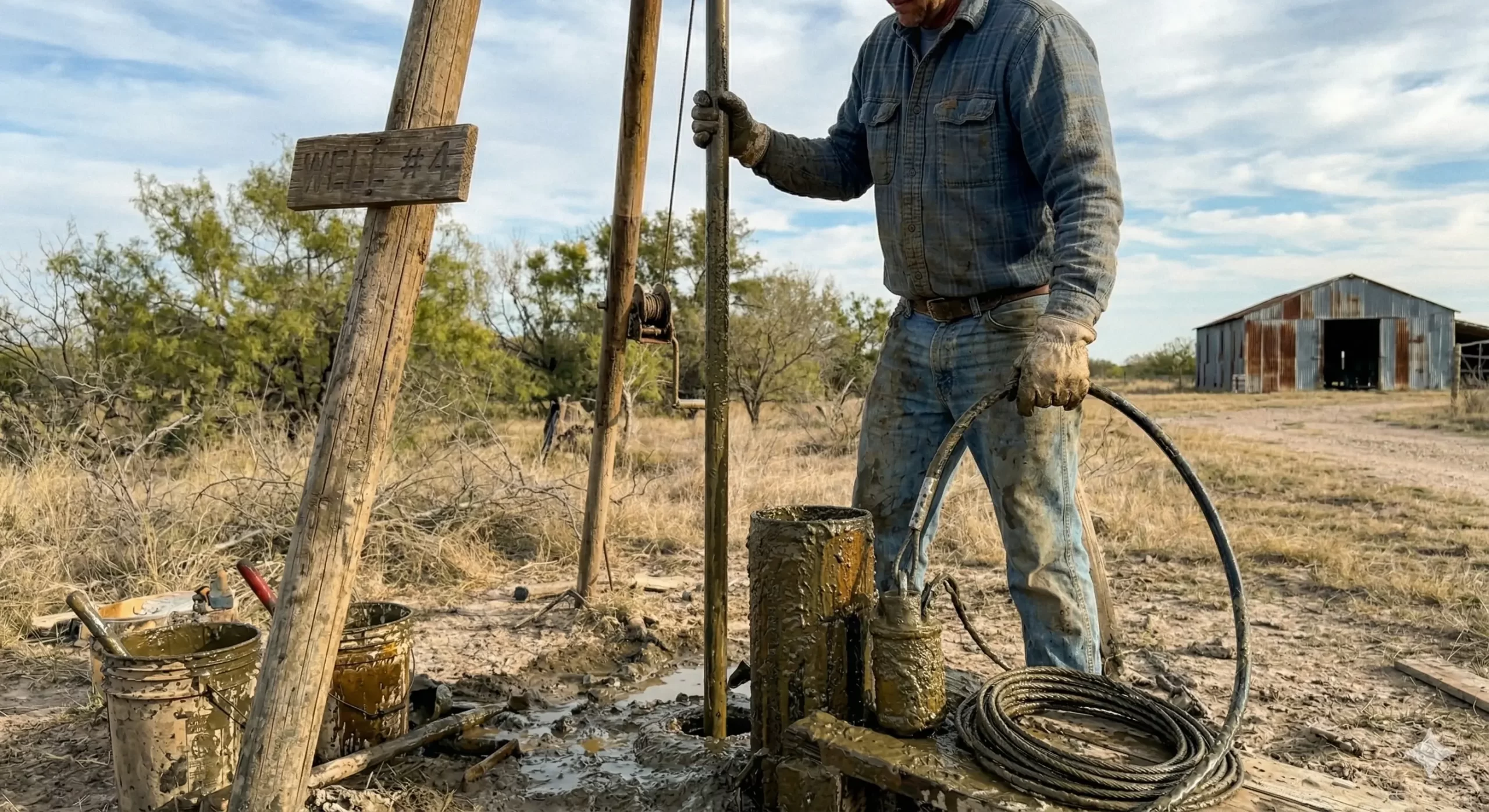
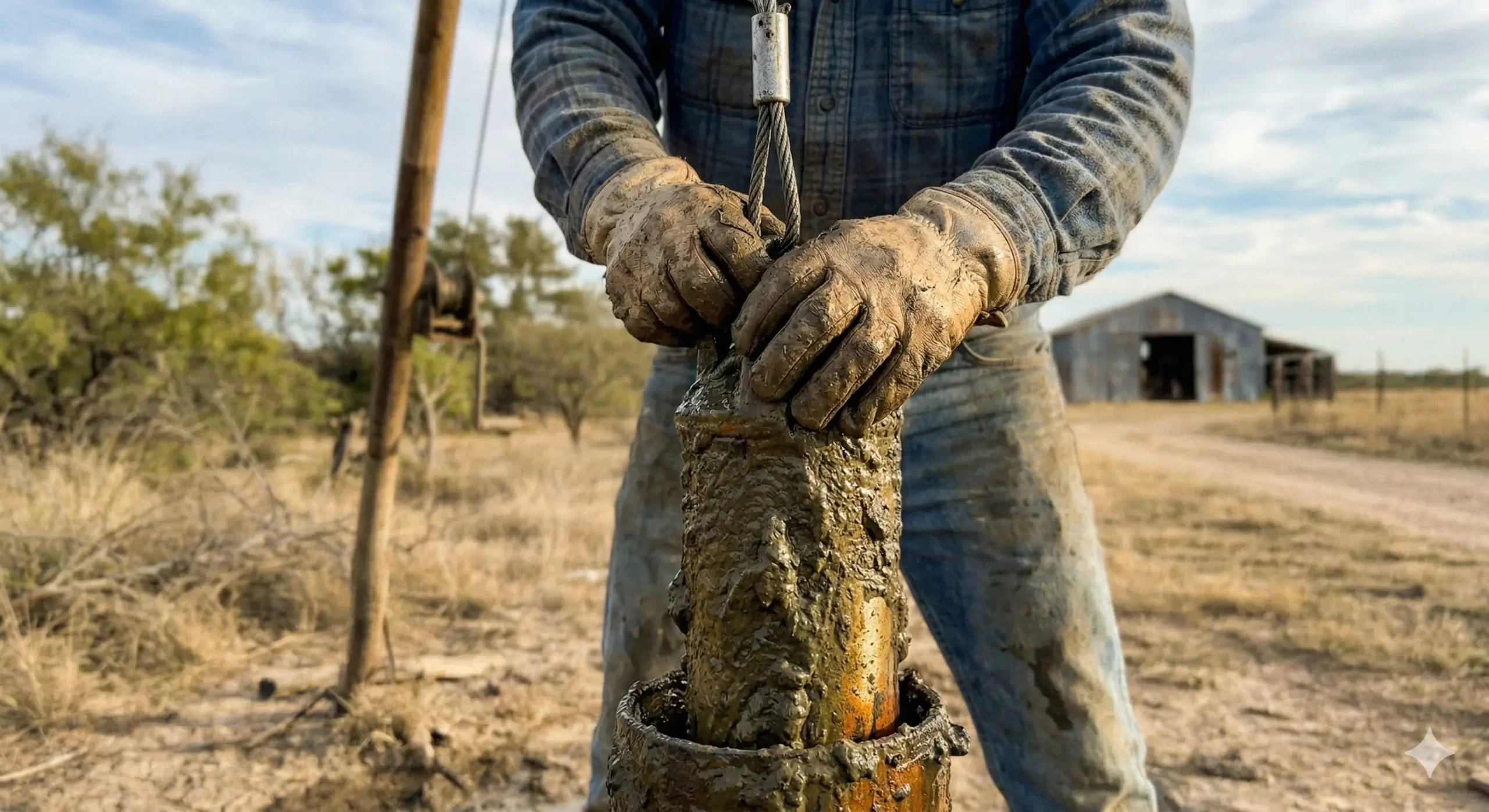
Pulling a pump here in Gilmer ain’t always a simple job. Many of our wells are drilled deep into sandy formations. When a pump fails, that sand can collapse around the casing or the pump itself, making retrieval a slow, careful, and sometimes risky operation. Factor in the often-tight access roads to rural properties, and setting up a proper service rig can take extra time and effort. We’ve got to be prepared for anything from minor obstructions to full-blown well fishing expeditions.
The equipment needed for these jobs isn’t just a pickup and a wrench. We’re talking heavy-duty well service rigs, specialized pump hoist trucks, generators, air compressors, and a full complement of tools to handle everything from wire splices to casing repairs. The cost reflects not just the labor and the pump itself, but the specialized machinery and expertise required to do the job right and safely in these challenging East Texas conditions.
Spring Well Maintenance in Texas
Heavy spring rains can cause surface runoff to breach well caps. We strongly recommend testing your water for coliform bacteria and inspecting the sanitary seal.
Save $500+ on Replacements
Via the TX Energy Co-op VFD Upgrade Program
73°F in Gilmer
Local Aquifers & Geology
The primary groundwater sources in Gilmer include the The Carrizo-Wilcox Aquifer is the backbone of our groundwater supply in Gilmer and much of Upshur County. It’s primarily composed of sand and sandstone, with interbedded clay and lignite layers. This aquifer is known for providing moderate to high yields, making it an excellent source for domestic and agricultural use. However, its sandy nature means that wells often require proper screening and development to minimize sand production. Water from the Carrizo-Wilcox typically ranges from fresh to slightly saline, with elevated levels of iron, manganese, and sometimes dissolved solids being common, which can impact water quality and pump longevity.. Drilling through the local The soil profile around Gilmer generally consists of sandy loams and loamy sands on the surface, typical of East Texas’s Post Oak Savanna and Pineywoods regions. These surface soils drain relatively well but can be prone to erosion. Beneath these top layers, you often encounter more clayey subsoils, sometimes transitioning to sandy clays or even highly fractured shale and sandstone formations at greater depths, particularly in the geological formations associated with the Carrizo-Wilcox aquifer. means that average well depths range from 300 ft – 700 ft.
Due to these geological factors, local homeowners frequently struggle with Sand abrasion leading to impeller wear and motor burnout due to continuous running against resistance..
Drilling Depth Comparison
Deeper wells require heavy-duty crane hoists for pump extraction.
Climate & Water Quality
Pump systems in the Gilmer area face severe environmental stressors. The most significant threat is Frequent lightning storms in our humid climate are a major threat, causing power surges that fry pump motors and control boxes. Prolonged droughts lead to lower water tables, forcing pumps to work harder and sometimes run dry, while heavy rainfall can saturate electrical components at the wellhead if not properly sealed and protected.
Additionally, the raw groundwater often presents issues with High iron content, often accompanied by manganese, causes staining and can foul plumbing and water treatment systems. Moderate to high hardness is also common, leading to scale buildup. However, the most consistent mechanical challenge for pumps in this region is the presence of fine sand, which acts like sandpaper on impellers and bearings..
Regional Groundwater Advisory
Known primary contaminant threat to submersible pumps and pipes in this area:
Common Area Systems
VFD Upgrade Savings
Constant Pressure vs StandardReplacing a standard single-speed pump with a Variable Frequency Drive (VFD) eliminates hard starts and drastically reduces energy draw in Texas.
Compliance & Local Permits
Upshur County Level: Upshur County does not have a local Groundwater Conservation District (GCD). Therefore, groundwater withdrawals for domestic and livestock use are generally unregulated at the local level. However, all new well drilling and pump installations must strictly adhere to the statewide rules and regulations set forth by the Texas Department of Licensing & Regulation (TDLR) and the Texas Water Development Board (TWDB) for construction standards, casing, grouting, and sealing. This ensures the protection of groundwater resources and prevents contamination. While no local permit is typically required for individual domestic wells, property owners should always verify current regulations before drilling or making significant modifications.
Top Pump Brands in Texas
Most frequently installed hardware based on local geology (2026 data).
- Verify power supply to the pump controller and motor circuit.
- Check pressure tank air charge and cut-in/cut-out pressure settings.
- Measure pump motor amperage and voltage while running.
- Inspect all visible wiring, connections, and pressure switch for corrosion or damage.
- Conduct a draw-down test to assess well yield and pump performance.
- Listen for abnormal noises from the pump motor or water flow system.
Premium Well Pump Brands We Service
Our licensed technicians in Gilmer are certified to repair, replace, and install high-quality groundwater equipment from industry-leading manufacturers, including:
- No water or very low water pressure from all fixtures.
- Pump constantly cycles on and off, even when no water is being used.
- Dirty, sandy, or rust-colored water suddenly appearing.
- Unusual noises (grinding, humming, rattling) coming from the wellhead or pressure tank.
- Higher than usual electricity bills without increased water usage.
- System short-cycling, causing intermittent water flow.
Gilmer Real Estate Well Regulations
Local Dispatch & Response Times
Live Dispatch: Texas
Updated Just Now⚠️ High demand. Call now to secure the next available technician.
- Typically within 24-48 hours for critical failures, depending on current workload and geographic distance.
- Emergency calls receive priority scheduling, especially for loss of all water supply.
- Response times can be longer during major regional weather events or widespread power outages.
- We strive to get a technician on-site or provide phone support for immediate troubleshooting.
- Preparation for rural travel and specialized equipment mobilization is factored into response estimates.
⚠️ Upshur County & State Regulatory Warning: Abandoned Wells
The Cost of Ignoring Symptoms
Fixing a short-cycling pump early saves thousands in Gilmer.
Data reflects average well contractor estimates in Gilmer.
Pump Lifespan Estimator
Select household size in Gilmer to see strain impact.
Groundwater Threat Level
Current aquifer and mineral impact on pumps in Gilmer.
Dropping water tables cause pumps to suck air and overheat.
Hard water calcifies pump impellers, reducing lifespan.
Local Gilmer
Well Pros
Fast Local Service & Diagnostics
Calls are routed to a licensed local well professional.
Septic System Services in Gilmer, TX
Do you have a septic tank on your property? Proper maintenance is critical to protecting your well water quality.
Gilmer Homeowner Feedback
“Called ’em up when my well stopped pumping. They were out quick, fixed it up without a fuss. Good, honest fellas.”

Local Homeowner
✓ Verified TX
“Our water pressure had been droppin’ for months, then one morning, nothing. I figured the pump was finally dead after 15 years. Called these guys and they were able to get out the next day. Turns out, it wasn’t the pump totally, but the impellars were so wore down from all the sand in our well, they couldn’t get no lift. They had to pull the whole thing, installed a new Grundfos with a better sand guard, and cleaned out some sediment. Works like new, and my shower pressure is back to normal. Glad I called ’em, they know there stuff.”

Local Homeowner
✓ Verified TX
“Lost water on a Sunday afternoon, and with livestock, that’s an emergency. Called them up, and even on a weekend, they got a crew out to Gilmer within a few hours. Had us back up and running before sunset. Can’t beat that kind of fast service when you need it most.”

Local Homeowner
✓ Verified TX
Expert Gilmer Well System FAQ
Why do I keep getting sand in my water from my well in Gilmer, and what can be done about it?
Sand in your water is a very common issue in Upshur County due to our sandy aquifers, particularly the Carrizo-Wilcox. It usually indicates one of a few things: your well screen might be damaged or improperly sized, your pump is set too deep or too close to a sand layer, or the well itself wasn’t properly developed during drilling. Short-term fixes include sediment filters, but for a lasting solution, we often need to pull the pump to inspect the well casing and screen. Sometimes, adjusting the pump’s depth, installing a pump with a better sand-handling design, or even re-developing the well can significantly reduce or eliminate sand production. Ignoring it will eventually destroy your pump.
My pump seems to be running constantly, but I’m not using that much water. What’s going on?
A pump that runs constantly, or ‘short cycles,’ without high water usage is a red flag. The most common culprits in our area are a water leak somewhere in your plumbing system (either above or below ground), a failed pressure tank (loss of air charge or a ruptured bladder), or a check valve failure in the well or at the pump. A constant run can also mean your pump is failing to build enough pressure due to worn parts from sand abrasion, or the well’s yield has dropped. We’d start by checking your pressure tank and then systematically isolate sections of your water system to pinpoint the leak or the specific component failure, preventing premature pump burnout.
How often should I have my well pump system inspected or maintained in Gilmer, TX?
For folks in Gilmer and Upshur County, considering the local water quality and well conditions, I recommend a professional inspection every 3-5 years, or more frequently if you’ve noticed any changes in water pressure, quality, or pump behavior. During a routine check, we’ll inspect the pressure tank, verify pump amperage and voltage, check the wellhead integrity, test water quality for common issues like iron and hardness, and look for any signs of wear and tear. Proactive maintenance can catch small problems before they become costly emergencies, extending the life of your pump and ensuring reliable water supply for your home or farm.
What’s the best way to protect my well pump from lightning strikes in East Texas?
Lightning strikes are a serious concern here in East Texas, and they can wreak havoc on well pumps and control panels. The best protection is a comprehensive approach. First, ensure your wellhead and pump control box are properly grounded according to electrical codes. Second, installing a high-quality surge protector specifically designed for well pump applications is critical. These devices divert excess voltage away from your pump motor and control box during a strike or power surge. While no protection is 100% foolproof against a direct hit, a well-grounded system with robust surge protection significantly reduces the risk of expensive damage and keeps your water flowing through our storm seasons.
Gilmer Groundwater Expert AI
What are the specific groundwater regulations, average well depths, and the local conservation district for Gilmer, Upshur County?
Groundwater Regulations, Well Depths, and Conservation in Gilmer, Upshur County (2026)
As a Senior Hydrogeologist and local groundwater regulatory expert for Texas, I can provide you with specific information regarding residential water wells in Gilmer, Upshur County, for the year 2026.
Local Groundwater Conservation District
For Gilmer, Upshur County, the groundwater resources are managed by the Upshur County Underground Water Conservation District (UCUWCD). This district is empowered by the Texas Legislature under Texas Water Code Chapter 36 to protect, conserve, and preserve the groundwater resources within its jurisdiction.
- UCUWCD Official Website: https://www.ucuwcd.org/
Specific Groundwater Regulations for Residential Wells
As of 2026, residential water wells in Gilmer, Upshur County, are subject to regulations from both the state of Texas and the UCUWCD:
- State-Level Regulations (TDLR):
- All water well drillers operating in Texas must be licensed by the Texas Department of Licensing and Regulation (TDLR).
- New water well construction, alteration, or plugging must adhere to statewide construction standards detailed in Title 16, Texas Administrative Code, Chapter 76 (Water Well Drillers and Pump Installers). This includes requirements for well casing, cementing, and wellhead completion to prevent contamination.
- TDLR Well Driller Database: You can verify a driller's license and search for well reports here.
- Local-Level Regulations (UCUWCD):
- Well Registration: Even for domestic/residential use, all new water wells drilled within the UCUWCD's jurisdiction are generally required to be registered with the District. While exempt from some permitting requirements for production, registration is crucial for the UCUWCD to maintain an accurate inventory of groundwater use. You should contact the UCUWCD directly for their specific well registration forms and requirements.
- Driller Reporting: The licensed well driller is typically responsible for submitting a State of Texas Water Well Driller's Report (Form WRD-0001) to the TDLR and often to the UCUWCD as well.
- Spacing Rules: The UCUWCD Management Plan and Rules contain provisions regarding minimum spacing requirements between new wells and property lines or existing wells to prevent localized overpumping or interference. While these are sometimes more lenient for individual domestic wells, it's critical to review the current rules or contact the district directly before drilling.
- Waste Prevention: All groundwater users within the district are expected to prevent waste of groundwater as defined by the Texas Water Code and UCUWCD rules.
It is highly recommended to contact the Upshur County Underground Water Conservation District directly at the planning stage of any new well to confirm the most current requirements and ensure full compliance.
Average Well Depths in Gilmer, Upshur County
Based on historical state well logs and typical drilling practices for residential wells in the Gilmer area targeting the primary aquifer, an estimated average well depth is around 375 feet. It is important to note that actual depths can vary significantly depending on the specific property location, the desired yield, and the targeted water-bearing sand interval within the aquifer.
Specific Aquifer Beneath Gilmer
The primary groundwater source for residential wells in Gilmer, Upshur County, is the Carrizo-Wilcox Aquifer. This major aquifer system is a significant source of water for eastern Texas, consisting primarily of interbedded sands, silts, and clays. Wells in this region typically draw water from various sand layers within the Wilcox Group, often referred to as the Carrizo-Wilcox sands.
Fast Local Service & Diagnostics
Calls are routed to a licensed local well professional.
Blix
provides official
Emergency Well Pump Repair services for the
Gilmer
area.