
Emergency Well Pump Repair in Virginia
From the affluent, sprawling estates of Northern Virginia and the dense red clay of the Piedmont, to the rugged, fractured bedrock of the Blue Ridge Mountains and the sandy shores of the Tidewater region, over a million Virginians rely entirely on private groundwater systems. The Old Dominion presents a uniquely demanding environment for water well infrastructure. The coastal plains are constantly threatened by hurricane storm surges and saltwater intrusion, while the mountainous western counties grapple with impenetrable granite, deep frost lines, and highly corrosive, acidic groundwater that silently eats away at submersible pump motors. Furthermore, intense summer humidity wreaks havoc on pressure tanks hidden in damp residential crawlspaces. Whether you need a rapid well jet pump repair after a coastal storm in Virginia Beach, a lightning-fried control box replaced in Richmond, or a heavy-duty submersible pump hoisted from 600 feet of Appalachian rock in Roanoke, our statewide network of DPOR-certified technicians is on standby. We deliver rapid, highly specialized emergency well pump repair near you to ensure your home’s water pressure survives Virginia’s diverse and challenging climate.
Fast Local Service & Diagnostics
Calls are routed to a licensed local well professional.
Well Pump Repair in
Virginia
Virginia Well Service Costs & Stats
Virginia’s rapidly expanding suburban and rural footprint is supported by over 1 million active private water wells. Because municipal water grids cannot feasibly expand fast enough to cover the massive residential developments in Northern Virginia or the vast agricultural tracts in the south, decentralized groundwater is the absolute lifeblood of the state. The mechanical safety and environmental protection of these private wells are fiercely monitored by the Virginia Department of Health (VDH) to prevent widespread aquifer contamination.
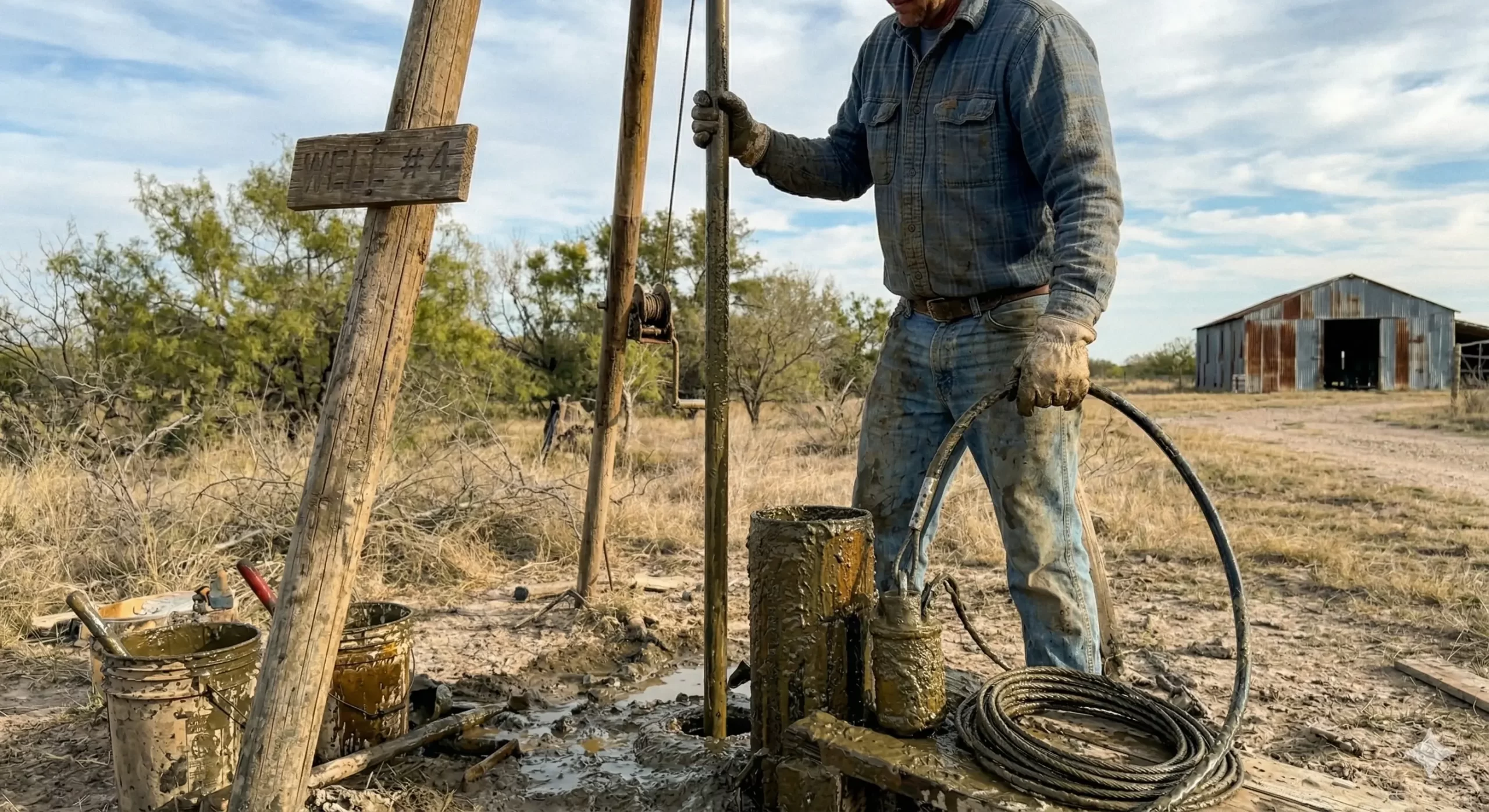
- Mountain Bedrock Extraction: Replacing a deep submersible well pump in the Blue Ridge or Appalachian Plateau requires heavy commercial crane hoists to pull hundreds of feet of water-filled pipe out of solid rock, driving replacement costs to $1,800 – $4,700+.
- Coastal Jet Pump Repairs: In the sandy Tidewater and Coastal Plain regions, shallow above-ground jet pumps are highly prevalent. Repairing or replacing these surface units is generally more affordable, usually ranging from $300 to $850.
- Corrosive Water Mitigation: Virginia’s mountain and Piedmont regions are notorious for low-pH (acidic) water. A submersible pump repair service often involves replacing motors destroyed by acid corrosion and installing specialized acid-neutralizing filters, adding $400 – $1,200.
- Crawlspace Tank Replacements: High humidity rapidly rusts steel tanks located in unconditioned Virginia crawlspaces. Upgrading to a premium, rust-proof fiberglass or epoxy-coated pressure tank averages $550 – $1,300 to fix waterlogged pressure tank issues permanently.
- Constant Pressure Upgrades (VFDs): For massive suburban estates in Northern Virginia (NoVA) with high-demand irrigation and multi-bathroom needs, upgrading a standard system to a Variable Frequency Drive (VFD) costs between $1,500 and $3,500.
- Lightning & Electrical Fixes: Virginia experiences fierce summer electrical storms. Replacing a fried control box, blown capacitor, or a melted water well pressure switch replacement is an incredibly common diagnostic fix, averaging $220 – $450.
62°F in Virginia
Save $300+ on Replacements
Via the VA Appalachian Well Infrastructure Program
Average Well Pump Repair Costs by Virginia Region (2026)
Pricing across Virginia is dictated by massive geologic zones. Pulling a submersible pump from a 600-foot granite well in Roanoke is vastly more labor-intensive and expensive than replacing a shallow surface jet pump on the sandy coast of Norfolk.
| Region / Major Cities | Aquifer & Avg. Depth | Minor Repair (Switches, Controls) | Pump Replacement (Parts + Labor) |
|---|---|---|---|
| Northern Virginia (NoVA) Loudoun, Fairfax, Prince William | 200 – 600 ft Piedmont Crystalline Rock | $250 – $550 | $2,400 – $4,600 |
| Central VA & Richmond Richmond, Chesterfield, Hanover | 150 – 450 ft Dense Red Clay / Fall Line | $220 – $420 | $1,800 – $3,800 |
| Shenandoah Valley Harrisonburg, Winchester, Staunton | 200 – 600 ft Karst Limestone (Hard Water) | $250 – $450 | $2,200 – $4,200 |
| Southwest VA & Appalachia Roanoke, Blacksburg, Bristol | 300 – 800+ ft Fractured Granite / Steep Terrain | $280 – $500 | $2,500 – $4,800+ |
| Coastal Plain & Tidewater Va Beach, Norfolk, Chesapeake | 40 – 200 ft Potomac Aquifer (Sandy Soils) | $200 – $350 | $800 – $2,500 |
Pump Lifespan Estimator
Select household size in Virginia to see strain impact.
The Cost of Ignoring Symptoms
Fixing a short-cycling pump early saves thousands in VA.
Data reflects average well contractor estimates in Virginia.
Groundwater Threat Level
Current aquifer and mineral impact on pumps in Virginia.
Dropping water tables cause pumps to suck air and overheat.
Hard water calcifies pump impellers, reducing lifespan.
Groundwater & Aquifers
The primary groundwater sources in Virginia include the The Coastal Plain aquifer system (Potomac), the Piedmont Crystalline-rock aquifers, and the Valley and Ridge Carbonate-rock (Karst) aquifers.. Drilling through the local Impenetrable mountain granite/limestone, notoriously dense “Virginia red clay” (Ultisols) in the Piedmont, and porous coastal sandy loam. means that average well depths range from Drastically split: 40-150 feet in the coastal sands, plunging to 300-800+ feet in the dense clay and solid bedrock of Western Virginia..
Due to these geological factors, local homeowners frequently struggle with Submersible motor failure due to acidic water corrosion, and waterlogged pressure tanks rusting out in highly humid home crawlspaces..
Drilling Depth Comparison
Deeper wells require heavy-duty crane hoists for pump extraction.
Climate & Water Quality
Pump systems in Virginia face severe environmental stressors. The most significant threat is Devastating summer lightning strikes frying electricals, tropical storm flooding breaching wellheads on the coast, and deep winter freezes in the Appalachians.
Additionally, the raw groundwater often presents issues with Highly corrosive low pH (acidic water), iron and manganese, naturally occurring radon in the mountains, and hard water in karst limestone areas..
Regional Groundwater Advisory
Known primary contaminant threat to submersible pumps and pipes in this area:
Common Well Systems
VFD Upgrade Savings
Constant Pressure vs StandardReplacing a standard single-speed pump with a Variable Frequency Drive (VFD) eliminates hard starts and drastically reduces energy draw in Virginia.
Compliance & Authority
Top Pump Brands in Virginia
Most frequently installed hardware based on local geology (2026 data).
Standard Virginia Technician Diagnostic Checklist
Because pulling a pump from 500 feet of solid mountain rock is a massive operation, our certified contractors follow a stringent diagnostic protocol to rule out above-ground electrical, lightning, and pressure tank issues before resorting to an extraction:
- Electrical & Amp Draw Audit: Using a multimeter at the control box to check the voltage and amperage draw, looking specifically for a shorted motor or a blown capacitor caused by intense summer thunderstorms.
- Pressure Tank Bladder Calibration: Draining the system completely to test the internal tank bladder for ruptures, and adjusting the air pre-charge to exactly match the pressure switch settings to prevent rapid cycling.
- Sanitary Seal & Flood Check: Visually inspecting the wellhead casing to ensure it meets VDH height requirements and is tightly sealed against severe Nor’easter storm flooding and insect intrusion.
- Switch & Contactor Cleaning: Inspecting the mechanical water well pressure switch replacement contacts, which frequently pit from electrical surges or become infested with spiders and insects in rural areas.
- Acid & Scale Assessment: Visually inspecting the pulled drop pipe and pump housing for severe acidic corrosion or iron bacteria sludge, which dictates whether the well needs aggressive chemical shock treatment.
- Hydraulic Flow & Prime Check: For shallow well jet pump repair jobs on the coast, verifying the suction line integrity, check valve operation, and ensuring the pump is holding its prime.
- Transparent Code Review: Providing a complete, upfront breakdown of repair costs, ensuring all modifications adhere strictly to local County Environmental Health and Virginia VDH regulations.
Top Well Pump Brands Serviced in Virginia
Virginia’s diverse geology—from coastal sand to mountain granite—requires the absolute toughest, corrosion-resistant hardware available. Our DPOR-certified technicians are fully equipped to install and repair the industry’s most resilient brands:
- Goulds Water Technology: The undeniable favorite across the Piedmont and Mountains. Their heavy-duty cast iron and stainless steel submersible pumps easily survive highly corrosive, acidic, iron-rich aquifers.
- Franklin Electric: The absolute industry standard for deep-well submersible motors, heavy-duty control boxes, and advanced drive systems engineered to survive Virginia’s brutal lightning surges.
- Amtrol (Well-X-Trol): The premium choice for indoor hydro-pneumatic pressure tanks. Their thick steel casings and robust bladders are essential for surviving damp, intensely humid Virginia crawlspaces.
- Grundfos: Premium innovators known for their ultra-efficient SQE submersible series, offering quiet, constant pressure delivery for large, sprawling suburban estates in Loudoun and Fairfax counties.
- Sta-Rite (Pentair): The dominant brand across the Coastal Plain and Tidewater areas, famous for their incredibly durable, cast-iron shallow well jet pumps and centrifugal irrigation setups.
- Flint & Walling: Renowned for their high-capacity submersible pumps and dependable pressure-boosting systems, heavily utilized in multi-story Appalachian hillside properties.
- Myers (Pentair): A highly reliable brand frequently found in older Virginia farm properties in the Shenandoah Valley, offering excellent longevity for both jet and submersible applications.
Critical Warning Signs Your VA Well Pump is Failing
Between brutal summer lightning storms, suffocating humidity, and the acidic, iron-rich water of the Piedmont, pump systems in Virginia endure incredible stress. Ignoring early symptoms almost always guarantees a complete loss of water and a severely expensive emergency. Watch closely for these 7 critical warning signs:
- Rapid Clicking in the Crawlspace: Hearing the pressure switch violently click on and off every few seconds means you urgently need to fix a waterlogged pressure tank before the pump motor burns out.
- Complete Loss of Power After a Storm: A sudden outage during a summer thunderstorm usually indicates a lightning strike has fried the control box capacitor or tripped the dedicated circuit breaker.
- Blue/Green Stains & Metallic Taste: This is a massive red flag in Virginia, indicating highly acidic (low pH) water is silently dissolving the copper pipes in your home and destroying the internal components of your submersible pump.
- Sputtering Faucets (Air in Lines): In coastal areas with shallow wells, this indicates the jet pump is losing its prime due to a failing foot valve or a cracked underground suction line.
- Red or Brown Sludge in Water: A massive spike in iron bacteria (extremely common in VA red clay) creates a thick, rusty slime that coats the pump intake, causing it to overheat and fail prematurely.
- Unexplained High Electric Bills: An aging submersible pump struggling against thick iron scale, or a pump that never shuts off due to an underground leak, will draw massive amounts of electricity.
- Loud Grinding from Jet Pumps: For homes on the Coastal Plain, mechanical squealing from the above-ground pump points directly to failing motor bearings that are about to seize entirely.
Real Estate Regulations & Inspections
- Rigorous Yield & Drawdown Test: Absolutely critical in the Blue Ridge and Appalachian regions, where fractured rock wells may only produce 1-2 GPM. This verifies if the well can support a modern family without running dry.
- Crawlspace Pressure System Audit: Inspecting the hydro-pneumatic tank for deep rust and waterlogging—a massive problem in Virginia’s humid crawlspaces—and ensuring the pressure switch is perfectly calibrated.
- Electrical & Amp Draw Analysis: Testing the motor’s amperage at the control box to detect hidden wear or severe heat/surge damage caused by previous summer lightning strikes.
- Sanitary Seal & Flood Check: Particularly in the Tidewater region, ensuring the wellhead extends sufficiently above the flood line and is hermetically sealed against Nor’easter storm surges and insect infestations.
The second mandatory phase involves comprehensive water quality testing. Because of Virginia’s massive agricultural industry and unique Piedmont geology, groundwater carries specific, localized risks:
- Corrosivity (pH) & Lead: Testing for highly acidic “aggressive” water, incredibly common in VA, which can silently leach lead or copper from a home’s older interior plumbing over time.
- Radon & Uranium Testing: Naturally occurring radioactive elements are a known, significant health hazard in the deep granite bedrock wells of Western Virginia.
- Coliform Bacteria & E. coli: Crucial to confirm that the well casing hasn’t been breached by heavy surface water runoff or a failing nearby septic system.
- Nitrate & Nitrite Panels: Absolutely essential in the Shenandoah Valley and southern regions, dominated by farming operations that can leach fertilizer into the aquifer.
Executing this rigorous due diligence is the only way to ensure your new Virginia property provides a safe, powerful, and storm-resilient water supply.
⚠️ Virginia Regulatory Warning: Abandoned Wells
- Certified Abandonment Only: A well must be permanently sealed from the bottom up using state-approved neat cement or bentonite grout, executed strictly by a DPOR-licensed Master Water Well Systems Provider.
- State VDH Reporting: A formal Uniform Water Well Completion Report (GW-2 form) detailing the abandonment must be submitted to the VDH and the local health department within 30 days.
- Temporary Abandonment: If a well is temporarily out of service, it must still be officially sealed with a watertight, bolted or welded cap and properly maintained to prevent contamination.
- Local County Permitting: In almost all VA counties, you cannot repair a well pump, alter a casing, or install a well and septic repair near me without first obtaining a specific repair permit from the local health district.
Furthermore, when drilling a new well or installing a new septic system, the state enforces uncompromising sanitary setback distances to prevent biological disasters:
- Septic Tanks & Drain Fields: A potable water well must maintain an absolute minimum Class IIIB setback of 50 feet from a septic tank, and 50 to 100 feet from a drainfield depending on soil class.
- Chemically Treated Foundations: Wells must be heavily distanced (typically 50+ feet) from building foundations that have been treated with termite soil poisons—a common necessity in Virginia.
- Animal Enclosures: Strict setbacks are aggressively enforced from animal pens, manure storage, and agricultural feeding operations.
- Property Lines: A minimum distance must be maintained from any property boundary to protect neighboring water rights and utility access.
Navigating this complex web of state and county regulations requires hiring a highly experienced, regionally knowledgeable water well professional.
Spring Well Maintenance in Virginia
Heavy spring rains can cause surface runoff to breach well caps. We strongly recommend testing your water for coliform bacteria and inspecting the sanitary seal.
Local Virginia
Well Pros
Fast Local Service & Diagnostics
Calls are routed to a licensed local well professional.
Live Dispatch: Virginia
Updated Just Now⚠️ High demand. Call now to secure the next available technician.
Homeowner Feedback
“Right in the middle of a brutal July thunderstorm in Loudoun County, lightning struck a tree near our estate and we completely lost water pressure. The tech from this network came out the very next morning. He tested the lines and found the lightning surge had just fried the capacitor in our control box and melted the pressure switch. He had the parts on the truck, replaced them, and had us flowing again in under an hour. Honest, fast, and didn’t try to sell me a $3,000 pump I didn’t need.”

Local Homeowner
✓ Verified VA
“We live on a steep property outside of Roanoke. Our submersible pump finally gave out after 15 years, totally choked with iron sludge and acid corrosion, and our well yield was always terrible. The repair crew was incredible. They brought in a heavy pump hoist, pulled 500 feet of pipe, installed a heavy-duty Goulds pump, and added a massive underground cistern and booster pump system so we never run out of pressure again. True Blue Ridge groundwater experts.”

Local Homeowner
✓ Verified VA
“After a severe Nor’easter flooded our property in Virginia Beach, our shallow jet pump was completely submerged and ruined, and the well water smelled awful. The technicians came out, replaced the ruined pump with a rust-resistant Sta-Rite model, and performed a full shock chlorination of the well casing to kill the bacteria from the floodwaters. They even raised the casing height to prevent it from happening next storm. Absolute lifesavers.”

Local Homeowner
✓ Verified VA
Well Pump Intelligence AI: Virginia
Can a lightning strike or power surge destroy my well pump?
Understanding Lightning Strikes and Power Surges on Your Well Pump System
As a Global Expert on water wells, well pump repair, and groundwater systems, I can give you a definitive and practical answer: Yes, absolutely. A lightning strike or a significant power surge can, and very frequently does, destroy well pumps and their associated control systems. This is a common and costly issue for homeowners, particularly in regions like Virginia, which experience frequent thunderstorms.
How Lightning and Surges Damage Your Well Pump
Both lightning and power surges introduce an enormous, uncontrolled influx of electrical energy into your home's electrical system, including the dedicated circuit for your well pump. Here's a breakdown of the mechanisms:
- Lightning Strikes:
- Direct Strike: While rare, a direct strike to your wellhead or power lines leading to it will almost certainly cause catastrophic damage to the pump, control box, wiring, and potentially other household electronics.
- Indirect Strike (Electromagnetic Pulse - EMP): More commonly, lightning striking a nearby tree, ground, or utility pole can generate a powerful electromagnetic pulse that induces extreme voltage spikes in all nearby electrical conductors, including your well's wiring.
- Ground Current: Lightning energy can travel through the ground. If your well casing or pipes are well-grounded, this current can still find a path through the pump's motor windings, leading to severe damage.
- Power Surges:
- Utility Grid Fluctuations: Issues on the power grid (e.g., utility switching, downed lines, nearby lightning strikes to utility infrastructure) can send voltage spikes into your home.
- Internal House Surges: Less common but possible, internal surges can occur from the cycling of large appliances, though these are typically much less damaging than lightning or external grid issues.
The delicate electronic components within your well pump's motor windings, the capacitors, relays, and circuit boards in its control box (if it's a submersible pump), and even the pressure switch are highly susceptible to these extreme voltage spikes. The sudden overload can melt insulation, fuse components, or burn out the motor entirely, rendering the pump inoperable.
Homeowner Maintenance and Emergency Prevention
Proactive measures are your best defense against such costly damage:
- Install Surge Protection:
- Whole-House Surge Protector: This is installed at your main electrical panel and provides a first line of defense for your entire home, including the well pump circuit.
- Dedicated Well Pump Surge Protector: Given the vulnerability and expense of well pumps, installing a surge protector specifically for the well pump circuit, often at the control box itself or the disconnect switch, provides an additional, robust layer of protection. This is highly recommended, especially in areas prone to electrical storms like Virginia.
- Ensure Proper Grounding: Verify that your well system, including the well casing and electrical components, is correctly and robustly grounded according to current electrical codes. Proper grounding helps safely dissipate excess electrical energy.
- Regular Electrical System Check-ups: Periodically have a licensed electrician inspect your home's main electrical panel and grounding system to ensure everything is up to code and functioning optimally.
No-Water Emergency: What to Do If Your Pump is Hit
If you experience a no-water situation after a thunderstorm or power fluctuation, it's critical to act cautiously:
- Check the Breaker: First, safely check the circuit breaker dedicated to your well pump in your main electrical panel. If it's tripped, try resetting it once. If it immediately trips again, do not repeatedly reset it as this can cause further damage or pose a safety hazard.
- Listen for the Pump: If your pump normally makes a sound when it runs, listen for it. A complete silence, or a hum without water flow, can indicate an issue.
- Inspect the Control Box: If your well has an external control box (common for 3-wire submersible pumps), check it for any signs of scorching, burning smells, or tripped reset buttons (if present).
- Contact a Professional: If your breaker trips repeatedly, you have no water, or you suspect a lightning strike, immediately contact a licensed well pump technician or electrician in Virginia. Do not attempt to repair or remove the pump yourself, as this involves high voltage and heavy equipment.
Well Pump Replacement and Pressure Tanks
When a pump is damaged by a surge or lightning, diagnosis by a qualified professional is essential. Often, the damage is irreversible, necessitating a full well pump replacement. This can include replacing the submersible pump itself, the control box, wiring, and potentially the pressure switch. While the pressure tank itself is less likely to be directly damaged by a surge unless it's a smart tank with integrated electronics, its associated pressure switch (which tells the pump when to turn on and off) is highly vulnerable and frequently needs replacement alongside the pump or control box.
Given Virginia's climate, with its warm, humid summers bringing frequent thunderstorms, the risk of lightning and surge damage to well systems is a significant concern for homeowners. Investing in robust surge protection and ensuring proper grounding are wise preventative measures that can save you from considerable expense and inconvenience in the long run.
Expert Virginia Well System FAQ
Why is my well pump rapidly clicking on and off every few seconds?
This condition is called “short-cycling,” and it is an absolute emergency. It is almost always caused by a waterlogged pressure tank, often located in your damp Virginia crawlspace or utility room. Inside the tank is a rubber bladder filled with air. If that bladder tears, the tank fills entirely with water, eliminating the air cushion. Without that cushion, the pressure switch senses an immediate drop in pressure the second you open a tap, forcing the pump to instantly turn on and off. You need a well pressure tank replacement immediately before the pump motor burns out.
My well pump stopped working after a severe summer thunderstorm. Why?
Virginia experiences intense summer lightning, and well systems are prime targets. A nearby strike can send a massive power surge down the lines, instantly frying the start capacitor or relay switch inside your pump’s control box. In worse cases, the surge travels down the wire and melts the submersible pump motor itself. First, check your main circuit breaker. If the breaker is fine but there’s no water, you likely need a pump control box repair from a licensed technician.
Why is my water leaving blue-green stains on my sinks?
Blue-green stains, often accompanied by a metallic taste, are a massive red flag indicating your well water has a low pH (acidic). This is incredibly common in the Piedmont and mountain regions of Virginia. Acidic water is highly corrosive; it literally eats away at the copper pipes in your home and dissolves the internal metal components of your submersible pump, drastically shortening its lifespan. A water professional will need to install an acid-neutralizing filter system to protect your plumbing and new pump.
Can I legally pull and replace my own deep well pump in Virginia?
It is highly discouraged and violates many local county codes. Under Virginia law, significant modifications to a well casing, abandonment, or the pulling of a deep submersible pump should be executed by a contractor certified by the DPOR as a Master Water Well Systems Provider. DIY repairs on deep wells are incredibly dangerous—often involving hoisting hundreds of pounds of steel pipe. Furthermore, improper sealing after a DIY job can contaminate the aquifer with surface water, leading to potential VDH fines and massive liability.
Fast Local Service & Diagnostics
Calls are routed to a licensed local well professional.
Septic System Services in Virginia
Do you have a septic tank on your property? Proper maintenance is critical to protecting your well water quality.