
Diagnosis: The Yaskawa iQpump ‘oH’ fault code indicates a critical heatsink overheat, typically caused by direct sun exposure in hot climates, obstructed ventilation, or a failing cooling fan. Resolving this fault involves ensuring adequate airflow and shading for the drive, but it can also be a symptom of a failing pump motor drawing excessive current, which requires professional diagnosis.
In this Guide:
What Causes the Yaskawa Code oH Issue?
The ‘oH’ (Heatsink Overheat) fault on a Yaskawa iQpump drive is a protective trip designed to prevent thermal destruction of its core power components, specifically the Insulated-Gate Bipolar Transistors (IGBTs). These solid-state switches modulate the frequency and voltage sent to the pump motor, and this high-frequency switching process inherently generates significant heat. The drive’s aluminum heatsink is engineered to dissipate this thermal energy into the ambient air. However, when the control panel is installed in direct sunlight, particularly in states like Texas or Florida, the solar load can heat the enclosure to temperatures far exceeding the ambient air temperature. This severely reduces the thermal gradient between the heatsink and the surrounding air, crippling its ability to cool the IGBTs effectively. The drive’s internal thermistor detects the rising temperature on the heatsink, and once it crosses a predefined safety threshold (typically around 90-100°C), it triggers the ‘oH’ fault and shuts down the motor to prevent a catastrophic failure of the power module.
While environmental factors are the primary cause, an ‘oH’ fault can also be a critical symptom of a failing downstream pump or motor. As a submersible pump’s mechanical components wear, its efficiency degrades. Seizing pump bearings, a damaged impeller, or a failing thrust bearing will force the motor to work harder to spin the pump stack. This increased mechanical resistance demands higher current (amperage) from the VFD. According to the formula for power loss (P = I²R), the heat generated within the VFD’s power components increases with the square of the current. Therefore, even a modest increase in amperage draw from a struggling pump can lead to a substantial increase in heat production within the drive, pushing a properly ventilated unit into an overheat condition. The VFD is essentially working overtime, and the resulting thermal stress is the first indicator of a severe mechanical problem downhole.
This cascading failure scenario can be destructive to the entire system. The excessive heat and current draw will accelerate the degradation of the submersible motor’s winding insulation. Over time, this insulation can break down, leading to a short circuit between windings or, more commonly, a short to ground. Furthermore, failing mechanical seals within the pump assembly can permit water intrusion into the motor housing. This contaminates the bearings, causing rapid failure and eventually leading to a direct electrical short. The ‘oH’ fault, therefore, should not be dismissed as a simple cooling issue; it is often the system’s final warning cry that the pump motor is under extreme duress and at risk of a complete burnout, necessitating a costly replacement.
DIY Troubleshooting Steps
- Assess Environmental Conditions: Check if the VFD control panel is exposed to direct, prolonged sunlight during the hottest part of the day. The surface of a metal enclosure can easily reach 150°F (65°C) or more in the sun, which is a primary cause of this fault. If so, providing temporary shade is an immediate first step.
- Inspect All Ventilation Openings: Carefully examine the VFD enclosure’s intake and exhaust vents. These are commonly clogged by dust, debris, grass clippings, and especially wasp or mud dauber nests. Clear any and all obstructions to restore the designed airflow path.
- Verify Cooling Fan Operation: With the system running (use extreme caution), listen and look to confirm that the heatsink’s integrated cooling fan is operational. The fan should be spinning freely when the drive is active. Listen for any grinding or rattling noises that would indicate a failing fan bearing, which would necessitate fan replacement.
- Power Cycle the System (After Cooldown): Turn off the main breaker supplying power to the drive. Allow the unit to cool down completely for at least 30-60 minutes. Once cool to the touch, restore power. If the fault clears and does not immediately return, the issue was likely a temporary thermal overload. Monitor its operation closely.
- Check Drive Parameters for Amperage Draw: If you are comfortable navigating the VFD’s digital operator menu, find the parameter that displays real-time output current (amps). Compare this reading to the Full Load Amps (FLA) rating printed on the pump motor’s nameplate. If the running amps are consistently at or above the FLA rating, it strongly suggests a problem with the pump or well conditions.
- Monitor Pump Cycle Behavior: Take note of how the system is behaving. Is the pump running much longer than it used to in order to fill the pressure tank? Are you getting less water pressure or flow? These are signs that the pump itself is struggling, leading to the high amp draw that can cause the VFD to overheat.
When to Call a Professional Well Service
Upon arrival, a qualified technician will immediately approach the ‘oH’ fault not as a drive failure, but as a system-wide symptom. Their first diagnostic step is to use a calibrated true-RMS clamp-on ammeter to measure the current on each of the three output legs going to the motor. They will compare these readings against the motor’s nameplate data and the manufacturer’s pump performance curve. Readings that are balanced but excessively high point toward a mechanical bind or hydraulic overload (e.g., pumping against a closed valve). Unbalanced amperage across the phases is a strong indicator of failing motor windings or a poor electrical connection in the splice or wiring.
Safety Protocol: Before any hands-on work, a strict lockout/tagout (LOTO) procedure is mandatory. The technician will de-energize the circuit at the main breaker, lock it in the off position, and tag it. They will then use a voltmeter at the drive’s power terminals to verify a zero-energy state. For diagnosing the motor, they will disconnect the motor leads from the drive and perform an insulation resistance test using a megohmmeter (megger). By applying 500 or 1000 volts DC, this test measures the integrity of the motor winding insulation. A reading of several hundred megohms is ideal; a reading below 2 megohms to ground indicates a serious insulation breach, confirming the motor is failing and must be replaced.
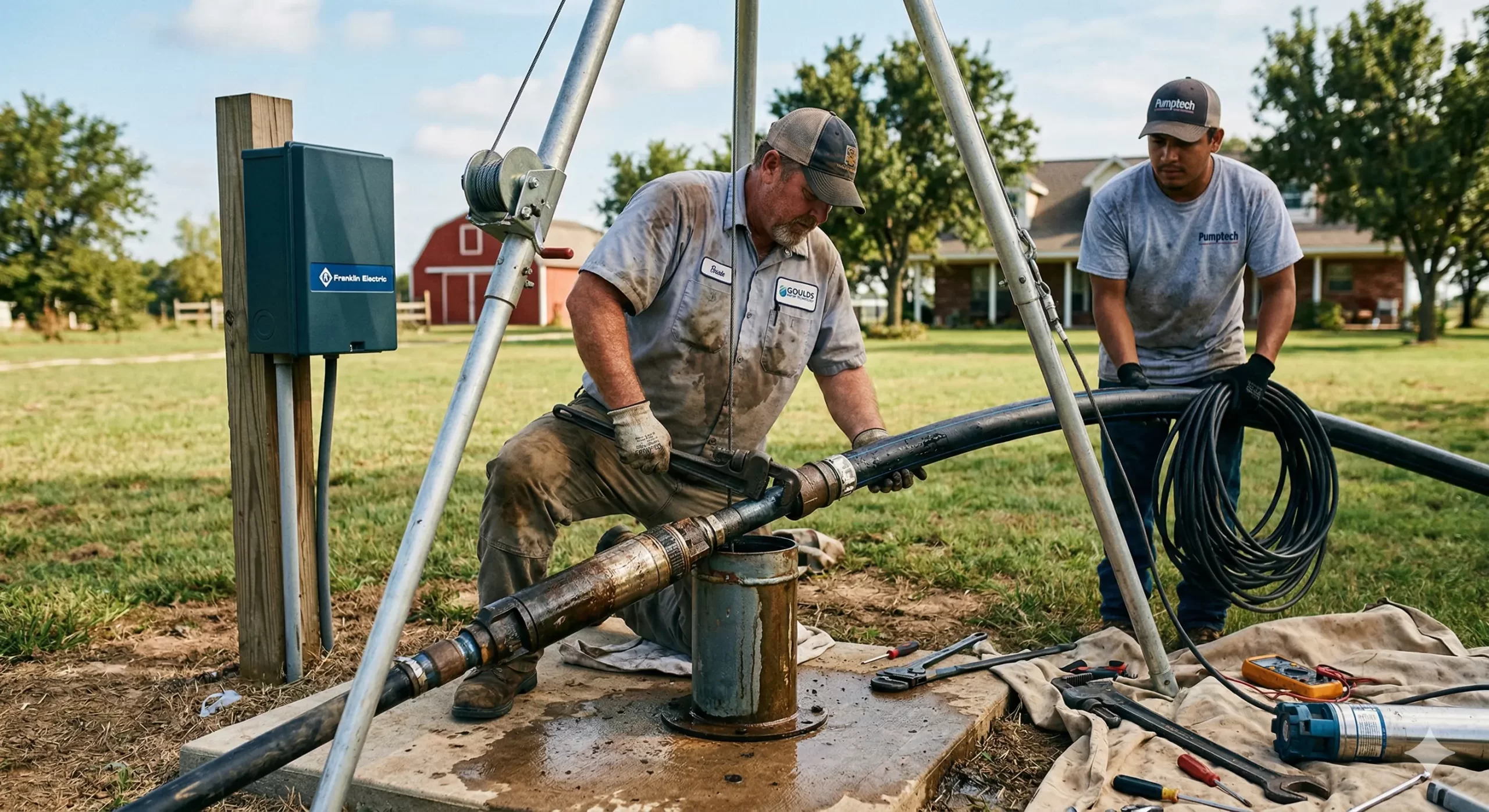
If the electrical tests confirm a faulty motor, the pump must be pulled from the well. This is a hazardous operation that requires specialized equipment. A pump hoist rig or a small crane is essential, as a typical 4-inch submersible pump, motor, and water-filled drop pipe can weigh 300-500 lbs or more. The technician will use a T-handle pitless adapter key to safely disengage the pump assembly from the well casing below the frost line. Once at the surface, the old pump and motor are removed, and a new unit is installed. A critical part of this process is creating durable, completely waterproof connections using industry-standard heat-shrink splice kits to connect the new motor’s leads to the drop cable, ensuring decades of reliable service.
Repair Cost & Time Assessment
The cost and time for resolving an ‘oH’ fault vary drastically depending on the root cause. For a simple environmental issue, the solution is relatively inexpensive. Expect to pay for a standard service call, which typically ranges from $250 to $500. This fee covers 1-2 hours of a qualified technician’s labor for diagnostics, cleaning out obstructed ventilation ports, and potentially fabricating and installing a simple metal sun shield over the control panel. The entire process is usually completed in under two hours.
However, if diagnostics reveal that the overheat fault is a symptom of a failing pump and motor, the project becomes a major repair with a significantly higher cost. A full pump replacement for a residential deep well typically ranges from $3,000 to $7,000+. This comprehensive cost includes the initial diagnostic fee, the labor for two technicians (required for safety when pulling a pump), the specialized pump hoist rig usage fee, the price of a high-quality submersible pump and motor, new drop wire if needed, and materials like heat-shrink splice kits and torque arrestors. Such a job is labor-intensive and can take anywhere from 4 to 8 hours to complete, depending on the depth of the well and any complications encountered during the process.
Fast Local Service & Diagnostics
Calls are routed to a licensed local well professional.