Top Septic Pumping in
Davenport
Davenport Pumping Costs & Data
Here are the critical statistics defining the current state of wastewater infrastructure in the Davenport area:
- Vacation Rental Failure Rates: Septic systems attached to high-occupancy short-term rentals experience a 60% higher rate of premature drain field failure compared to standard residential homes due to constant hydraulic overloading.
- Weather-Related Failure Spikes: Due to heavy summer rainfall, local data indicates a 40% spike in emergency service calls during the wet season. These are predominantly caused by sudden spikes in the water table hydraulically locking systems.
- The Maintenance Deficit: Despite the severe financial risks to rental income, nearly 35% of absentee property owners fail to schedule accelerated 1-to-2 year pump-outs, leading directly to catastrophic, $15,000+ drain field failures.
The mathematics of septic maintenance for vacation homes are unforgiving. Routine, scheduled vacuum pumping is the only scientifically valid method to protect your investment property from a biohazard disaster and prolonged rental vacancy.
The final invoice for your specific pump-out will be dictated by these localized variables:
- High-Occupancy Sludge Density: Pumping a tank at a heavily booked 6-bedroom vacation rental often requires significantly more time to break down massive, compacted grease caps and heavy sludge layers compared to a standard residential home.
- Emergency “Weekend Shock” Calls: Vacation rental systems frequently fail on Saturday nights or Sunday mornings due to sudden hydraulic overload. Emergency dispatch fees and immediate response requirements add to the overall cost.
- Wet Sand Excavation: Finding the tank and manually digging through heavy, shifting Florida sand to expose the access lids adds intensive labor time. The sand often caves back into the hole. We highly recommend paying for PVC surface risers to eliminate this future cost.
- System Complexity (Mounds/ATUs): To overcome high water tables in lower-lying areas, some homes utilize elevated mound systems. Servicing these requires pumping the primary tank and verifying the functionality of dosing pump chambers.
Furthermore, Polk County’s specific soil profiles dictate maintenance frequency:
| Davenport Terrain / Soil | Drainage Capacity | Impact on Septic Systems | Maintenance Need |
|---|---|---|---|
| Sandy Ridge (Former Groves) | Dangerously Rapid | Effluent drains too fast, bypassing natural filtration and directly polluting the Floridan Aquifer. | Strict adherence to FDOH pumping schedules |
| Wetlands / Lowlands | Poor (Seasonal) | Groundwater rises during summer storms, causing immediate hydraulic lock and home backups. | High (Strict 3-year pumping) |
Cost Estimation by System Profile in Davenport:
| Service Description | Estimated Range | Primary Labor Factors |
|---|---|---|
| Standard Residential Pump-Out | $320 – $550+ | Manual excavation in caving sand, standard sludge breakdown. |
| Mega-Rental / High Occupancy Pump-Out | $400 – $640 | Thick grease/crust density breakdown, massive volume, and emergency weekend dispatch fees. |
| Hydro-Jetting / Line Clearing | +$150 – $350 | Deploying high-pressure water to obliterate flushable wipe blockages and severe grease clogs. |
Our platform guarantees that you connect with transparent, Florida-licensed professionals who understand the rigorous demands of Polk County’s expanding vacation and residential properties.
🌱 Local Environmental Status
When an On-Site Sewage Facility (OSSF) is neglected in the Davenport area, the localized consequences are distinct and hazardous:
- Vacation Rental “Weekend Shock”: Davenport is a global hub for mega-vacation rentals due to its proximity to Orlando’s theme parks. A septic system designed for a standard family of four will catastrophically fail when 12 to 16 guests take showers, do laundry, and flush toilets over a single weekend. The hydraulic overload pushes raw sewage and grease directly into the drain field, destroying it permanently.
- Aquifer Contamination (Rapid Perc): The deep, sandy soils characteristic of former citrus groves drain water exceptionally fast. If a septic tank is not pumped and solid sludge escapes into the drain field, the untreated effluent and high nitrogen loads bypass natural filtration and plunge directly into the Floridan Aquifer.
- High Water Table Hydraulic Lock: In the lower-lying areas near local lakes and wetlands, intense summer thunderstorms cause the groundwater to spike. A full septic tank will hydraulically lock, forcing raw sewage to back up into the home.
- Sinkhole Generation: As with much of Polk County, Davenport sits over karst limestone. A leaking drain field continuously saturates the porous limestone below, accelerating its dissolution and significantly increasing the risk of sinkholes.
To protect the Central Florida ecosystem and property investments, owners must enforce uncompromising maintenance protocols:
- Accelerated Rental Pumping: If you operate a high-occupancy short-term rental (Airbnb/VRBO), you MUST schedule a professional vacuum pump-out every 1 to 2 years. Standard 3-to-5 year intervals will result in a $15,000 drain field failure.
- Filter Maintenance: Vacation rentals absolutely require an effluent filter on the outlet baffle to catch non-biodegradable trash (wipes, feminine products) flushed by guests. This filter must be cleaned annually.
- Protect the Biomat: Never allow heavy construction equipment or massive moving trucks to cross the drain field in expanding neighborhoods. The weight will instantly crush the PVC pipes in the soft sand.
Consistent, occupancy-aware pumping is the absolute baseline of stewardship for homeowners and property managers in Davenport.
⚙️ Local Service Details
When a certified vac-truck arrives at your Polk County property, you can expect a rigorous, exhaustive service protocol:
- Electronic Tank Locating & Safe Excavation: Utilizing flushable sondes and ground-penetrating technology to locate buried tanks on new or altered properties. Technicians then carefully hand-dig through shifting sand to expose the lids safely without damaging your turf.
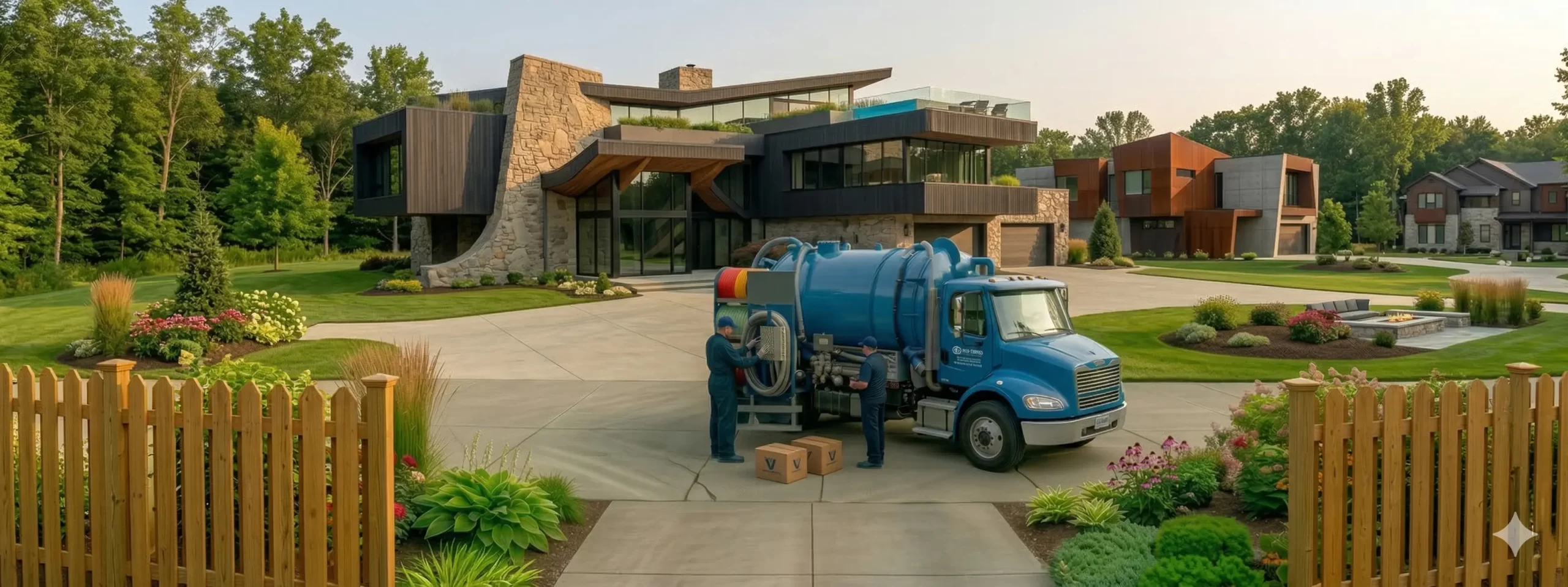
- Low-Impact Equipment Staging: Strategically parking heavy 30,000-gallon vacuum trucks on solid ground (paved roads or stable driveways) and deploying up to 150 feet of industrial hose to protect pristine subdivision lawns and paver driveways.
- Complete Sludge & Grease Evacuation: Engaging high-CFM vacuum power to entirely empty the tank. For high-occupancy rentals, technicians utilize heavy-duty crust busters and hydro-jetting to break down severe grease caps and trash build-up.
- Filter Maintenance: Removing and rigorously power-washing the effluent filter—a critical step for vacation rentals to ensure wipes and feminine products do not enter the drain field.
- Structural Diagnostics: Performing a critical visual inspection of the emptied tank to detect structural fractures caused by shifting sandy soil, root intrusion from old citrus trees, or sinkhole activity.
This comprehensive, specialized approach guarantees that your Central Florida property is protected against catastrophic backups, angry guests, and costly premature drain field failures.
📍 Coverage & ZIP Codes
The Maintenance Revolution
Tracking the popularity of proactive pumping in Davenport. It is the fastest-growing home service this year.
Local Rainfall & Saturation Monitor
Seasonal rains destroy old septic systems. See how much pressure Davenport weather is putting on your tank.
The Ultimate Flush Protocol
Melt away the stress of a Davenport backup. Hit the schedule button on your calendar exactly at this time.
The Davenport Transit Route
Track the estimated physical distance of your service crew. Most local pros utilize these exact regional hubs.
Solid Waste Recovery
You will build profound sludge layers over time. Here is how close you are to needing a pump in Davenport.
The Economics of Sludge
Based on average Davenport contractor prices, here is the amount of cash you are risking every year you wait.
Base Drain Field Replacement in Davenport: $13,618
🏡 Real Estate Transactions
Navigating a property transfer in Davenport requires meticulous attention to septic documentation:
- Vacation Rental Scrutiny: Investors buying a property intended for short-term rental must verify the exact permitted capacity of the septic system. Lenders and health inspectors will demand a full vacuum pump-out to ensure the system hasn’t already been destroyed by previous high-occupancy “weekend shock.”
- Historic & Grove Property Inspections: Because many older homes operate on legacy conventional systems installed decades ago on former agricultural land, appraisers demand a structural camera inspection. This ensures the aging tanks are not actively collapsing from root intrusion or shifting sand.
- USDA/Rural Loan Inspections: For properties on the outskirts of the city, rural housing loans have extremely rigorous requirements for septic functionality and health clearances. A failing system or lack of maintenance records will immediately halt the funding process.
- Appraisal Value Protection: A failed leach field on a tight suburban lot can cost $12,000 to $20,000 to replace due to excavation difficulty and imported fill requirements. Providing a potential buyer with a flawless pumping log neutralizes their ability to demand massive price concessions.
Protect your Polk County property’s equity. Securing a professional pump-out and a clean bill of health from our vetted technicians is the most profitable step you can take before listing your Davenport home or investment property.
⚠️ Local Regulatory Warning
Homeowners and property managers are legally bound by the following uncompromising mandates:
- FDOH State Laws: The Florida Department of Health (FDOH) dictates that all septic pumping must be performed exclusively by state-licensed sludge transporters. The waste must be legally manifested and disposed of at approved treatment facilities. Hiring an unlicensed contractor makes you complicit in illegal dumping.
- Short-Term Rental Capacity Codes: FDOH strictly regulates the number of bedrooms allowed on a specific septic tank size. Advertising a property for 14 guests when the septic permit only allows for a 3-bedroom capacity is a massive liability and will void your permit if reported.
- Surface Discharge Penalties: Failing drain fields that leak raw effluent onto neighboring properties or into public storm drains trigger immediate municipal health citations, forced system condemnation, and immediate shutdown of the rental property.
- System Expansion Permitting: Upgrading a drain field or adding a massive pool without filing engineered blueprints with the Polk County Health Department will result in massive retroactive fines and stop-work orders.
Consequences of Regulatory Non-Compliance in Davenport:
| Environmental Violation | Enforcing Agency | Potential Penalty |
|---|---|---|
| Illegal Surface Discharge (Raw Sewage) | FDOH / DEP | Emergency fines up to $500 per day, forced condemnation, rental shutdown. |
| Unpermitted System Expansion | Polk County Health | Stop-work orders, forced removal of plumbing, blockage of property sales. |
| Using Unlicensed “Gypsy” Pumpers | State Police / DEP | Homeowner liability for illegal dumping, massive environmental restitution fees. |
Protect your finances and your legal standing. Our network only provides access to elite, fully insured, and FDOH-compliant professionals who protect your property legally and environmentally.
Homeowner Feedback