
Diagnosis: An ‘Err 1’ or Overcurrent Fault on a CentriPro Aquavar VFD indicates the system is drawing dangerously high electrical current. This is a protective shutdown, almost always caused by a severe mechanical failure, such as a seized pump, or a catastrophic electrical short in the submersible motor windings. Professional diagnosis with a megohmmeter and pump hoist rig is required.
In this Guide:
What Causes the CentriPro Code Err 1 Issue?
From an electrical engineering perspective, the CentriPro Aquavar Variable Frequency Drive (VFD) is a sophisticated motor controller. Its primary function is to protect the expensive submersible pump motor from damaging electrical conditions. An ‘Err 1’ Overcurrent Fault is the drive’s self-preservation mechanism in action. It means the VFD has detected an amperage draw that dramatically exceeds the motor’s Full Load Amp (FLA) rating programmed into its parameters. This isn’t a minor fluctuation; it’s a massive, near-instantaneous demand for power that, if allowed to continue for even a few seconds, would destroy the drive’s power components (IGBTs) and potentially melt the motor windings. The VFD is essentially shouting that the motor is trying to perform an impossible task that requires an unsafe amount of electrical energy.
The root cause of this excessive current draw is almost always a catastrophic failure downhole. The most common scenario is a severe mechanical lock-up of the pump assembly. Over time, sediment, sand, or mineral buildup (scale) can accumulate within the pump’s tight-tolerance impeller stages. Eventually, an impeller can jam against a diffuser, effectively seizing the entire rotating assembly. Alternatively, the pump’s internal bearings—either the radial support bearings or the primary thrust bearing—can fail due to wear or loss of lubrication. When this mechanical binding occurs, the submersible motor, a powerful induction motor, attempts to overcome the resistance. To generate the immense torque required to break the pump free, it draws a massive inrush of current, far exceeding its design limits. The VFD detects this spike and immediately faults on overcurrent to prevent a thermal meltdown of the motor.
A secondary, but equally critical, cause is a direct electrical failure within the motor or its wiring. Submersible motors operate in a harsh, wet environment, and the integrity of their internal seals and the waterproof splices on the power cable is paramount. If a seal fails, water can penetrate the motor housing and compromise the lacquer insulation on the copper windings. This creates a low-resistance path, or a short circuit, either between windings or from a winding to the motor’s steel casing (ground). When the VFD applies voltage, the electricity bypasses the intended magnetic circuit and flows directly through the short, resulting in a virtually infinite current draw that instantly trips the ‘Err 1’ fault. This condition can also be caused by lightning strikes or significant power surges that physically puncture the winding insulation.
DIY Troubleshooting Steps
- Safely Power Cycle the System: Locate the dedicated double-pole circuit breaker for the pump system in your main electrical panel. Turn it completely off, wait a full two minutes to allow the VFD’s internal capacitors to discharge, and then turn it back on. Attempt to run the water. If the ‘Err 1’ fault reappears instantly, do not reset it again; this indicates a hard fault requiring professional diagnosis.
- Document VFD Display Data: Before the drive faults, it often displays real-time operational data. Carefully observe the screen during the brief startup attempt. Note the displayed frequency (Hz) and, most importantly, the amperage (Amps) reading at the exact moment it trips. Providing this data to a technician is extremely valuable.
- Inspect All Surface-Level Components: Visually inspect the Aquavar drive, any associated control boxes, and pressure switches. Look for signs of overheating such as discolored plastic, a distinct acrid smell of burnt electronics, or any evidence of water intrusion or corrosion on the terminals.
- Check Thermal Overload Resets: While the VFD has its own electronic overload, some installations may have a secondary magnetic starter or control box with a physical thermal overload block. Look for a small, often red or blue, button and check if it can be reset. If it trips repeatedly, it confirms the overcurrent condition.
- Listen for Abnormal Startup Noises: Stand near the wellhead while an assistant initiates the pump (by opening a faucet). During the 1-2 seconds before the VFD faults, listen carefully. A normal pump is nearly silent. A loud grinding, humming, or clunking sound strongly suggests the pump is mechanically seized and physically unable to turn.
- Verify Incoming Voltage: If you are qualified and have a multimeter, you can check the incoming L1 and L2 voltage at the VFD’s input terminals. Unbalanced voltage or low voltage conditions can sometimes contribute to high amperage draw, though it is rarely the cause of an instantaneous ‘Err 1’ fault.
When to Call a Professional Well Service
Upon arrival, a certified technician’s first step is to validate the overcurrent condition safely and scientifically. They will use a clamp-on ammeter around one of the motor leads coming from the VFD to confirm the extreme amperage draw at startup. The definitive diagnostic test, however, involves using a Megohmmeter, often called a ‘Megger.’ After completely disconnecting the motor leads from the VFD, the technician will apply a high voltage (typically 500V or 1000V) DC signal through the wiring. This instrument measures insulation resistance in millions of ohms (megohms). A healthy motor and drop cable will show a high resistance, often reading ‘infinite’ or well over 100 megohms. A reading near zero indicates a dead short in the motor windings or a compromised cable, confirming the need to pull the pump from the well.
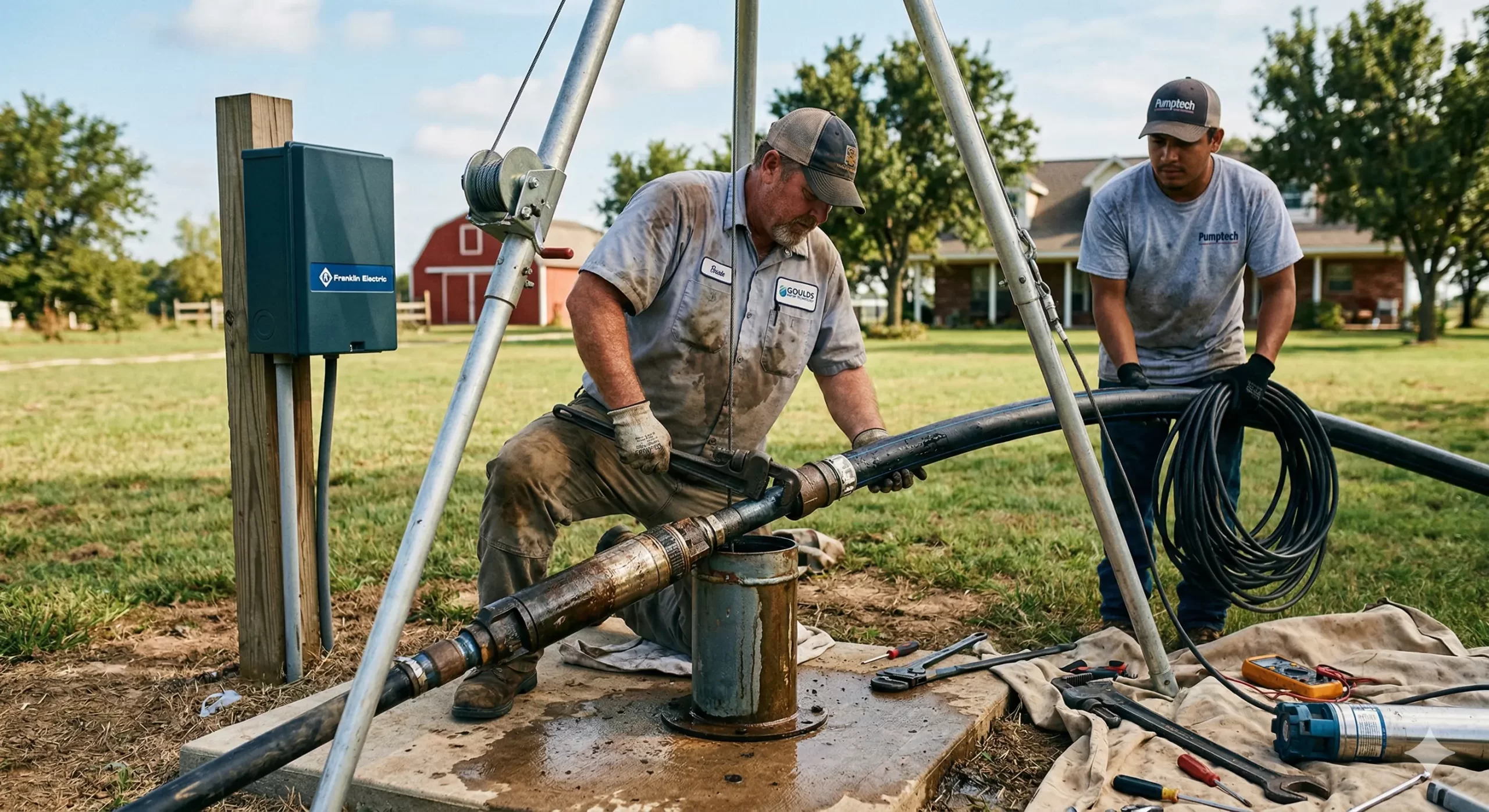
For any submersible pump set deeper than 50-60 feet, pulling the equipment by hand is unsafe and impractical. A professional crew will arrive with a specialized Pump Hoist Rig. This is a portable derrick or crane designed specifically for well work. The rig is positioned directly over the wellhead, and heavy-duty clamps are attached to the drop pipe below the well cap. Once the well seal is removed, a technician will use a long T-handle ‘Pitless Key’ to reach down into the well casing and disengage the pitless adapter, which is the fitting that connects the pump’s plumbing to the underground service line to the house. This allows the entire assembly—pump, motor, drop pipe, and wire—to be lifted straight out of the well without excavating the yard.
With the pump hoist carrying the immense weight, the crew carefully raises the pipe, uncoupling sections every 20 feet and stacking them aside. This process continues until the pump and motor surface. A visual inspection of the retrieved pump will almost always reveal the cause of failure: impellers packed with sand, a burnt smell from the motor, or a shaft that cannot be turned by hand. The technician will then replace the entire pump and motor assembly, make a new waterproof heat-shrink splice for the motor leads, and carefully lower the new unit back into the well, re-engaging the pitless adapter. On the surface, they will re-land the wires in the control panel and meticulously program the Aquavar VFD with the new motor’s specific nameplate data. The system is then commissioned, tested for proper amperage, and the well yield is checked to ensure everything is operating to specification.
Safety Protocol: All work is performed with the circuit breaker locked out and tagged out. Technicians wear appropriate PPE, including hard hats and safety glasses, especially when working under the suspended load of the pump hoist. The 240V power and the hundreds of pounds of suspended equipment present significant hazards that demand professional handling.
Repair Cost & Time Assessment
Diagnosing and repairing an ‘Err 1’ fault is a significant undertaking, and the cost reflects the specialized labor, heavy equipment, and high-quality parts involved. Expect a service call fee of $150 to $300 for the initial diagnosis. The primary cost driver is the pump pulling operation. A two-person crew, required for safety and efficiency, will bill at a combined rate of $250 to $400 per hour. The use of the Pump Hoist Rig itself typically adds a flat or daily fee of $500 to $1,000 to the invoice.
The cost of replacement parts is also substantial. A new high-quality 4-inch submersible pump and motor assembly can range from $800 to over $2,500, depending on horsepower, flow rate, and brand (e.g., Grundfos, Franklin Electric). Additional materials like new drop cable, pitless adapters, or check valves will add to the total. For a typical residential deep well (150-300 feet), homeowners should budget for a total repair cost in the range of $3,500 to $7,000. The entire process, from diagnosis to a fully operational system, usually takes between 5 and 10 hours. This investment covers not just the parts, but the technicians’ expertise, insurance, and the specialized equipment necessary to perform the job safely and correctly.
Fast Local Service & Diagnostics
Calls are routed to a licensed local well professional.