
Emergency Well Pump Repair in Vernon, TX
Folks in Vernon know the harsh realities of pulling water from the ground out here. This isn’t lush East Texas; we’re in the Red River Valley, and the groundwater can be a real challenge. Drought cycles mean fluctuating water levels, and the mineral content is a constant battle for your pump’s lifespan. We’ve seen it all, from corroded casings to pumps choked with scale.
Our local water primarily comes from two significant sources: the Seymour Aquifer and, for deeper wells, the Blaine Aquifer. The Seymour is shallower, often providing good yields but can be more susceptible to surface contamination and shallower water levels during dry spells. The Blaine, while deeper and generally more reliable in terms of volume, often comes with its own set of mineral challenges, particularly hardness.
A cheap pump might sound like a good deal up front, but out here, it’s a false economy. The mineral-rich water, coupled with potential sand abrasion and the sheer workload demanded by our depths, will chew through an inferior pump in no time. You end up paying for multiple replacements and calls, costing you far more in the long run than investing in quality from the start.
Fast Local Service & Diagnostics
Calls are routed to a licensed local well professional.
Well Pump Repair in
Vernon
Vernon & Wilbarger County Well Stats
Wilbarger County has a significant number of private domestic wells, alongside wells serving agricultural operations, primarily for irrigation of cotton, wheat, and feed crops. Depths vary considerably, but many domestic wells fall between 100 and 400 feet, with some municipal or larger agricultural wells going much deeper into the Blaine. The Texas Water Development Board tracks thousands of water wells in the county, indicating a heavy reliance on groundwater resources.
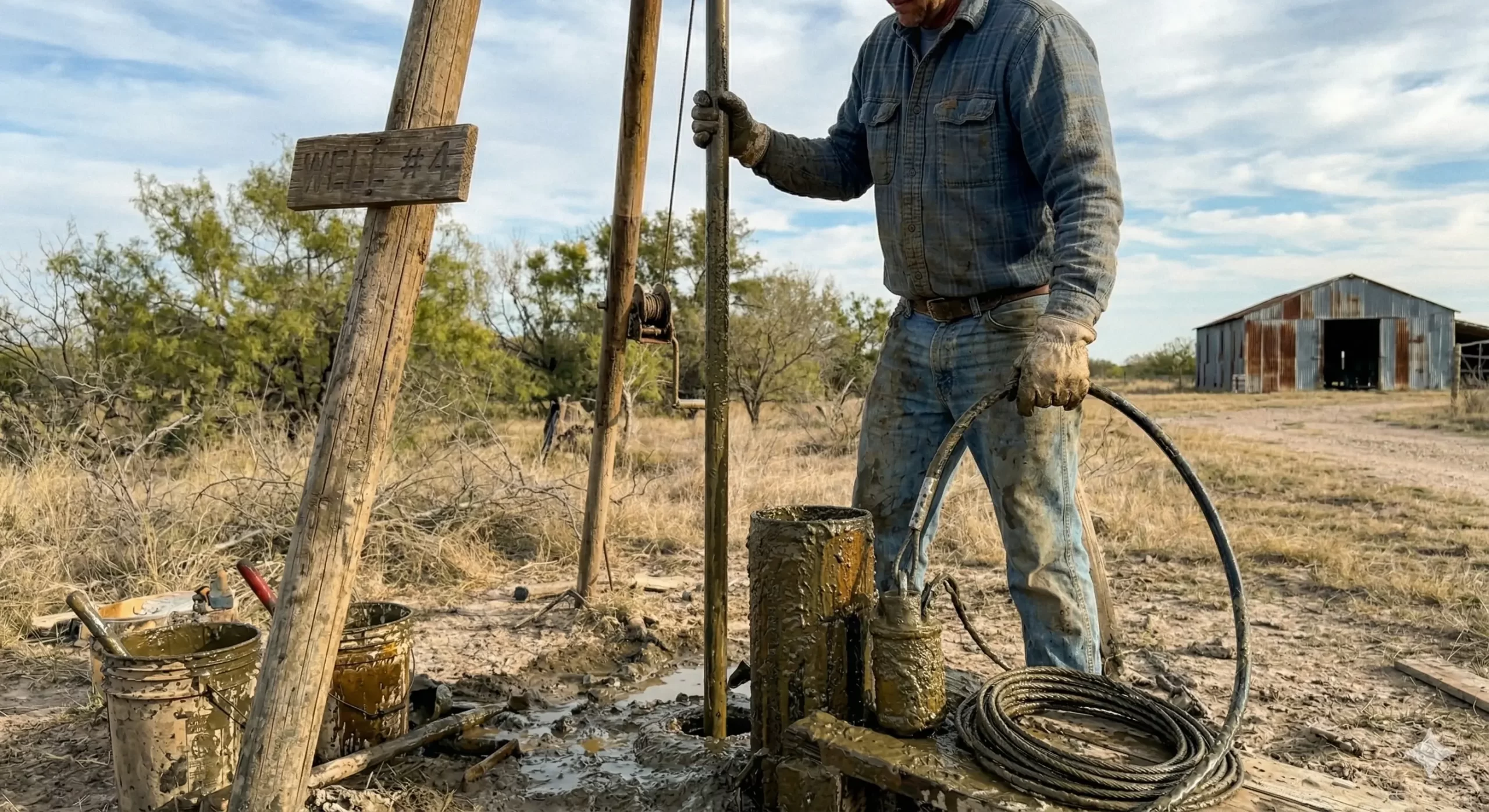
Pulling a pump in Wilbarger County, especially around Vernon, often means dealing with hard, consolidated formations like the Blaine Gypsum. It’s not uncommon to hit rock just a few feet down, requiring specialized drilling and casing techniques. If we’re working on an older well, rust and corrosion can fuse pipes together, turning a standard pull into a full-day ordeal requiring casing jacks and specialized breaking tools. Accessibility can also be an issue; tight spaces near outbuildings or agricultural equipment mean precise rig placement.
To get your pump out and a new one in, we often need heavy-duty pulling rigs – not just a tripod. We use specialized pipe wrenches, well cameras to inspect the casing, electrical diagnostic tools, and sometimes even a mobile crane for very deep or stubborn pulls. The specialized knowledge to interpret well logs and diagnose issues unique to our local geology also factors into the cost, ensuring the job is done right the first time.
Spring Well Maintenance in Texas
Heavy spring rains can cause surface runoff to breach well caps. We strongly recommend testing your water for coliform bacteria and inspecting the sanitary seal.
Save $500+ on Replacements
Via the TX Energy Co-op VFD Upgrade Program
81°F in Vernon
Local Aquifers & Geology
The primary groundwater sources in Vernon include the The Seymour Aquifer is a shallow, unconfined aquifer composed of unconsolidated sands, silts, clays, and gravels. It typically yields fresh to slightly saline water, but water quality can vary significantly. Beneath that, the Blaine Aquifer consists of fractured gypsum, dolomite, red shale, and sandstone. Water from the Blaine is generally hard due to dissolved gypsum and can also contain hydrogen sulfide. It’s a critical source for deeper wells, but those minerals are tough on equipment.. Drilling through the local Vernon sits primarily on soils derived from the Red River alluvium, characterized by deep, reddish-brown clays and loams. We also have areas with loamy fine sand and gypsum-influenced soils from the Permian Basin, particularly in the western and southern parts of the county. These soils can be expansive, leading to issues with well pad foundations, and the high clay content can make trenching for water lines challenging. means that average well depths range from 100 ft – 400 ft, though some agricultural or municipal wells exceed 600 ft..
Due to these geological factors, local homeowners frequently struggle with Mineral scale buildup and sand abrasion. The hard water from the Blaine Aquifer, coupled with fine sand particles that often infiltrate older or poorly screened wells, can act like sandpaper on impellers and literally choke a pump motor with scale. This drastically reduces efficiency and shortens pump life..
Drilling Depth Comparison
Deeper wells require heavy-duty crane hoists for pump extraction.
Climate & Water Quality
Pump systems in the Vernon area face severe environmental stressors. The most significant threat is Our extreme Texas heat and frequent droughts are killers for well equipment. Prolonged dry spells lower the water table, forcing pumps to work harder and potentially run dry, leading to motor burnout. Surface components like pressure tanks and wellheads also take a beating from the intense sun and occasional deep freezes, cracking plastics and degrading seals. Rapid temperature changes can stress piping and electrical connections too.
Additionally, the raw groundwater often presents issues with Hardness (from gypsum), high iron content causing staining, hydrogen sulfide (rotten egg smell), and varying levels of sand or silt, especially in older wells or those drawing from the shallower Seymour Aquifer..
Regional Groundwater Advisory
Known primary contaminant threat to submersible pumps and pipes in this area:
Common Area Systems
VFD Upgrade Savings
Constant Pressure vs StandardReplacing a standard single-speed pump with a Variable Frequency Drive (VFD) eliminates hard starts and drastically reduces energy draw in Texas.
Compliance & Local Permits
Wilbarger County Level: Wilbarger County is part of the Wilbarger Control Groundwater Conservation District (WCGCD). While generally not as stringent for domestic wells as some urban GCDs, you still need to register new wells with the WCGCD and adhere to their spacing rules and production limits, especially for larger agricultural operations. For domestic use, the key is proper construction per TDLR standards. Always check with the WCGCD office before drilling a new well or significantly altering an existing one to ensure compliance.
Top Pump Brands in Texas
Most frequently installed hardware based on local geology (2026 data).
- Check static & pumping water levels, and recovery rate.
- Verify motor amperage and voltage readings against manufacturer specifications.
- Inspect pressure tank pre-charge, integrity, and cycling frequency.
- Test pump’s ‘dead head’ pressure and overall system pressure switch settings.
- Examine all above-ground electrical connections and wellhead seal.
- Perform water quality test for hardness, iron, and sediment content.
Premium Well Pump Brands We Service
Our licensed technicians in Vernon are certified to repair, replace, and install high-quality groundwater equipment from industry-leading manufacturers, including:
- No water at all, or only a trickle.
- Extremely low water pressure throughout the house or property.
- Pump cycling on and off very frequently, even when no water is being used.
- Dirty, sandy, or rusty water coming from the faucet.
- A humming or grinding noise coming from the wellhead or pressure tank area.
- Unexpectedly high electricity bills without changes in water usage.
Vernon Real Estate Well Regulations
Local Dispatch & Response Times
Live Dispatch: Texas
Updated Just Now⚠️ High demand. Call now to secure the next available technician.
- In Vernon, we understand that ‘no water’ is a true emergency, especially out in the rural areas.
- During business hours, we aim for a response time of 2-4 hours for critical ‘no water’ calls within a 30-mile radius.
- For after-hours or weekend emergencies, we have a dedicated on-call crew, typically reaching you within 4-6 hours, depending on current call volume and distance.
- Travel time to properties further out in the county (e.g., near Odell or Harrold) will naturally add to the response, but we prioritize getting eyes on your system as fast as possible.
- We always provide an estimated arrival time and keep you updated, because being without water is stressful enough without guessing when help will arrive.
⚠️ Wilbarger County & State Regulatory Warning: Abandoned Wells
Groundwater Threat Level
Current aquifer and mineral impact on pumps in Vernon.
Dropping water tables cause pumps to suck air and overheat.
Hard water calcifies pump impellers, reducing lifespan.
The Cost of Ignoring Symptoms
Fixing a short-cycling pump early saves thousands in Vernon.
Data reflects average well contractor estimates in Vernon.
Pump Lifespan Estimator
Select household size in Vernon to see strain impact.
Local Vernon
Well Pros
Fast Local Service & Diagnostics
Calls are routed to a licensed local well professional.
Septic System Services in Vernon, TX
Do you have a septic tank on your property? Proper maintenance is critical to protecting your well water quality.
Vernon Homeowner Feedback
“Had a well go out on the back forty. Called these fellas, and they had a new pump in there quicker than I thought possible. Good work, fair price.”

Local Homeowner
✓ Verified TX
“My pump started actin’ real weird last month. It just kept on runnin’ and runnin’ no matter what, and the pressure was terrible. Thought I might have to replace the whole thing, but these guys came out and figured out it was a worn-out pressure switch and a corroded check valve. They replaced ’em fast, and now the water pressure is better than it’s been in years. Real honest and know their stuff. Didn’t even try to sell me a whole new system when I didn’t need it. Gratefull for their help.”

Local Homeowner
✓ Verified TX
“Lost water on a Sunday morning, and thought we were in for a long wait. Called these folks, and they had a tech out to our place by lunchtime. Diagnosed a faulty starter and had us back in water before dinner. Can’t beat that kind of emergency service.”

Local Homeowner
✓ Verified TX
Expert Vernon Well System FAQ
What commonly causes low water pressure in homes around Vernon, especially if my pump seems to be running?
Low water pressure, even if your pump is running, is a common complaint out here and can stem from several issues. Often, it’s a partially clogged foot valve or pump intake due to sand or mineral scale, restricting water flow. Your pressure tank might also be waterlogged or improperly charged, leading to rapid pump cycling and inconsistent pressure. Lastly, mineral buildup within your home’s plumbing or water heater, common with our hard water, can significantly reduce flow over time. We’d start by checking the pressure tank, pressure switch settings, and then assess pump performance and water quality for blockages.
How often should I get my well and pump system inspected in Wilbarger County, given our water conditions?
Considering the specific challenges of Wilbarger County’s groundwater – high mineral content, potential for sand, and fluctuating water tables due to droughts – we strongly recommend an annual professional inspection of your well and pump system. This preventative maintenance can catch small issues like failing pressure switches, minor leaks, or early signs of scale buildup before they turn into costly, no-water emergencies. Regular checks of your well’s static and pumping levels also help us anticipate problems related to dropping water tables, ensuring your system is running efficiently and reliably year-round.
My well water sometimes smells like rotten eggs or has a rusty tint. What’s causing that in our area?
That rotten egg smell is almost always hydrogen sulfide gas, often produced by sulfur-reducing bacteria living in the anaerobic (oxygen-free) environment of your well or water heater. It’s common in our region, especially from the Blaine Aquifer. A rusty tint usually indicates high iron content in your water, which can stain fixtures and laundry. While typically not a health hazard, it’s certainly unpleasant. We can test your water to confirm the presence of these issues and recommend appropriate treatment systems, such as aeration, chlorination, or specialized filtration, to improve your water quality.
Can I dig my own well for domestic use on my property in rural Wilbarger County, or do I need a licensed professional?
Under Texas law, all new water wells, including those for domestic use, must be drilled by a driller licensed by the Texas Department of Licensing and Regulation (TDLR). It’s not just about digging a hole; it involves proper casing, grouting, and wellhead construction to prevent contamination and ensure long-term functionality. You’ll also need to register your well with the Wilbarger Control Groundwater Conservation District (WCGCD). Attempting to dig your own well bypasses critical safety and environmental regulations and could lead to fines, contaminated water, or a non-functioning well. Always use a licensed professional.
Vernon Groundwater Expert AI
What are the specific groundwater regulations, average well depths, and the local conservation district for Vernon, Wilbarger County?
Groundwater Regulations and Residential Wells in Vernon, Wilbarger County, TX (2026)
As a Senior Hydrogeologist and Local Groundwater Regulatory Expert for Texas, I can provide you with specific information regarding residential water wells in Vernon, Wilbarger County, based on current regulations as of 2026.
Local Groundwater Conservation District (GCD)
- No Local Groundwater Conservation District: It is important to note that Wilbarger County, including Vernon, is not currently located within an active Groundwater Conservation District (GCD). This means there are no local GCD permitting requirements or specific local rules regarding well spacing, production limits, or water usage reporting that would typically be enforced by a local district.
Primary Regulatory Authority and State Regulations
In the absence of a local GCD, the primary regulatory oversight for water well drilling, construction, and plugging in Vernon, Wilbarger County, falls under the Texas Department of Licensing and Regulation (TDLR), as mandated by state law.
- Texas Water Code Chapter 36: All water well drillers and pump installers operating in Texas must be licensed by the TDLR. The construction, repair, and plugging of wells must adhere to the statewide standards outlined in Texas Water Code Chapter 36 and TDLR administrative rules.
- Well Driller Licensing: Any person drilling or altering a water well must hold a valid Class A or Class C Water Well Driller License issued by the TDLR. Similarly, anyone installing or repairing pumping equipment must hold a licensed Water Well Pump Installer registration.
- Well Completion Reports (WCR): For every new well drilled, deepened, or altered, a licensed driller is required to submit a Well Completion Report (WCR) to the TDLR and the Texas Water Development Board (TWDB) within 90 days of completion. These reports contain vital information such as well depth, casing details, geological formations encountered, and pump test data. This data is critical for understanding local groundwater resources.
- You can learn more about TDLR's Water Well Drillers and Pump Installers program here: https://www.tdlr.texas.gov/wwd/wwd.htm
- Well Setback Requirements:
- Wells must be located a minimum of 50 feet from a property line.
- Wells must be located a minimum of 50 feet from a septic system absorption field.
- Wells must be located a minimum of 100 feet from an existing or proposed septic system absorption field if the well is designed to produce more than 5,000 gallons per day.
- Specific distances are also mandated from potential contamination sources like feedlots, waste disposal sites, and chemical storage.
- Well Plugging: Abandoned or deteriorated wells pose a contamination risk and must be properly plugged by a licensed driller in accordance with TDLR rules to protect groundwater quality.
Average Well Depths for Vernon, Wilbarger County
Based on historical state well logs available from the Texas Water Development Board (TWDB) for the Vernon area of Wilbarger County, residential water wells typically tap into the shallower aquifers.
- Estimated Average Depth: For residential wells in Vernon, the average well depth is approximately 180 feet.
- Typical Range: You can expect residential wells to range anywhere from 100 to 250 feet deep, depending on the specific location, water demand, and the presence of suitable sand and gravel layers. Deeper wells are less common for domestic use due to potential water quality issues or lower yield from deeper formations.
Specific Aquifer Beneath Vernon
The primary aquifer system supplying residential water wells in Vernon, Wilbarger County, is the Seymour Aquifer.
- Seymour Aquifer: This unconfined aquifer consists of isolated areas of Quaternary age sand, gravel, silt, and clay. It is a vital local water source, particularly for domestic and agricultural use in this region. Water quality can vary, and localized shallow perched zones may also be utilized.
- You can find more detailed information on Texas aquifers via the TWDB: https://www.twdb.texas.gov/groundwater/aquifer/index.asp
Key Actionable Steps for a Homeowner in Vernon:
- Hire a Licensed Professional: Always ensure you hire a TDLR-licensed water well driller for any new well construction, deepening, or plugging. Verify their license through the TDLR website.
- Review Well Completion Report: Request a copy of the Well Completion Report (WCR) from your driller. This document is essential for future well maintenance and property records.
- Consult with Local Experts: While there's no GCD, local environmental health departments or county extension agents may offer additional localized guidance.
Fast Local Service & Diagnostics
Calls are routed to a licensed local well professional.
Blix
provides official
Emergency Well Pump Repair services for the
Vernon
area.