
A screeching Rheem water heater indicates high gas pressure or a clogged burner orifice. A pro must test pressure with a manometer and clean the assembly.
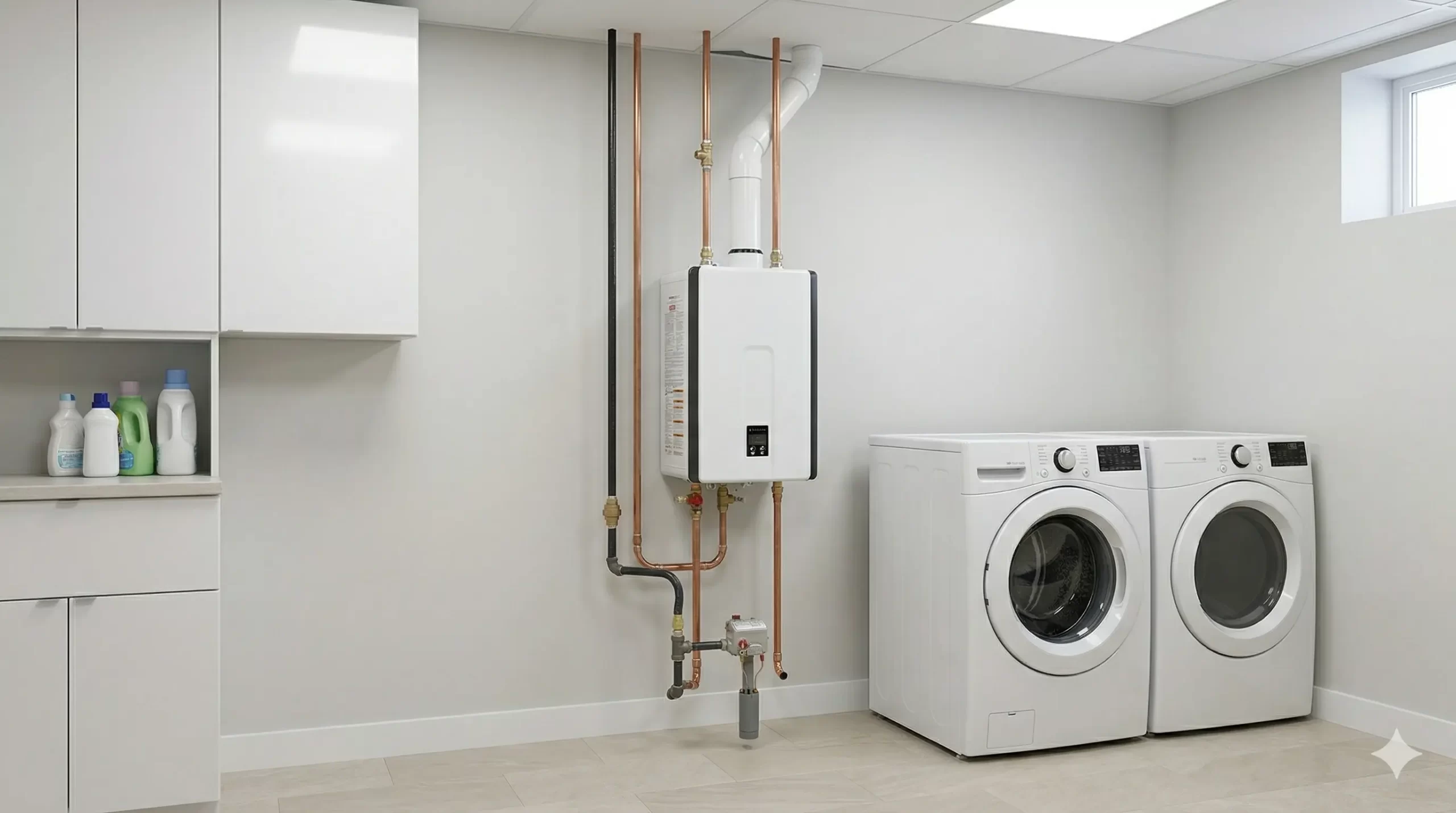
️ Repair Profile
Required Diagnostics Tools
Digital or U-tube manometer, Pipe wrenches, Socket set (1/4″, 3/8″), Non-marring orifice cleaning kit, Soft bristle brushes, Can of compressed air, Gas leak detection solution, High-lumen flashlight
Financial Breakdown: Parts vs. Licensed Labor
This repair’s cost is overwhelmingly weighted towards specialized labor because it demands precise diagnostic instrumentation, specifically a manometer, which is not a standard homeowner tool. The solution involves a meticulous, time-consuming process of disassembly, cleaning, and safety verification rather than the replacement of expensive components.
Deep Technical Diagnosis: The Physics of the Failure
The acoustic phenomenon of a screeching sound during the ignition sequence of a Rheem gas water heater is a direct result of fluid dynamics, specifically turbulent gas flow creating high-frequency vibrations. The primary culprit is excessive gas velocity passing through a fixed restriction. This condition is analogous to air being forced through the reed of a musical instrument. The main burner orifice, a precisely drilled brass spud, is designed to regulate gas flow to achieve a specific BTU/hr rating based on a nominal supply pressure, typically 5-7 inches of Water Column (WC) for natural gas. When the incoming pressure exceeds this design parameter, the gas is forced through the orifice at a velocity that creates harmonic resonance within the burner assembly, resulting in the audible screech.
An alternative, yet related, cause is a partial occlusion or geometric alteration of the burner assembly itself. Debris such as rust scale from inside the gas line, spider webs, or carbon buildup can partially block the orifice. This narrowing of the aperture increases gas velocity locally, creating the same whistling effect. Similarly, obstructions within the burner tube or across the burner ports can disrupt the laminar flow of the air-fuel mixture established by the Venturi effect at the primary air shutter. This disruption alters the stoichiometric combustion, leading to unstable flame propagation and audible oscillations as the flame struggles to stabilize. A qualified technician will use a manometer connected to the gas control valve’s test port to differentiate between these causes. A high static and operating pressure reading points to a supply-side issue, while normal pressure readings suggest an obstruction within the appliance’s burner components.
- Excessive Supply Pressure: The regulator at the gas meter or a line regulator is failing, delivering pressure exceeding the 14″ WC maximum typically allowed for residential appliances.
- Partially Occluded Orifice Spud: Minute debris lodged within the orifice creates a smaller, irregular opening, accelerating gas flow to sonic speeds.
- Burner Tube or Port Contamination: Soot, rust flakes, or insect nests inside the main burner tube disturb the air/fuel mixture, causing noisy, inefficient combustion.
- Misaligned Burner Assembly: Improper seating of the burner tube relative to the orifice can aspirate air incorrectly, leading to turbulent, noisy ignition.
- Corroded Air Shutter: Heavy corrosion on the primary air shutter can restrict airflow, creating a fuel-rich mixture that ignites with an unstable and noisy ‘whoosh’ or screech.
US Building Codes & Plumbing Regulations
According to NFPA 54, the National Fuel Gas Code, which is the foundational standard for gas appliance installation in the United States, the gas pressure at the appliance inlet must be verified upon installation. Section 8.1.3 (in many editions) mandates that gas pressure regulators shall be adjusted to the manufacturer’s specified outlet pressure. A screeching noise is a direct indication that this pressure may be dangerously high, potentially violating the core safety tenets of this code. Furthermore, the code requires that the appliance be installed with the correct orifice for the specific gas type and altitude. An audible symptom like screeching necessitates an immediate verification of these code-mandated parameters by a licensed professional using a calibrated manometer, as it signals a deviation from safe operating specifications.
The Uniform Plumbing Code (UPC) reinforces this by requiring all work on gas piping systems to be performed by qualified individuals. A screeching ignition is considered evidence of improper operation. The UPC mandates that every gas appliance be served by a dedicated, accessible shutoff valve. The presence of this screeching condition would compel a certified inspector to verify that the system was tested for pressure and leaks upon installation, and that the appliance is operating within the manufacturer’s listed and approved parameters. Failing to address an audible combustion problem like this could be cited as a violation of the general code requirement to maintain systems in a safe and sanitary condition, as improper combustion is inherently unsafe.
Professional Master Plumber Repair Sequence
- Initial Safety Protocol & Verification: Don full PPE (gloves, safety glasses). Verbally confirm the symptom with the homeowner. Post a ‘Do Not Operate’ notice on the unit. Ensure the area is well-ventilated.
- Static and Operating Gas Pressure Test: Turn the gas control knob to ‘OFF’. Loosen the inlet pressure tap screw on the gas control valve. Connect a manometer hose. Turn the main gas supply cock back on. Record the static pressure (should be 5-7″ WC for NG). Then, have an assistant turn the thermostat up to call for heat while you observe and record the operating (dynamic) pressure. A reading significantly above 7″ WC indicates a supply-side issue.
- System Isolation and Depressurization: Turn the gas cock to the closed position. Disconnect the manometer. Securely tighten the pressure tap screw. Disconnect the pilot tube, main burner tube, and thermocouple/thermopile leads from the gas control valve. Note their positions carefully.
- Burner Assembly Extraction: Carefully remove the screws or bolts securing the main burner access cover and the burner assembly itself. Slide the entire assembly out from the combustion chamber, taking care not to damage the fragile pilot assembly or igniter.
- Orifice Inspection and Cleaning: Locate the brass orifice spud where the burner tube connects to the gas manifold. Inspect the tiny hole for any visible debris. Using a specialized, non-metallic orifice pick or compressed air, gently clear any obstruction. CRITICAL: Never use a drill bit, pin, or wire, as this will permanently damage the orifice and alter the appliance’s firing rate.
- Burner Tube and Port Decontamination: Use a soft-bristled brush and compressed air to thoroughly clean the inside of the burner tube, the primary air shutter, and all burner ports on the burner head. Remove all soot, rust scale, and any other foreign material.
- Meticulous Reassembly: Re-insert the burner assembly, ensuring it is properly aligned and seated. Reconnect the burner tube, pilot tube, and thermocouple/thermopile to the gas control valve, ensuring all fittings are snug but not over-torqued. Reinstall the burner access cover.
- Gas Leak Detection: Slowly turn the gas supply back on. Using a certified gas leak detection solution, generously coat every fitting that was disturbed. Watch for the formation of bubbles, which indicates a gas leak that must be corrected before proceeding.
- Re-Ignition and Operational Observation: Follow the manufacturer’s lighting procedure to relight the pilot. Once the pilot is stable, turn the thermostat up to call for heat. Listen carefully during the main burner ignition. The screeching sound should be eliminated, replaced by a soft ‘whoosh’.
- Flame Characteristic Analysis: Visually inspect the main burner flame through the sight glass. The flame should be stable, quiet, and predominantly blue with slight orange/yellow tips. A noisy, lifting, or mostly yellow flame indicates a persistent combustion problem that requires further diagnosis.
Expert Verdict: Is It Worth Repairing?
In the specific case of a screeching ignition on a Rheem gas water heater, a repair is overwhelmingly the most logical and cost-effective course of action. This symptom is almost never indicative of a failure of the tank or a major, non-serviceable component. It is a classic maintenance and adjustment issue rooted in gas pressure or burner hygiene. The cost of a professional service call to diagnose with a manometer, clean the burner assembly, and verify safe operation represents a minor fraction—typically 5-15%—of the total cost to purchase and install a new water heater. Replacing an otherwise functional unit for this specific noise would be a significant financial misstep.
The return on investment (ROI) for this repair is exceptionally high. By investing in a few hundred dollars of professional service, you restore the appliance to safe, quiet, and efficient operation, potentially extending its service life for many more years. The only scenario where replacement should be considered is if the screeching symptom is discovered on a unit that is already well past its 10-12 year average lifespan, is showing signs of tank corrosion or weeping, or has a history of repeated component failures. For any unit under 10 years old, fixing the screech is the clear and prudent choice.
Frequently Asked Questions (FAQ)
Q: Can I just ignore the screeching noise if the water is still hot?
A: Absolutely not. This noise is an urgent warning sign of improper combustion or dangerously high gas pressure. Ignoring it can lead to inefficient operation, premature component failure, a risk of flame rollout from the combustion chamber, and the production of deadly carbon monoxide gas. It must be addressed by a professional immediately.
Q: Is this screeching sound unique to Rheem water heaters?
A: While the symptom can occur on any brand of gas appliance, the specific harmonic frequency (the ‘screech’) can be characteristic of certain burner and orifice designs used by manufacturers like Rheem. However, the root cause—excessive gas velocity due to high pressure or an obstruction—is a universal principle of gas combustion, and the diagnostic method is the same across all brands.
Q: Will cleaning the burner myself with a wire brush fix the problem?
A: No, and attempting this is extremely dangerous. The main burner orifice is a precision-machined brass component. Using an abrasive tool like a wire brush, a paperclip, or a drill bit will permanently ream out and damage the orifice. This will alter the BTU input of the appliance, leading to over-firing, extreme safety hazards, and voiding any warranty or certification.
Q: Does the screeching noise mean my gas bill will be higher?
A: Yes, it is a strong indicator of energy waste. The screech is a symptom of turbulent, inefficient combustion. An improper air-to-fuel ratio means the water heater is not extracting the maximum amount of heat (BTUs) from the natural gas being burned. This forces the unit to run for longer cycles to heat the same amount of water, directly increasing your gas consumption and utility bill.