
Water Heater Repair in Florida
From steamy summers to surprise cool fronts, count on us for reliable hot water through Florida’s unpredictable weather.
No Hot Water? Get It Fixed Today.
Connect with licensed Florida plumbers. Emergency service available.
Fast Local Water Heater Repair & Diagnostics
Calls are routed to a licensed local plumbing professional.
Common Failures We Fix in Florida
🔥 Gas Water Heaters
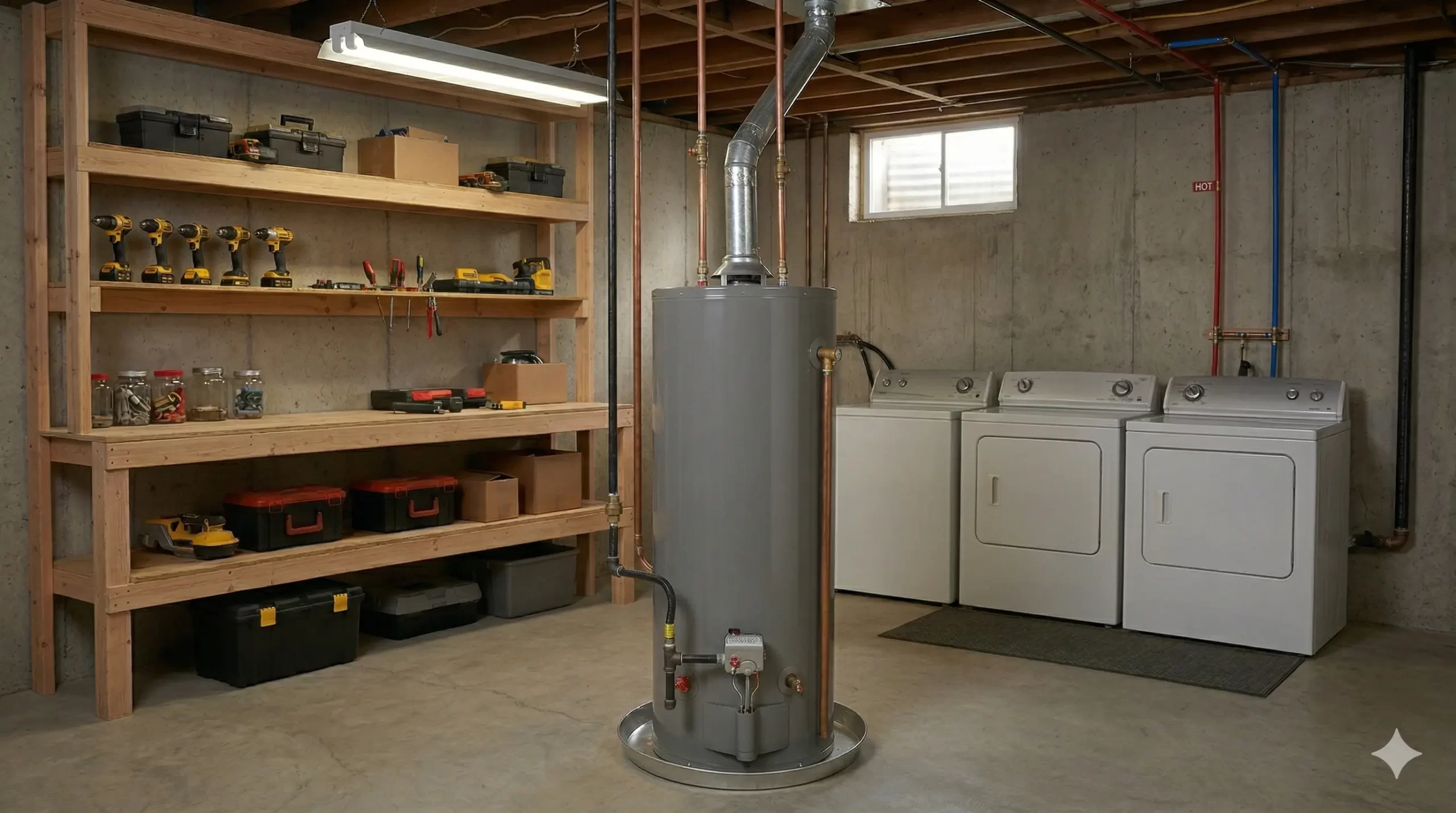
In Florida, many gas water heaters are tucked away in garages or housed in outdoor utility closets, exposing them to our state’s signature humidity and salty air. This relentless moisture can wreak havoc on critical components. You might notice a pilot light that refuses to stay lit, a burner that sputters erratically, or the distinct smell of rotten eggs (a sign of a gas leak) near the unit. These issues are often caused by corrosion on the thermocouple or burner assembly, problems that are accelerated by the damp, often salty, environment common from Jacksonville to Key West.
Furthermore, listen for unusual sounds like popping or banging coming from the tank. In Florida’s hard water, this is a classic sign of sediment buildup cooking at the bottom of the tank, which insulates the water from the flame, causing overheating and stress on the metal. For units installed outdoors, check for debris from storms clogging vents and signs of rust on the casing itself. Ignoring these symptoms can lead to a complete system failure, leaving you with cold showers and a potentially dangerous appliance.
⚡ Electric Water Heaters
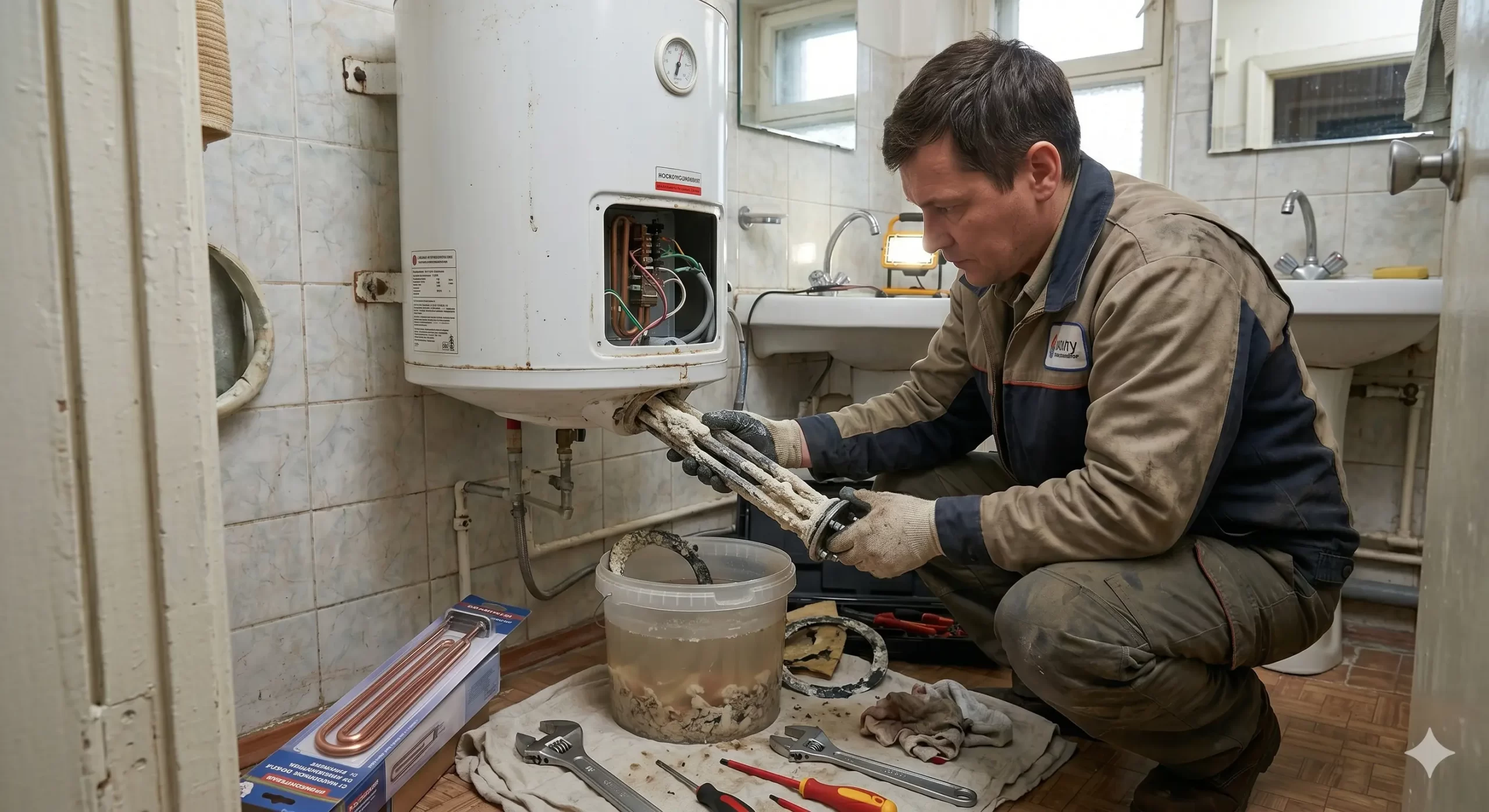
The biggest enemy of your electric water heater in Florida isn’t the heat—it’s the water itself. Our statewide hard water is rich in minerals like calcium and magnesium, which are highly corrosive. The first sign of trouble is often lukewarm water, which indicates the heating elements are caked in mineral scale. This ‘scale’ acts like an insulator, forcing the element to work much harder and eventually burn out. You may also notice a spike in your FPL or Duke Energy bill as the unit struggles to heat the water through this layer of rock-like sediment.
Another clear symptom of Florida’s corrosive water is discolored or rusty hot water coming from your taps. This indicates that the sacrificial anode rod inside your tank has been completely consumed and the water is now eating away at the steel tank itself. Once you see rusty water, a catastrophic leak is often imminent. Popping or whining sounds also point to severe sediment buildup, a problem that significantly shortens the lifespan of electric units across the Sunshine State.
🚿 Tankless Systems
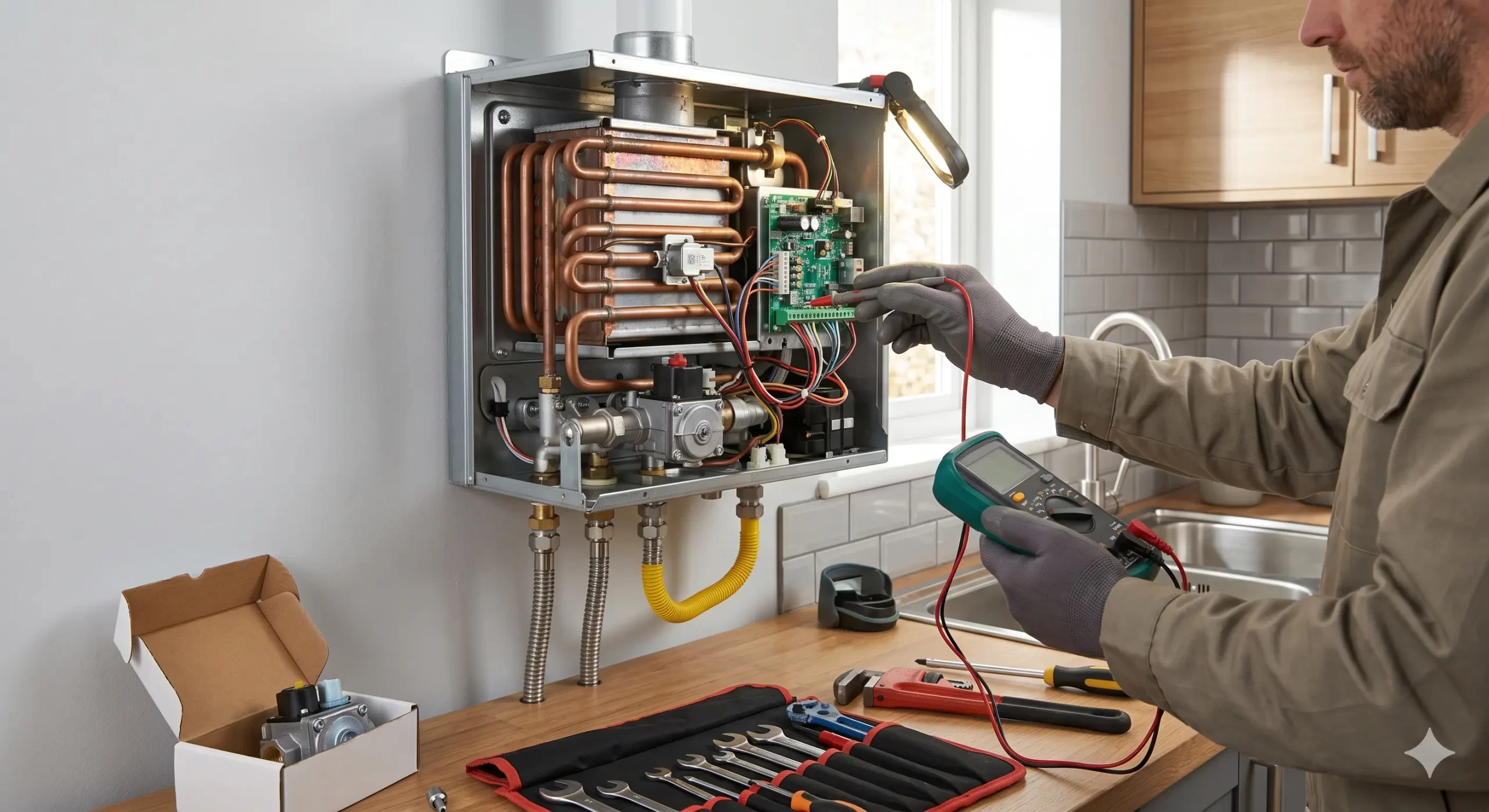
Tankless water heaters are fantastic, but Florida’s climate presents unique challenges. The extreme, year-round humidity can be devastating to their sophisticated electronic circuit boards. If your tankless unit is suddenly displaying error codes, failing to ignite, or providing fluctuating water temperatures, moisture intrusion into the electronics is a likely culprit. This is especially true for units installed in non-climate-controlled spaces like garages or outdoor sheds where condensation can form on sensitive components.
Beyond humidity, our hurricane season poses a physical threat. A tankless unit must be securely anchored to withstand high-wind events; a loose unit can have its venting or water lines ripped away during a storm, causing major damage. After any significant weather event, it’s crucial to check your outdoor tankless unit for visible damage or loose connections. Any disruption to the precise venting system can cause the unit to shut down as a safety precaution, cutting off your hot water supply when you need it most.
Average Repair Costs in Florida
Florida Plumbing Codes & Regulations
🔥 Gas Installation Codes
In Florida, a gas water heater installed in a garage must be elevated by at least 18 inches off the floor. This isn’t just a suggestion; it’s a critical safety law based on physics. Flammable vapors from sources like gasoline, paint thinners, or solvents are heavier than air and tend to pool near the ground. By raising the water heater’s ignition source—the pilot light and burner—well above this vapor zone, the code significantly reduces the risk of a catastrophic fire or explosion. Our technicians ensure every garage installation is fully compliant to protect your home and family.
⚡ Electric Codes
Florida building codes are written with hurricanes in mind, and your water heater is no exception. All tank-style water heaters must be secured with approved hurricane straps, typically one at the top and one at the bottom third of the tank. This prevents the heavy, water-filled tank from tipping over or breaking its connections during a hurricane, which could cause flooding and turn the unit into a dangerous projectile. Additionally, if the unit is in a location where water could be present, like a garage or utility closet, the electrical outlet must have GFCI (Ground Fault Circuit Interrupter) protection to prevent deadly electrical shock in our damp environment.
🚿 Tankless Regulations
Installing a standard outdoor tankless water heater along Florida’s coastline is a recipe for disaster and a code violation. The salty sea air is incredibly corrosive and can destroy a typical unit’s internal components and external casing in a surprisingly short time. Therefore, state and local codes mandate that any outdoor unit installed in coastal zones must be specifically rated for salt-air environments. These models feature marine-grade stainless steel or specially coated components designed to resist corrosion, ensuring longevity, safety, and reliable performance despite the harsh coastal conditions.
💰 Florida Permits & Energy Rebates
Replacing a water heater in Florida requires more than just a simple swap-out. Most counties require a permit to ensure the installation meets strict building codes, including wind-load compliance to withstand hurricane-force winds. Our team handles the entire permitting process for you, guaranteeing your new unit is installed safely and legally. On the bright side, Florida Power & Light (FPL) often provides instant rebates for customers who upgrade to new, energy-efficient water heaters. We can help you identify qualifying models, so you not only get a safe, code-compliant installation but also save money upfront on your investment.
Ask the Florida Plumbing AI Expert
Have specific questions about plumbing codes, permits, or hard water in your local county? Ask our AI assistant below:
🤖 Florida Plumbing Expert AI
Local Codes & Water Quality Dashboard
What are the statewide water heater plumbing codes, safety regulations, and 2026 energy rebates for Florida?
STATEWIDE WATER HEATER PLUMBING CODES & SAFETY REGULATIONS FOR FLORIDA (As of 2026)
As a Senior Master Plumber and Inspector for the State of Florida, I can confirm that water heater installations and safety regulations statewide are primarily governed by the current adopted edition of the Florida Building Code (FBC). As of early 2026, the prevailing code is the 8th Edition (2023) Florida Building Code, which includes the Plumbing Volume, Mechanical Volume, and Energy Conservation Volume. All installations must also adhere strictly to the manufacturer's installation instructions, which are legally binding under the FBC.
Key Statewide Plumbing Codes and Safety Regulations:
- Temperature and Pressure Relief Valve (T&P Valve) Discharge:
- Code Reference: FBC Plumbing, Section 504.6.
- Requirements: The T&P discharge pipe must be of approved material (e.g., copper, CPVC, polypropylene, PEX, galvanised steel, or stainless steel) and be the same diameter as the relief valve outlet. It must terminate within 6 inches of the floor or ground, point downward, and not be threaded or capped. There can be no valve, obstruction, or reduced pipe size between the T&P valve and its point of discharge. It must terminate to an approved drainage system (e.g., floor drain, indirect waste receptor, or outside) where it will not create a hazard or nuisance.
- Drain Pans:
- Code Reference: FBC Plumbing, Section 504.7.
- Requirements: A water heater or storage tank shall be provided with a drip pan that drains to an approved location when installed in an attic, above a finished ceiling, or in any location where leakage could cause damage to the building structure or its contents. The pan must be adequately sized to collect any discharge or leakage and must be drained by an indirect waste pipe with a minimum nominal diameter of 3/4 inch to an approved point of discharge.
- Thermal Expansion Tanks:
- Code Reference: FBC Plumbing, Section 607.3.
- Requirements: A thermal expansion tank is required for all potable water heating systems operating in a closed system (i.e., where a backflow preventer, pressure-reducing valve, or check valve is installed on the cold water supply line, preventing water from expanding back into the main supply). The tank must be sized and installed per manufacturer's instructions and code requirements to accommodate the thermal expansion of heated water.
- Shut-off Valves:
- Code Reference: FBC Plumbing, Section 606.3.
- Requirements: A full-open valve must be installed on the cold water supply pipe to each water heater.
- Supports and Anchorage:
- Code Reference: FBC Plumbing, Section 504.3.
- Requirements: Water heaters must be properly supported and secured in an approved manner to prevent displacement. While Florida is not a high seismic activity zone, proper strapping or bracing is essential to prevent tipping or movement, especially during maintenance or due to accidental impact.
- Combustion Air and Venting (for Gas Water Heaters):
- Code Reference: FBC Mechanical, Chapter 8.
- Requirements: Proper sizing of combustion air openings and flue venting systems is critical. Venting must extend above the roof line, maintain proper clearances from combustibles, and terminate safely. Manufacturer's instructions for clearances, vent material, and termination are paramount. Adherence to NFPA 54 (National Fuel Gas Code) is integrated into the FBC Mechanical Volume.
- Energy Efficiency and Pipe Insulation:
- Code Reference: FBC Energy Conservation, Sections 402.5.1 and 403.4.
- Requirements: Water heating equipment must meet minimum energy efficiency standards. Hot water piping from the water heater to fixtures or appliances, particularly longer runs, often requires insulation as specified by the energy code to minimize heat loss.
- Electrical Requirements (for Electric Water Heaters):
- Code Reference: Florida Building Code, Electrical Volume (based on NFPA 70, National Electrical Code).
- Requirements: Proper wire sizing, dedicated circuits, overcurrent protection, grounding, and bonding are mandatory. All electrical work must comply with the current edition of the National Electrical Code as adopted by Florida.
Note: While these are statewide codes, always verify with your local municipal or county building department, as they may have minor local amendments or interpretations. However, the core FBC requirements are universally enforced.
2026 ENERGY REBATES FOR FLORIDA
For 2026, Floridians can access significant energy rebates and tax credits, primarily driven by federal programs, with specific rebate programs administered at the state level. The focus is on high-efficiency electric water heaters, especially heat pump water heaters (HPWH).
Federal Programs Available to Florida Residents:
- 1. Federal Tax Credit (IRS Section 25C - Energy Efficient Home Improvement Credit):
- Eligibility: Homeowners for existing homes that are their primary residence.
- Benefit: 30% of the cost for qualifying ENERGY STAR certified heat pump water heaters, up to a maximum credit of $2,000 per year.
- Requirements: Purchase and installation must occur between January 1, 2023, and December 31, 2032. Professional installation is generally required, and you must retain receipts and manufacturer's certifications.
- How to Claim: File IRS Form 5695 with your federal tax return.
- 2. High-Efficiency Electric Home Rebate Program (HEEHRP - Inflation Reduction Act Section 50121):
- Eligibility: Income-qualified households (determined by Area Median Income - AMI) for new, high-efficiency electric appliances. This program is administered by the State of Florida's designated agency (likely the Florida Department of Agriculture and Consumer Services or a similar entity), which will have the program fully established and operational by 2026.
- Benefit for Heat Pump Water Heaters (HPWH): Up to $1,750 for the purchase and installation of an ENERGY STAR certified electric heat pump water heater.
- Income Tiers for Total Electrification Projects (which includes HPWHs):
- Low-Income Households (under 80% AMI): Can receive 100% of the purchase and installation costs, up to $8,000 for qualifying electrification projects.
- Moderate-Income Households (80% to 150% AMI): Can receive 50% of the purchase and installation costs, up to $8,000 for qualifying electrification projects.
- Requirements: The specific implementation details (e.g., point-of-sale rebates, post-installation application) and income verification processes will be established by the State of Florida. Check the official Florida energy efficiency program websites closer to 2026 for exact application procedures.
Florida Utility Company Rebate Programs:
Many utility companies across Florida offer their own energy efficiency rebate programs, particularly for the installation of heat pump water heaters. These programs are separate from federal tax credits and rebates and often can be combined with them (though always confirm specific program rules regarding stacking incentives).
- Key Utility Providers in Florida Known for such Programs (check their 2026 offerings directly):
- Florida Power & Light (FPL)
- Duke Energy Florida
- Tampa Electric (TECO)
- Orlando Utilities Commission (OUC)
- JEA (Jacksonville Electric Authority)
- City of Tallahassee Utilities
- Lakeland Electric
- Gulf Power (now part of FPL)
- Action Required: You must visit your specific utility provider's website or contact their energy efficiency department directly to inquire about their 2026 rebate programs for water heaters, as eligibility, rebate amounts, and application processes vary by utility and are subject to change annually.
Recommendation: When planning a water heater replacement or new installation, always research the most current federal, state, and local utility incentives, as these can significantly reduce your out-of-pocket costs for energy-efficient equipment.
Repair vs. Replace Guidelines
My electric bill is already high from running the AC. Is it better to keep repairing my old water heater or replace it?
In Florida, it’s often more cost-effective to replace an older, inefficient water heater. Your AC already accounts for a huge portion of your electric bill, and a failing water heater struggling against scale buildup will only drive it higher. A new, energy-efficient model can significantly cut your monthly usage. When you factor in an instant rebate from FPL and avoid the cost of recurring repairs, a replacement becomes a smart financial decision that pays for itself over time.
What can I do to protect my water heater from Florida’s hard, corrosive water?
Proactive maintenance is key. We strongly recommend having your tank-style water heater professionally flushed at least once a year to remove the abrasive mineral sediment that builds up. Additionally, the anode rod—which is designed to corrode so your tank doesn’t—should be inspected every 2-3 years. In Florida’s water, these rods are often consumed much faster, and replacing a $50 rod can prevent a $1500 tank replacement.
Recent Service Feedback in Florida
“Our water heater in the garage finally gave out after 15 years of Florida humidity. The team came out the same day, explained the new elevation code requirements, and had a new one installed and strapped in for hurricane season. Couldn’t be happier with the fast, professional service.”
— Maria G., Orlando
“I was getting rusty water and thought the worst. They came and checked my electric heater, showed me how the hard water had destroyed the anode rod, and replaced it on the spot. Saved me from buying a whole new unit. Honest and knowledgeable service.”
— David L., Tampa
“Our tankless unit on the side of our house started acting up after Tropical Storm Ian. They quickly diagnosed a moisture issue on the circuit board due to the driving rain. They sealed it properly and got our hot water back on. True professionals who understand Florida weather.”
— Brenda S., Fort Myers
Fast Local Water Heater Repair & Diagnostics
Calls are routed to a licensed local plumbing professional.