
Fix an A.O. Smith 3-blink error. This guide diagnoses a failed pressure switch, restricted power vent, or cracked vacuum hose. Pro solutions included.
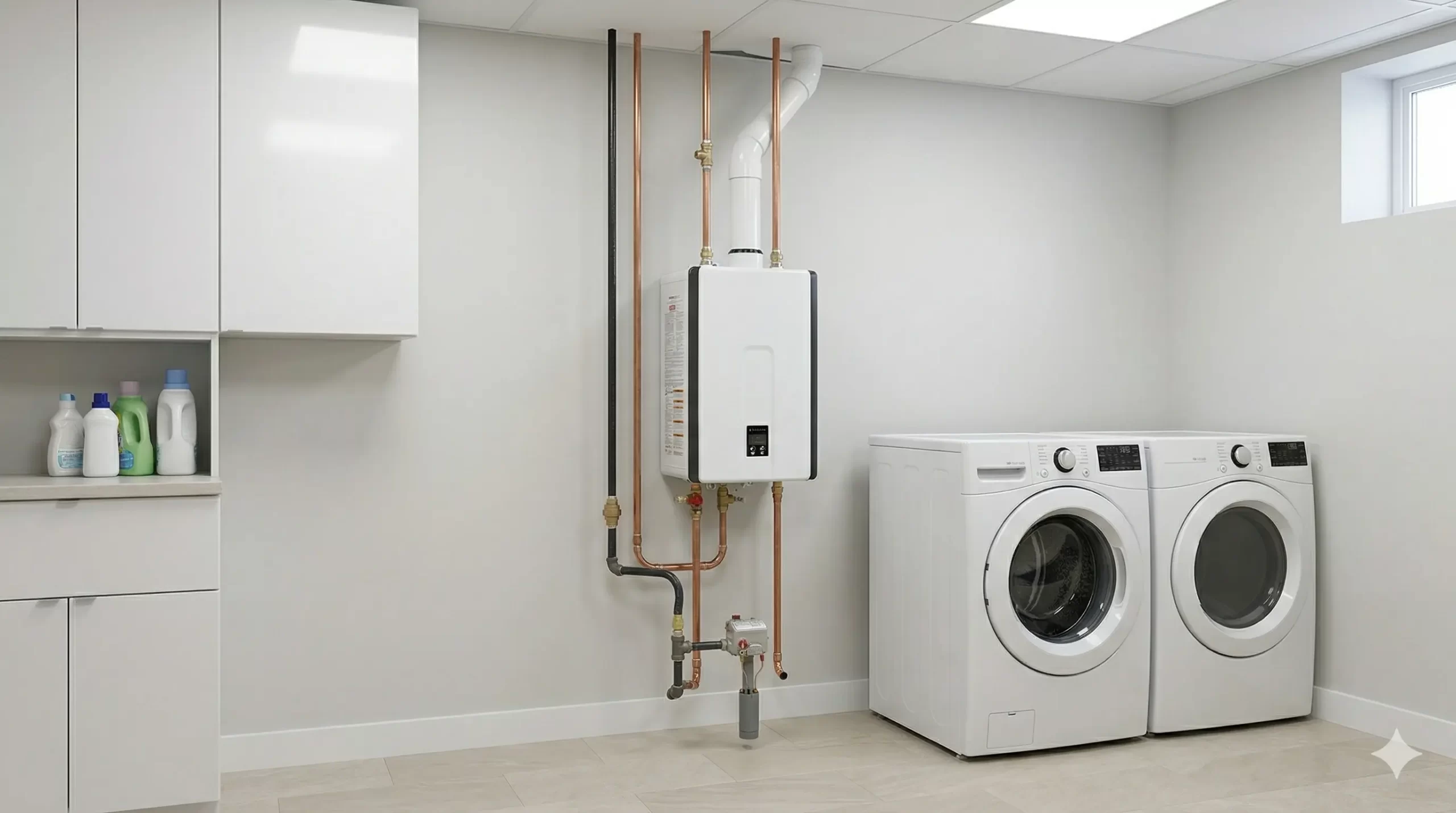
A 3-Blink fault indicates a critical failure of the flue gas proving system. Under no circumstances should the pressure switch be bypassed or jumped for testing. Doing so can allow the unit to fire with a blocked exhaust, releasing lethal, odorless carbon monoxide (CO) into the structure. This diagnostic procedure involves exposure to 120V AC at the control board and inducer motor connections. Always perform a verified Lockout/Tagout (LOTO) of the electrical circuit before removing access panels. Failure to de-energize the unit can result in severe electrical shock or electrocution.
️ Repair Profile
Required Diagnostics Tools
Digital Multimeter (with continuity test), Manometer (measuring inches of water column), Nut Driver Set, Pliers, Work Gloves, Safety Glasses, Replacement OEM Pressure Switch
Financial Breakdown: Parts vs. Licensed Labor
The cost allocation is heavily weighted towards labor due to the diagnostic precision required; accurately testing the negative pressure differential with a manometer and verifying switch actuation points takes significantly more time than the physical part replacement. The component itself, a calibrated pressure switch or silicone hose, is a relatively low-cost item.
Deep Technical Diagnosis: The Physics of the Failure
An A.O. Smith 3-Blink fault code signifies a ‘Pressure Switch Failed to Close’ condition, a critical safety interlock failure within the power vent system’s sequence of operation. When a call for heat is initiated, the integrated furnace control (IFC) first energizes the inducer motor. This motor must generate a specific, pre-calibrated negative static pressure (measured in inches of water column, e.g., -0.6″ WC) within the collector box to prove the venting system is unobstructed. This negative pressure, or draft, is transmitted via a small-diameter silicone hose to a differential pressure switch. The switch contains a sensitive diaphragm that, upon sensing the correct pressure drop, physically moves to close an electrical circuit, sending a low-voltage signal (typically 24V) back to the IFC. Only upon receiving this confirmation signal will the IFC proceed to the ignition trial.
The 3-Blink error is logged when the IFC energizes the inducer motor, waits for a programmed period, but never receives the ‘switch closed’ signal. This points to an insufficient pressure differential, a failure in the sensing apparatus, or a defective switch. The root cause is often mechanical rather than electronic. The system cannot distinguish between a vent pipe blocked by a bird’s nest and a pressure switch diaphragm that is mechanically stuck open. Achieving proper stoichiometric combustion is impossible without confirmed venting, as the unit would produce excessive carbon monoxide without adequate flue gas removal. Therefore, this fault triggers an immediate hard lockout to prevent a hazardous condition.
- External Vent Termination Blockage: The most common cause. Debris, snow, ice, or animal nesting physically obstructing the PVC exhaust outlet, preventing flue gas egress and inhibiting the inducer from establishing the required negative pressure.
- Vacuum Hose Degradation: The silicone tubing connecting the inducer housing to the pressure switch port can develop hairline cracks, become disconnected, or accumulate moisture/debris, causing a vacuum leak. This prevents the full pressure differential from reaching the switch diaphragm.
- Condensate Line Obstruction: In high-efficiency models, a blocked condensate drain can cause water to back up into the inducer housing and collector box. This liquid obstruction severely impedes airflow and prevents the system from pulling the necessary draft.
- Failed Pressure Switch: The internal diaphragm can fail, the sensing port can become clogged with rust or debris, or the electrical contacts can corrode. In this case, even if a perfect vacuum is present, the switch is mechanically incapable of diaphragm actuation and closing the circuit. A manometer is the only tool to definitively prove if the switch or the draft is the true point of failure.
- Weak Inducer Motor: Worn motor bearings or a failing capacitor can cause the inducer fan to spin at a lower-than-specified RPM. This results in a sub-optimal draft that is insufficient to meet the pressure switch’s actuation setpoint.
US Building Codes & Plumbing Regulations
The 3-Blink pressure switch fault directly implicates compliance with the National Fuel Gas Code, NFPA 54. Specifically, section G2427.8 (Venting System Termination) mandates that vent terminations shall be located and constructed to prevent blockage from foreign material, snow, or ice. A recurring 3-Blink error during winter months is a prima facie indicator of a potential violation of this code, requiring re-evaluation of the termination’s height and shielding. Furthermore, G2427.6.4 (Vent System Sizing and Slope) requires that the horizontal portions of the vent system be supported to prevent sagging and sloped correctly to manage condensate. A low point or ‘belly’ in the PVC run can collect water, creating an internal obstruction that mimics an external blockage and triggers this specific fault code, placing the installation out of compliance.
From a Uniform Plumbing Code (UPC) perspective, Chapter 5, Section 503.5 (Safety Devices) is paramount. This section requires that all appliances be equipped with safety devices, and that these devices shall not be removed or rendered inoperative. The pressure switch is a primary safety device designed to prevent flue gas spillage. Any attempt to bypass this switch to clear the 3-Blink code is a direct violation of the UPC and creates an Imminent Hazard condition. A certified technician must diagnose and repair the underlying venting issue or replace the switch with an OEM-calibrated component to restore the system to its safe, code-compliant operational state, ensuring the prevention of carbon monoxide backdrafting into the occupied space.
Professional Master Plumber Repair Sequence
- Perform Lockout/Tagout (LOTO): Turn off the dedicated circuit breaker for the water heater and shut off the gas supply valve at the appliance’s sediment trap. Verify the unit is de-energized using a multimeter at the incoming power terminals.
- Inspect Exterior Vent Termination: Thoroughly examine the PVC exhaust and intake (if applicable) pipes on the exterior of the building. Remove any snow, ice, leaves, animal nests, or other debris that could be causing an obstruction.
- Access Internal Components: Remove the front access panel of the water heater to expose the gas valve, control board, and power vent assembly.
- Inspect the Vacuum Hose: Locate the pressure switch (a small, round or square component with a thin hose and two wires). Carefully inspect the entire length of the silicone vacuum hose running from the inducer motor housing to the pressure switch. Look for cracks, kinks, or loose connections at either end.
- Check for Moisture/Blockage: Disconnect the hose from the pressure switch port. Gently blow through it towards the inducer motor to ensure it is clear. Check for any signs of water, which could indicate a condensate drainage problem. Reconnect the hose securely.
- Test Pressure Switch with Manometer (Professional Step): Disconnect the two wires from the pressure switch terminals. Connect a manometer to the pressure switch port where the hose was connected. Power on the unit and initiate a call for heat. The manometer should read a negative pressure that meets or exceeds the rating printed on the switch (e.g., -0.60″ WC). If the reading is sufficient, the switch is faulty. If the reading is too low, the problem is with the vent or inducer motor.
- Test Switch Electrical Continuity: With the unit powered off, set your multimeter to the continuity (beep) setting. Place the probes on the two electrical terminals of the pressure switch. It should read open (no beep). Now, apply a slight vacuum to the hose port (using a vacuum pump or by carefully sucking on the hose). The switch should click and the multimeter should now show continuity (beep). If it fails this test, it must be replaced.
- Replace the Pressure Switch: If the switch is deemed faulty, unscrew it from its mounting bracket. Note the orientation of the wires. Install the new, OEM-specific pressure switch, ensuring it has the exact same inches of water column (WC) rating. Reconnect the vacuum hose and electrical wires.
- Reassembly and System Test: Securely re-install the main access panel. Restore power via the circuit breaker and reopen the gas supply valve. Initiate a call for heat and observe the unit’s sequence of operation. The LED should remain solid green, indicating a successful ignition and run cycle. Verify proper exhaust flow at the exterior termination.
Expert Verdict: Is It Worth Repairing?
For an A.O. Smith water heater exhibiting a 3-Blink fault, a repair is almost always the superior financial decision over a full replacement, provided the unit is less than 10-12 years old. This error code points to a failure in the external venting components, not the integrity of the tank itself. The primary components involved—the pressure switch and its vacuum hose—are relatively inexpensive parts, typically under $100. The majority of the repair cost is labor, dedicated to precise diagnostics to differentiate between a simple blockage and a failed component. Given that a new power vent water heater installation costs thousands of dollars, a repair bill of a few hundred dollars offers a substantial ROI, extending the service life of an otherwise healthy appliance. The decision calculus shifts only if the unit is well past its warranty period and showing other signs of failure, such as tank leakage or significant corrosion, in which case the pressure switch repair would be a poor investment into a failing system.
Frequently Asked Questions (FAQ)
Q: Can very high winds cause a 3-Blink error code?
A: Yes, it is possible. Extreme wind or gusting downdrafts can create positive pressure at the exterior vent termination, counteracting the negative pressure generated by the inducer motor. This can momentarily prevent the pressure switch from closing, triggering the 3-blink fault. If the error only occurs during severe weather events, this is a likely cause.
Q: Is it safe to just clean my vent pipe myself to fix the 3-blink error?
A: Cleaning the exterior termination point of obvious debris like snow or leaves is a safe and reasonable first step for a homeowner. However, if the error persists, the blockage may be internal or the issue may be a failed component. At that point, professional diagnosis is required to ensure the system’s safety interlocks are functioning correctly.
Q: Why did my new pressure switch not fix the 3-Blink problem?
A: If a new, correct OEM pressure switch doesn’t resolve the fault, it confirms the switch was not the root cause. The problem lies in the system’s inability to produce the required negative pressure. This points back to a partially blocked vent (internal or external), a failing inducer motor, or a blockage in the condensate drainage system.
Q: My technician used a ‘manometer’. What is that and why was it necessary?
A: A manometer is a specialized pressure-testing instrument that measures air pressure in inches of water column (WC). For a 3-blink error, it is the only tool that can definitively determine if the inducer motor is creating the proper vacuum. It allows the technician to prove whether the fault lies with the draft system or the pressure switch itself, preventing unnecessary parts replacement.