
Your Septic System’s Best Friend: Proactive Maintenance Tips ️
Howdy, neighbor! Let’s chat about something that’s out of sight and, for many folks, out of mind: your septic tank. Think of it as the hardworking, silent stomach of your home. It digests everything you send its way, but just like our own stomachs, it can get upset if you feed it the wrong stuff. Keeping it happy is way cheaper than dealing with a full-blown plumbing emergency. Trust me on this one. Navigating local soil conditions can be tricky. Consult our Terrell, TX septic pumping guide.
Here are the golden rules for a happy, healthy septic system that won’t drain your wallet:
- Flush Only the 3 P’s: This is my mantra! Only Pee, Poo, and (septic-safe) Paper should go down that drain. Things like ‘flushable’ wipes, feminine hygiene products, dental floss, and kitty litter are absolute villains. They don’t break down and create a nasty, concrete-like clog in your sludge layer.
- Go Easy on the Chemicals: Your septic tank is a living ecosystem! It’s teeming with billions of tiny anaerobic bacteria (more on those little heroes later). Pouring harsh chemicals like bleach, drain cleaner, or antibacterial soaps down the drain is like setting off a bomb in their little city. A little bit is okay, but heavy use kills the good bacteria needed to break down waste.
- Mind Your Drain Field: That big, grassy area in your yard? That’s your drain field, or leach field. It’s the final, critical stage of wastewater treatment. Don’t drive cars over it, don’t plant trees with deep roots near it (they’ll invade the pipes!), and make sure your gutters and downspouts direct rainwater away from it. An oversaturated drain field can’t breathe and can’t absorb effluent properly. This is especially true here in Georgia with our famous heavy downpours! ️
- Be Smart with Water Usage: Spreading out your water usage helps your system. Don’t do five loads of laundry, run the dishwasher, and have everyone take a long shower all on the same day. This firehose of water can overwhelm the tank, pushing solid waste out into the drain field before it has a chance to settle and break down.

The Bottom Line: 2026 Septic Tank Pumping Cost in Georgia

Alright, let’s talk turkey. You want to know what this is going to cost you come 2026. Predicting the future is tricky, but based on current trends, inflation, and fuel costs (those big pumper trucks are thirsty!), we can make a pretty solid estimate. Remember, these are ballpark figures. Your final price can vary based on your specific situation. Navigating local soil conditions can be tricky. Consult our Bellaire, TX septic pumping guide.
Here in the Peach State, the cost is mainly influenced by your tank size and your location. Pumping a tank in rural South Georgia is often cheaper than in the suburbs of Atlanta, where operational costs are higher.
| Service / Tank Size | Estimated 2026 Cost (Metro Atlanta) | Estimated 2026 Cost (Rural Georgia) |
|---|---|---|
| Standard Pumping (1000 Gallon Tank) | $425 – $600 | $350 – $525 |
| Standard Pumping (1250 Gallon Tank) | $500 – $700 | $450 – $650 |
| Standard Pumping (1500 Gallon Tank) | $600 – $850 | $550 – $775 |
Watch Out for These Extra Charges!
- Digging Fee: If your septic tank lid isn’t easily accessible, the technician will have to dig to find it. This can add $50 – $150 to your bill, depending on how deep it is.
- Filter Cleaning: Most modern systems have an effluent filter in the outlet baffle. This is a great safety feature that protects your drain field, but it needs to be cleaned during pumping. This might add an extra $25 – $75.
- Emergency / After-Hours Fee: If you wait until your toilet is backing up on a Saturday night, expect to pay a premium. Emergency calls can easily add $200 or more to the final bill.
A Real-Life Georgia Septic Story: The Case of the Soggy Lawn in Macon
Let me tell you about the Miller family. They had a beautiful home just outside Macon, GA, with a big yard for their kids and dog. They’d lived there for eight years and never once thought about their septic tank. One summer, after a week of heavy Georgia thunderstorms, they noticed a… peculiar smell near the back of their yard. Then, a patch of grass became suspiciously green and spongy. Uh oh.
They called us, and the diagnosis was what we call a ‘drain field failure’. Their septic tank was so full of solids that the sludge had been pushed out into the drain field pipes. This clog prevented the wastewater (effluent) from being absorbed by the soil. The water had nowhere to go but up, to the surface. It was a smelly, unsanitary mess. Dealing with a sudden sewage issue? Rely on our emergency septic team in Fairview, TX.
Here’s the science of what went wrong. The Miller’s tank was overloaded. The Biological Oxygen Demand (BOD) of the effluent leaving their tank was sky-high. BOD is just a fancy term for how much oxygen the good bacteria need to break down the organic matter in the water. When solid waste gets into the drain field, the BOD goes through the roof. This creates a thick, black, slimy layer called a ‘biomat’ that coats the drain field trenches. This biomat essentially suffocates the soil.
Now, couple that with Georgia’s infamous red clay soil. Clay has very low permeability, meaning water passes through it very slowly (this is a basic concept of soil percolation physics). A healthy drain field in clay soil is already working hard. When you add a thick biomat clog, the soil has zero chance of absorbing the water. The system was doomed. The Millers ended up needing not just a pump-out, but a complete drain field replacement, a project that can cost upwards of $10,000 to $20,000. All for a problem that a $500 pump-out every few years could have prevented.
Troubleshooting 101 & The Science of Your Tank
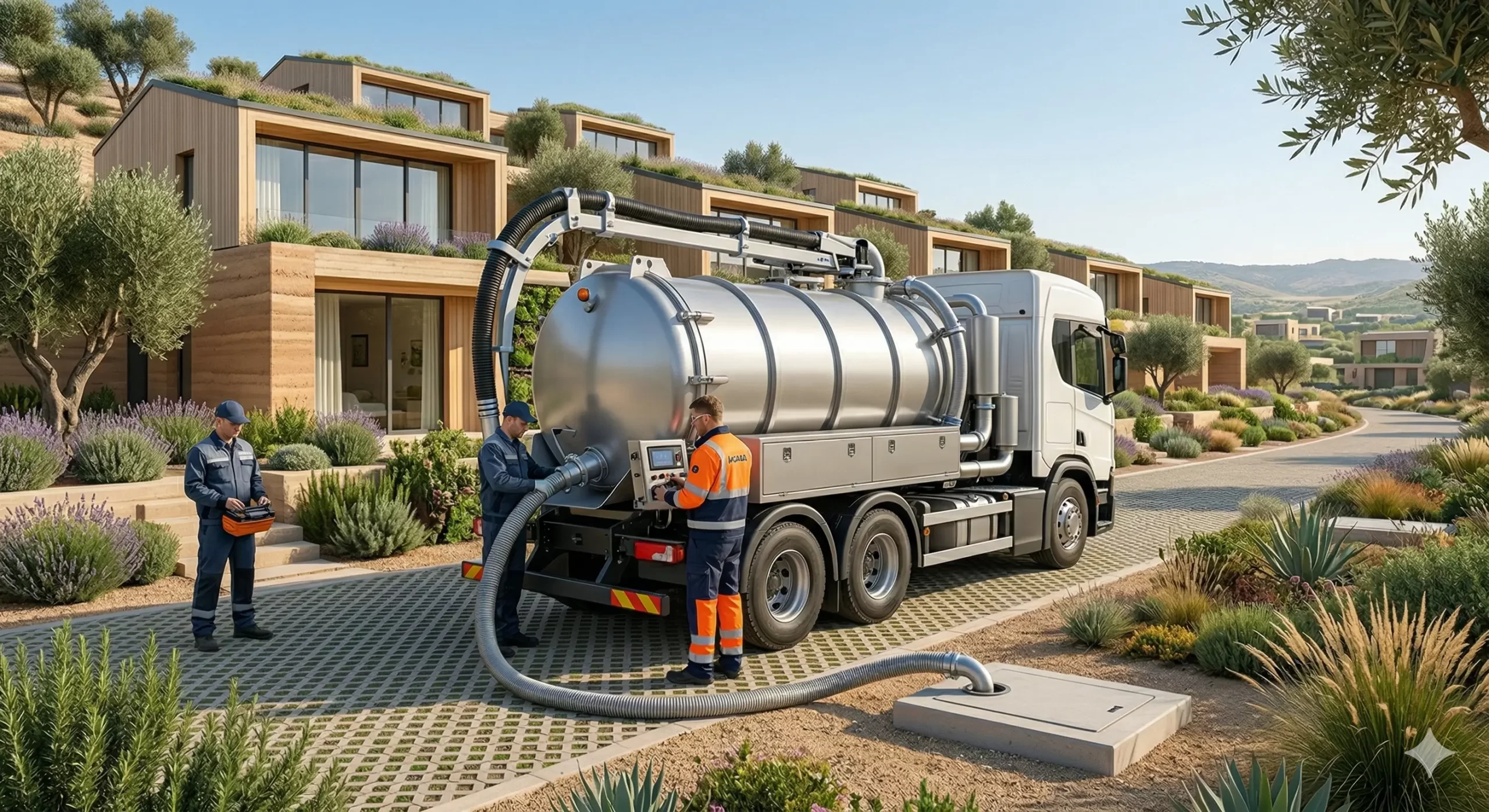
Ever wonder what’s actually happening in that big concrete box buried in your yard? It’s a fascinating little world of biology and chemistry! When waste enters your tank, it separates into three layers:
- The Scum Layer (Top): Greases, fats, oils, and other things that are lighter than water float to the top. Think soap scum and cooking grease.
- The Effluent Layer (Middle): This is the ‘clarified’ wastewater that flows out to your drain field. It’s mostly water, but still contains dissolved pollutants and bacteria.
- The Sludge Layer (Bottom): The heavy organic solids sink to the bottom. This is where the magic happens!
In that bottom sludge layer lives an army of anaerobic bacteria. ‘Anaerobic’ means they thrive without oxygen. These microscopic critters are your unpaid employees, working 24/7 to eat and digest the organic solids, breaking them down and significantly reducing their volume. This process is called anaerobic digestion. But, they can’t eat everything, and what’s left behind is what we pump out. If you let this sludge layer get too high, it flows into the drain field, causing the exact kind of failure the Miller family experienced.
What if your system starts acting up, sending you little warning signs before a full-blown catastrophe? The key is to listen to your home. Gurgling drains, slow-flushing toilets, bad odors inside or outside, and yes, those dreaded soggy spots in the yard are all cries for help from your septic system. It’s telling you that something is blocking the flow, and it’s often a sign that your tank is overdue for a pumping. Looking for a reliable local contractor? Explore our septic solutions for Spanish Fort, AL.
Progression of Septic Failure: A Danger Timeline
This shows how a neglected 1000-gallon tank for a family of four might progress towards failure. Whether it’s a minor repair or a major overhaul, our Virginia Gardens, FL plumbing and septic crew has you covered.
- Year 1-2 (Healthy): System is new or recently pumped. Sludge and scum layers are minimal. Anaerobic bacteria are happily digesting waste. Effluent flowing to the drain field has a low BOD. All is well!
- Year 3-4 (Maintenance Due): The sludge layer now occupies about 1/3 of the tank’s volume. The system is still functional, but it’s time to call the pumper. The risk of solids being stirred up and pushed into the outlet pipe is increasing.
- Year 5 (Warning Signs): The tank is over 40% full of solids. You might notice occasional slow drains or faint odors after heavy water use. The system is under stress. Effluent quality is dropping, and the drain field’s biomat is starting to thicken.
- Year 6+ (Failure Imminent): The tank is dangerously full. Solids are consistently flowing into the drain field, clogging the pipes and suffocating the soil. You’re seeing sewage backup, a permanently soggy and smelly yard. Catastrophic and expensive failure is here.
Hear From Your Georgia Neighbors! ⭐⭐⭐⭐⭐
“Saved us from a disaster!”
⭐⭐⭐⭐⭐
“We had a smelly, wet spot in our yard in Cumming and feared the worst. The technician came out, explained the whole process, showed me the clogged filter, and got our tank pumped super fast. Very professional and worth every penny. Will be calling them for all our maintenance from now on!” – Sarah P.
“Honest and Fair Pricing”
⭐⭐⭐⭐⭐
“I called around for quotes to pump our tank in Valdosta, and these guys were upfront and honest. No hidden fees. The driver was friendly, worked efficiently, and even gave me some tips on how to keep our system healthy. A+ service.” – David R.
Frequently Asked Questions (The Nitty Gritty)
How often should I really get my septic tank pumped in Georgia?
For most households in Georgia, the standard recommendation is every 3 to 5 years. However, this can change. A large family of six in a home with a 1000-gallon tank should pump every 2-3 years. A retired couple in the same home might be able to go 5 years or more. The key is to be proactive, not reactive!
Can Georgia’s red clay soil affect my septic system?
Absolutely! Georgia’s red clay has poor percolation, meaning water drains through it very slowly. This makes your drain field’s job harder. It’s why regular pumping is CRITICAL here. If solids clog a drain field in clay soil, it fails much faster and more dramatically than a system in sandy soil. It also means new system installations in clay often require more complex (and expensive) drain field designs.
What’s the difference between pumping and cleaning a septic tank?
Great question! Basic ‘pumping’ just sucks out the liquids and some sludge from the tank opening. A proper ‘cleaning’ involves pumping the tank completely empty and then using a tool or high-pressure water to backflush and break up any hardened sludge at the bottom of the tank. Always ask your provider if they perform a full cleaning to ensure you’re getting all the solids removed.
Will a garbage disposal harm my septic system?
It can! A garbage disposal adds a significant amount of organic solids to your tank, which means your sludge layer will build up much faster. If you use a garbage disposal frequently, you should plan on pumping your septic tank at least once a year more often than a home without one. For example, if your schedule was every 4 years, you should now pump it every 3 years.
Technically Reviewed By:
BlixBase Master Plumber Team
20+ Years Septic Industry Experience | Certified System Inspectors