
Let’s Talk About Your Backyard’s Most Misunderstood Employee
Howdy, folks! Your friendly neighborhood septic expert here. Let’s have a little chat, just you and me. We’re going to talk about something that’s literally in your backyard, working 24/7, and probably gets less respect than a three-legged coyote. I’m talkin’ ’bout your septic tank. Specifically, we’re tackling a whopper of a question that I hear all the time here in the Lone Star State: How close can that big ol’ concrete box be to my house?
Now, you might have heard your Uncle Roy say, “Heck, just stick it wherever the backhoe fits!” Or maybe you saw some fella on a YouTube video digging a hole three feet from his patio. Let me tell you right now, that kind of advice is a one-way ticket to what I call the “Poopocalypse.” We’re talking foundation damage, nasty smells, and a bill from me that’ll make your eyes water more than a fresh-cut onion. The rules are there for a reason, and it’s not just about bureaucrats wanting to ruin your landscaping plans. It’s about protecting your biggest investment (your home!) and your family’s health.

The ‘Too Close for Comfort’ Tax: A Cost Breakdown of Cutting Corners
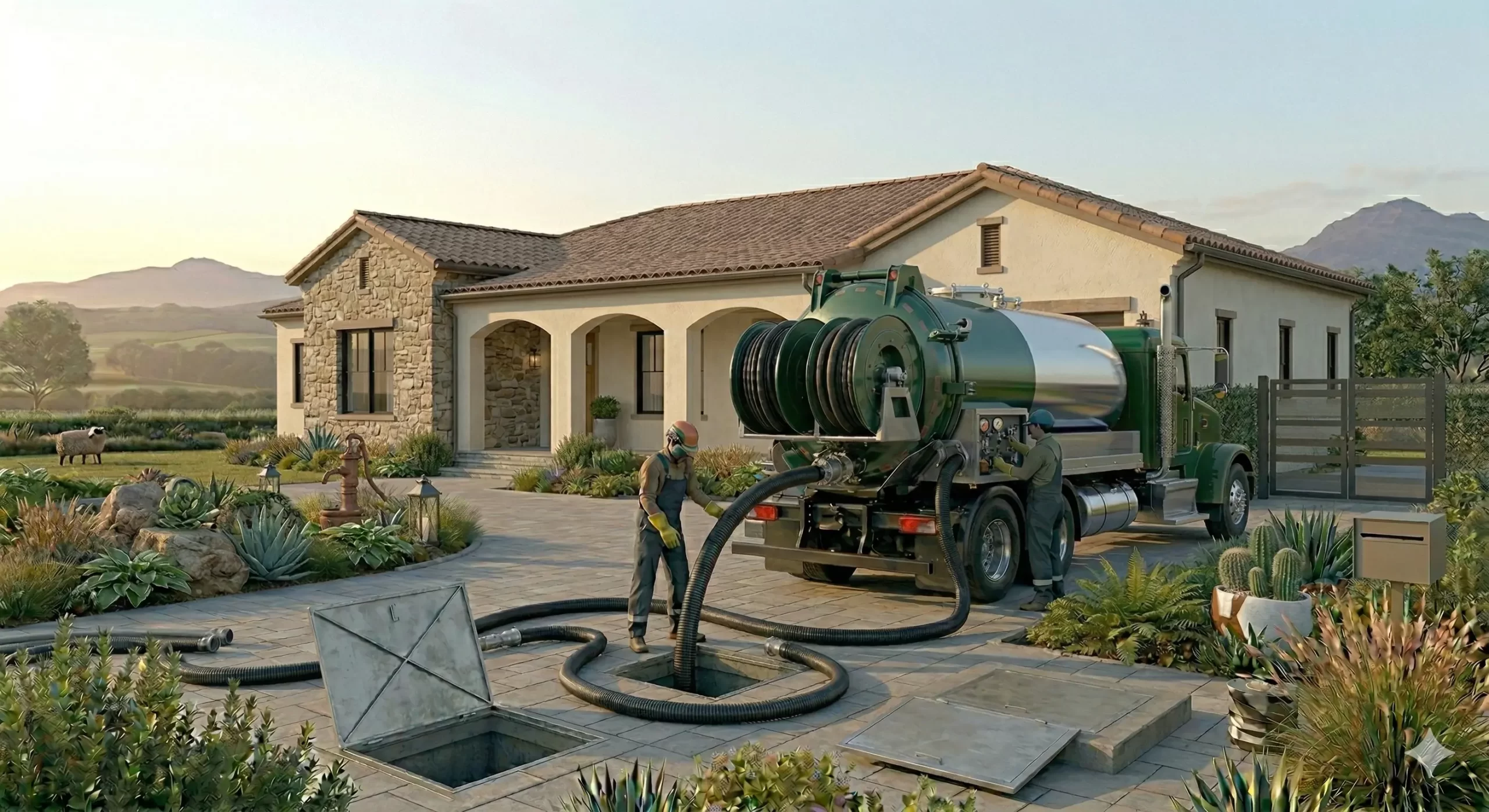
Some contractors out there will promise you the moon for a rock-bottom price. They’ll tell you they can save you money by not digging as far, keeping the tank snug against your house. Sounds great, right? Less trenching, less pipe, less labor. Wrong. ❌ This isn’t a discount; it’s a down payment on disaster. Let’s break down the real costs of getting this wrong. Proactive care saves money. See what our local experts in Quincy, FL can do for your system.
| Expense Item | Initial “Savings” | Eventual REAL Cost |
|---|---|---|
| System Relocation | -$500 to -$1,000 | $10,000 – $20,000+ |
| Foundation Repair | $0 | $5,000 – $25,000+ |
| Landscaping & Yard Repair | -$200 | $2,000 – $7,000 |
| County Fines & Penalties | $0 | $500 – $5,000 |
Think about it. A slow, undetected leak from a tank that’s too close will saturate the ground right next to your foundation. Here in Texas, with our lovely expansive clay soil, that’s a recipe for disaster. That clay gets wet, it swells up, and pushes on your foundation. Then it dries out in the summer heat and shrinks. This cycle creates movement that leads to cracks, warped door frames, and a world of hurt for your wallet. That ‘deal’ your contractor offered you just cost you the price of a new car.
Keeping Your System Happy: Maintenance Tips for a Properly Placed Tank
Alright, let’s assume you did it right, or you’re planning to. Your tank is sitting at a nice, legal, and safe distance from your home. High five! Now what? Proper placement makes your life, and my job, so much easier.
- Easy Pumping Access: When your tank is at least 5-10 feet away, it means my big pumping truck doesn’t have to drive all over your prize-winning petunias. We can get to the access lids easily without running hundreds of feet of hose. This can actually save you money on pumping services!
- Root-Free Zone: Planting a big oak tree right next to your foundation is a bad idea. Planting it on top of your septic tank is an even worse one. Keeping the tank away from the house naturally creates a buffer zone where you shouldn’t be planting anything with aggressive roots. This prevents roots from cracking your tank or clogging your pipes.
- Know Your Lids: With the tank a safe distance away, you should have easy access to the lids. I recommend installing risers that bring the lids to ground level. This saves you from having to dig up your yard every 3-5 years for a pump-out. It’s a simple upgrade that pays for itself.
- Watch for a Soggy Lawn: A properly placed system gives you a clear ‘early warning zone’. If you see a patch of unusually green or soggy grass between the tank and the house, you know you’ve got a problem with the main line. If the tank were right against the house, that leak would be happening right at your foundation, with no warning at all.
What Our Neighbors Are Saying!
“I was getting crazy quotes and conflicting advice about where to put our new septic system. These guys came out, explained the Texas code in plain English, and showed me exactly why the tank needed to be 10 feet out. They saved my foundation and my sanity. Can’t recommend them enough!”
– Brenda P., Conroe, TX ⭐⭐⭐⭐⭐
“My old septic tank was installed practically under my back porch by the original builder in the 70s. It was a nightmare. The team here relocated the whole system, followed all the setback rules, and for the first time in years, my backyard doesn’t smell like a swamp. Professional, honest, and they did it right.”
– Frank G., Waxahachie, TX ⭐⭐⭐⭐⭐
The Real Deal: Texas Setback Distances (Don’t Argue With The TCEQ!)

Okay, let’s get down to brass tacks. These aren’t my opinions; these are the minimum distances set by the Texas Commission on Environmental Quality (TCEQ). Your local county might have even stricter rules! This is the bible. Don’t let anyone tell you otherwise. You can find more detailed pricing and local regulations on our dedicated Holmes Beach, FL location page.
The absolute, rock-bottom, non-negotiable minimum distance for a septic tank from a building foundation in Texas is five (5) feet. But let me be crystal clear: that’s the bare minimum. Any good installer, any plumber who cares about their reputation, will push for more. I personally won’t install a tank closer than 10 feet. Why? Because that extra 5 feet is the cheapest insurance you will ever buy for your home’s foundation. It gives you a buffer against leaks, soil saturation, and future access problems. Looking for a reliable local contractor? Explore our septic solutions for Delray Beach, FL.
Here are some other numbers you need to burn into your brain:
- Private Water Well: 50 feet. This is a big one. You don’t want your drinking water getting… uh… ‘recycled’.
- Property Line: 10 feet. You need to keep your business on your own property, literally.
- Leach Field / Drain Field: This is the part that really freaks people out. The drain field needs to be at least 10 feet from the house, 10 feet from the property line, and a whopping 100 feet from any water wells.
- Swimming Pool: 15 feet. A leaking tank can contaminate your pool water. No thank you!
The Progression of a Placement Failure: A Timeline of Trouble Timeline
What happens when a tank is installed too close? It’s not usually a big bang. It’s a slow, silent, and stinky creep of a problem. Here’s how it typically plays out. Looking for a reliable local contractor? Explore our septic solutions for Town N Country, FL.
- Year 1: The Honeymoon Phase. Everything seems fine! The toilets flush, the grass is green. The homeowner is patting himself on the back for saving a few bucks with that cheap contractor. Ignorance is bliss.
- Year 3: The First Clues. A faint, musty smell appears near the foundation after a heavy Texas rain. The downstairs toilet starts gurgling sometimes. The homeowner blames it on the weather or ‘old pipes’.
- Year 5: Denial is No Longer an Option. There’s a permanently damp spot on the wall in the basement or on the slab. A hairline crack appears in the drywall. The smell is no longer faint, and guests are starting to notice. The ground right next to the house is always a little… spongy.
- Year 7+: Catastrophe. The foundation has noticeably shifted. Doors don’t close properly. A major crack appears in the exterior brickwork. The septic system backs up into the house during a party. The homeowner now has to pay for a full septic system replacement AND major foundation repair. The ‘savings’ from Year 1 have been wiped out 20 times over.
Frequently Asked (and Feared) Questions
So, the absolute minimum in Texas is 5 feet from the house? Really?
Yes, TCEQ code (§285.31) states 5 feet is the minimum from a foundation. But listen to me: this is a terrible idea. It leaves zero room for error, makes future repairs a nightmare, and puts your foundation at serious risk from soil saturation, especially in our Texas clay. A reputable installer will always recommend 10-15 feet as a practical, safe minimum. Don’t let anyone talk you into just 5 feet.
Can I get a variance or exception from the county?
You can try, but it’s tougher than trying to nail Jell-O to a tree. You’d need to have an extremely unusual lot shape or geological feature that makes the standard setbacks impossible. You’ll need site plans, soil tests, and a very, very good reason. For 99.9% of homeowners, the answer is no. It’s much cheaper and easier to just follow the rules.
Does a deck or a concrete patio count as ‘part of the house’ for the measurement?
Great question! Generally, the measurement is taken from the primary foundation of the home’s structure. However, you absolutely do NOT want to put a septic tank under a deck or patio. Think about it! How would you ever get it pumped or repaired? You’d have to tear out your beautiful new deck. Plan your backyard with septic access in mind. Leave at least 5-10 feet of clear space around the tank lids.
My tank is old and closer than 5 feet. Am I in big trouble?
If the system was installed legally before the current codes were in place, you might be ‘grandfathered in’. However, this doesn’t make it safe. You are living with a higher risk of foundation damage. Furthermore, if the system fails and needs to be replaced, the new system MUST be installed according to all current codes and setback distances. You won’t be able to just drop a new tank in the old hole.
A Real-Life Case Study: The Tale of Billy Bob’s Backyard Bog
Let me tell you a story. I got a call from a fella we’ll call Billy Bob out near Tyler. He was in a panic. His wife was threatening to leave him because the whole house smelled like, well, you know. He’d just had a new aerobic system put in a couple of years back by a contractor who gave him a ‘heck of a deal’. We understand the specific environmental rules for your region. Learn more from our experts in Arab, AL.
I show up, and the first thing I notice is the sprinkler heads for the drain field are practically watering his back porch. I got my probe and found the main treatment tank just four feet from his foundation. Four feet! The contractor told him it was ‘more efficient’ that way.
What really happened was a fitting on the tank had a slow leak. For two years, treated effluent was slowly seeping into the ground, turning the clay soil under his foundation into a soupy mess. The whole slab had shifted, he had a crack in his brick you could stick your hand in, and the smell was coming up through the plumbing. The ‘heck of a deal’ ended up costing him $18,000 to move the entire system to a legal distance, plus another $22,000 in foundation piering and repair. Don’t be a Billy Bob. Pay for the extra 10 feet of trenching. It’s the best money you’ll ever spend.
Troubleshooting: Is Your House Too Close to the Action?
How can you tell if your existing system is too close and causing problems? Here are some red flags to watch for:
- Persistent Musty Odors: If you constantly smell a sewage or swampy odor inside or right outside your house, especially near the foundation, that’s a huge warning sign.
- Slow Drains & Gurgling: If all the drains in your house are slow, not just one, it points to a mainline or septic issue. Gurgling toilets are the system’s cry for help.
- Spongy Ground or Lush Patches: Is there a spot near your foundation where the grass is way greener and healthier than anywhere else? Or a spot that feels like you’re walking on a sponge? That’s not good fertilizer, friend. That’s a leak.
- Foundation Cracks: Look for new or worsening cracks in your slab, brick exterior, or interior drywall. This is an advanced symptom and means you need to call a professional YESTERDAY.
The bottom line is simple, folks. The rules for septic tank distance aren’t suggestions. They are the bare minimum to protect your property and your health. Don’t cut corners, don’t trust a contractor who tells you it’s ‘no big deal’, and for goodness sake, don’t try to cheat the system. A few extra feet of pipe can save you tens of thousands of dollars and a world of stinky headaches. ️
Technically Reviewed By:
BlixBase Master Plumber Team
20+ Years Septic Industry Experience | Certified System Inspectors