
Cost Breakdown: What You’re Really Paying For
Alright, let’s get down to brass tacks. You want to know what it’ll cost to get that tank of yours pumped in South Dakota come 2026. Don’t call me looking for a flat $200 quote you saw on some slick website. Life isn’t that simple, especially not with the gumbo clay we’ve got around here from Sioux Falls to the Black Hills. Your price depends on more than just the size of your tank. It’s about access, how deep your lid is buried, and frankly, how much of a mess you’ve let it become.
I’ve been doing this for 30 years. I’ve seen it all. The price of diesel to get my truck out to your acreage isn’t going down, and neither is the cost of properly disposing of what comes out of your tank at the treatment facility. Here’s a realistic look at the numbers. Don’t get sticker shock; get smart.
| Service | Estimated 2026 SD Cost | Grumpy Vet’s Notes |
|---|---|---|
| Standard Pump (1000-1250 gal) | $425 – $650 | This is your baseline. Price varies based on your distance from town. If I have to drive 40 miles on gravel roads, expect the higher end. |
| Oversized Tank (1500+ gal) | $600 – $900+ | Bigger tank, more truck capacity needed, more disposal fees. Simple math. |
| Digging/Locating Fee | $75 – $150 per foot | You don’t know where your lid is? Your builder buried it three feet down to save a buck? Well, my back isn’t free. Get risers installed and save yourself this fee forever. |
| Effluent Filter Cleaning | $50 – $100 | If you have a newer system (post-2000s), you have one of these. If it’s not cleaned, your system backs up. It’s a nasty job, and I charge for it. |
| Emergency / Weekend / Holiday Fee | Add $200 – $400 | You waited until Christmas morning when all your relatives are there to call me? That’s gonna cost you. Procrastination is expensive. |
| Hydro-Jetting Main Line | $300 – $700 | Got a blockage between the house and tank? Usually from grease or those ‘flushable’ wipes (which are a lie). My jetter uses 4000 PSI to clear it. Not cheap. |

The ‘Don’t-Be-An-Idiot’ Maintenance Guide
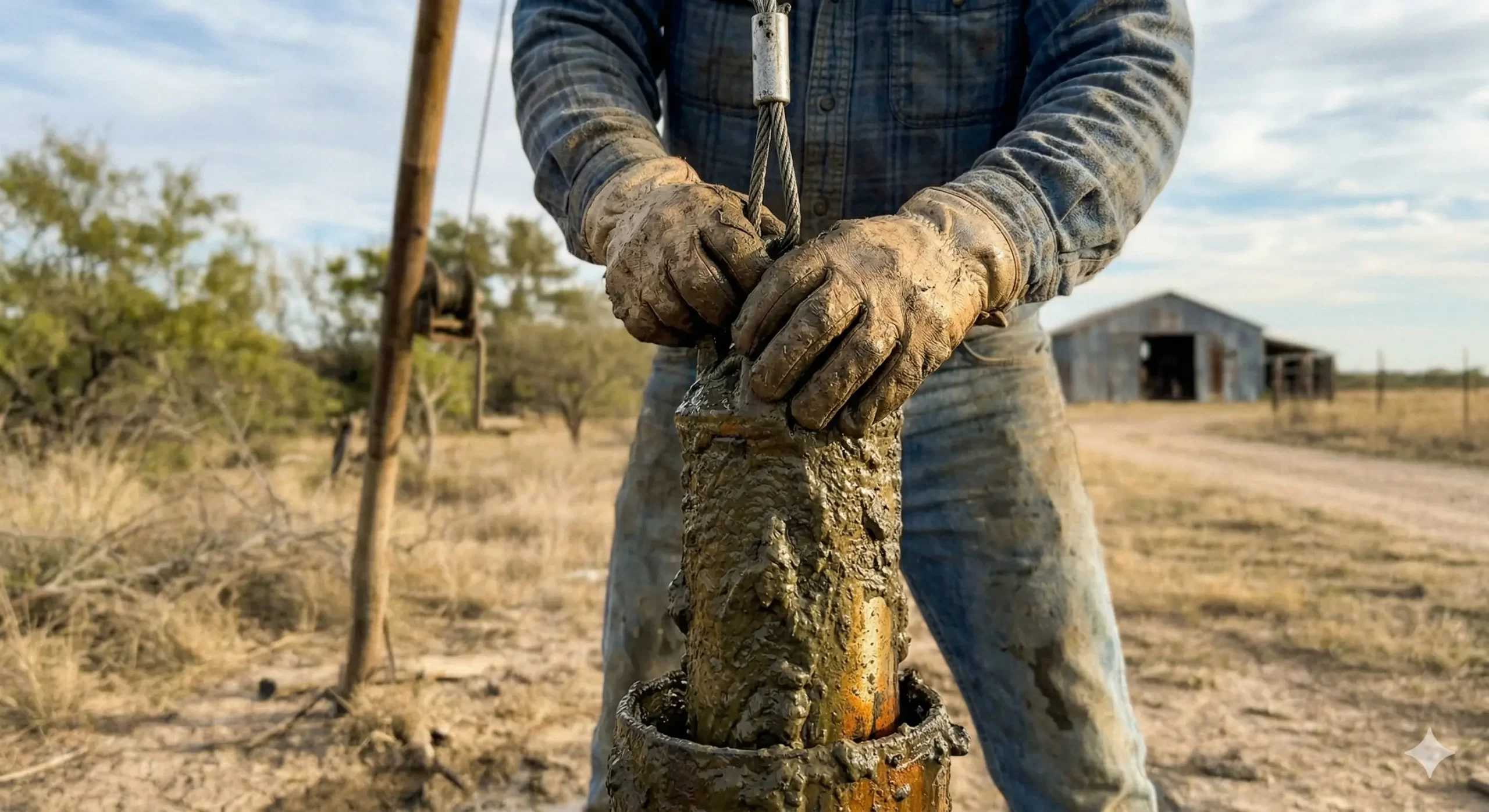
Look, your septic system is a living thing. A big, buried concrete stomach full of anaerobic bacteria. Your job is to not kill it. Seems simple, but I make a living off people who fail at this every single day. First off, those septic additives you buy at the hardware store? Mostly yeast and filler. Your system gets all the bacteria it needs from… well, from what you flush. Stop wasting your money.
The real killer is chemicals. A half-gallon of bleach poured down the drain can wipe out your tank’s biome for weeks. The same goes for some heavy-duty drain cleaners. You’re trying to clear a sink and you end up sterilizing the one thing that’s processing your waste. Also, water softeners. In South Dakota, we have hard water. I get it. But most softeners dump a load of sodium brine into your system. In our heavy clay soils, that sodium breaks down the soil structure, creating a waterproof barrier where your effluent is supposed to percolate. It’s called soil binding, and it murders drain fields. If you reside in the area, you can learn more about our septic services in Corpus Christi, TX.
And let’s talk about water usage. Modern low-flow toilets are great for your water bill, but terrible for plumbing. They don’t use enough water to push the solids all the way to the tank, especially in homes with long, gently-sloped sewer lines. I’ve seen lines packed solid with what looks like paper-mâché from toilet paper that never got enough of a push. You have to be conscious of this stuff. One load of laundry a day, not seven on a Saturday. Spread it out. Give your tank and field a chance to breathe.
Troubleshooting: When The Yard Smells Ripe
So, things have gone wrong. The drains are slow, or there’s a suspicious wet spot in the yard. Your first thought is ‘the tank must be full.’ Maybe. But it’s usually more complicated than that. Here are the real culprits I find day in and day out.
1. Baffle Failure: Your tank has two baffles, an inlet and an outlet. The inlet directs flow down. The outlet tee prevents the scum layer (grease, soap) and sludge from escaping into the drain field. Old concrete baffles from the 70s and 80s? I see them crumbled into the bottom of the tank all the time. The new plastic ones? An inexperienced pumper can knock them loose with their hose. If that outlet baffle is gone, you’re sending solid waste directly into your drain field. It’s the equivalent of a fatal heart attack for your system. An inspection camera can verify their integrity for about $250. Do it.
2. Compaction: This one drives me nuts because it’s so avoidable. Never, ever let anyone drive anything heavier than a lawnmower over your tank or drain field. I had a guy out near Wall who had a buddy bring a load of gravel for his driveway. The truck took a ‘shortcut’ across the lawn, right over his drain field. Crushed three of the four lateral lines flat. That was a $19,000 fix, all because someone wanted to save 30 seconds of backing up. Facing a drain field failure? Our team in Dripping Springs, TX is ready to diagnose the problem.
3. Hydraulic Overload: Your toilet is running. Just a little trickle, you can barely hear it. That ‘little trickle’ can be 200 gallons of water a day. Your system was designed for maybe 300-400 gallons of intermittent use per day. The constant flow from a leaking toilet or a dripping faucet never gives the drain field soil time to dry out and reaerate. The soil gets saturated, the biomat grows thick, and the system fails, even if the tank isn’t full of solids. A $10 flapper valve can save you from a $15,000 drain field replacement. Need immediate assistance? Find trusted septic tank pumping in Pinehurst, TX right away.
Progression of Failure: A Timeline to Disaster ️

You think you can put off pumping? Here’s the timeline you’re looking at. This isn’t a scare tactic; it’s the physics of wastewater treatment happening in your backyard.
- Year 1-3 (The Honeymoon Phase): Everything works great. The three layers (scum, effluent, sludge) are well-defined in the tank. The scum layer is less than 6 inches deep, and the sludge is under 12 inches. The bacteria are happy.
- Year 4-5 (The Warning Signs): Pumping is now due for a typical family of four. The sludge layer has likely reached the 30% capacity mark (about 18 inches in a standard 5-foot deep tank). The system still works, but you’re on borrowed time. The clear zone for effluent is shrinking.
- Year 6-7 (Playing with Fire): The sludge and scum layers are now thick enough that suspended solids are constantly being agitated and are starting to slip past the outlet baffle. These solids flow into the perforated pipes of your drain field, starting to clog the pores in the soil. Drains in the house might start getting sluggish after a shower or laundry.
- Year 8+ (Total System Failure): It’s over. The drain field is clogged with a thick, black, tar-like substance called a biomat. Effluent can no longer soak into the ground, so it flows upwards, creating smelly, mushy spots in your yard. Sewage may back up into your house through the lowest drain (usually a basement shower). A simple pump-out will do nothing. You’re now a customer for a full system replacement.
Real-Life Case Study: The Johnson’s Nightmare in Lincoln County
Let me tell you about a call I got last fall. A young family, the Johnsons, bought a nice little acreage just outside of Tea. The previous owner swore up and down he’d had the septic pumped ‘just last year.’ Six months after they move in, the toilets start gurgling and the basement shower backs up. They call me in a panic.
First red flag: they had no idea where the tank was. The seller didn’t leave a diagram. So, I get out my soil probe and electronic locator. An hour and an extra $150 later, we find it. Under a flower bed the previous owner had built. Second red flag: it was buried three feet deep. Cue the digging fee. When we finally got the lid open, the smell hit us like a physical blow. The tank was a 1,000-gallon concrete box, and it was packed solid. Not just full of water, but full of 20 years of compacted sludge. The previous owner hadn’t just lied, he’d probably *never* had it pumped.
The outlet baffle had rotted away years ago. For at least a decade, every flush had been sending solids directly into the drain field. We pumped what we could—it was so thick I nearly burned out my pump’s motor. Then I sent a camera down the line to the drain field. It was completely clogged. The soil around it was black and dead. The quote for a new mound system, which is what they needed for the heavy clay soil on their property, came to $28,000. All because the previous owner was cheap and a liar. They could have prevented it all with a proper septic inspection before they bought the house, which would have cost them about $500.
What Folks Are Saying
Danielle P. – Rural Pennington County ⭐⭐⭐⭐⭐
“Called on a Tuesday with a slow drain, he was out here Wednesday morning. No nonsense, no trying to upsell me on junk I didn’t need. Told me my lid was buried too deep and that I should get a riser, explained exactly why. Found my filter was completely clogged, which the last company I used three years ago never even mentioned. It’s hard to find honest guys out here. He’s my go-to from now on.” Whether it’s a minor repair or a major overhaul, our Arab, AL plumbing and septic crew has you covered.
Mark T. – Sioux Falls ⭐⭐⭐⭐⭐
“Our septic alarm went off at 8 PM on a Friday night. I was panicking. Called him, and he told me over the phone how to silence the alarm and what to check. He diagnosed it as a bad float switch right there. Came out the next morning with the part and had it fixed in under an hour. Saved our weekend and probably saved us from a much bigger problem. Worth every penny.” If you reside in the area, you can learn more about our septic services in Pell City, AL.
Frequently Asked Questions (The Stuff You’re Afraid to Ask) ❓
Why is my septic alarm going off if I just had it pumped?
Because pumping the main tank has almost nothing to do with the alarm. That alarm is for your pump chamber or dose tank, which is a separate compartment. It means either the pump itself has failed, the float switch that activates it is stuck or broken, or the effluent filter between the main tank and the pump tank is clogged solid. Pumping the main tank won’t fix any of those things. It’s like changing your car’s oil to fix a flat tire.
Does South Dakota law require septic inspections for home sales?
The state of South Dakota itself doesn’t have a universal mandate. However, don’t let that fool you. Most counties, especially more populated ones like Minnehaha and Lincoln, have their own ordinances that DO require it. More to the point, virtually any mortgage lender (FHA, VA, conventional) will require a certified septic inspection before they loan you a dime. A pumping receipt is NOT an inspection. An inspection involves checking the structural integrity of the tank, the condition of the baffles, and a flow test to ensure the drain field is actually accepting water. Don’t skip it.
With South Dakota’s winters, can my septic lines freeze?
You bet they can. The frost line here can get down 4 to 6 feet deep. Usually, the constant flow of warm water from the house and the bacterial action in the tank keep things from freezing solid. But problems happen. If you have a dripping faucet sending a slow, cold trickle into the lines, it can freeze. If your tank is shallow and there isn’t enough snow cover to insulate the ground, the tank itself can get a layer of ice. The pipe from the house to the tank is the most common freeze spot. Make sure it has proper fall (1/4 inch per foot) and is buried below the frost line. If not, you’re in for a long winter.
Technically Reviewed By:
BlixBase Master Plumber Team
20+ Years Septic Industry Experience | Certified System Inspectors