
Regulatory Mandates vs. Geophysical Realities in Kentucky
The Commonwealth of Kentucky, through the Kentucky Administrative Regulations (KAR), specifically 902 KAR 10:085, stipulates a minimum horizontal setback distance for a septic tank from a building foundation. The legally mandated minimum is five (5) feet. However, treating this figure as a universal constant without a thorough understanding of the underlying biogeochemical and geophysical principles is a critical engineering error. This distance is not arbitrary; it is a baseline designed to mitigate hydraulic pressure against the foundation, prevent effluent contamination of crawl spaces or basements, and allow for necessary service access. The core function of an on-site sewage disposal system relies on a two-stage process: primary anaerobic digestion within the septic tank and secondary aerobic treatment within the soil absorption system (leach field). The proximity of the tank to the structure directly impacts the system’s long-term viability and the structural integrity of the dwelling. For homeowners nearby, we highly recommend calling our Tallassee, AL wastewater professionals.

The Biochemical Engine: Anaerobic Digestion and Effluent Composition
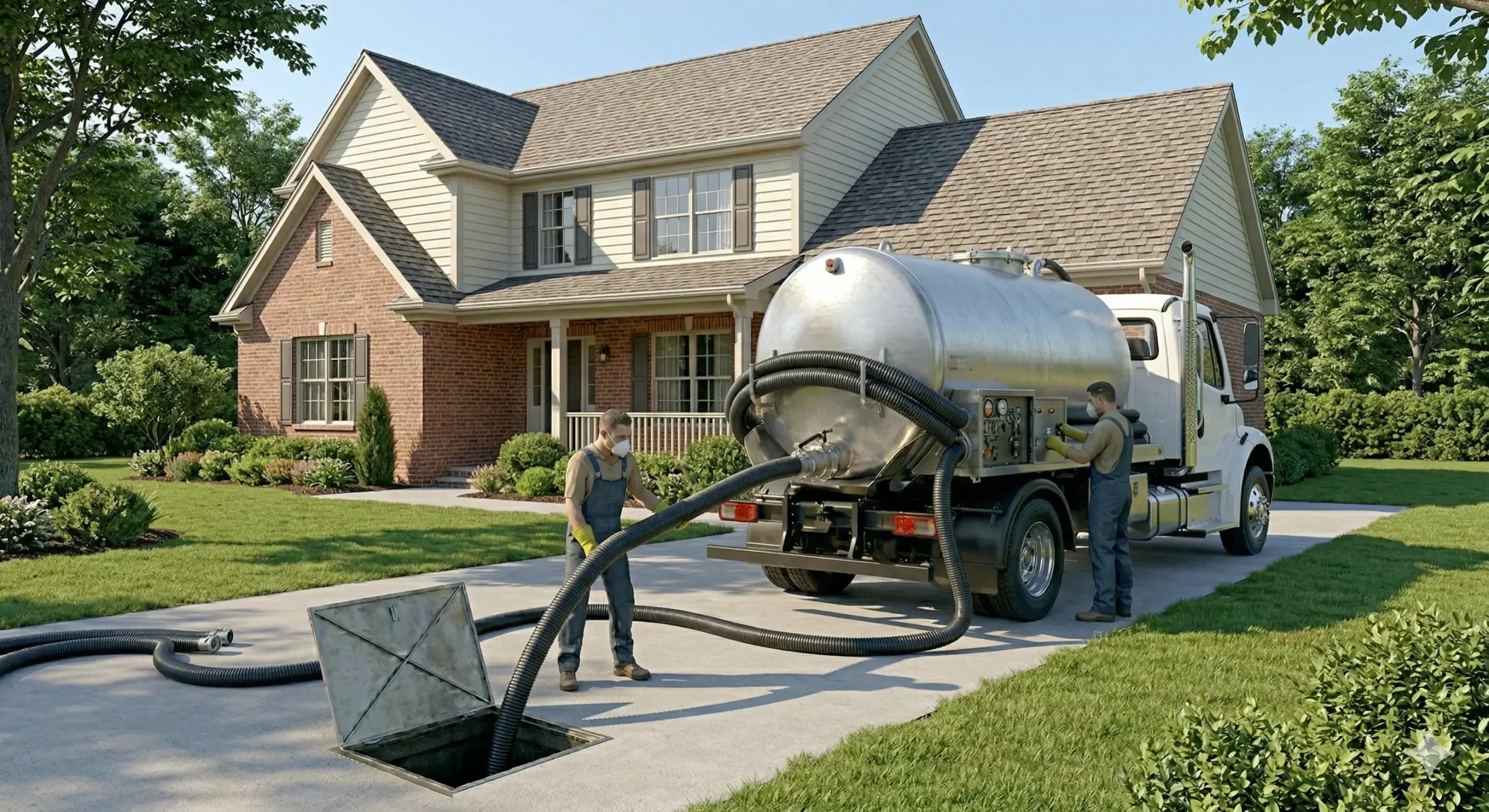
A septic tank is an anoxic bioreactor. Its primary function is to separate solids from liquids and facilitate the anaerobic digestion of organic matter. This process occurs in four sequential stages, orchestrated by a complex consortium of microorganisms:
- Hydrolysis: Complex organic polymers (proteins, lipids, carbohydrates) are broken down by extracellular enzymes secreted by fermentative bacteria into simpler, soluble monomers like amino acids, fatty acids, and simple sugars.
- Acidogenesis: Acidogenic bacteria further metabolize these monomers into a mixture of volatile fatty acids (VFAs), such as acetic acid, propionic acid, and butyric acid, along with alcohols, ammonia, carbon dioxide, and hydrogen. This stage significantly lowers the pH of the tank’s environment.
- Acetogenesis: Acetogenic bacteria consume the VFAs and alcohols, producing acetate, hydrogen, and carbon dioxide. This is a critical intermediate step, as the final-stage microorganisms can only utilize a limited range of substrates.
- Methanogenesis: Methanogenic archaea, which are highly sensitive to oxygen and pH fluctuations, convert acetate, hydrogen, and carbon dioxide into methane (CH4) and carbon dioxide. This process stabilizes the organic material and reduces its volume, creating the sludge layer at the bottom of the tank.
The efficiency of this entire process dictates the quality of the effluent discharged to the soil absorption system. A healthy septic tank should reduce the Biological Oxygen Demand (BOD) of raw sewage (typically 200-400 mg/L) by 30-50% and Total Suspended Solids (TSS) by 60-70%. Failure to achieve these reductions results in the discharge of high-strength effluent, which will prematurely clog the soil absorption system.
Real-Life Case Study: Oldham County, KY Foundation Failure

A residential property constructed in Crestwood, Oldham County, featured a septic tank installed approximately four feet from the walk-out basement foundation to accommodate a planned landscaping feature. The local soil profile is dominated by the Crider silt loam series, which, while generally well-drained, has a significant silt and clay component. In year seven of operation, the homeowner reported persistent dampness along the basement wall nearest the tank. Investigation revealed that the outlet pipe from the house to the tank had a minor, chronic leak at the tank inlet grommet, a condition exacerbated by seasonal freeze-thaw cycles. This slow leak, combined with the insufficient setback, created a perpetually saturated zone of soil adjacent to the foundation footing. The hydrostatic pressure exerted by this saturated soil, coupled with the reduction in soil bearing capacity, led to differential settling of the foundation. The resulting stairstep cracks in the concrete block wall required remediation costing upwards of $18,000, involving hydraulic piering and extensive excavation—a cost far exceeding that of a properly sited initial installation.
System Maintenance Protocols: A Chemical and Physical Regimen
Proactive system maintenance is not a matter of convenience but a requirement for ensuring operational longevity and regulatory compliance. The following protocols are essential: Upgrading your system? Let our Salado, TX installation experts walk you through the options.
- Periodic Solids Removal: Sludge and scum layers must be pumped every 3-5 years. The interval is a function of tank volume, household size, and wastewater characteristics. Failure to pump allows solids to be scoured into the drain field, causing irreversible bioclogging.
- Hydraulic Load Management: Avoid discharging large volumes of water over short periods (e.g., multiple laundry loads consecutively). This can cause hydraulic shock, disrupting the stratification of scum, effluent, and sludge layers and forcing suspended solids into the outlet.
- Chemical Input Limitation: Minimize the introduction of non-biodegradable chemicals, including excessive use of bleach, drain cleaners, and antibacterial soaps. These substances are toxic to the anaerobic microbiome, particularly the sensitive methanogens, thereby arresting the digestion process and increasing the BOD of the effluent.
- Effluent Filter Maintenance: Modern systems are equipped with an effluent filter in the outlet baffle. This filter must be cleaned annually to prevent it from clogging with suspended solids, which would cause a system backup.
Troubleshooting System Malfunctions: A Diagnostic Approach
Is there a scientific basis for the common symptoms of septic system failure? Indeed, each symptom corresponds to a specific physical or biochemical breakdown within the system.
| Symptom | Primary Scientific Cause | Technical Explanation |
|---|---|---|
| Slow Drains / Gurgling Pipes | Negative Pressure Differential | Indicates a blockage or saturated drain field preventing proper venting. Air is being displaced back up the plumbing lines as wastewater struggles to enter the tank or drain field. |
| Sewage Odors (Indoors/Outdoors) | Fugitive Gas Emissions (H2S, CH4) | Caused by a dry P-trap, compromised plumbing vent, or system backup forcing anaerobic gases (hydrogen sulfide, methane) to escape. Odors near the drain field indicate surfacing effluent. |
| Lush Green Grass Over Drain Field | Nutrient Loading & Hypoxia | Effluent, rich in nitrogen and phosphorus, is surfacing or is too close to the surface. This indicates hydraulic overload and failure of the soil to properly treat the wastewater. |
| Water Pooling in Yard | Soil Absorption Capacity Exceeded | The soil’s hydraulic conductivity has been compromised, typically by the formation of an impermeable biomat due to high-BOD effluent, or the soil is saturated due to high water table or excessive rainfall. |
Cost Analysis: Proactive Installation vs. Reactive Remediation
The financial implications of improper septic system placement are severe. A standard, correctly-sited installation represents a baseline cost. Remediation costs, however, escalate non-linearly due to the complexity of working around existing structures and landscaping, and the necessity of addressing secondary damage.
- Standard Installation (New Construction): $7,000 – $15,000. This includes soil analysis, system design, permitting, tank, drain field materials, and excavation/installation.
- Corrective Relocation of an Improperly Sited Tank: $12,000 – $25,000+. This includes pumping and decommissioning the old tank, excavation for the new tank and lines (often in constrained spaces), installation of the new system, and restoration of the landscape.
- Cost of Foundation Repair (Resulting from Saturated Soil): $5,000 – $30,000+. This depends on the severity and can range from epoxy injection for minor cracks to hydraulic piering for significant structural settlement.
- Cost of Complete System Failure (Tank & Drain Field): $20,000 – $40,000+. This is a total replacement scenario, often requiring more complex and expensive alternative system designs if the original drain field location is no longer viable.
Progression of System Failure: A Temporal Analysis
System failure is not a singular event but a protracted process of degradation. The timeline below illustrates a typical progression for a system subjected to moderate hydraulic and organic overloading.
- Year 1-3 (Normal Operation): System functions as designed. BOD and TSS reduction are within specifications. A healthy, semi-permeable biomat forms in the drain field trenches, regulating effluent absorption.
- Year 4-6 (Incipient Stress): Occasional slow drains are noted after heavy water use. The biomat begins to thicken due to slightly elevated organic loading. Anaerobic conditions start to dominate deeper in the trench, reducing treatment efficiency.
- Year 7-9 (Advanced Clogging): Gurgling sounds in plumbing become frequent. A distinct, lush patch of grass may develop over the drain field. The biomat is becoming restrictive (bioclogging), causing effluent to pond in the trenches for longer periods. The BOD of the effluent reaching the native soil is higher than design specifications.
- Year 10+ (System Failure): Persistent sewage odors are present. Damp or spongy soil is evident over the drain field, or effluent begins to surface. Drains back up into the house. The soil absorption system is hydraulically overloaded and no longer capable of accepting or treating effluent. The system is now a public health hazard.
Field Assessments & Client Testimonials
Col. Michael Vance, Ret. – Lexington, KY
⭐⭐⭐⭐⭐
“The technical brief provided prior to our system replacement was exemplary. The team correctly identified that our original 1982 installation was not only undersized for our home’s additions but that the tank’s proximity to our fieldstone foundation was causing moisture ingress. The explanation of hydraulic conductivity and soil mechanics was university-level. The execution was flawless. This is a true engineering-led operation.” Don’t wait for a backup to flood your yard. Check out our local services in Jasper, AL.
Dr. Ananya Sharma – Paducah, KY
⭐⭐⭐⭐⭐
“After purchasing a property with a failing system, we were presented with a complex challenge due to a high water table and clay-loam soil. The diagnostic process was meticulous, involving soil borings and a detailed analysis of Biological Oxygen Demand. The proposed solution—an advanced treatment unit with a drip irrigation dispersal field—was explained with exceptional clarity. The professionalism and scientific rigor were deeply impressive.” Regular maintenance is crucial. Connect with our South Daytona, FL septic experts to schedule a check-up.
The Critical Role of the Soil Absorption System
While the tank performs primary treatment, the true purification of wastewater occurs in the drain field. This is an aerobic environment, contrasting sharply with the anoxic tank. Effluent trickles from perforated pipes into gravel-filled trenches and then into the native soil. A vast community of aerobic and facultative microorganisms in the soil metabolizes the remaining organic compounds, converting them into water, carbon dioxide, and cellular mass. The setback distance of the drain field is even more critical than that of the tank. Kentucky regulations mandate a minimum of 10 feet from a property line, 10 feet from a building foundation, and typically 100 feet from any private water well or surface water body. This distance is paramount to ensure pathogens are filtered and die off before they can reach groundwater or a potable water source. The physics of this process involves filtration, adsorption to soil particles, and biochemical degradation over time and distance. Whether it’s a minor repair or a major overhaul, our Chelsea, AL plumbing and septic crew has you covered.
Frequently Asked Questions: Technical Specifications
What is the absolute minimum distance between a septic tank and a house in Kentucky?
According to 902 KAR 10:085, the minimum setback is five (5) feet from the tank to the building foundation. However, this is an absolute minimum. Sound engineering practice often dictates a greater distance, typically 10-20 feet, to improve service access and further mitigate risks of hydraulic pressure against the foundation, especially in soils with high clay content.
How does soil type in Kentucky affect septic system placement?
Kentucky’s diverse geology presents significant challenges. Western Kentucky’s loess soils and the Bluegrass region’s clay-rich soils derived from limestone (e.g., Maury or Crider series) have vastly different hydraulic conductivities. Clay soils (low permeability) require larger drain fields and may necessitate alternative systems. The soil’s percolation rate, determined by a perc test, is the primary factor in calculating the required size and location of the soil absorption system, which in turn influences the optimal placement of the tank.
Can I plant trees or build a deck over my septic tank?
Absolutely not. Building any permanent structure over a tank or drain field is prohibited. It prevents access for mandatory pumping and maintenance and the structural load can damage the tank or compress drain lines. Tree roots are a significant threat; they will seek the water-rich environment of the system and can infiltrate and destroy pipes and tanks. Only grass should be planted over the system components.
Technically Reviewed By:
BlixBase Master Plumber Team
20+ Years Septic Industry Experience | Certified System Inspectors