

Case Study: The “Sunshine Shores Motel” Financial Catastrophe
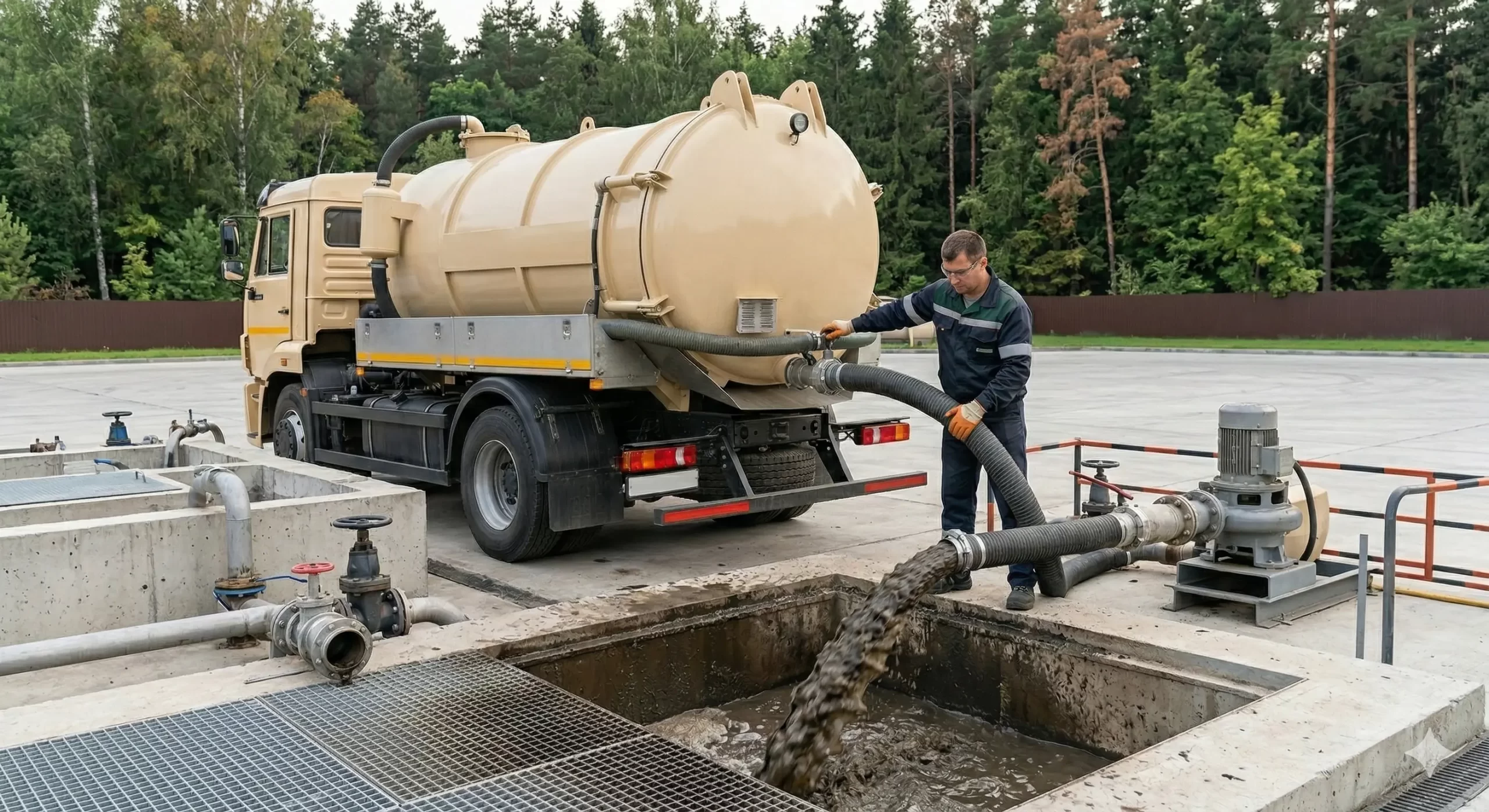
An objective analysis of system failure provides the most salient data for asset managers. Consider the case of a 50-room motel in a coastal Florida county, operating with a 15,000 Gallon Per Day (GPD) design flow capacity, served by an Advanced Treatment Unit (ATU) and a pressure-dosed drip irrigation disposal field. The property was acquired by a new ownership group unfamiliar with onsite wastewater treatment protocols.
For the initial 48 months of operation, the ownership group deferred all specialist maintenance, opting instead for reactive emergency pumping when alarms sounded, believing this to be a cost-saving measure. The contracted maintenance plan, quoted at $4,500 per annum, was declined.
The Cascade of Failures:
- Months 49-54: The system’s effluent pump began to fail intermittently due to solids carry-over from the neglected trash tank. This resulted in four emergency service calls at an average cost of $1,250 each, totaling $5,000. During these events, multiple ground-floor rooms experienced wastewater backups, rendering them unbookable and requiring biohazard remediation ($7,500).
- Month 55: A guest reported foul odors near the disposal field. An inspection by the Florida Department of Health (DOH) was triggered. The inspection revealed surfacing effluent, a direct violation of Florida Administrative Code 64E-6. The DOH issued an immediate cease-and-desist order for system operation and levied an initial fine of $10,000.
- Months 56-58: The motel was forced into a continuous pumping contract, transporting 15,000 gallons of wastewater offsite daily at a cost of $0.25 per gallon, or $3,750 per day. Over a 90-day period required for emergency engineering and permitting, this amounted to a staggering $337,500 in hauling fees alone.
- The Final Calculation: The original ATU and disposal field were declared unsalvageable due to catastrophic biomat formation and media fouling. A complete system replacement was mandated. The total financial impact was as follows:
- Emergency Repairs: $5,000
- Remediation: $7,500
- DOH Fines: $10,000
- Lost Room Revenue (estimated): $45,000
- Emergency Hauling: $337,500
- Full System Replacement: $285,000
- Total Financial Damage: $690,000
Hospitality Industry Endorsements
⭐⭐⭐⭐⭐
Jonathan Mills, Regional Manager, Vista Hospitality
“Their team performed a full system audit on our 120-room property in the Keys. The level of technical detail, from soil percolation tests to biochemical oxygen demand (BOD) analysis of our effluent, was beyond our expectations. They identified a critical imbalance in our ATU’s microbial colony caused by our laundry facility’s discharge. Their prescribed chemical dosing regimen and modified maintenance schedule saved us from a projected $150,000 drain field replacement. This is not a standard plumbing service; this is asset management at an engineering level.” You can find more detailed pricing and local regulations on our dedicated Destin, FL location page.
⭐⭐⭐⭐⭐
Maria Rodriguez, Owner, The Gulf Breeze Inn
“We were facing regulatory fines due to nitrogen loading in a sensitive watershed. The proposed solution from a competitor was a complete system overhaul costing nearly $300,000. The engineers here presented a phased retrofit solution, integrating a de-nitrifying bioreactor into our existing infrastructure for a total cost of $95,000. They provided all the necessary documentation for regulatory compliance and demonstrated a clear, positive ROI within 7 years based on fine avoidance and increased property valuation. Their financial and technical acumen is unparalleled.” Protect your property value by working with certified septic inspectors in Stafford, TX.
Financial Engineering of Commercial Onsite Wastewater Treatment Systems (OWTS)
The capital expenditure for a commercial OWTS suitable for a hotel or motel is a significant investment. It is critical to analyze these costs not as a singular expense but as a long-term capital asset with associated operational and depreciation costs. The following tables provide a granular breakdown for a hypothetical 75-room hotel with a design flow of 22,500 GPD, located in a region with challenging sandy soils and a high water table, such as coastal Florida or the Carolinas. Proactive care saves money. See what our local experts in Dothan, AL can do for your system.
| Component | Specification | Estimated Cost (USD) |
|---|---|---|
| Engineering & Permitting | Geotechnical survey, system design, DOH/DEP applications | $25,000 – $40,000 |
| Primary & Secondary Tanks | 30,000-gallon precast concrete, traffic-rated | $50,000 – $75,000 |
| Advanced Treatment Unit (ATU) | Moving Bed Biofilm Reactor (MBBR), nitrogen-reducing | $80,000 – $120,000 |
| Dosing & Pumping Station | Duplex alternating pumps, control panel, telemetry | $15,000 – $25,000 |
| Disposal Field (Leach Field) | Elevated mound system or drip irrigation, ~15,000 sq ft | $100,000 – $160,000 |
| Excavation & Installation Labor | Site prep, heavy machinery, certified installers | $60,000 – $90,000 |
| Total Estimated Capital Expenditure: | $330,000 – $510,000 | |
Operational Expenditure (OpEx) vs. Capital Expenditure (CapEx)
The operational budget for an OWTS is as critical as the initial investment. For the system detailed above, a prudent operator should budget approximately 1.5% to 2% of the total CapEx for annual maintenance. This equates to an annual OpEx of $4,950 to $10,200. This budget covers:
- Quarterly specialist inspections of all mechanical components (pumps, blowers, floats).
- Annual solids pumping from the primary tank (volume determined by occupancy rates and sludge measurements, not a fixed schedule).
- Annual effluent quality testing (BOD5, TSS, Fecal Coliform, Total Nitrogen) as required by permit.
- Electricity costs for pumps and aerators (approximately $2,000 – $4,000 annually).
Deferring this operational expenditure does not eliminate the cost; it merely transforms a predictable, manageable OpEx into a future, catastrophic CapEx event. The cost to replace a fouled mound system disposal field often exceeds 50% of the initial total system cost due to the complexity of demolition and remediation of contaminated soil.
Scheduled Maintenance: A Non-Negotiable Asset Protection Strategy ️
A commercial septic system is a dynamic biochemical reactor. Its continued function is predicated on maintaining a delicate equilibrium between hydraulic loading, organic loading, and the health of its microbial colonies. Hotel operations introduce unique stressors, including high-volume, intermittent flows (peak check-out times), aggressive cleaning agents, and high concentrations of fats, oils, and grease (FOG) from laundry and food service operations. A standardized maintenance protocol is therefore insufficient; a site-specific, data-driven strategy is required. For homeowners nearby, we highly recommend calling our Locations wastewater professionals.
Progression of Failure: A Financial Timeline
This timeline illustrates the escalating financial consequences of neglecting a properly engineered maintenance program for a typical commercial OWTS. You can find more detailed pricing and local regulations on our dedicated Pineville, LA location page.
- Phase 1 (Years 1-2): Optimal Performance. The system operates at peak design efficiency. Microbial colonies are robust. Effluent meets all regulatory standards.
Cost: Proactive Annual Maintenance Budget: $5,000 – $8,000. - Phase 2 (Years 3-5): Incipient Degradation. Undetected sludge accumulation begins to reduce effective tank volume. Early-stage biomat formation starts to occlude soil pores in the drain field, reducing hydraulic conductivity. System performance is marginally reduced but not yet symptomatic.
Cost of Neglect: The window for low-cost intervention (e.g., corrective pumping, drain field aeration) is closing. Deferred cost accumulates. - Phase 3 (Years 6-8): Symptomatic Failure. The system experiences regular high-level alarms. Slow drains are reported in ground-floor units. Foul odors become noticeable near the disposal area. Emergency pumping is now required 2-3 times per year. The biochemical oxygen demand (BOD) and total suspended solids (TSS) in the effluent exceed permit limits.
Cost of Neglect: Emergency Pumping ($1,500/call x 3 = $4,500/yr), Drain Field Hydro-jetting ($8,000), potential regulatory notices. Total reactive costs: ~$12,500+ per year. - Phase 4 (Years 9+): Catastrophic System Failure. The drain field is fully occluded by a mature biomat, refusing all effluent. Wastewater surfaces, creating a public health hazard and triggering immediate regulatory action. The ATU components are fouled beyond repair. The hotel faces operational shutdown.
Cost of Neglect: Fines ($10,000+), mandatory full system replacement ($300,000+), business interruption losses ($50,000+). Total liability: $360,000+.
Diagnostic Protocols for Commercial Septic System Malfunctions
Troubleshooting a commercial OWTS requires a systematic, data-driven approach. Symptoms are often misleading, and incorrect interventions can be costly or exacerbate the underlying problem. The primary failure vectors in a hospitality setting are hydraulic overload, chemical toxicity, and FOG accumulation.
Troubleshooting Matrix: Hotel/Motel OWTS
- Symptom: High-level alarm in pump tank.
- Probable Cause A: Pump failure (electrical or mechanical).
- Diagnostic Test: Measure voltage at pump terminals. Manually actuate floats. Check amperage draw against manufacturer specifications.
- Action: Replace faulty pump, floats, or capacitor.
- Probable Cause B: Drain field saturation (hydraulic overload or biomat clogging).
- Diagnostic Test: Expose distribution box. Observe if effluent is ponding. Use a soil probe or permeameter to assess soil saturation levels.
- Action: If overloaded, implement water conservation measures. If clogged, schedule emergency pumping and prepare for drain field remediation or replacement analysis.
- Symptom: Foul, ‘rotten egg’ odors near tanks or drain field.
- Probable Cause: System has turned septic/anaerobic due to lack of oxygen (for ATUs) or organic overload.
- Diagnostic Test: For ATUs, check aerator/blower function. Measure dissolved oxygen (DO) levels in the aeration chamber; they should be >2.0 mg/L. For conventional systems, measure sludge/scum layers.
- Action: Repair or replace aerator. Institute an immediate pumping of the primary tank to reduce organic load. Analyze influent for high BOD sources.
- Symptom: Unusually green, lush grass over the disposal area.
- Probable Cause: Effluent is surfacing or is too close to the surface. This is a sign of imminent drain field failure and a public health risk.
- Diagnostic Test: Visual inspection. Probe soil for saturation depth. Test effluent for fecal coliform and nitrate levels.
- Action: Immediately rope off the area to prevent public access. Contact the local health department to report the issue. Cease discharge to the field and begin emergency hauling. The field has failed and requires replacement.
Technical Inquiries & Regulatory Clarifications ❓
What is the expected lifespan of a commercial hotel septic system in a high-water-table area like Florida?
The engineered lifespan is component-dependent. Precast concrete tanks have a structural lifespan exceeding 50 years. Mechanical components like pumps and blowers may have a service life of 7-12 years. The critical component, the drain field, has the most variable lifespan. In the sandy, high-water-table soils of Florida, a properly loaded and maintained drain field (especially a mound system) can function effectively for 20-30 years. However, with neglect, hydraulic overloading, or inadequate FOG interception, a drain field can experience irreversible failure in as little as 5-10 years.
How is the required Gallons Per Day (GPD) capacity calculated for a new hotel project?
GPD calculation is strictly regulated by state and local health codes and is not based on actual water meter readings. For example, the Florida Department of Health might stipulate a flow rate of 100 GPD per hotel room, plus additional capacity for laundry facilities (e.g., 400 GPD per commercial washer) and any food service operations (e.g., 1.5 GPD per seat). Therefore, a 100-room hotel with a small laundry would be engineered with a minimum design flow of (100 rooms * 100 GPD) + (2 washers * 400 GPD) = 10,800 GPD, regardless of its average occupancy rate.
Can a failing commercial drain field be rejuvenated, or is replacement always necessary?
Rejuvenation is sometimes possible in the early stages of failure (Phase 2). Techniques such as Terralift® (pneumatic soil fracturing) or high-pressure water jetting combined with a long resting period (6-12 months, requiring a secondary drain field) can fracture the biomat and restore some hydraulic conductivity. However, these are temporary measures with a high degree of variability in success rates. For systems in advanced failure (Phase 3 or 4), where a dense, mature biomat has formed and soil chemistry has been altered, replacement is the only technically sound and financially prudent long-term solution.
What are the specific legal liabilities for a hotel owner if their septic system contaminates local groundwater?
The legal liabilities are severe and multi-faceted. They include regulatory enforcement from the EPA and state DOH/DEP, including substantial fines (often calculated on a per-day basis), mandatory remediation orders, and potential business license suspension. Additionally, civil liability can be enormous. If contamination affects neighboring properties or municipal water sources, the owner can face lawsuits for property damage, diminished property values, and costs associated with providing alternative water sources. In cases of willful negligence, criminal charges are possible under the Clean Water Act.
How does an Advanced Treatment Unit (ATU) provide a positive ROI over a conventional system?
While an ATU has a higher initial CapEx, it generates ROI in several ways. First, an ATU produces a much cleaner, higher-quality effluent (lower BOD and TSS). This allows for a significantly smaller drain field footprint, which can be a critical cost-saving factor on small or expensive commercial lots. Second, in environmentally sensitive areas (e.g., near coastlines or aquifers), regulations may mandate the nitrogen reduction capabilities that only an ATU can provide, making development possible where a conventional system would be prohibited. This regulatory compliance avoids fines and unlocks the property’s development potential, providing a direct and substantial return on investment.
Technically Reviewed By:
BlixBase Master Plumber Team
20+ Years Septic Industry Experience | Certified System Inspectors