
A.O. Smith’s 4-blink code signals a critical ECO high-limit trip. This guide details diagnosing severe scale buildup or a failed gas control valve.
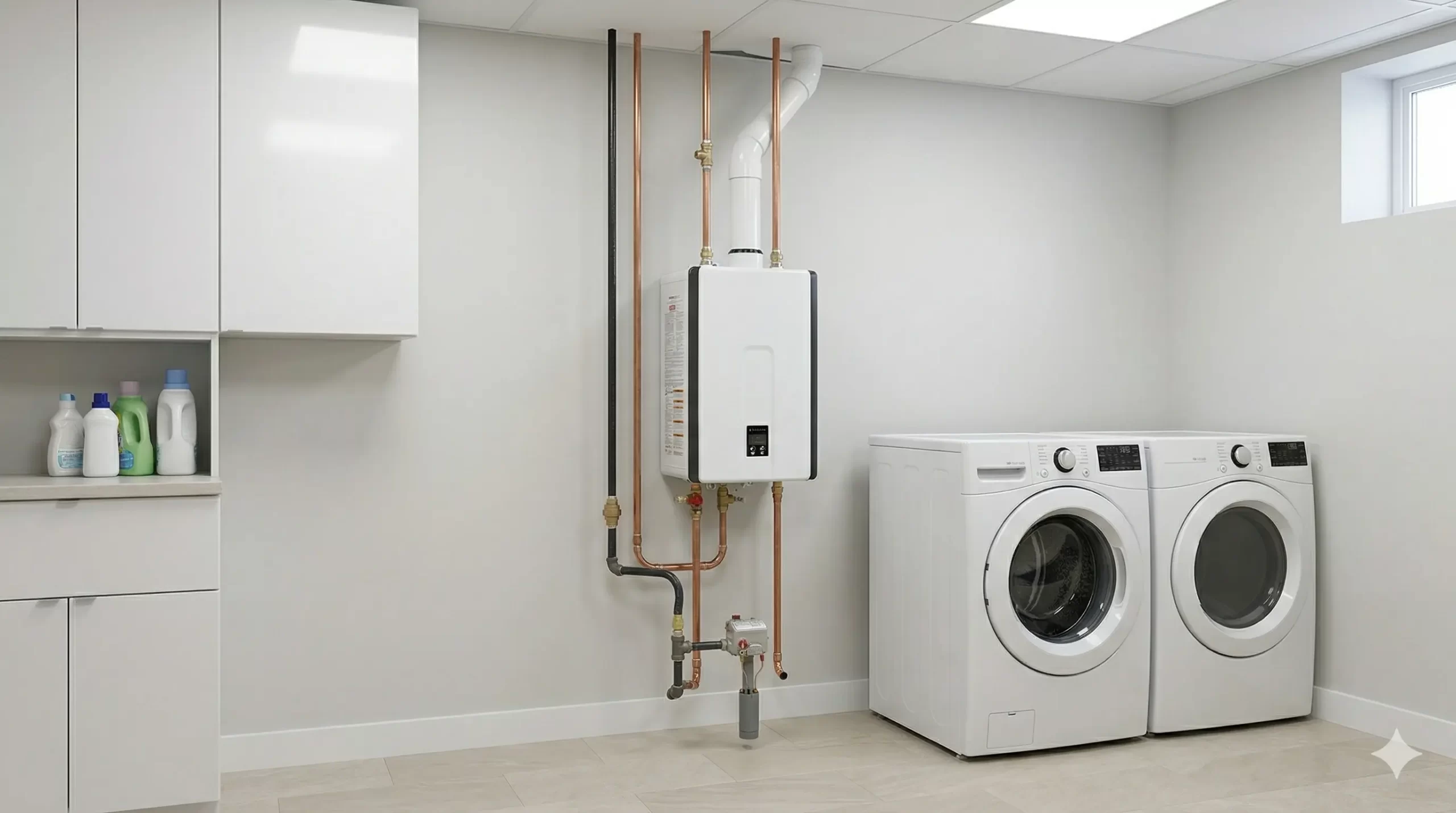
A 4-Blink error code signifies that the Energy Cut Out (ECO), a non-resettable safety device, has been activated due to extreme temperatures. This is not a nuisance alert; it is the final line of defense against a catastrophic tank failure. Attempting to bypass or repeatedly reset this control can lead to a condition where water within the tank superheats beyond its boiling point, potentially resulting in a boiling liquid expanding vapor explosion (BLEVE). This event has sufficient force to level structures. All diagnostic and repair procedures must be conducted with the gas supply securely isolated. Failure to address the root cause of the overheating poses an immediate and severe risk to life and property.
️ Repair Profile
Required Diagnostics Tools
Pipe wrenches, Phillips screwdriver, Digital Multimeter with thermocouple adapter, Manometer, Approved pipe thread sealant, Teflon tape, Wet/dry vacuum, Full-flow drain hose, Bucket
Financial Breakdown: Parts vs. Licensed Labor
The cost allocation is heavily weighted towards parts because the primary remedy for a persistent 4-blink error is the complete replacement of the integrated gas control valve assembly, which is a high-cost component. The labor percentage reflects the diagnostic time and specialized installation process, which is less than the component’s material expense.
Deep Technical Diagnosis: The Physics of the Failure
The A.O. Smith 4-blink status light indicates a trip of the high-limit temperature switch, known as the Energy Cut Out (ECO). This is a single-use thermal fuse integrated into the thermostat assembly, designed to irrevocably open the electrical circuit to the main gas valve when tank temperatures exceed a preset safety limit, typically around 180-190°F. This is not a standard cycling process; it is a hard fault triggered by a thermal runaway condition. The fundamental issue is a failure in the system’s ability to transfer heat into the water at the rate it is being generated in the combustion chamber, or a failure in the primary thermostat’s ability to regulate that heat generation.
A primary vector for this failure is severe sediment stratification at the bottom of the tank. A thick layer of calcified mineral deposits (primarily calcium and magnesium carbonate) acts as a thermal insulator. The thermostat’s sensing probe, submerged in this area, receives a delayed or muted temperature reading. In response, the gas control valve maintains a prolonged burn cycle, attempting to satisfy the temperature setpoint. However, the heat, unable to efficiently transfer to the water, builds up in the tank bottom and flue, eventually reaching the ECO’s trip threshold. This same insulating effect can cause localized boiling, leading to the characteristic ‘popping’ or ‘kettling’ sounds that often precede this failure.
Alternatively, the fault can be intrinsic to the gas control valve assembly. The primary thermostat may fail to open the gas valve circuit when the setpoint is reached, leading to uncontrolled firing. Furthermore, improper gas pressure, verifiable with a manometer, can lead to over-firing, exceeding the heater’s designed BTU input and causing rapid overheating. A compromised combustion process, such as severe flame impingement on the flue wall due to a clogged burner orifice or incorrect stoichiometric mixture, can also create concentrated hot spots that trigger the ECO.
- Severe Mineral Scale Insulation: A layer of sediment prevents the thermostat from accurately reading water temperature, causing the burner to run excessively long and overheat the tank bottom.
- Defective Gas Control Valve: The internal regulating thermostat has failed mechanically or electronically, preventing it from shutting off the gas supply when the desired water temperature is reached.
- Excessive Gas Manifold Pressure: The appliance is being supplied with gas pressure (measured in inches of water column) above the manufacturer’s specification, causing it to over-fire and produce more heat than the tank can dissipate.
- Flue or Venting Obstruction: A blockage in the internal flue baffle or the external vent piping traps excessive heat within the combustion chamber and heat exchanger, leading to a high-limit trip.
US Building Codes & Plumbing Regulations
The occurrence of a 4-blink ECO trip directly implicates sections of the NFPA 54 National Fuel Gas Code. Specifically, an overheating event suggests a potential violation of the code’s mandate that gas appliances operate within their approved design parameters. If the root cause is excessive gas pressure, this contravenes the requirement for proper pressure regulation to ensure the appliance’s firing rate does not exceed its listed input rating. Furthermore, the ECO itself is a required safety control; its activation indicates the system has operated outside of safe limits, a condition the code is designed to prevent through proper installation, venting, and maintenance protocols.
From a plumbing code perspective, this fault state engages the principles of the Uniform Plumbing Code (UPC), particularly concerning safety devices. UPC Section 507 mandates that water heaters be equipped with an approved and properly functioning Temperature and Pressure (T&P) relief valve. The conditions that trigger an ECO trip—excessive temperature—are precisely what the T&P valve is designed to mitigate as a final failsafe. An investigation following a 4-blink error must include verification that the T&P valve has not been tampered with and is not obstructed by the same mineral scale that may have caused the initial overheating, as a failure of both safety systems could lead to a catastrophic vessel rupture.
Professional Master Plumber Repair Sequence
- Initial Safety Protocol & Fault Verification: Turn the gas control knob to the ‘OFF’ position. Close the upstream manual gas shutoff valve. Confirm the 4-blink code is active on the LED status light. This confirms a live fault diagnosis is required.
- Attempt Single ECO Reset: On combination gas control valves, locate the reset button, which may be part of the temperature dial assembly. Press it firmly once. If the unit immediately re-enters a 4-blink fault upon attempting to relight, the ECO has permanently tripped, or the underlying condition persists. Do not attempt further resets.
- Execute Full Tank Descale & Flush: Connect a full-port drain hose to the boiler drain. Route the hose to a floor drain. Shut off the cold water supply to the heater. Open a nearby hot water faucet to break the vacuum. Open the drain valve and flush the tank completely, observing for heavy sediment discharge. Refill and re-flush if necessary to clear scale.
- Gas Pressure Manometer Test: If flushing fails to resolve the issue, connect a manometer to the outlet pressure tap on the gas control valve. Start the heater and observe the pressure reading while the main burner is firing. Compare this reading (typically 3.5″ W.C. for natural gas) to the specifications on the heater’s rating plate. Adjust the regulator if necessary and qualified to do so.
- Combustion & Venting System Inspection: Disconnect power (if applicable) and shut off gas. Remove the inner and outer burner access covers. Carefully extract the entire burner assembly. Inspect the burner orifices for blockage, the combustion chamber for soot or signs of flame rollout, and the internal flue baffle for obstructions.
- Condemn the Gas Control Valve: If the tank is free of scale, gas pressure is correct, and the venting system is clear, the fault is isolated to the gas control valve/thermostat assembly. The internal thermostat or ECO mechanism is defective and requires complete replacement. This component is not field-serviceable.
- Gas Control Valve Replacement: Ensure gas is off and the tank is drained below the valve level. Disconnect the pilot tube, thermocouple/thermopile, and main burner tube fittings from the valve. Disconnect the main gas supply line. Using two pipe wrenches (one for backup), carefully unthread the old valve from the tank spud.
- Install New Valve & Leak Test: Clean the threads on the tank spud. Apply approved pipe thread sealant to the new OEM valve’s threads. Install the new valve, tightening it to the correct orientation. Reconnect all gas lines and tubes. Turn the main gas supply back on and use a leak detection solution to meticulously test every joint and fitting for bubbles.
- System Commissioning: Refill the tank completely, purging all air from the system by opening a hot water tap until a steady stream flows. Follow the manufacturer’s specific lighting procedure for the new valve. Set the temperature to a safe level (e.g., 120°F) and monitor the heater through a complete heating cycle to ensure proper operation and confirm the 4-blink error is cleared.
Expert Verdict: Is It Worth Repairing?
When faced with an A.O. Smith 4-blink error, the repair-versus-replace decision hinges on the water heater’s age and the cost of the replacement gas control valve. For a unit under 6 years old and still under parts warranty, a repair is almost always the correct financial choice, as the primary cost will be labor. However, if the heater is approaching or has exceeded its 8-10 year expected service life, the investment calculus shifts significantly. The cost of a new gas control valve plus professional installation can represent 40-60% of the cost of a brand new, more efficient water heater. Investing a substantial sum into an aging tank, whose eventual failure from corrosion is a statistical certainty, yields a poor return on investment. Replacing the unit provides a new warranty, the benefits of modern energy efficiency standards, and peace of mind against a near-term tank leak.
Frequently Asked Questions (FAQ)
Q: Can I just keep resetting the 4-blink error on my A.O. Smith heater?
A: Absolutely not. The ECO (Energy Cut Out) is a critical one-time safety device. A persistent 4-blink code indicates a dangerous overheating condition exists. Bypassing or repeatedly resetting it ignores the underlying fault, risking a catastrophic tank failure, which can cause an explosion.
Q: Does a water softener prevent the 4-blink overheating error?
A: A properly calibrated water softener is highly effective at preventing the mineral scale buildup that insulates the thermostat and causes many 4-blink faults. However, it offers no protection against other causes, such as an internal failure of the gas control valve’s thermostat or an over-pressure gas supply.
Q: Why does the 4-blink error seem to happen after a very long shower?
A: A long, continuous draw on hot water forces the burner to operate for an extended period. If a layer of insulating sediment exists, the heat cannot transfer into the water efficiently. This traps excessive heat in the tank’s lower section and combustion chamber, eventually raising the temperature high enough to trip the ECO high-limit switch.
Q: Is the 4-blink error covered under my A.O. Smith warranty?
A: The failed part, typically the gas control valve, is often covered by the manufacturer’s parts warranty (usually 6 years). However, the labor cost for the diagnosis and replacement is typically only covered for the first year. Furthermore, if the failure is determined to be caused by excessive sediment, the warranty claim may be denied as this is considered a maintenance issue, not a component defect.