
Listen closely. Your septic system is failing. That crumbling concrete baffle isn’t a future problem; it’s a ‘now’ problem. I see the stress. I understand the panic. We’re going to cut through the noise and get to the facts. This is your action plan. No fluff. Just the hard data you need to make a decision that will save you thousands of dollars and protect your property. Let’s move.
Troubleshooting: Confirming Baffle Failure ️♂️
Before we talk money, we confirm the diagnosis. A professional scope is the only 100% confirmation, but you can gather critical intel. A failed baffle creates specific symptoms beyond a general backup. First, check your effluent filter, if you have one. Is it clogged with solids prematurely? A baffle is a wall that keeps solids in the tank. If that wall crumbles, solids rush out and clog the filter fast. This is your canary in the coal mine.
Next, listen for gurgling sounds from drains that are unusually loud or happen long after water use. This can indicate pressure changes from solids blocking the outlet pipe, a direct result of baffle collapse. During a pump-out, the technician should visually inspect both the inlet and outlet baffles. Look for ‘spalling’ (flaking or chipping concrete), exposed rebar (the steel rods inside the concrete), or a visible pile of concrete debris at the bottom of the tank. The outlet baffle is the most critical. A failed inlet baffle is a problem; a failed outlet baffle is a catastrophe for your drainfield.

Progression of Failure: The Danger Timeline ⏳
Baffle failure isn’t instantaneous. It’s a progression. Understanding where you are on this timeline dictates the urgency and the solution. This is how a healthy system turns into a total drainfield replacement. Upgrading your system? Let our Breaux Bridge, LA installation experts walk you through the options.
- Year 1-5 (Early Stage): Minor surface spalling. You might see small flakes of concrete during a pump-out. The structural integrity is still 95% intact. No immediate operational impact. This is the golden window for a simple, inexpensive repair.
- Year 5-8 (Intermediate Stage): Significant cracking and chipping. Chunks of concrete (1-3 inches) may be missing. The baffle is still functional but weakened. You may notice slightly faster clogging of your effluent filter. The risk of partial collapse is moderate. Repair is urgent at this stage.
- Year 8-10 (Critical Stage): Large sections of the baffle have fallen off. The rebar is likely exposed and corroding. The baffle is no longer effectively stopping solids. Your drainfield is now receiving unfiltered effluent, leading to the formation of a thick, black layer called a ‘biomat’ that clogs the soil. You are actively damaging your drainfield every day.
- Year 10+ (Catastrophic Failure): The baffle has completely collapsed. A pile of rubble sits at the bottom of the tank. Solids are flowing freely into your drainfield pipes. You are experiencing frequent backups, foul odors in the yard, and potentially have irreversible drainfield damage. At this point, you’re not just replacing a tank; you may be replacing the entire system for $15,000 to $40,000+.
Cost Breakdown: Repair vs. Replace
This is the bottom line. The numbers don’t lie. I’ve broken down the typical costs for a standard 1,000-gallon concrete tank. Prices will vary by location, soil conditions, and accessibility of the tank, but this is a solid baseline for your financial planning.
| Action Item | Baffle Repair (Slip-On PVC) | Full Tank Replacement |
|---|---|---|
| Pump & Clean Tank | $350 – $600 | $350 – $600 (Included) |
| Minor Excavation (Risers) | $200 – $400 | N/A (Part of Major Excavation) |
| Materials (PVC Baffle Kit) | $150 – $250 | N/A |
| Labor (2-4 hours) | $400 – $800 | N/A |
| Major Excavation & Old Tank Removal | Not Required | $2,500 – $5,000+ |
| New Concrete Tank (1000 gal) | Not Required | $1,200 – $2,500 |
| Permits & Soil Testing | Not Required | $500 – $1,500 |
| TOTAL ESTIMATE | $1,100 – $2,050 | $6,000 – $12,000+ |
Real-Life Case Study: The Rodriguez Family, Chester County, PA
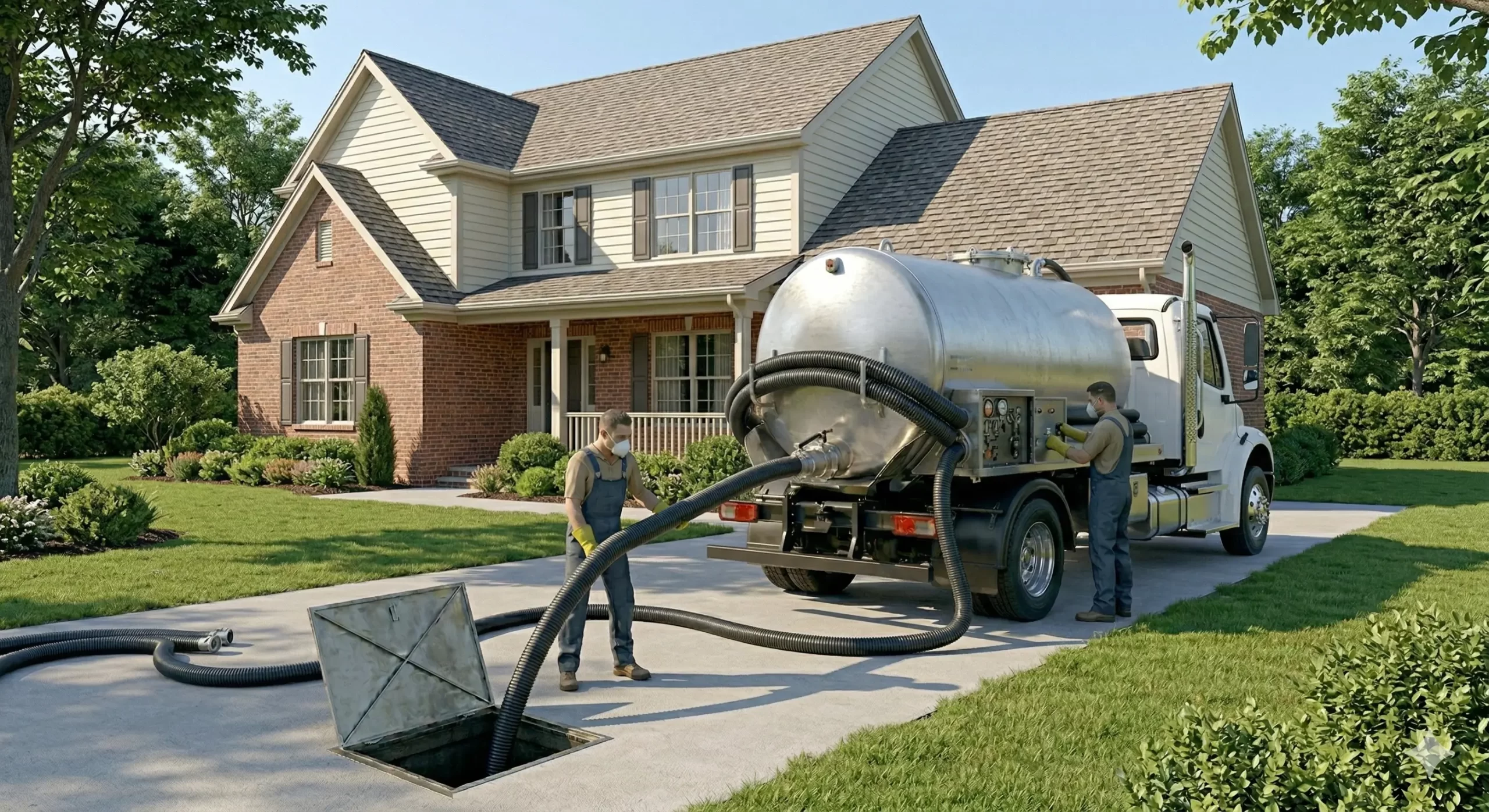
The Rodriguez family called me on a holiday weekend. Classic. Their toilets were backing up into the showers. They have a 1,250-gallon concrete tank installed in 1988, typical for the area. The soil in Chester County can be rocky and acidic, which is tough on older concrete. Their system had no effluent filter, so there was no early warning. When we opened the tank, the outlet baffle was gone. A pile of concrete mush was sitting right under the outlet pipe.
But what if the damage extends beyond just the baffle itself? A thorough inspection revealed the tank walls were also showing severe spalling and the dividing wall between the two compartments was cracked. This is a critical distinction. Repairing the baffle in a tank that is losing its overall structural integrity is like putting a new tire on a car with a cracked frame. You’re fixing one symptom of a much larger disease. For the Rodriguez family, the risk of a full tank collapse within 2-3 years was over 70%. We recommended a full tank replacement with a modern, dual-compartment tank that meets current Pennsylvania DEP code. It was a tough pill to swallow, but it saved them from a catastrophic yard collapse and an emergency drainfield replacement down the line.
Advanced Maintenance: Protecting Your Investment ️
You’ve made a decision. Now protect it. Basic pumping every 3-5 years is a given. Let’s go deeper. Install an effluent filter and clean it annually. This $80 part is your best early-warning system. It protects your multi-thousand dollar drainfield. Next, manage your water usage. A 1,000-gallon tank is designed to handle about 300-400 gallons per day. A leaky toilet can waste 200 gallons per day, constantly churning the tank and putting stress on the baffle. Facing a drain field failure? Our team in Palm Beach Gardens, FL is ready to diagnose the problem.
Finally, be ruthless about what goes down the drain. This isn’t about being ‘septic safe’ in general. It’s about protecting the concrete. Avoid harsh chemical drain cleaners, especially those containing sulfuric acid. These chemicals create a highly acidic environment that accelerates concrete corrosion. Use bacterial and enzyme-based drain treatments instead. They are slower but won’t compromise your tank’s structure.
Hear From Your Neighbors
David Chen, West Chester, PA ⭐⭐⭐⭐⭐
“Called in a panic with a backup. They were here in 90 minutes. They didn’t just pump and run – they used a camera to show me the crumbled baffle on a screen. Explained the options, showed me the cost breakdown for a PVC slip-on vs a new tank. No pressure. We went with the repair and they had it done the same day. Saved our drainfield and our sanity.” Protect your property value by working with certified septic inspectors in Brenham, TX.
Maria Garcia, Downingtown, PA ⭐⭐⭐⭐⭐
“Our old concrete tank was a disaster waiting to happen. The team evaluated not just the baffle but the tank walls and lid integrity. They identified multiple structural cracks and recommended a full replacement. The excavation was clean, the crew was professional, and they handled all the township permits. A huge job done right.” We also provide specialized local support—see our Frisco, TX service page for details.
Frequently Asked Questions (FAQ) ❓
Will my homeowner’s insurance cover a failed septic tank or baffle?
Almost never. Standard homeowner’s insurance policies explicitly exclude coverage for septic system failures due to age, wear and tear, or corrosion. These are considered maintenance issues. You may have limited coverage if the damage was caused by a sudden, covered peril (like a vehicle driving over the tank), but a crumbling baffle is a maintenance failure 99% of the time. Some companies offer specific service line or septic endorsements for an additional premium, but you must have that rider *before* the failure occurs.
What’s the difference between a concrete baffle and a PVC baffle?
Concrete baffles were cast as part of the tank itself. They are strong but susceptible to gas corrosion over decades. Modern tanks and all repairs now use PVC (polyvinyl chloride) or Polylok-style baffles. These are sanitary tees that attach to the inlet and outlet pipes. They are completely immune to the corrosive gases in the tank and have a virtually unlimited lifespan. When we perform a repair, we install a modern PVC baffle, which is a permanent solution for the baffle problem.
If I replace the tank, do I need to replace the drainfield too?
Not necessarily. This is the key reason to act fast. If you catch the baffle failure before significant amounts of solids have clogged your drainfield piping and the surrounding soil, the drainfield may be salvageable. A professional can perform a soil percolation test or a hydraulic load test to assess the drainfield’s health. If it’s still accepting effluent correctly, you can often connect the new tank to the existing field, saving you tens of thousands of dollars. Wait too long, and you will be forced to replace both.
The decision is yours, but it needs to be made with facts, not fear. A simple baffle repair is a viable, cost-effective solution if, and only if, the rest of the tank is structurally sound. If there is widespread cracking, spalling, or rebar exposure on the walls or lid, a repair is throwing good money after bad. Get a professional, honest assessment. Your property and your wallet depend on it. For a free consultation, simply reach out to our office serving Amarillo, TX.
Technically Reviewed By:
BlixBase Master Plumber Team
20+ Years Septic Industry Experience | Certified System Inspectors