
Proactive Care: Keeping Your Commercial Septic System Happy
Alright, let’s talk turkey. Pumping your tank is reactive. True septic mastery is proactive. A 10,000-gallon tank isn’t just a big concrete box; it’s a living, breathing (well, not exactly breathing) ecosystem. It’s a subterranean city of bacteria, and you’re the mayor. Your job is to keep the citizens—the anaerobic bacteria—happy and working hard. When they’re happy, your wallet is happy.
The magic happens through a process called anaerobic digestion. This isn’t just stuff rotting; it’s a sophisticated, multi-stage biological process. First, acid-forming bacteria break down complex organic solids (fats, proteins, carbs) into simpler compounds like fatty acids. Then, a second group of bacteria, the methanogens, take over. These little guys are the real MVPs. They consume the fatty acids and produce methane and carbon dioxide. This process significantly reduces the volume of solid waste, turning a large portion of it into liquid and gas. If you disrupt this bacterial city with harsh chemicals, you’re essentially causing a mass die-off, and the solid waste will pile up at an alarming rate.
What Your Bacteria Hate (And You Should Avoid)
- Grease and Oil: Especially for restaurants or commercial kitchens, a grease trap is non-negotiable. Grease doesn’t break down well. It floats to the top, cools, and forms a hard, concrete-like scum layer that can block the inlet and outlet pipes.
- Harsh Chemicals: Industrial-strength cleaners, bleach, certain sanitizers—they’re like a chemical weapon to your bacterial workforce. They kill the very organisms you need to break down waste. Look for septic-safe cleaning products.
- Hydraulic Overloading: A 10,000-gallon tank is big, but it’s not infinite. Consistently pushing more water through the system than it’s designed for (e.g., from multiple high-volume washing machines running non-stop) doesn’t give the solids enough time to settle. This pushes solid waste into your drain field, which is a death sentence for it.
- ‘Magic’ Additives: Be very wary of products that promise to eliminate the need for pumping. At best, they do nothing. At worst, they can churn up the sludge layer, forcing solids into the leach field and causing a catastrophic failure. Your tank has all the bacteria it needs, naturally.

Frequently Asked Questions (The Nitty Gritty)
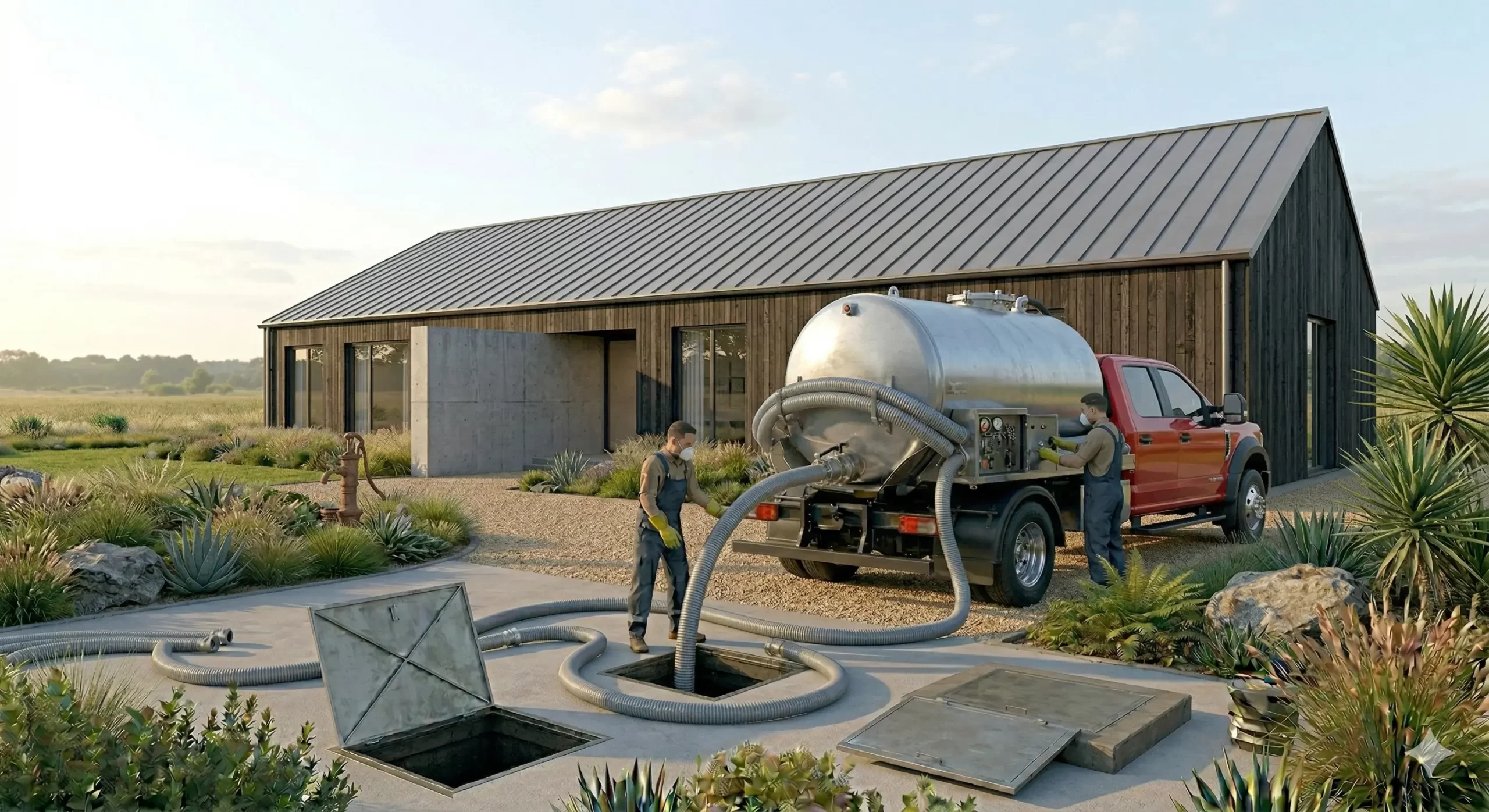
How often should a 10,000-gallon commercial tank actually be pumped?
This is the million-dollar question, but the answer isn’t a simple number. It depends entirely on the biological load. For a high-use facility like a busy restaurant, truck stop, or a small factory, you might need pumping annually, or even every 6-9 months. For a lower-use commercial space, like an office building with 50-70 employees, you might go 2-4 years. The key is to measure the sludge and scum layers. A good rule of thumb is to pump when the bottom of the scum layer is within 6 inches of the outlet baffle, or the top of the sludge layer is within 12 inches. A professional inspection is the only way to know for sure.
What is ‘Biological Oxygen Demand’ (BOD) and why does my septic guy care about it?
This is where we get into the real science of wastewater! Biological Oxygen Demand (BOD) is a measure of how much oxygen the bacteria in the effluent will consume to break down the organic matter. Think of it as a measure of wastewater ‘strength’. Raw sewage has a very high BOD. The septic tank’s job is to act as a primary treatment facility, where anaerobic bacteria digest solids and lower this BOD by about 30-50%. The resulting effluent then flows to the drain field for secondary treatment. If your tank is failing or overloaded, high-BOD effluent enters the drain field. The aerobic bacteria in the soil go into overdrive trying to consume this rich ‘food,’ using up all the available oxygen. This creates an anaerobic environment in the soil, leading to the formation of a thick, black, tar-like layer called a ‘biomat’. A healthy biomat is thin and helps filter pathogens, but a thick, overgrown biomat from high-BOD effluent will seal the soil, preventing water from percolating. This is the primary cause of drain field failure.
Can I use my commercial property’s septic system for things like floor drains or process water?
Absolutely not, and this is a critical distinction. A septic system is designed for sanitary waste (from toilets and sinks) only. Introducing chemicals, solvents, oils, or other industrial process water can destroy the bacterial ecosystem, contaminate groundwater, and violate local and federal environmental regulations. Floor drains in a commercial garage or workshop, for example, can introduce petroleum products that are toxic to the system. You need separate, appropriate disposal systems or interceptors for any waste stream that is not sanitary waste.
The Big Question: Cost Breakdown for Pumping a 10,000-Gallon Tank

Okay, let’s get down to brass tacks. You’re looking at a big tank, and that means a big job. This isn’t your cousin’s backyard residential tank. A 10,000-gallon tank often requires multiple trips from a large-capacity pumper truck or coordinating two trucks at once. The cost isn’t just a simple flat fee; it’s a combination of factors.
Nationally, you can expect the cost to pump a 10,000-gallon commercial septic tank to range from $1,800 to $4,000+. That’s a wide range, so let’s break down exactly where that money goes. Protect your property value by working with certified septic inspectors in Wimberley, TX.
| Cost Factor | Typical Price Range | What It Means For You |
|---|---|---|
| Base Pumping Fee | $0.15 – $0.30 per gallon | This is the core cost for the labor and equipment. For 10,000 gallons, this alone could be $1,500 – $3,000. It covers the technician’s time, the truck’s operation, and the pumping itself. |
| Disposal/Treatment Fees | $0.05 – $0.10 per gallon | We can’t just dump this stuff in a field! The septage must be taken to a licensed wastewater treatment facility, and they charge us a fee, which is passed on to you. This can add $500 – $1,000 to your bill. |
| Travel & Fuel Surcharge | $50 – $250+ | If your business is in a remote location, expect to pay more for the time and fuel it takes for a large, heavy truck to get to you. |
| Lid Excavation Fee | $75 – $300 per lid | If the access lids to your tank are buried and not fitted with risers to the surface, we have to dig. This takes time and labor. A 10,000-gallon tank can have multiple lids. |
| Emergency / After-Hours Fee | $200 – $500 Surcharge | If your system is backing up into your business on a Friday night, you’re going to pay a premium for immediate service. This is why regular maintenance is so much cheaper. |
Real-Life Case Study: A Restaurant on the Brink in Rural Ohio
Let me tell you about a call I got a while back. It was for a popular family restaurant out in a rural part of Ohio, surrounded by that dense, clay-heavy soil we know so well. Their system was a big 10,000-gallon tank, and the owner was complaining about slow drains and some… let’s call them ‘unpleasant odors’ near the back of the property. He’d been in business for 15 years and admitted he’d only had it pumped ‘a few times’. Don’t wait for a backup to flood your yard. Check out our local services in Miami Springs, FL.
When we opened the lid, the problem was immediately obvious. The scum layer, which should be a few inches thick, was a solid two-foot-thick cap of hardened grease. The anaerobic bacteria were suffocating. The high-strength waste from the kitchen—full of food scraps, oils, and detergents—had created an incredibly high Biological Oxygen Demand (BOD). The effluent flowing out to the drain field was barely treated, like sending syrup down a straw.
The real issue was the soil physics at play. Ohio clay soil has very low permeability. The drain field trenches rely on a process called percolation, where the effluent slowly seeps into the soil, getting filtered and cleaned by aerobic bacteria along the way. But because the effluent was so ‘strong’ (high-BOD), it had created a super-thick, slimy biomat that had completely sealed off the trench walls. Water couldn’t percolate anymore. The physics just didn’t work. The effluent had nowhere to go but up to the surface. Need immediate assistance? Find trusted septic tank pumping in Fairhope, AL right away.
The solution was a multi-step process. First, an emergency pump-out of all 10,000 gallons. We had to use a crust-buster to break up that solid grease cap. Second, we hydro-jetted the line leading to the drain field to clear the blockage. Third, we recommended a strict pumping schedule (every 12 months) and, most importantly, the installation of a properly-sized external grease interceptor *before* the septic tank. By capturing the grease first, we dramatically lowered the BOD of the wastewater entering the septic tank, allowing it to function properly. It was a costly lesson, but it saved his drain field from total failure.
Troubleshooting: Early Warning Signs Your Big Tank is in Big Trouble
Your commercial septic system will almost always give you hints before it stages a full-blown, catastrophic protest. You just need to know how to listen. Ignoring these signs is like ignoring the check engine light on your truck; the problem only gets more expensive. Protect your property value by working with certified septic inspectors in Alexander City, AL.
The Progression of Failure Timeline
Here’s how a healthy system can degrade over time if neglected:
- Year 1-2 (The Honeymoon Phase): Everything works perfectly. The bacterial colony is established and efficiently breaking down solids. Effluent is clear, BOD is low, and the drain field is happily percolating. Maintenance: Just be mindful of what goes down the drain.
- Year 3-4 (The Subtle Warning): Solids have accumulated. The tank is now operating at reduced capacity. You might notice slightly slower drains during peak usage. The system is still working, but it’s under strain. The bacterial process is less efficient. Maintenance: This is the ideal window to get it pumped.
- Year 5-6 (The Danger Zone): The sludge and scum layers are thick enough to impede flow. Toilets gurgle ominously. You get faint sewer gas odors after heavy use. Suspended solids are now being regularly pushed into the drain field, starting to clog the soil pores. Maintenance: You are on borrowed time. Pumping is now urgent, not preventative.
- Year 7+ (Catastrophic Failure): You have constant backups in your building’s drains. Noxious, soggy patches of ground appear over the drain field. The system has completely failed. The drain field is saturated with a thick biomat and is no longer accepting water. Maintenance: Prepare for a massive bill. You’re likely looking at a full drain field replacement, which is the septic equivalent of an engine rebuild.
Recognizing the signs in the ‘Yellow’ and ‘Orange’ phases can be the difference between a $2,500 maintenance bill and a $50,000 system replacement. Pay attention to slow drains, gurgling sounds in the pipes, and any unusual lush green grass or foul odors over the tank and drain field area. These are your system’s cry for help.
Hear From Our Happy Commercial Clients
⭐⭐⭐⭐⭐ – Main Street Logistics
“We run a 24/7 warehouse with over 100 employees, and our septic system is critical. These guys are the real deal. They didn’t just pump the tank; they explained the science, installed an effluent filter, and set us up on a maintenance plan that prevents problems before they start. True professionals.”
⭐⭐⭐⭐⭐ – The Corner Bistro
“After a nightmare scenario with our old system backing up during a dinner service, we called them in a panic. They were here within hours, diagnosed a massive grease issue, and gave us a clear, honest plan to fix it. Their knowledge of commercial kitchen waste and BOD was incredible. Our system has run flawlessly ever since. Can’t recommend them enough.” Protect your property value by working with certified septic inspectors in Opa Locka, FL.
Technically Reviewed By:
BlixBase Master Plumber Team
20+ Years Septic Industry Experience | Certified System Inspectors