
Listen Up: Your D-Box is the Ticking Time Bomb in Your Yard
Alright, let’s get one thing straight. You’re here because your drains are slow, your yard smells funky, or some home inspector told you to find a thing called a ‘distribution box.’ Most people think the septic tank is the whole story. They’re wrong. The tank is just the holding pen. The real work—the part that can poison your well and get your property condemned by the county—happens in the leach field. And the general of that whole army of pipes is the distribution box, or D-box. Don’t wait for a backup to flood your yard. Check out our local services in North Miami, FL.
For 30 years, I’ve seen it all. Homeowners with shovels, convinced it’s ‘just a little to the left,’ digging up their sprinkler lines. Guys with rented excavators cracking the main line from the tank. The worst was a fella out in rural Pennsylvania, with that heavy clay soil. He spent a week digging craters in his yard, turning it into a World War I battlefield, only to find out his system had a dry well and no D-box at all. Don’t be that guy. Finding this thing isn’t a treasure hunt; it’s a surgical operation with legal consequences.

Real-Life Case Study: The Tale of “Smart-Guy” Steve from Summit County, Ohio
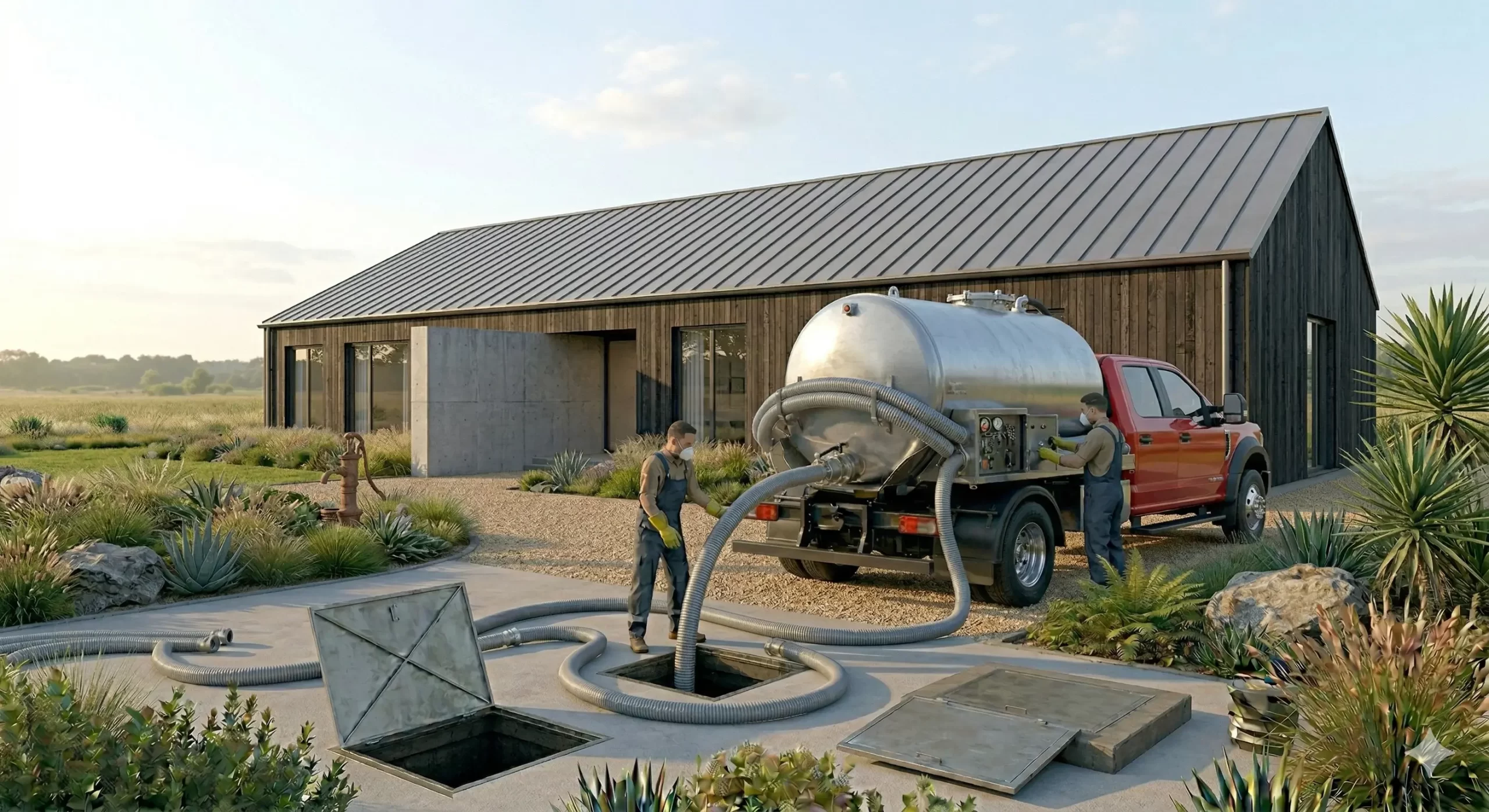
Let me tell you about Steve. Steve bought a nice little property with a big yard. The septic system passed the basic dye test during the sale, and he got a piece of paper saying it was ‘functional.’ That word is a trap, by the way. ‘Functional’ just means it wasn’t actively surfacing sewage on the day of the test.
A year later, after a wet spring, the toilet started gurgling. Steve, being a ‘smart guy’ who watched a bunch of online videos, decided to tackle it himself. He rented a mini-excavator for $400 a day. His first mistake.
- The Blind Dig: He had no ‘as-built’ diagram from the county health department. He started digging where he thought the D-box should be. He ended up shearing off a 4-inch SDR 35 pipe about two feet from the box. That was mistake number two.
- Ignoring the Signs: The ground was soggy. Not just damp, but squishy. That’s a classic sign of hydraulic overload. The D-box was likely tilted, sending all the effluent down one drain line for years, effectively killing that part of the leach field. Instead of diagnosing the problem, he just created a bigger one.
- The Permit Problem: When he finally found and uncovered the cracked, root-filled concrete D-box, he went to the big box store and bought a cheap, flimsy plastic replacement. He thought he could just swap it out. Wrong. In most Ohio counties, altering any part of the septic system, including the D-box, requires a permit and an inspection from the health department. That’s Ohio Administrative Code 3701-29-09(E) for you sticklers.
The neighbor, tired of the smell, called the health department. The inspector showed up and saw the un-permitted work, the open pit of sewage, and the cracked pipe. Steve got a cease-and-desist order, a $1,500 fine for the un-permitted work, and another fine for creating a public health nuisance. He had to pay for an emergency pump-out ($500), then he had to call me. I charged him double for the emergency call-out and for having to work in the mud pit he created. The final bill to fix his ‘weekend project’ was over $4,000. If he had just called me in the first place, it would have been a $900 job. Don’t be Steve.
Cost Breakdown: Pay Me Now or Pay the County a Fortune Later
People always want to know the cost. They call me up, ‘How much to find a box?’ It’s not that simple. It depends on how much of a mess you’ve made already and what we find when we open it. Here’s a table of what you’re looking at. I’ve seen all these scenarios play out a hundred times. Proactive care saves money. See what our local experts in Miramar, FL can do for your system.
| Service or Component | Typical Professional Cost | ‘I Ignored It For 5 Years’ Cost |
|---|---|---|
| Electronic Locating (Sonde & Receiver) | $250 – $450 | Included in a much larger bill. |
| Excavation & Inspection of D-Box | $400 – $700 | $1,000+ (if it’s a swamp) |
| D-Box Replacement (Plastic) | $800 – $1,500 (I hate these things) | $1,500+ (plus plumbing repairs) |
| D-Box Replacement (Concrete) | $1,200 – $2,200 (The right way) | $2,500+ |
| Leach Field Hydro-Jetting | $1,000 – $2,500 (If you’re lucky) | Not an option. It’s too late. |
| Full Leach Field Replacement | Not Applicable | $15,000 – $40,000+ (Plus fines) |
Troubleshooting: Reading the Signs Your System is Crying For Help
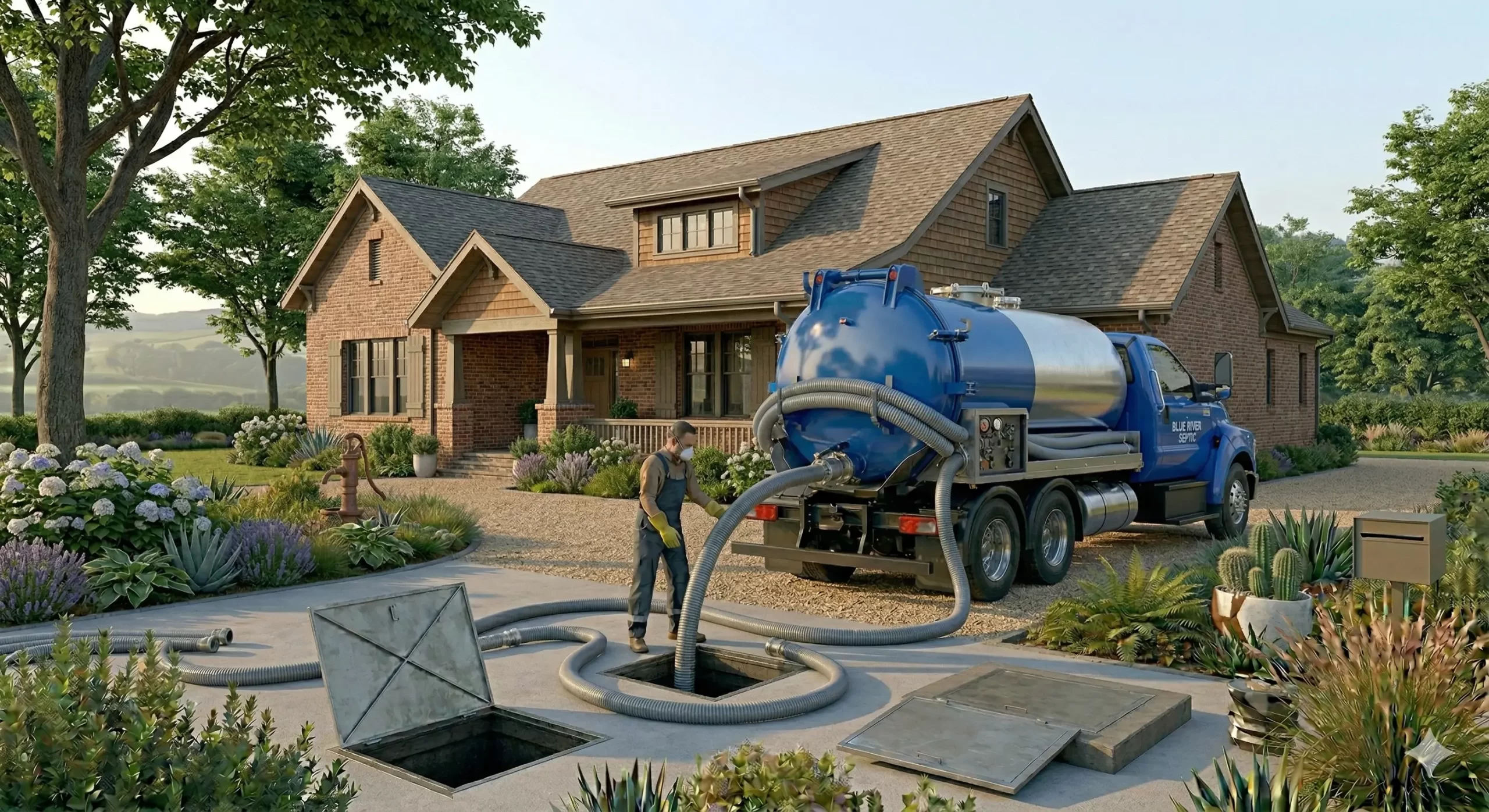
Your yard is talking to you. You just have to learn the language. A failing D-box is the cause of probably 60% of the leach field failures I see. Here’s what to look for:
- Mysterious Green Stripes: You see one or two strips of impossibly lush, green grass in your yard, while the rest is normal. That’s not a fertilizer miracle. That’s a D-box that has tilted or has a blockage, sending all the nutrient-rich effluent down one or two pipes. Those lines are saturated and failing.
- The Unending Puddle: There’s a spot in your yard that’s always damp, even a few days after it rains. Go poke it with a stick. If it smells like a swampy laundry room, you’ve got a problem. Effluent is surfacing. This is a major health code violation.
- Gurgles and Slow Drains: If your toilets gurgle when you run the washing machine, or your shower takes forever to drain, it’s a sign the system is backing up. The leach field can’t accept any more water. This could be the tank, but if the tank has been pumped recently, my money is on a blocked or failed D-box.
- The Smell of Failure: You shouldn’t smell your septic system. Ever. If you get a whiff of that rotten-egg, sewer gas smell, especially on a damp day, something is very wrong. It could be a cracked vent pipe, but it’s often a sign that the leach field is saturated and gasses are escaping through the soil.
Progression of Failure: A Timeline of Your Neglect
A D-box doesn’t just fail overnight. It’s a slow, agonizing death caused by neglect and ignorance. Here’s how the tragedy unfolds: Discover why so many neighbors recommend our septic tank services in Quinlan, TX.
- Year 1-5 (The Good Old Days): The system is new. The D-box is perfectly level, installed in a bed of gravel. Effluent is distributed evenly to all drain lines. Life is good. You forget you even have a septic system.
- Year 7-10 (The Subtle Shift): The ground settles. Maybe a car drove over the lawn once. The box tilts by a half-inch. Now, the lowest outlet pipe gets 40% of the flow, and the other three share the remaining 60%. You don’t notice anything, but the clock is ticking.
- Year 12-15 (The Warning Signs): The tilt is now a full inch. One pipe is getting 75% of the effluent. That drain line is now constantly saturated. A fine root from a nearby maple tree has found its way into a pipe seal. You notice the grass over that line is suspiciously green. Your drains run a little slow after doing three loads of laundry.
- Year 15+ (Total System Collapse): The D-box is cracked from a freeze/thaw cycle. It’s full of sludge and roots. Only one pipe is taking any water, and that entire drain line has failed. Effluent is forced back towards the D-box and boils up to the surface, creating a stinking, hazardous swamp in your yard. You’re facing a health department violation, and a full system replacement is your only option. You just turned an $800 fix into a $25,000 catastrophe.
The Law is Not Your Friend: EPA, Municipal Codes, and You
You think this is just about plumbing? Think again. This is about public health and environmental law. The EPA has guidelines for decentralized wastewater systems, but the real teeth are at the state and local levels. Your county health department is the law, and they don’t mess around.
- Setback Requirements: There are strict rules about where septic components can be. Typically, a D-box and leach field must be at least 10 feet from property lines, 50 feet from streams or ponds, and 100 feet from any private water well (yours or your neighbor’s). If your failing system contaminates a well, you are legally and financially liable.
- Permitting and Inspections: You can’t just dig up and replace parts. As I said before, any major repair or alteration requires a permit. An inspector needs to verify the work was done to code. This includes ensuring the D-box is set level on a proper gravel bed and that watertight pipe seals are used. Skipping this can invalidate your home’s certificate of occupancy.
- Failing System Consequences: If your system is declared a ‘public health nuisance,’ you will receive a notice to repair it, usually within 30-90 days. If you fail to comply, they can levy daily fines, place a lien on your property, and in extreme cases, get a court order to have it fixed and bill you for the entire amount. They don’t lose these battles.
You need to find your property’s ‘as-built’ diagram. This is a map of your system made at the time of installation. Your local health or planning department should have it on file. It’s the only reliable treasure map. Without it, you’re just guessing, and guessing is expensive.
What Folks Are Saying
⭐⭐⭐⭐⭐ – Bill R., Medina, OH
“Called this guy after my yard started to get swampy. He showed up when he said he would, grumbled about the weeping willow I planted 20 years ago, and found the distribution box in 15 minutes flat. It was a cracked mess, just like he said it would be. He replaced it with a heavy-duty concrete one and leveled it perfectly. He’s not cheap, but he’s cheaper than a new drain field. Worth every penny.”
Facing a drain field failure? Our team in Taft, TX is ready to diagnose the problem.
⭐⭐⭐⭐⭐ – Sarah P., Kent, OH
“Our drains were backing up, and the last company just wanted to sell us a whole new system for $30,000. He came out, ran a camera from the tank, and identified a clog in the pipe leading to the D-box. He located the box, dug it up by hand to protect our landscaping, and cleared the line. System works like new. He’s grumpy as a bear, but he’s honest and knows his stuff.”
The Pro’s Toolbox: More Than Just a Shovel ️
When you call a professional, you’re not just paying for their time. You’re paying for their experience and their thousands of dollars in specialized equipment. This is the stuff that separates us from the guy with a shovel.
- Soil Probe (Penetrometer): A long, thin, T-handled steel rod. I can walk a grid pattern and poke the ground. I can feel the difference between compacted soil, a rock, and the hollow ‘thump’ of a concrete lid or the crunchy sound of the gravel bed the D-box sits in. It takes years to get the feel for it.
- Electronic Transmitter (Sonde): This is a small, battery-powered beacon. We can flush it down a toilet, but it’s better to attach it to a sewer snake and push it down the line from the septic tank outlet baffle. It sends out a specific radio frequency.
- Radio Frequency Locator: This is the ‘magic wand’ that picks up the signal from the sonde. It allows me to pinpoint the sonde’s location and depth to within a few inches. No guesswork, no unnecessary digging.
- Rigid Borescope / Sewer Camera: A small camera on a flexible line. I can run this from the tank outlet to see what’s going on. I can see root intrusion, blockages, or a broken pipe before I ever put a shovel in the ground. It helps diagnose if the problem is even at the D-box at all.
- Methane Gas Detector: This is for advanced failures. When a field is saturated and gasses are venting up through the soil, a sensitive electronic gas detector can sometimes help pinpoint the location of the breach or the totally overwhelmed D-box, especially if the ground isn’t visibly wet yet.
FAQ: Stuff You Should Have Asked Before You Bought the House
Can I find my septic distribution box with a metal detector?
Almost never. Unless some genius in the past replaced the lid with a cast iron one (rare), there’s nothing metal to detect. The box is concrete or plastic, and the pipes are plastic. The only thing you might find is the rebar in the septic tank lid, which isn’t what you’re looking for. Don’t waste your time.
How deep is a D-box usually buried?
It varies wildly, which is part of the problem. In a perfect world, it’s between 1 to 3 feet deep. But I’ve seen them 6 inches under the grass and I’ve had to dig down 5 feet because a landscaper re-graded the whole yard without thinking. Generally, the top of the D-box will be slightly higher than the tops of the leach field trenches.
What’s the difference between a plastic and concrete D-box?
Night and day. Concrete is heavy, stable, and lasts 50 years if it’s not abused. It resists shifting and roots. Plastic is cheap, light, and easy for a DIYer to install, which is why they do. But they crack under soil and frost pressure, they can ‘float’ and pop up in high water tables, and the rubber grommets they use for seals fail and let in roots. I only install concrete. Period.
Do I really need a permit just to replace my D-box?
In almost every regulated jurisdiction in the United States, yes. The distribution box is a critical component of the Onsite Sewage Treatment System (OSTS). Altering it without a permit and subsequent inspection is illegal. The health department needs to ensure it’s done correctly to protect groundwater and public health. Don’t risk the fines. Call a licensed professional who knows the local codes.
Final Word: Don’t Be an Idiot
Finding your D-box is the first step. Keeping it working is the next. This isn’t city sewer. You have a living, breathing wastewater treatment plant in your yard, and you have to take care of it. Discover why so many neighbors recommend our septic tank services in Duncanville, TX.
- Get the Map: Call your county health department NOW and get a copy of your ‘as-built’ septic plan. Don’t wait until there’s a problem.
- Install Risers: Once you find the D-box and the septic tank lids, have a professional install risers that bring the covers up to ground level. It costs a bit up front, but it saves you hours of digging for every future inspection or pump-out.
- Don’t Drive on It: I don’t care if it’s a riding mower or a pickup truck. The weight compacts the soil, cracks pipes, and can destroy your D-box. Mark the area and keep vehicles off it.
- Watch Your Drains: Don’t treat your toilet like a trash can. The only things that go in are human waste and toilet paper. No ‘flushable’ wipes (they’re not), no grease, no harsh chemicals.
Stop guessing. Stop digging random holes in your yard. Call someone who knows what they’re doing. My back already hurts, don’t make me fix your mess on top of everything else.
Technically Reviewed By:
BlixBase Master Plumber Team
20+ Years Septic Industry Experience | Certified System Inspectors