
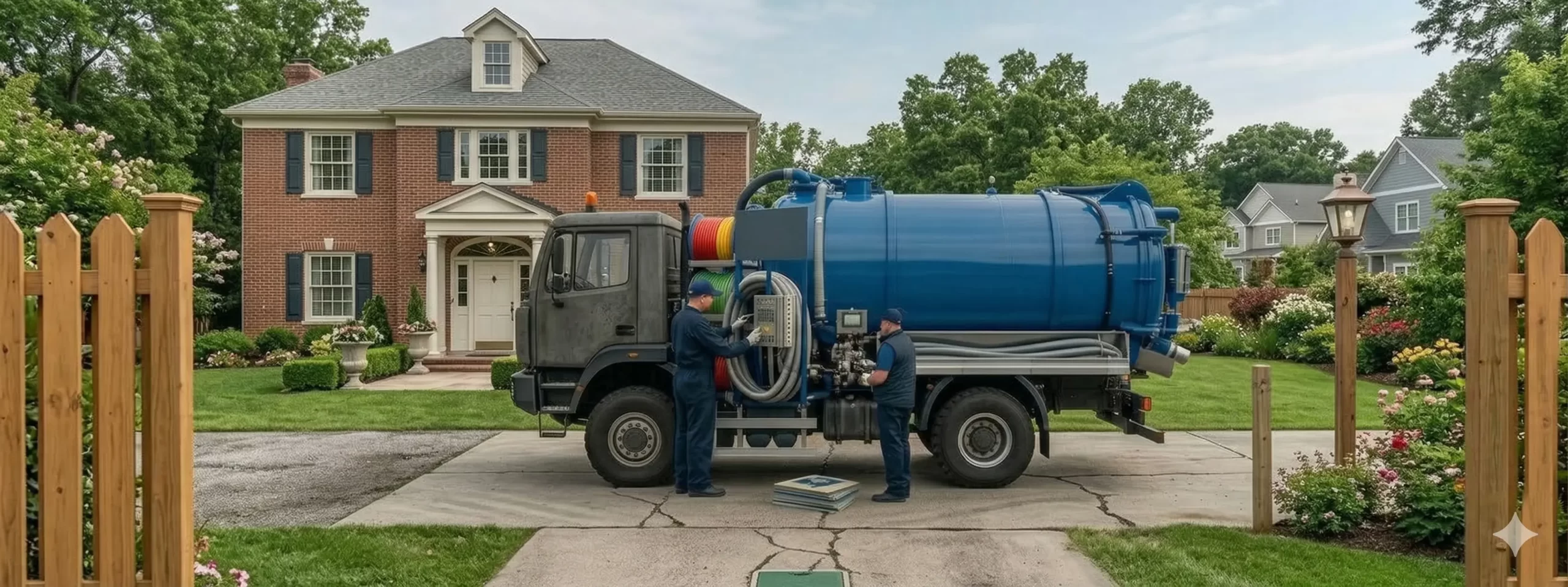
Top Septic Pumping in
Cocoa
Cocoa Pumping Costs & Data
The operational statistics of the area’s septic infrastructure reveal a critical need for proactive maintenance:
- Nitrogen-Reducing Mandates: To combat the crisis in the Indian River Lagoon, Brevard County mandates that failing legacy systems in designated BMAP zones must be replaced with advanced nitrogen-reducing ATUs.
- Root Intrusion Rates: In the historic, heavily wooded environments of Cocoa, invasive tree roots account for nearly 35% of all emergency tank seal breaches and crushed PVC pipes reported locally.
- Weather-Related Failure Spikes: During Florida’s intense summer storm season, local data indicates a 40% spike in emergency service calls. These are predominantly caused by sudden spikes in the water table hydraulically locking older gravity systems.
- The Maintenance Deficit: Despite the extreme environmental risks to the lagoon, nearly 25% of local homeowners fail to schedule their necessary 2-to-3 year trash tank pump-outs, leading directly to catastrophic drain field failure and massive mandatory upgrade costs.
The mathematics of septic preservation in coastal sand are undeniable. Scheduled, professional vacuum pumping is the only scientifically valid method to protect your legacy infrastructure from total collapse.
The final invoice for your specific pump-out will be dictated by these localized variables:
- Advanced ATU Maintenance (Nitrogen Reduction): To meet strict Brevard County IRL protection laws, many homes now rely on advanced nitrogen-reducing systems. Servicing these requires cleaning multiple specialized chambers, verifying aeration, and ensuring compliance with BMAP regulations—a much more complex process than pumping a simple gravity tank.
- Historic Root Intrusion Remediation: Aggressive old-growth oak roots frequently breach the seams of legacy concrete tanks in Cocoa’s older neighborhoods. Extracting these dense root balls from the inlet baffles and hydro-jetting the lines adds a significant manual labor surcharge.
- Wet Sand Excavation & Dewatering: Finding the tank and manually digging through heavy, wet sand to expose the access lids adds significant labor time. The sand often caves back into the hole, requiring specialized shoring techniques. We highly recommend PVC surface risers to eliminate this expensive future cost.
- Extended Hose Deployments: Pumping tanks located behind historic homes, across delicate landscaping, or near the river requires staging the heavy vacuum truck on solid pavement to prevent it from sinking. Technicians frequently deploy 150 to 200 feet of heavy industrial hose.
Furthermore, Brevard County’s specific coastal soil profiles dictate maintenance frequency:
| Cocoa Terrain / Soil | Drainage Capacity | Impact on Septic Systems | Maintenance Need |
|---|---|---|---|
| Coastal Sand / River Banks | Dangerously Rapid | Effluent drains too fast, bypassing natural filtration and directly polluting the Indian River Lagoon with nitrogen. | Strict adherence to ATU BMAP schedules |
| High Water Table Zones | Poor (Seasonal) | Groundwater rises during summer storms, causing immediate hydraulic lock and home backups. | High (Strict 2-3 year pumping) |
Cost Estimation by System Profile in Cocoa:
| Service Description | Estimated Range | Primary Labor Factors |
|---|---|---|
| Legacy Conventional Pump-Out | $340 – $580+ | Manual excavation in wet caving sand, root extraction, thick crust density breakdown. |
| Nitrogen-Reducing ATU Pump-Out | $380 – $690 | Multi-tank evacuation, BMAP compliance checks, dosing pump sanitation, and corrosion checks. |
| Hydro-Jetting / Line Clearing | +$150 – $350 | Deploying high-pressure water to obliterate scale, roots, and sand blockages in aging lines. |
Our platform guarantees that you connect with transparent, Florida-licensed professionals who understand the rugged, highly regulated demands of Space Coast properties.
72°F in Cocoa
🌱 Local Environmental Status
When an On-Site Sewage Facility (OSSF) is neglected in the Cocoa area, the localized consequences are distinct and hazardous:
- Indian River Lagoon (IRL) Contamination: Cocoa is ground zero for the “Save Our Indian River Lagoon” (SOIRL) initiative. A failing septic tank releases high nitrogen loads directly through the porous sand into the river. This nitrogen fuels massive, toxic algae blooms that block sunlight, kill seagrass, and cause devastating marine life die-offs.
- High Water Table Hydraulic Lock: During Florida’s intense summer thunderstorms, the sandy soil saturates rapidly. If a septic tank is full of solid sludge, the high groundwater leaves the effluent nowhere to drain, causing raw sewage to instantly back up into the home.
- Salt-Air Corrosion: For properties near the water, the highly corrosive coastal environment aggressively accelerates the degradation of concrete tank lids, metal baffles, and aerobic compressor parts, leading to premature structural failures and subterranean leaks.
- Catastrophic Root Intrusion: Established neighborhoods like Historic Cocoa Village boast massive, old-growth oak trees. Their aggressive roots relentlessly seek out septic moisture, easily crushing aging PVC lateral lines and breaching legacy concrete tanks in the soft sand.
To protect the Brevard County coastal ecosystem, property owners must enforce uncompromising maintenance protocols:
- Strict Pumping Intervals: Schedule a professional vacuum pump-out every 2 to 4 years. The highly porous sand cannot filter out solid sludge; if it escapes the tank, it will directly pollute the Lagoon or the St. Johns River.
- Storm Preparation: Pumping your tank *before* hurricane season is critical to provide emergency holding capacity when the drain field is hydraulically locked by groundwater.
- Corrosion Inspections: Regularly inspect concrete lids and access ports for spalling and rust, replacing them with heavy-duty PVC components where possible.
Consistent, environment-aware pumping is the absolute baseline of stewardship for property owners in Cocoa.
⚙️ Local Service Details
When a certified vac-truck arrives at your Space Coast property, you receive a meticulously executed protocol:
- Low-Impact Equipment Staging: Strategically parking heavy 30,000-gallon vacuum trucks in the street or on solid driveways, deploying up to 200 feet of industrial hose to protect delicate landscaping and soft sand from crushing weight.
- Electronic Mapping & Root Navigation: Utilizing flushable sondes to locate buried tanks. Technicians carefully hand-dig through wet, caving sand and roots to expose the lids safely.
- Complete Sludge Evacuation: Engaging high-CFM vacuum power to entirely empty the primary and secondary chambers, removing the heavy bottom sludge essential for preventing nitrogen loading.
- Filter & ATU Maintenance: Removing and power-washing the effluent filter, and checking advanced aeration system components to ensure maximum operational efficiency and compliance with BMAP IRL protection codes.
- Structural Diagnostics: Performing a critical visual inspection of the emptied tank to detect structural fractures caused by root intrusion, shifting sand, or hydrostatic pressure from high groundwater.
This comprehensive, rugged approach guarantees your system operates at peak efficiency, protecting your property value and preventing catastrophic backups.
📍 Coverage & ZIP Codes
Local Flow Dynamics
Your effluent level will rise significantly. Protect your leach lines with this Cocoa calculation.
Wallet-Friendly Septic Care
Basic maintenance shouldn't bankrupt you. See how a simple pump-out prevents massive future bills.
Base Drain Field Replacement in Cocoa: $15,439
Heavy Equipment Logistics
We analyzed the local roads. Here is the operational arrival data for pumpers bound for Cocoa.
Biological Tank Alignment
Sync your bacterial health with your local Cocoa environment for the most robust wastewater breakdown.
The Cocoa Pumping Boom
More locals are hitting their tank limits. Look at the surge in vacuum truck dispatch in your area.
Cocoa Ground Moisture Report
See the real-time soil index. When the ground is saturated, your septic tank fills up dangerously fast.
🏡 Real Estate Transactions
Navigating a property transfer involving a septic system in Cocoa requires meticulous attention to documentation:
- Indian River Lagoon BMAP Compliance: Brevard County has implemented extremely strict mandates to protect the Indian River Lagoon. Any new or replacement system, or a system failing inspection near the water, is legally required to be upgraded to an advanced Nitrogen-Reducing Aerobic Treatment Unit (ATU) or connected to the municipal sewer if available. Appraisers demand proof of an active maintenance contract and recent FDOH pumping records.
- Historic System Inspections: Because many homes in Cocoa were built decades ago, they operate on legacy conventional systems. Appraisers will demand a full vacuum pump-out and a structural camera inspection to ensure these aging tanks are not actively collapsing from root intrusion or spalling.
- High-Water Table Clearances: Inspectors must rigorously verify that the active drain field maintains the legally required separation distance above the seasonal high water table, which fluctuates heavily with the rains.
- Appraisal Value Protection: A mandatory nitrogen-reducing system upgrade on a tight lot can cost $15,000 to $25,000+. Providing a potential buyer with a flawless 5-year pumping and maintenance log is critical to proving the current system is functional and avoiding massive price concessions.
Protect your Space Coast property’s equity. Securing a professional pump-out and a clean bill of health from our vetted technicians is the most profitable step you can take before listing your Cocoa home.
⚠️ Local Regulatory Warning
Homeowners are legally bound by the following uncompromising mandates:
- Brevard County IRL BMAP: The Save Our Indian River Lagoon Project requires that properties in designated zones must upgrade to Advanced Nitrogen-Reducing Systems when their legacy systems fail. Operating these advanced systems absolutely requires a continuous, active maintenance contract with a certified provider.
- FDOH State Statutes: The Florida Department of Health (FDOH) strictly regulates the extraction and transport of bio-hazardous waste. Only state-licensed sludge transporters are permitted to pump your system and manifest the waste.
- Surface Discharge Penalties: Failing drain fields that leak effluent onto neighboring properties, local roads, or into the Lagoon trigger immediate health citations, environmental fines, and forced system condemnation.
- System Alteration Permitting: Expanding your home or upgrading your drain field without filing engineered blueprints with the Brevard County Environmental Health Department is illegal and will result in massive penalties.
Consequences of Regulatory Non-Compliance in Cocoa:
| Environmental Violation | Enforcing Agency | Potential Penalty |
|---|---|---|
| Illegal Surface Discharge (Raw Sewage) | FDOH / DEP | Emergency fines up to $500/day, forced condemnation, environmental restitution. |
| Expired ATU Maintenance Contract | Brevard County Health | Permit revocation, Class C Misdemeanor, blockage of property sales. |
| Using Unlicensed “Gypsy” Pumpers | State Agencies | Homeowner liability for illegal dumping, massive environmental restoration fees. |
Protect your estate and your legal standing. Our network exclusively provides access to fully insured, FDOH-registered experts who guarantee absolute compliance with all local and state laws.
Homeowner Feedback




Reliable Septic Services in
Cocoa, FL
Cocoa Septic Expert AI
What are the specific septic tank regulations, typical soil drainage characteristics, and the local permitting authority for the Cocoa area?
Septic System Regulations, Soil Characteristics, and Permitting in Cocoa, FL (2026)
As a Senior Environmental Health Inspector and Septic Regulatory Expert for Florida, I can provide you with detailed information specific to residential septic systems in the Cocoa area, Brevard County, for the year 2026.
1. Local Permitting Authority
For all Onsite Sewage Treatment and Disposal Systems (OSTDS), which include septic tanks and drain fields, the primary local permitting and regulatory authority in Cocoa, Florida, is the:
- Florida Department of Health in Brevard County, Environmental Health Section
They are responsible for interpreting and enforcing state regulations, issuing permits, conducting site evaluations, and performing inspections for new installations, repairs, and modifications of OSTDS within Brevard County.
2. Specific Septic Tank Regulations (Florida Administrative Code)
The regulations governing septic systems in Cocoa, like the rest of Florida, are primarily established by the state and are codified under:
- Chapter 64E-6, Florida Administrative Code (F.A.C.) - Standards for Onsite Sewage Treatment and Disposal Systems
This comprehensive administrative code dictates virtually all aspects of OSTDS, including but not limited to:
- Permitting Requirements: A permit is required for the construction, repair, modification, or abandonment of any OSTDS. This involves submitting an application, site plans, and often a detailed system design by a qualified professional (e.g., engineer, septic designer).
- Site Evaluation Criteria: Mandatory site evaluations assess soil characteristics, depth to the wet season water table, available land area, and setback requirements. These factors are crucial in determining the feasibility and appropriate type of system.
- System Design Standards: Specific standards exist for septic tank sizing (based on bedrooms and wastewater generation rates), drain field sizing (based on estimated daily flow and soil absorption rates), and material specifications.
- Setback Requirements: Strict minimum separation distances must be maintained from wells (potable water sources), property lines, buildings, surface water bodies, storm sewers, and other features to prevent contamination.
- Minimum Lot Size: There are minimum lot size requirements for conventional septic systems, although these can sometimes be reduced with the use of performance-based treatment systems (PBTS) or connection to public water.
- Maintenance Requirements: While not heavily enforced by DOH for routine pumping, systems must be maintained to ensure proper function. Performance-based treatment systems (PBTS) often require annual inspections and maintenance contracts with certified operators.
- Alternative Systems: For sites with challenging conditions (e.g., high water table, limited space, poor soil), Chapter 64E-6 F.A.C. allows for the use of alternative systems, such as aerobic treatment units (ATUs), mound systems, or other engineered solutions (often categorized as PBTS), which provide enhanced wastewater treatment before discharge to the drain field.
3. Typical Soil Drainage Characteristics in Cocoa, FL and Impact on Design
The Cocoa area, situated within Brevard County, exhibits specific soil characteristics that significantly influence septic system design:
- Predominantly Sandy Soils: Much of Brevard County consists of soils formed from marine deposits, resulting in sandy textures. These soils generally have good permeability and can readily absorb treated effluent. However, rapid permeability in some sands can necessitate more advanced treatment to protect groundwater quality, especially in areas with a high water table.
- High Seasonal Water Table: This is the most critical and defining characteristic. Due to its proximity to the Atlantic Ocean, the Indian River Lagoon, and numerous inland waterways and wetlands, Cocoa frequently experiences a high seasonal water table. This means that for significant portions of the year, the groundwater level is very close to the natural ground surface.
- Potential for Spodic Horizons or Organic Layers: In some localized areas, the soils may contain spodic horizons (also known as "coffee rock" or "hardpan"), which are layers of organic matter and iron/aluminum oxides that can impede the downward movement of water. Organic-rich mucky soils can also be present, which have poor drainage and absorption characteristics.
How these characteristics dictate drain field design:
- High Water Table: Chapter 64E-6 F.A.C. mandates a minimum separation distance of at least 24 inches (2 feet) between the bottom of a conventional drain field and the estimated wet season water table. In Cocoa, a high water table often makes it impossible to achieve this separation with a conventional in-ground system. This typically necessitates:
- Mound Systems: These systems are designed to elevate the drain field above the natural grade using clean, approved fill material (e.g., sand) to create the necessary separation from the high water table.
- Performance-Based Treatment Systems (PBTS): These advanced systems, such as Aerobic Treatment Units (ATUs), provide a higher level of wastewater treatment (reducing biological oxygen demand and suspended solids) before discharge. Because the effluent is cleaner, DOH may allow for reduced separation distances or smaller drain field sizes in challenging soil or high water table conditions, though a minimum separation is always required.
- Sandy Soils: While generally good for absorption, highly permeable sandy soils combined with a high water table can increase the risk of nutrient (nitrogen) leaching into groundwater or nearby surface waters. This often triggers the requirement for PBTS designed to achieve specific nitrogen reduction targets, especially in areas sensitive to nutrient loading (e.g., near the Indian River Lagoon).
- Spodic Layers/Organic Soils: If these restrictive layers are identified during a site evaluation, the drain field must either be constructed above them (as in a mound system) or engineering solutions applied to mitigate their impact on effluent dispersal.
4. Realistic 2026 Cost Estimates for the Cocoa Market
Please note that these are estimates based on current market trends and projected inflation for 2026. Actual costs can vary significantly based on site-specific conditions, system complexity, contractor, and current material/labor availability.
- Routine Septic Tank Pumping (1000-1500 Gallon Tank):
- Estimated Range (2026): $380 - $700
- This cost typically includes pumping the tank, inspection of the baffles, and basic sludge level assessment. Factors affecting cost include tank size, ease of access, and the specific service provider.
- New Conventional Septic System Installation (Basic 3-bedroom, good site conditions):
- Estimated Range (2026): $8,500 - $18,000+
- This includes the septic tank, drain field (absorption bed), all necessary piping, excavation, labor, and basic DOH permitting fees. Costs can rise quickly with any site challenges.
- New Advanced/Alternative Septic System Installation (e.g., Mound System, Aerobic Treatment Unit (ATU) with Drain Field - often required in Cocoa due to site conditions):
- Estimated Range (2026): $20,000 - $40,000+
- These systems involve more complex designs, specialized equipment (ATU), additional fill material for mound construction, electrical work, and often require engineering design and annual maintenance contracts. Permitting fees may also be higher due to the increased complexity and review.
- DOH-Brevard Permit Fees (Application and Inspection):
- Estimated Range (2026): $380 - $650
- This is the fee paid directly to the Florida Department of Health in Brevard County for the review, issuance of the construction permit, and final inspection of the system. This does NOT include any costs for professional site evaluations or engineering designs that might be required by the DOH.
It is always recommended to obtain multiple detailed quotes from licensed and insured septic contractors and to consult directly with the Florida Department of Health in Brevard County's Environmental Health Section for the most current regulatory interpretations and specific site requirements.
Nearby Septic Service Areas
Expert Septic FAQ
Why is Brevard County forcing homeowners to install these expensive new septic systems?
We have massive historic trees in our yard. Are they a threat to the septic lines?
My yard is flooded after a massive summer storm. Should I have my septic tank pumped immediately?
Are “flushable” wipes safe for my aerobic septic system?
Only human waste and rapid-dissolving toilet paper should ever enter your OSSF.