
Top Septic Pumping in
Wildwood
Wildwood Pumping Costs & Data
Here are the critical statistics defining the state of infrastructure in the surrounding area:
- Sinkhole Generation: Due to the highly soluble limestone bedrock of Central Florida, areas with failing or leaking drain fields show a significantly higher incidence of localized sinkhole activity over a 15-year period compared to properties with well-maintained systems.
- The “Wipe” Epidemic: As the demographics shift toward 55+ and retirement communities, local service data indicates a 50% higher rate of system backups caused entirely by non-biodegradable “flushable” personal care and medical wipes clogging inlet baffles.
- Decommissioning Trends: As municipal sewer lines expand to support new development, hundreds of legacy septic tanks on older properties are being legally decommissioned annually.
The mathematics of septic maintenance in environmentally sensitive, karst topography are unforgiving. Routine, scheduled vacuum pumping is the only scientifically valid method to protect your property and prevent sinkhole generation.
The final invoice for your specific pump-out will be dictated by these localized variables:
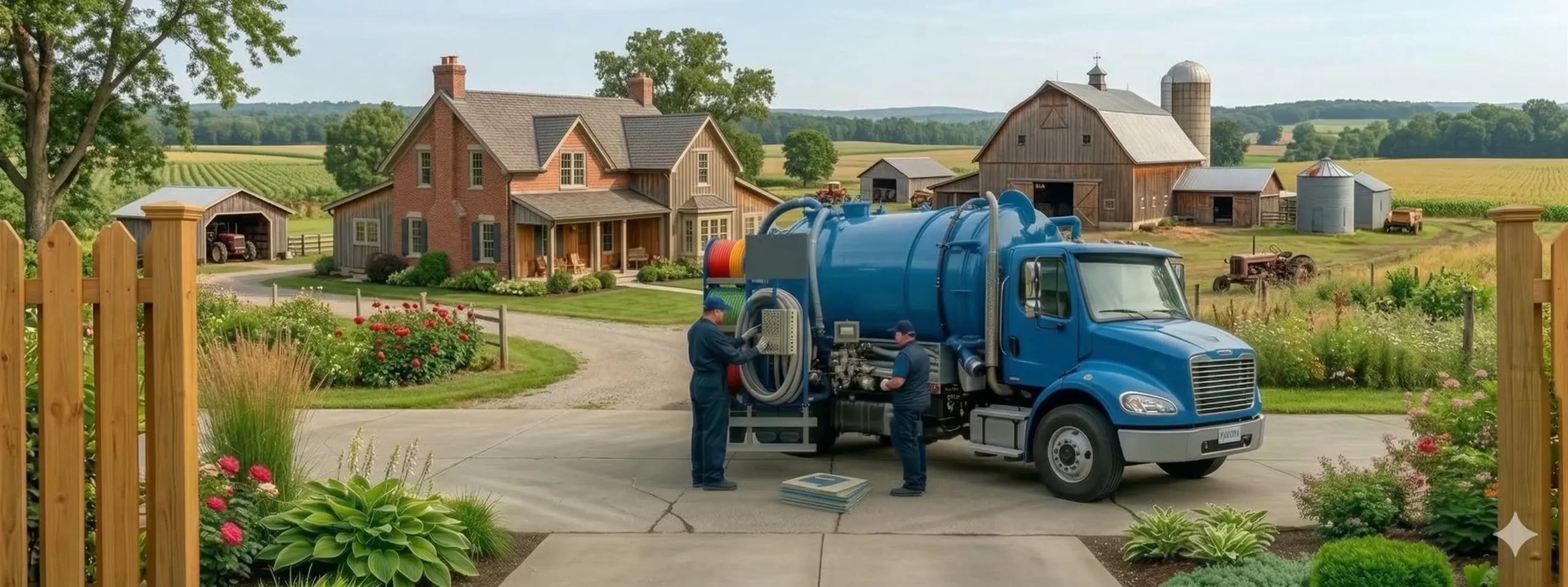
- Extended Hose Deployments (Rural/Suburban): Pumping tanks located behind sprawling farmhouses, across soft pastures, or near delicate new golf cart paths requires staging the heavy vacuum truck carefully to prevent property damage. Technicians frequently deploy 100 to 200+ feet of heavy industrial hose.
- Sinkhole Risk & Tank Diagnostics: Because of the extreme liability in Central Florida’s karst zones, thorough structural inspections and camera work inside the emptied tank are critical and often add slightly to the labor time during a standard service call.
- Wipe Remediation & Hydro-Jetting: Extracting dense, concrete-like blockages caused by years of “flushable” wipe usage (extremely common in nearby 55+ developments) requires heavy-duty hydro-jetting to clear the inlet baffles and lateral lines, adding a significant manual labor surcharge.
- Dry Sand Excavation: Finding the tank and manually digging through deep, dry sand to expose the access lids adds significant labor time. The sand often caves back into the hole. We highly recommend paying for PVC surface risers.
Furthermore, Sumter County’s specific soil profiles dictate maintenance frequency:
| Wildwood Terrain / Soil | Drainage Capacity | Impact on Septic Systems | Maintenance Need |
|---|---|---|---|
| Sandy Loam over Karst Limestone | Dangerously Rapid | Effluent drains too fast, bypassing filtration and polluting the aquifer. Extreme sinkhole risk from structural leaks. | Strict adherence to FDOH pumping schedules |
| Low-Lying Wetland Buffers | Poor (Seasonal) | Groundwater rises during summer storms, causing immediate hydraulic lock and home backups. | High (Strict 3-year pumping) |
Cost Estimation by System Profile in Wildwood:
| Service Description | Estimated Range | Primary Labor Factors |
|---|---|---|
| Legacy Conventional Pump-Out | $320 – $550+ | Manual excavation in caving sand, property protection, long hose runs (rural or suburban). |
| Wipe Remediation / Hydro-Jetting | +$150 – $350 | Deploying high-pressure water to obliterate scale and “flushable” wipe blockages in aging lines. |
| System Decommissioning Prep | Custom Quote | Complete evacuation and sanitation of an abandoned tank prior to filling with sand per county codes. |
Our platform guarantees that you connect with transparent, Florida-licensed professionals who understand the uncompromising demands, rapid expansion, and karst geology of Sumter County.
🌱 Local Environmental Status
When an On-Site Sewage Facility (OSSF) is neglected in the Wildwood area, the localized consequences are distinct and hazardous:
- Catastrophic Sinkhole Generation: This region of Central Florida sits directly over active karst limestone. A failing, leaking drain field continuously saturates the porous limestone below the sand. The acidic nature of untreated effluent accelerates the dissolving of the bedrock, significantly increasing the risk of massive sinkholes opening up under new homes and roads.
- Aquifer Contamination: Because the sandy soil drains so rapidly, untreated effluent from a neglected tank plunges directly into the Floridan Aquifer, polluting local well water and fueling algae blooms in regional lakes.
- Agricultural Compaction: On sprawling rural acreage or transitioning farms, accidental driving of heavy tractors, livestock trailers, or construction equipment over unmarked drain fields instantly crushes the PVC lines in the soft sand.
- The “Flushable” Wipe Epidemic: As Wildwood integrates more 55+ developments, the increased use of “flushable” personal care wipes creates catastrophic bio-mechanical failures. These wipes do not dissolve, forming massive, concrete-like clogs that destroy baffles and permanently seal drain fields.
To protect the Central Florida ecosystem and their properties, homeowners and farmers must enforce uncompromising maintenance protocols:
- Strict Pumping Intervals: Schedule a professional vacuum pump-out every 3 to 5 years. The highly porous sandy soils cannot forgive any solid sludge escaping into the drain field.
- Sinkhole Prevention Checks: Regular pumping allows technicians to visually inspect the tank for structural integrity, ensuring that no untreated wastewater is leaking out and eroding the fragile limestone bedrock beneath the property.
- Protect the Biomat: Clearly mark your drain field to ensure that agricultural equipment, construction trucks, and golf carts never cross it.
Consistent, environment-aware pumping is the absolute baseline of stewardship for homeowners in Wildwood.
⚙️ Local Service Details
When a certified vac-truck arrives at your Sumter County home, you can expect a rigorous, exhaustive service protocol:
- Low-Impact Equipment Staging: Strategically parking heavy 30,000-gallon vacuum trucks in the street or on solid dirt roads, deploying up to 200 feet of industrial hose to meticulously protect delicate new landscaping, golf cart paths, and pastures from crushing weight.
- Electronic Tank Locating & Sand Excavation: Utilizing flushable sondes to locate buried tanks. Technicians then carefully hand-dig through sandy soil, placing the sod on tarps to expose the lids safely without destroying the lawn.
- Complete Sludge & Wipe Evacuation: Engaging high-CFM vacuum power to entirely empty the tank. For severely neglected systems, technicians utilize heavy-duty hydro-jetting to physically extract concrete-like masses of “flushable” wipes from the inlet baffles.
- Decommissioning Preparation (If Applicable): Completely sanitizing the interior of the tank and providing the necessary FDOH documentation to your builder so the tank can be legally filled and abandoned during sewer hookups.
- Structural Sinkhole Diagnostics: Performing a critical visual inspection of the emptied tank to detect structural fractures caused by shifting limestone, minor sinkhole activity, or heavy agricultural/construction equipment.
This comprehensive, specialized approach guarantees that your property is protected against catastrophic backups and costly premature drain field failures.
📍 Coverage & ZIP Codes
🏡 Real Estate Transactions
Navigating a property transfer involving a septic system in Wildwood requires meticulous attention to documentation:
- Sinkhole & Structural Diagnostics: Because Sumter County is notorious for sinkhole activity, home insurance companies and buyers frequently require a structural camera inspection of the emptied tank to guarantee aging concrete hasn’t been cracked by shifting limestone or minor subterranean voids.
- USDA/Rural & VA Loan Inspections: A massive percentage of transactions on the rural outskirts utilize government-backed loans, which have extremely rigorous requirements for septic functionality and health clearances. A failing system or lack of maintenance records will immediately halt the funding process.
- Decommissioning Verifications: As the city expands municipal sewer access to support new development, older properties transitioning to the grid must have their legacy tanks legally pumped, collapsed, and filled with clean sand per county code.
- Appraisal Value Protection: A failed drain field can cost $10,000 to $18,000+ to replace due to extreme excavation difficulty and sinkhole remediation. Providing a potential buyer with a flawless 5-year pumping and maintenance log neutralizes their ability to demand massive price concessions.
Protect your Sumter County property’s immense equity. Securing a professional pump-out and a clean bill of health from our vetted technicians is the most profitable step you can take before listing your Wildwood home or farm.
Fast-Track to Wildwood
Your home safety shouldn't be delayed by slow dispatch. Review the local transit metrics here.
Market Surge: Emergency Dispatches
Look at the exponential growth in calls. Wildwood is currently experiencing a high volume of septic issues.
Underground Stress Tracker
Monitor what your septic pipes fight daily in Wildwood. Heavy soil offers profound resistance to wastewater.
Ground Drying Effect
The post-summer dry out makes access easy. Time your session in Wildwood to maximize this effect.
Bio-Optimized Flushing
Generic advice doesn't work. Here is the usage protocol tailored for the current Wildwood environment.
Wildwood Repair Alternative
Why dig up your entire yard? See the financial impact of maintaining the system you already have.
Base Drain Field Replacement in Wildwood: $12,579
⚠️ Local Regulatory Warning
Homeowners and farmers are legally bound by the following uncompromising mandates:
- FDOH State Laws: The Florida Department of Health (FDOH) dictates that all septic pumping must be performed exclusively by state-licensed sludge transporters. The waste must be legally manifested and disposed of at approved treatment facilities. Hiring an unlicensed contractor makes you complicit in illegal dumping.
- Decommissioning Codes: If a property is connecting to the expanding city sewer grid, any existing septic tank cannot simply be abandoned. Sumter County codes strictly require the tank to be completely pumped out by a licensed professional, the bottom fractured for drainage, and filled with clean sand to prevent future sinkholes.
- Surface Discharge Penalties: Failing drain fields that leak raw effluent onto neighboring properties, public roads, or agricultural land trigger immediate municipal health citations and forced system condemnation.
- System Expansion Permitting: Upgrading a drain field, adding a home addition, or building an agricultural structure with plumbing without filing engineered blueprints with the Sumter County Health Department will result in massive retroactive fines and stop-work orders.
Consequences of Regulatory Non-Compliance in Wildwood:
| Environmental Violation | Enforcing Agency | Potential Penalty |
|---|---|---|
| Illegal Surface Discharge / Aquifer Threat | FDOH / DEP | Emergency fines up to $500 per day, forced condemnation. |
| Improper Tank Abandonment | Sumter County Health | Severe fines, forced re-excavation, and blockage of property sales or building permits. |
| Using Unlicensed “Gypsy” Pumpers | State Police / DEP | Homeowner liability for illegal dumping, massive environmental restitution fees. |
Protect your finances and your legal standing. Our network only provides access to elite, fully insured, and FDOH-compliant professionals who protect your property legally and environmentally.
Homeowner Feedback



Reliable Septic Services in
Wildwood, FL
Wildwood Septic Expert AI
Expert Septic FAQ
Can a leaking septic tank really cause a sinkhole in my yard?
Are “flushable” wipes safe for my septic system?
Only human waste and rapid-dissolving toilet paper should ever enter your OSSF.