
Diagnosis: A ‘Sensor Fault’ on a Grundfos CU 301 controller indicates a failure of the 4-20mA pressure transducer. This is typically caused by physical damage from water hammer or ice formation, leading to erratic pump operation. The repair involves electrically isolating the system, depressurizing the plumbing, and replacing the faulty sensor with a new OEM part to prevent severe damage to the pump motor.
In this Guide:
What Causes the Grundfos Индикатор “Sensor fault” Issue?
The ‘Sensor Fault’ alarm on a Grundfos CU 301 control unit points directly to a malfunction in the 4-20mA pressure transducer, the critical nerve ending of your constant pressure system. This sensor translates physical water pressure into a proportional analog electrical signal (4mA for minimum pressure, 20mA for maximum). The most frequent culprits behind its failure are extreme physical forces. A water hammer event, caused by the instantaneous closure of a valve, generates a hydraulic shockwave that can exceed 1,000 PSI. This immense, sharp pressure spike physically damages the sensor’s delicate internal diaphragm, causing a permanent electrical fault. Similarly, if water inside the sensor housing freezes during winter, the expansion of ice crystals exerts immense mechanical stress, often warping or rupturing the same sensitive components, rendering the sensor incapable of accurate readings.
When the sensor fails, it can transmit corrupted data to the CU 301 controller. It might send a constant 4mA signal (tricking the controller into thinking there’s zero pressure), a constant 20mA signal (falsely indicating max pressure), or a completely open circuit. If the controller believes the pressure is perpetually low, it will command the SQE pump to run continuously, even when there is no demand for water. This forces the pump to ‘dead-head’ against a closed system, causing the water within the pump volute to rapidly heat up from friction. This excessive heat is the primary enemy of the motor and its components, initiating a cascade of secondary failures.
The consequences of uncontrolled operation are severe and cumulative. Continuous running and the associated heat will thermally break down the epoxy insulation on the motor windings, leading to a short circuit and catastrophic motor burnout. The elevated temperature also hardens and degrades the carbon-ceramic internal seals, allowing water to penetrate the sealed motor housing and leading to bearing failure and electrical shorts. Conversely, if a faulty sensor causes the pump to short-cycle (starting and stopping every few seconds), the repeated high-amperage inrush current and immense starting torque place incredible strain on the thrust bearings and shaft assembly. This mechanical fatigue leads to premature failure of the pump bearings, resulting in noise, inefficiency, and eventual seizure of the entire rotating assembly.
DIY Troubleshooting Steps
- Safety First – Power Isolation: Before any inspection, locate the double-pole circuit breaker dedicated to the well pump in your main electrical panel. Switch it to the ‘OFF’ position and apply a piece of tape over it as a safety lockout. Verify with a non-contact voltage tester that power is truly off at the CU 301 controller.
- Visual Wiring Inspection: Carefully examine the low-voltage wires running from the pressure sensor to the CU 301 terminals. Look for any signs of physical damage, such as chafing, rodent chewing, corrosion on the terminals, or loose connections. A compromised wire can mimic a sensor failure.
- Cross-Reference with Mechanical Gauge: Observe the reading on your system’s mechanical pressure gauge (typically located on a tee near your pressure tank). Open a faucet to drain the system pressure. Does the gauge needle drop smoothly to zero? Close the faucet and briefly power the system. Does the gauge reading correspond logically to the pump’s operation? If the CU 301 indicates a fault while the mechanical gauge appears to read correctly, it strongly implicates the electronic sensor.
- Check for Thermal Overload Reset: Inspect the CU 301 controller and any associated motor starter box for a thermal overload reset button. A pump that has been running continuously due to a sensor fault may have tripped this protective device. If it has tripped, do not simply reset it without identifying the root cause.
- Monitor Pump Cycle Time: If the system runs intermittently, use a stopwatch to time the pump’s on/off cycles. A healthy constant pressure system should have very long run times. If the pump is starting and stopping every 5-30 seconds, this is severe short-cycling, a classic symptom of a control system failure originating from a faulty pressure signal.
- Amperage Draw Verification: If you are proficient with a clamp-on ammeter, check the current draw on one of the main power legs leading to the pump while it is running. Compare this reading to the Full Load Amps (FLA) rating on the pump’s nameplate. An abnormally high amperage draw could indicate a binding pump, which is a more serious issue than a simple sensor fault.
- Review Controller Fault Log: Navigate the menu on the CU 301 to check its alarm or fault log. Confirm that ‘Sensor fault’ is the active and primary alarm. The log may provide additional data or show a history of other related issues that can help in diagnosis.
When to Call a Professional Well Service
A certified pump technician or electrician will begin with a definitive electronic diagnosis to rule out wiring or controller issues. Using a professional-grade multimeter with a milliamp function, they will disconnect the sensor wires from the CU 301 terminals and measure the signal directly. A healthy sensor should output a stable DC signal between 4mA and 20mA that corresponds directly to system pressure. If the reading is 0mA, a fluctuating or erratic value, or a fixed value that does not change as pressure is released, the sensor is confirmed to be defective. This methodical testing ensures that the client does not pay for a new sensor when the actual problem is a simple frayed wire or a faulty controller input.
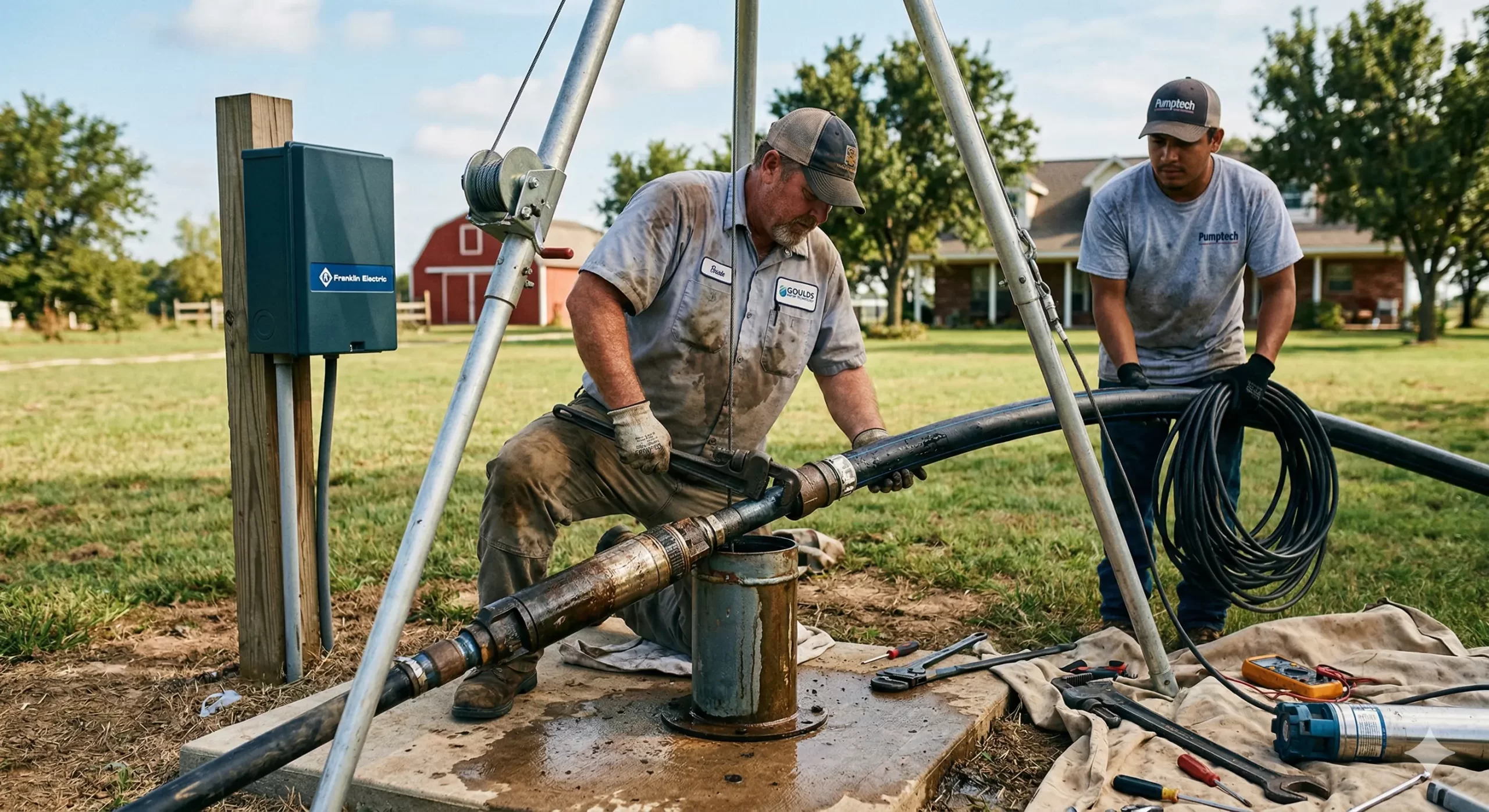
The replacement procedure begins with strict adherence to safety protocols. The technician will perform a lock-out/tag-out (LOTO) on the 240V breaker. They will then fully close the main isolation valve after the pressure tank and drain the system pressure to zero. Using pipe wrenches, the old transducer is carefully unthreaded from its mounting port. The threads on the pipe fitting are cleaned, and new Teflon tape or pipe sealant is applied before the new, original Grundfos sensor is installed and tightened to the manufacturer’s torque specification. After wiring the new sensor to the CU 301, the system is slowly re-pressurized while checking for leaks. In cases where the pump’s health is also in question, a Megohmmeter will be used to perform an insulation resistance test on the motor windings, checking for any potential shorts to ground that would indicate motor failure. If the pump must be accessed, specialized equipment like a portable Pump Hoist and a T-handle Pitless Key are non-negotiable for safely pulling the pump from the well casing.
Safety Protocol: Servicing a submersible well pump system carries significant risk. The 240-volt electrical circuit is lethal, and all work must be performed on a de-energized and locked-out system. The pump, drop pipe, and water column can weigh over 500 pounds, making manual extraction extremely hazardous and risking serious personal injury or catastrophic equipment damage. Using a dedicated Pump Hoist or pulling rig is mandatory for safe extraction. Attempting to lift this weight by hand can cause the pump to be dropped down the well, potentially destroying the pump, well casing, and pitless adapter—a mistake that can cost thousands of dollars to rectify.
Repair Cost & Time Assessment
For a straightforward pressure sensor replacement on a Grundfos CU 301 system, a homeowner in the United States can expect to pay between $450 and $950. This cost estimate can be broken down into several components. The primary part, a genuine Grundfos 4-20mA pressure transducer, typically costs between $180 and $275. Professional labor from a licensed well technician or electrician is billed at approximately $125 to $175 per hour, and this job usually takes 2 to 4 hours, including travel, diagnosis, replacement, system testing, and cleanup. The final invoice will reflect a service call fee plus the hourly labor and the marked-up cost of the part.
Several factors can influence the final cost. An emergency or after-hours service call will incur a significant premium. If the sensor is located in a hard-to-reach area, such as a cramped crawlspace or behind other equipment, the increased labor time will raise the price. Furthermore, if the initial diagnosis reveals that the sensor fault was a symptom of a larger issue—such as a waterlogged pressure tank causing water hammer, or a failing pump motor that requires pulling the pump from the well—the scope and cost of the repair will escalate substantially. Pulling a pump requires specialized equipment like a pump hoist, adding several hundred dollars to the total bill.
Fast Local Service & Diagnostics
Calls are routed to a licensed local well professional.