
Emergency Well Pump Repair in Del Rio, TX
Del Rio sits on the edge of the Chihuahuan Desert. Water’s a precious commodity, and groundwater’s the lifeline for folks out here beyond city limits. The harsh realities of limestone formations, deep water tables, and fluctuating demand during long, hot summers mean your well pump isn’t just a convenience; it’s the heart of your home’s water supply. When it goes down, it’s not just an inconvenience, it’s a crisis, especially with livestock or during drought.
We mostly tap into the Edwards-Trinity (Plateau) Aquifer here. It’s a massive system, but getting to that clean, reliable water often means drilling deep through hard rock. This isn’t like sandy soil wells you see elsewhere in Texas. The water quality is generally good, but the depth and geology add significant challenges to well construction and pump selection. Understanding this aquifer is key to long-term well reliability.
Folks try to save a buck on pumps, but out here, a cheap pump is almost always a guaranteed failure. The constant head pressure from deep wells, the mineral content, and the high summer temperatures put immense strain on lesser-quality units. We’ve seen ’em burn out in a year or two. You need a pump built for these conditions, designed to handle the load and the long haul, or you’ll be calling us back a lot sooner than you think, costing you more in the long run.
Fast Local Service & Diagnostics
Calls are routed to a licensed local well professional.

Well Pump Repair in
Del Rio
Del Rio & Val Verde County Well Stats
Val Verde County has thousands of private wells. The majority are for domestic use, but agricultural and livestock wells are also prevalent. Wells often exceed 300 feet, with many going beyond 600 feet, especially in higher elevation areas or where shallower zones are less productive. Static water levels can vary significantly, requiring careful pump sizing. The county relies heavily on groundwater, making well integrity critical for rural residents.
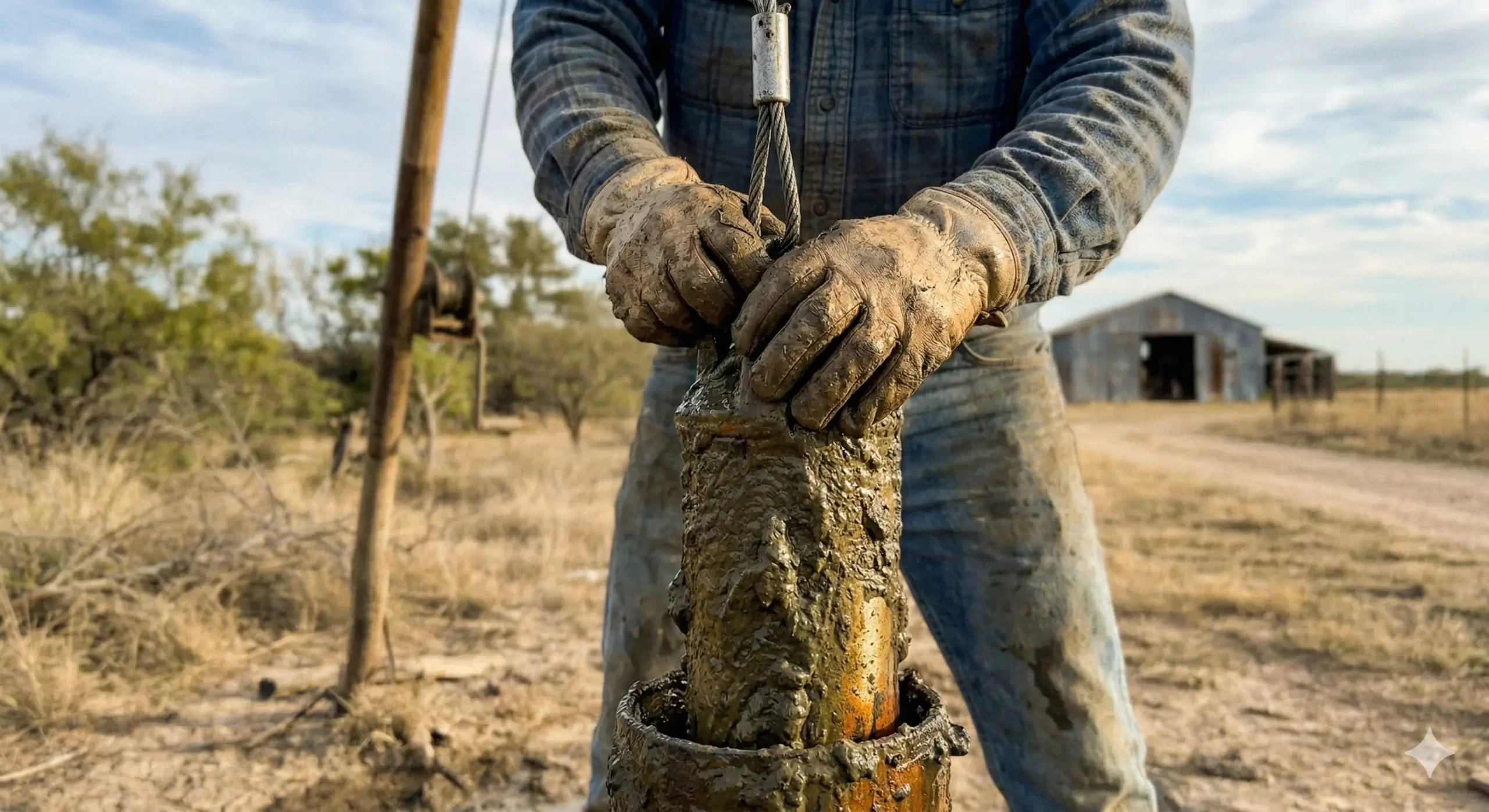
Pulling a pump here in Del Rio can be a real bear. We’re talking about wells often sunk hundreds of feet deep into hard limestone and Edwards Formation rock. That’s not a quick pull with a tripod; it demands specialized well service rigs with strong winches and booms. Access can also be a challenge on some of these large ranches or remote properties, requiring extra travel time and careful maneuvering of heavy equipment. Every foot of hard rock adds to the labor and specialized equipment needed.
The equipment itself isn’t cheap. You’re looking at heavy-duty well service rigs, specialized pump hoist trucks, generators for remote sites, and a full complement of tools designed for deep well retrieval and installation. Then there’s the cost of quality pump and motor units, control boxes, wiring, and piping – all built to withstand our local conditions. This isn’t backyard plumbing; it’s heavy industrial work, and the right tools and parts are non-negotiable for a lasting repair.
Spring Well Maintenance in Texas
Heavy spring rains can cause surface runoff to breach well caps. We strongly recommend testing your water for coliform bacteria and inspecting the sanitary seal.
Save $500+ on Replacements
Via the TX Energy Co-op VFD Upgrade Program
70°F in Del Rio
Local Aquifers & Geology
The primary groundwater sources in Del Rio include the Edwards-Trinity (Plateau) Aquifer. This aquifer is primarily composed of limestone and dolomite, with some sandstone layers. It’s a major source of water for much of West-Central Texas. Water flows through solution-enlarged fractures, bedding planes, and intergranular porosity. While it provides generally good quality water, its depth and the hard rock formations necessitate robust drilling and pumping solutions. Recharge occurs mainly from rainfall on its outcrop.. Drilling through the local Del Rio and Val Verde County exhibit a complex soil profile. Predominantly, you’ll find shallow, stony soils derived from limestone bedrock, such as the Tarrant and Brackett series. These soils are typically calcareous, well-drained, and have low organic matter. Deeper soils, like the Maverick series, can be found in floodplains or flatter areas, often consisting of clay loams or clays. The pervasive presence of limestone bedrock, either at the surface or just a few feet down, is a defining characteristic, impacting trenching and foundation work for pump houses or storage tanks. means that average well depths range from 250 ft – 800 ft (some irrigation wells can be deeper).
Due to these geological factors, local homeowners frequently struggle with Motor burnout due to continuous running from pressure tank issues, incorrect pump sizing for well yield, or excessive mineral buildup causing motor overheating..
Drilling Depth Comparison
Deeper wells require heavy-duty crane hoists for pump extraction.
Climate & Water Quality
Pump systems in the Del Rio area face severe environmental stressors. The most significant threat is The extreme heat of Del Rio’s summers is a major pump killer. High ambient temperatures combined with continuous operation in deep wells significantly increase motor winding temperatures, leading to premature insulation breakdown and burnout. Prolonged droughts lead to dropping water tables, causing pumps to run dry or operate at the very bottom of the well, stressing the motor. Flash floods can also contaminate shallow wellheads or damage control boxes if not properly protected.
Additionally, the raw groundwater often presents issues with Hardness is a very common issue, leading to scale buildup on pump impellers and plumbing. Iron can be present, causing staining and potential for bacterial growth. Sulfur (hydrogen sulfide) gives a distinct “rotten egg” smell and can be corrosive. Sand, while not as prevalent as in some other Texas regions, can occur in wells drilled through less consolidated zones or if well screens are damaged, leading to abrasive wear on impellers and motors..
Regional Groundwater Advisory
Known primary contaminant threat to submersible pumps and pipes in this area:
Common Area Systems
VFD Upgrade Savings
Constant Pressure vs StandardReplacing a standard single-speed pump with a Variable Frequency Drive (VFD) eliminates hard starts and drastically reduces energy draw in Texas.
Compliance & Local Permits
Val Verde County Level: The Val Verde County Groundwater Conservation District (VVCGCD) is the primary local authority. They require permits for drilling new wells, deepening existing wells, or converting an existing well to a new use (e.g., domestic to irrigation). Applications involve providing detailed information about the proposed well, its location, intended use, and estimated pumping rates. The VVCGCD aims to conserve, preserve, and protect the groundwater resources within the county. They also have rules regarding well spacing, well capping, and reporting of drilling activities to ensure sustainable use and prevent contamination. Always check with the VVCGCD before any new well construction or major modification.
Top Pump Brands in Texas
Most frequently installed hardware based on local geology (2026 data).
- Verify correct voltage and amperage at the control box.
- Check pressure switch operation & settings.
- Inspect bladder tank (pressure tank) for proper air charge and integrity.
- Measure static and pumping water levels (if possible) to assess well yield.
- Test pump motor windings for resistance and ground faults.
- Examine all visible piping, wiring, and connections for leaks or damage.
Premium Well Pump Brands We Service
Our licensed technicians in Del Rio are certified to repair, replace, and install high-quality groundwater equipment from industry-leading manufacturers, including:
- No water at all, even though the power is on.
- Low water pressure that persists even after checking faucets.
- Pump constantly cycles on and off (short cycling).
- Murky, sandy, or discolored water suddenly appearing.
- Unusual noises coming from the wellhead or pressure tank area.
- Higher-than-normal electricity bills without increased usage.
Del Rio Real Estate Well Regulations
Local Dispatch & Response Times
Live Dispatch: Texas
Updated Just Now⚠️ High demand. Call now to secure the next available technician.
- Within 2-4 hours for critical water outages, aiming for same-day service.
- Our goal is always to restore water as quickly and safely as possible.
- Remote ranch calls may extend response times slightly due to travel distances.
- We prioritize families, livestock, and commercial operations with no water.
- Have clear directions and gate codes ready for faster service to your property.
⚠️ Val Verde County & State Regulatory Warning: Abandoned Wells
Groundwater Threat Level
Current aquifer and mineral impact on pumps in Del Rio.
Dropping water tables cause pumps to suck air and overheat.
Hard water calcifies pump impellers, reducing lifespan.
Pump Lifespan Estimator
Select household size in Del Rio to see strain impact.
The Cost of Ignoring Symptoms
Fixing a short-cycling pump early saves thousands in Del Rio.
Data reflects average well contractor estimates in Del Rio.
Local Del Rio
Well Pros
Fast Local Service & Diagnostics
Calls are routed to a licensed local well professional.
Septic System Services in Del Rio, TX
Do you have a septic tank on your property? Proper maintenance is critical to protecting your well water quality.
Del Rio Homeowner Feedback
“Had a pump go out on my place a few miles east of town. Called ’em up, and they had me fixed up good as new in no time. Honest work, fair price. Can’t ask for more out here.”

Local Homeowner
✓ Verified TX
“Our well pump had been acting real funny for weeks, short cycling and sometimes we’d just lose water pressure completely. Thought it was the pressure tank, but the tech did a thorough check. Turns out the submersible motor was drawing too many amps intermittently, probably due to some sand or mineral buildup causing it to work harder. They pulled the pump – which was a job, it’s a deep well! – and replaced the whole unit. Even checked the wiring which had some minor rodent damage near the wellhead. Now, the water pressure’s steady, and the pump runs quiet. Glad I didn’t try to fix it myself, would have just made it worse. Great job, real pros.”

Local Homeowner
✓ Verified TX
“Lost water in the middle of a Sunday afternoon with guests coming. Called these guys and they were out here quicker than I expected. Diagnosed the problem fast, had the part on the truck, and had us back in water before dinner. Saved the weekend. Super grateful for the quick response.”

Local Homeowner
✓ Verified TX
Expert Del Rio Well System FAQ
My well water in Del Rio smells like rotten eggs, but only sometimes. What could be causing this, and how can it be fixed?
That ‘rotten egg’ smell is almost certainly hydrogen sulfide gas, which is naturally occurring in some groundwater, often reacting with specific bacteria in anaerobic conditions. It’s common in our local aquifers here. The intermittent nature might be due to variations in water usage or bacterial activity. While not typically a health hazard at low levels, it’s unpleasant and can be corrosive to plumbing. We can test your water to confirm the presence and concentration of hydrogen sulfide. Treatment options range from simple aeration systems for mild cases, to more robust solutions like manganese greensand filters or chlorine injection systems, which oxidize the hydrogen sulfide, removing the odor. The best solution depends on the severity and other water quality parameters.
How often should I have my well pump system inspected and maintained in Val Verde County given our tough conditions?
Given the demanding environment here in Val Verde County – deep wells, hard water, and extreme summer temperatures – we strongly recommend an annual preventative maintenance check. This isn’t just about avoiding catastrophic failure, it’s about optimizing efficiency and extending the life of your system. An inspection includes checking your pressure tank’s air charge, verifying pressure switch settings, measuring pump amp draw and voltage, inspecting wiring, and testing water quality. Catching small issues like a failing capacitor or a clogged aerator early can prevent much larger, more expensive problems down the line. Think of it like an oil change for your car; it saves you from needing a new engine.
I’m looking at buying a rural property near Laughlin AFB with an existing well. What specifically should I look for or ask about before buying?
Beyond a general well inspection, which is critical, specifically ask for documentation of the well’s drilling log. This will tell you the depth, casing material, screen placement, and initial yield. Inquire about the age of the pump and pressure tank, as these have finite lifespans. Ask if the well has ever gone dry, especially during droughts, and what the static water level typically is. Given our proximity to Laughlin AFB, also consider if any potential environmental concerns could affect groundwater, though this is usually well monitored. Finally, ensure the well has a proper wellhead seal to prevent contamination and is located appropriately relative to septic systems or potential pollution sources. A comprehensive water quality test is non-negotiable for peace of mind.
My pump runs constantly, but I have good water pressure. What could be causing this, and is it serious?
If your pump is running constantly but you still have good pressure, it almost always points to an issue with your pressure tank, specifically a loss of the air charge in the bladder. The pressure tank’s job is to store pressurized water and air, allowing the pump to turn on and off less frequently. If the air charge is gone, the tank becomes ‘waterlogged,’ meaning the pump has to kick on every time even a small amount of water is used, like flushing a toilet or running a faucet briefly. This constant cycling (short cycling) is very serious for your pump’s motor, leading to premature wear and eventual failure. It’s a relatively easy fix, usually just recharging the air in the tank, but it’s crucial to address it immediately to protect your pump.
Del Rio Groundwater Expert AI
What are the specific groundwater regulations, average well depths, and the local conservation district for Del Rio, Val Verde County?
Residential Water Wells in Del Rio, Val Verde County, TX (2026)
As a Senior Hydrogeologist and Local Groundwater Regulatory Expert for Texas, I can provide you with specific information regarding residential water wells in Del Rio, Val Verde County, TX, as of 2026.
Groundwater Regulations in Val Verde County
It is crucial to understand that **Val Verde County is not currently within the jurisdiction of a local Groundwater Conservation District (GCD)**. This means that the primary regulatory authority for water well drilling, construction, and plugging for residential wells falls under the statewide regulations administered by the Texas Department of Licensing and Regulation (TDLR).
While a local GCD would typically enforce specific local rules regarding well permitting, spacing, and production, in Val Verde County, you are primarily governed by:
- Texas Water Code Chapter 35: Pertains to Water Well Drillers and Pump Installers, requiring them to be licensed by TDLR.
- Texas Water Code Chapter 36: While primarily governing GCDs, it also sets out general principles for groundwater management in Texas.
- Texas Administrative Code (TAC) Title 16, Part 4, Chapter 76: This chapter, enforced by TDLR, details the technical requirements for water well drilling, construction, completion, and plugging throughout the state where no GCD rules supersede them.
Specific TDLR Regulations for Residential Wells:
- Driller Licensing: All individuals or companies drilling water wells must be licensed by TDLR. You should always verify a driller's license.
- Well Registration/Driller's Report: While a pre-drilling permit is generally not required by TDLR for domestic wells outside of a GCD, the licensed driller is legally required to submit a "Driller's Log and Water Well Report" to TDLR within 30 days of completing the well. This report provides crucial data about the well's construction and geology.
- Well Construction Standards: Wells must be constructed to prevent contamination of the aquifer and surface water. This includes specific requirements for casing, cementing, and wellhead completion as outlined in 16 TAC Chapter 76.
- Minimum Setback Distances: TDLR regulations include minimum setback requirements to prevent contamination. For example:
- 50 feet from a septic system drainfield.
- 100 feet from a septic system absorption bed, sewage treatment plant, or livestock/poultry confinement area.
- 150 feet from an improperly constructed well or abandoned well.
- Wells should also be located a reasonable distance from property lines, though specific state rules on this for domestic wells are less prescriptive than for public supply wells.
- Well Plugging: Abandoned or deteriorated wells pose a significant contamination risk and are required by state law (16 TAC Chapter 76) to be properly plugged by a licensed well driller or pump installer.
Important Note: While TDLR handles statewide regulations, it is always prudent to check with Val Verde County government offices or the City of Del Rio Planning Department for any local ordinances (e.g., zoning, public health, or construction permits) that might indirectly affect well placement or construction within city limits or extraterritorial jurisdictions (ETJ).
Average Well Depths in Del Rio, Val Verde County
Based on historical state well logs and hydrogeological mapping in the Del Rio area, which sits at the southwestern edge of the Edwards Plateau and near the Rio Grande, residential water well depths can vary significantly but typically range:
- Average Depth Estimate: 250 - 500 feet.
- Shallower Wells: Some wells, especially those seeking water from shallower, localized alluvial deposits along the Rio Grande or fractured limestone nearer to surface exposures, may be as shallow as 100-200 feet.
- Deeper Wells: Wells targeting reliable, higher-yield zones within the primary aquifer may extend to 600-800 feet or more, particularly as you move away from the recharge features or seek deeper artesian conditions.
The exact depth will depend on the specific location on your property, local geology, and the desired water quantity and quality. A professional driller will conduct a site-specific assessment.
Local Conservation District
As confirmed above, there is no dedicated Groundwater Conservation District (GCD) for Val Verde County as of 2026. This means the local management of groundwater quantity and quality, beyond statewide TDLR regulations, falls to general state oversight by the Texas Commission on Environmental Quality (TCEQ) for water quality, and the overall framework provided by the Texas Water Development Board (TWDB) for planning and data.
The lack of a local GCD means there are no local well permitting programs, production limits, or spacing rules beyond the basic statewide TDLR requirements. While this might seem less restrictive, it also means there is no local entity specifically tasked with monitoring and managing the local aquifer's long-term sustainability through proactive rules.
Specific Aquifer Beneath Del Rio
The primary aquifer system that supplies groundwater to Del Rio and Val Verde County is the Edwards Aquifer (Del Rio segment). This unconfined to confined limestone aquifer system is known for its high-quality water, flowing through karstic features and fractures within the Cretaceous-age Edwards Group limestone. While the Edwards Aquifer is the main source, localized shallow alluvial deposits along the Rio Grande and its tributaries may also provide limited groundwater resources.
I hope this detailed information assists you with your residential water well planning in Del Rio.
Fast Local Service & Diagnostics
Calls are routed to a licensed local well professional.
Blix
provides official
Emergency Well Pump Repair services for the
Del Rio
area.