
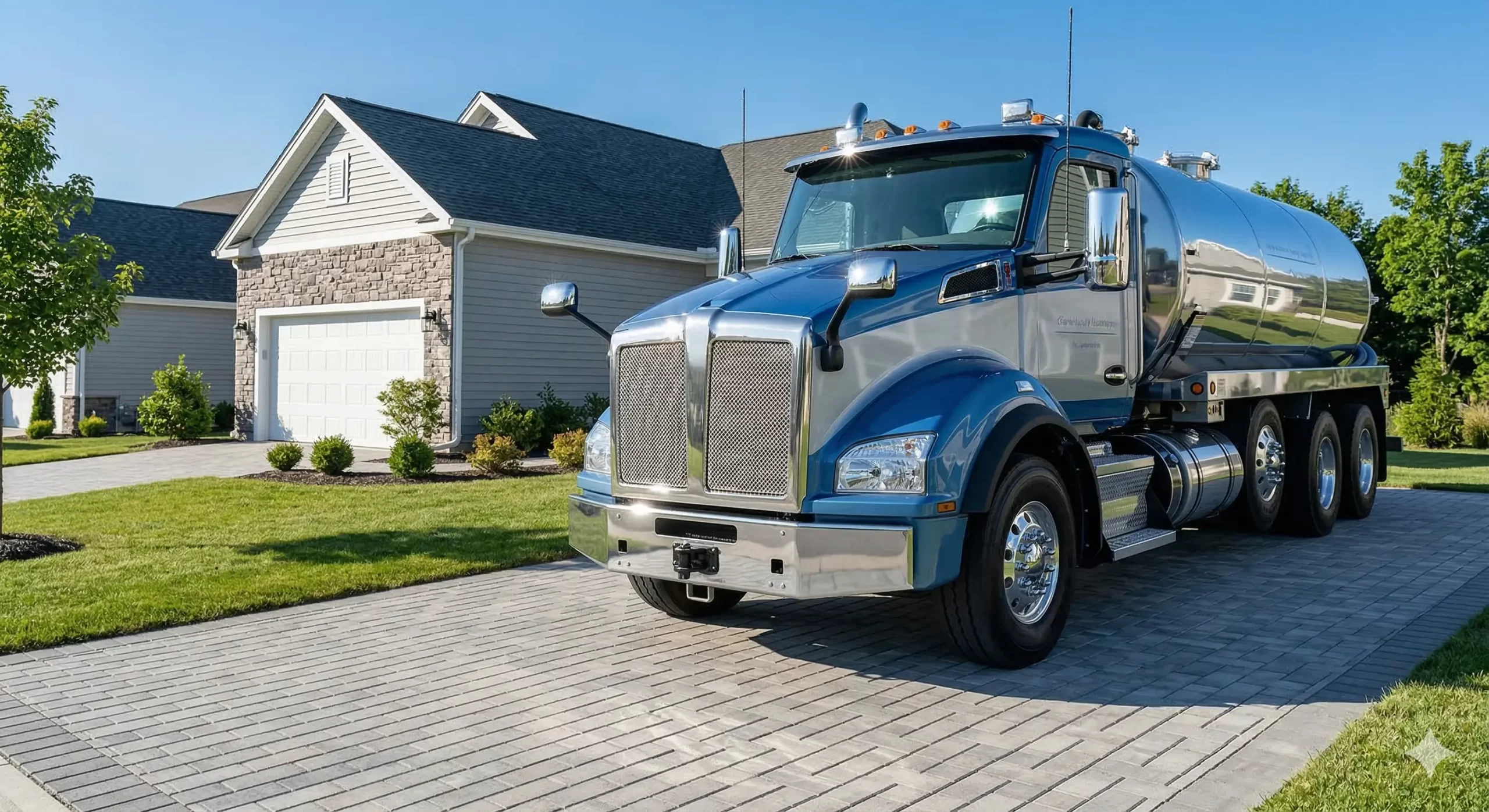
Top Septic Pumping in
Houma
Houma Pumping Costs & Data
Here are the critical statistics defining the state of infrastructure in the area:
- ATU Reliance: Due to the incredibly poor percolation rates of the local coastal clay and high water tables, nearly 90% of new or replacement decentralized systems in Terrebonne Parish are mandated to be mechanical Aerobic Treatment Units (ATUs).
- Subsidence Failures: In the deep bayou areas, nearly 30% of structural tank failures (cracks or sheared inlet/outlet pipes) are attributed directly to the sinking and settling of the organic peat and clay soils (subsidence).
- Hurricane & Storm Failure Spikes: During Louisiana’s intense hurricane season, local data indicates a massive 50% spike in emergency service calls. These are predominantly caused by saltwater storm surges overwhelming systems and power failures shutting down ATU pumps.
The mathematics of septic maintenance in dense clay, sinking land, and flood-prone coastal zones are unforgiving. Routine, scheduled vacuum pumping and mechanical maintenance is the only scientifically valid method to protect your property from a biohazard disaster.
The final invoice for your specific pump-out will be dictated by these localized variables:
- Advanced ATU Maintenance (Mechanical Plants): Because the dense clay and high water table forces the use of ATUs, servicing in Houma is generally more complex than pumping a simple gravity tank. Technicians must evacuate multiple chambers, clean the diffusers, verify the aeration compressor, and check the chlorinator systems. This comprehensive service commands a specialized rate.
- Subsidence Repair & Remediation: If a heavy concrete tank has sunk due to soil subsidence, the attached PVC pipes often shear off. Excavating and repairing these broken inlet/outlet lines is a frequent add-on cost for coastal systems.
- Wet Clay & Peat Excavation: Finding the tank and manually digging through heavy, wet “gumbo” clay or saturated peat soil to expose the access lids adds substantial labor time. The hole often fills with groundwater instantly. We highly recommend paying for PVC surface risers.
- Extended Hose Deployments: Pumping tanks located near delicate bayou retaining walls or behind homes on deep lots requires staging the heavy vacuum truck carefully to prevent it from sinking into soft yards. Technicians frequently deploy 100 to 200 feet of heavy industrial hose.
Furthermore, Terrebonne Parish’s specific coastal soil profiles dictate maintenance frequency:
| Houma Terrain / Soil | Drainage Capacity | Impact on Wastewater Systems | Maintenance Need |
|---|---|---|---|
| Below-Sea-Level Peat / Coastal Clay | Extremely Poor | Forces the use of mechanical ATUs. Constant high groundwater causes immediate hydraulic lock during storms. Soil subsidence breaks pipes. | High (Strict ATU servicing schedules) |
| Alluvial Loam (Bayou Ridges) | Moderate | Drains slightly better, but highly vulnerable to saltwater corrosion and root intrusion from mature live oaks. | High (Strict 2-3 year pumping) |
Cost Estimation by System Profile in Houma:
| Service Description | Estimated Range | Primary Labor Factors |
|---|---|---|
| Aerobic Treatment Unit (ATU) Pump-Out | $380 – $660 | Multi-tank evacuation, mechanical checks, diffuser cleaning, and dosing pump sanitation. |
| Legacy Conventional Pump-Out | $380 – $620+ | Manual excavation in wet clay/peat, subsidence checks, long hose deployments to protect property. |
| System Decommissioning Prep | Custom Quote | Complete evacuation and sanitation of an abandoned tank prior to filling with river sand per parish codes. |
Our platform guarantees that you connect with transparent, elite professionals who understand the uncompromising demands, complex mechanical ATUs, and extreme delta geology of Terrebonne Parish.
72°F in Houma
🌱 Local Environmental Status
When a wastewater system is neglected in the Houma area, the localized consequences are distinct and hazardous:
- Hurricane Surge & Hydraulic Lock: Deep South Louisiana is ground zero for intense tropical weather. During a hurricane, the coastal clay and peat soils saturate instantly, and saltwater storm surges can physically inundate low-lying drain fields. If a tank is full of sludge, raw sewage backs up immediately into the home or blows out into the yard.
- Soil Subsidence (Sinking Land): Because the region is built on coastal marsh, the highly organic peat soils constantly compress and shrink (subsidence). Heavy concrete septic tanks can sink unevenly, tilting and instantly snapping the rigid PVC lateral lines, causing massive subterranean sewage leaks.
- Aerobic Plant (ATU) Failure: Because the water table is so high and the clay is impermeable, a massive percentage of homes in Terrebonne Parish utilize mechanical Aerobic Treatment Units (ATUs). If these systems are not regularly pumped and serviced, the motors burn out, discharging untreated sewage directly into local bayous.
- Bayou Contamination: An overflowing system releases raw human pathogens and high nutrient loads directly into the intricate canal network, threatening the local shrimping, fishing, and oystering industries that define the region’s economy.
To protect their properties and the fragile delta ecosystem, homeowners managing ATUs or legacy systems must enforce uncompromising maintenance protocols:
- Strict Pumping & ATU Maintenance: Schedule a professional vacuum pump-out every 2 to 3 years. If you operate an ATU (mechanical plant), state law requires active, continuous maintenance to ensure the aeration motors and chlorinators are functioning properly.
- Hurricane Preparation: Pumping your tank *before* hurricane season provides critical emergency holding capacity when the power grid fails and your ATU pump stops working in flooded ground.
- Subsidence Inspections: Regular pumping allows technicians to visually inspect the tank for structural integrity, ensuring it hasn’t sunk and broken its plumbing connections.
Consistent, storm-aware pumping is the absolute baseline of stewardship for homeowners in Houma.
⚙️ Local Service Details
When a certified vac-truck arrives at your Terrebonne Parish home, you can expect a rigorous, exhaustive service protocol:
- Low-Impact Equipment Staging: Strategically parking heavy 30,000-gallon vacuum trucks on solid driveways or main roads, deploying up to 200 feet of industrial hose to navigate tight lot lines and protect delicate landscaping from crushing weight in soft mud.
- Electronic Tank Locating & Subsided Soil Excavation: Utilizing flushable sondes to locate forgotten buried tanks. Technicians carefully hand-dig through heavy, wet clay and peat to expose the lids safely without damaging your property.
- Complete Evacuation & ATU Servicing: Engaging high-CFM vacuum power to entirely empty the tank. For Aerobic Treatment Units (ATUs), technicians evacuate all chambers, clean the aeration diffusers, verify compressor function, and check the chlorination systems to ensure strict LDH compliance.
- Structural Subsidence Diagnostics: Performing a critical visual inspection of the emptied tank to detect structural fractures caused by massive soil subsidence (sinking ground), the violent hydrostatic pressure of a recent storm surge, or root intrusion from mature live oaks.
- Decommissioning Preparation (If Applicable): Completely sanitizing the interior of the tank and providing the necessary LDH documentation to your contractor or investor so the tank can be legally filled with river sand and abandoned.
This comprehensive, specialized approach guarantees that your South Louisiana property is protected against catastrophic backups and environmental code violations.
📍 Coverage & ZIP Codes
🏡 Real Estate Transactions
Navigating a property transfer involving a septic system or ATU in Houma requires meticulous attention to documentation:
- Aerobic Plant (ATU) Compliance: Because traditional drain fields fail in the local coastal clay and high water tables, almost all homes operate mechanical treatment plants. Appraisers and lenders demand proof of an active maintenance contract and recent LDH pumping records to ensure the expensive motors and chlorinators are fully functional. A failing ATU will immediately halt a title transfer.
- Subsidence & Structural Diagnostics: Because the soil in Terrebonne Parish is notorious for sinking (subsidence), appraisers will demand a full vacuum pump-out and a high-definition structural camera inspection to ensure the heavy concrete tank has not settled unevenly, cracked, or sheared off its connecting pipes.
- Flood Zone Clearances: Inspectors must rigorously verify the system’s resilience against the area’s notoriously high water table and frequent storm surges, ensuring electrical components for ATUs are properly elevated above flood lines.
- Appraisal Value Protection: A failed system requiring a total ATU replacement can cost $10,000 to $18,000+. Providing a potential buyer with a flawless pumping log neutralizes their ability to demand massive price concessions.
Protect your Terrebonne Parish property’s equity. Securing a professional pump-out and a clean bill of health from our vetted technicians is the most profitable step you can take before listing your Houma home.
⚠️ Local Regulatory Warning
Homeowners, flippers, and developers are legally bound by the following uncompromising mandates:
- Aerobic Plant (ATU) Mandates: The Louisiana Department of Health (LDH) dictates that in areas where traditional drain fields fail (virtually all of Houma’s clay/peat soils), mechanical treatment plants must be used. Operating these systems legally requires a continuous, active maintenance contract with a certified provider to ensure the motors and chlorinators are working.
- LDH Pumping Regulations: All septic and ATU pumping must be performed exclusively by state-licensed sludge transporters. The waste must be legally manifested and disposed of at approved treatment facilities. Hiring an unlicensed “gypsy” pumper makes you complicit in illegal dumping.
- Decommissioning Codes: If a home is rebuilt or connecting to a municipal sewer grid, any existing tank cannot simply be abandoned. Parish codes strictly require the tank to be completely pumped out by a licensed professional, the bottom fractured for drainage, and filled with clean river sand to prevent future subsidence.
- Surface Discharge Penalties: Failing systems that leak raw effluent into public drainage ditches or local bayous trigger immediate municipal health citations and forced system condemnation.
Consequences of Regulatory Non-Compliance in Houma:
| Environmental Violation | Enforcing Agency | Potential Penalty |
|---|---|---|
| Illegal Surface/Bayou Discharge | LDH / DEQ | Emergency fines up to $500 per day until mitigated; forced system condemnation. |
| Expired Aerobic Maintenance Contract | Terrebonne Parish Health | Permit revocation, Class C Misdemeanor, blockage of property sales. |
| Improper Tank Abandonment | Terrebonne Parish | Severe fines, forced re-excavation, and blockage of property sales or renovation permits. |
Protect your finances and your legal standing. Our network only provides access to elite, fully insured, and LDH-compliant professionals who protect your property legally and environmentally.
Annual Routine Optimizer
The secret to a stress-free home in Houma. Plan your 1000-gallon pump-out around this specific timeframe.
Maintenance Budget Optimizer
Maximize your system life without draining your wallet. Here is your projected risk in the Houma area.
Base Drain Field Replacement in Houma: $15,023
Recovery Pumping Need
A vacuum truck is the vehicle for reset. Here is the exact strain requirement for a resident in Houma.
The Houma Permeability Metric
Waterlogged dirt causes systemic septic failure. Keep an eye on local drainage capabilities.
The Houma Pumping Boom
More locals are hitting their tank limits. Look at the surge in vacuum truck dispatch in your area.
Regional Tech Radar
Don't wait days for relief. See how close the primary service node is to Houma right now.
Homeowner Feedback



Reliable Septic Services in
Houma, LA
Houma Septic Expert AI
What are the specific septic tank regulations, typical soil drainage characteristics, and the local permitting authority for the Houma area?
Septic System Regulations and Characteristics for Houma, Terrebonne Parish, Louisiana (2026)
As a Senior Environmental Health Inspector and Septic Regulatory Expert for Louisiana, I can provide you with detailed information specific to residential septic systems in the Houma area, Terrebonne Parish, for the year 2026.
Local Permitting Authority and Regulations
In Louisiana, the primary authority for regulating individual sewage treatment and disposal systems, including residential septic tanks, falls under the Louisiana Department of Health (LDH), Office of Public Health (OPH), Sanitarian Services. For residents of Houma, all permitting, inspection, and regulatory enforcement are handled by the local LDH OPH Sanitarian office serving Terrebonne Parish.
The specific regulations governing these systems are found in the Louisiana Administrative Code (LAC) Title 51, Part XIII, Subpart 3, Chapter 7 (Individual Sewage Treatment and Disposal Systems). Key aspects of these regulations include:
- Permit Requirement: A permit from the LDH OPH Sanitarian Services is mandatory prior to the installation, alteration, or repair of any individual sewage treatment and disposal system.
- Design and Certification: Systems must be designed by a qualified professional (such as a Louisiana-registered professional engineer or a registered sanitarian) to ensure compliance with state and local requirements.
- Site Evaluation: A thorough site evaluation, including soil borings, percolation tests (or hydraulic conductivity tests), and determination of the seasonal high water table, is required to determine the suitability of the site for sewage disposal and the appropriate type of system.
- System Types: The regulations outline various approved system types, including conventional subsurface absorption fields, aerobic treatment units (ATUs) with various disposal methods (e.g., subsurface drip, pressure-dosed conventional beds, spray irrigation where permitted), and mound systems. The suitable system type is strictly dictated by the site's soil and hydrological characteristics.
- Setback Distances: Strict setback requirements from wells, property lines, water bodies, buildings, and other features must be adhered to.
- Maintenance: All systems, particularly ATUs, require regular maintenance. ATUs typically require a service contract with a certified technician and routine monitoring. Conventional systems require periodic pumping, generally every 3-5 years, depending on household usage.
Typical Soil Drainage Characteristics in Houma (Terrebonne Parish)
The Houma area, located in the coastal plain of Louisiana, is characterized by soil and hydrological conditions that present significant challenges for conventional septic system design. The typical soil drainage characteristics in Terrebonne Parish are as follows:
- Predominantly Clay and Silty Clay Loams: The soils in Terrebonne Parish are primarily composed of heavy clays and silty clay loams, such as the Sharkey, Barataria, and Schriever series. These soils have very fine textures and tightly packed particles.
- Very Low Permeability: Due to the high clay content, these soils exhibit very low permeability (poor drainage). Water percolates through them very slowly, if at all, making them unsuitable for absorbing effluent from conventional drain fields.
- High Water Table: Terrebonne Parish is a low-lying area, often at or near sea level. Consequently, the seasonal high water table is frequently very shallow, often within a foot or two of the ground surface, and can even be at the surface during wet periods. This high water table severely limits the effective soil depth available for effluent treatment and dispersal.
- Flat Topography: The generally flat topography in Houma means there is little natural slope for gravity-fed drain fields, increasing the likelihood of surface ponding and inadequate drainage.
How these characteristics dictate drain field design: Given these challenging soil conditions, conventional gravity-fed drain fields are rarely, if ever, suitable for new installations in Houma. The poor drainage and high water table necessitate the use of **advanced or engineered sewage treatment systems**. These typically include:
- Aerobic Treatment Units (ATUs): These systems use an aeration process to treat wastewater to a higher quality than conventional septic tanks before dispersal. The treated effluent still requires a disposal method.
- Pressure-Dosed Disposal Fields: Effluent from ATUs is often pumped under pressure to shallow, gravel-less trenches or drip irrigation systems, distributing it more evenly over a larger area to maximize absorption in limited permeable soil.
- Mound Systems: In some instances, where sufficient space and suitable soil horizons exist (even if limited), mound systems may be permitted. These systems create an elevated drain field using imported sand and gravel to provide adequate separation from the high water table and improve effluent absorption.
The design process for these systems requires extensive soil testing and engineering to ensure proper function and compliance with environmental health standards.
Realistic 2026 Cost Estimates for the Houma Market
Costs for septic system services and installations in Houma are influenced by the challenging soil conditions, the need for advanced systems, and general market inflation. These estimates reflect anticipated 2026 prices.
- Septic Tank Pumping (Conventional System):
- For a standard 1,000-1,500 gallon tank: $320 - $650. (This cost can vary based on tank accessibility, size, and additional services like filter cleaning.)
- New Septic System Installation (Typical for Houma - Advanced/Engineered Systems):
- Aerobic Treatment Unit (ATU) with Pressure-Dosed Drain Field (e.g., drip irrigation or shallow absorption bed): This is the most common system type due to poor soil conditions. Costs typically range from $18,000 to $35,000+. Factors influencing this wide range include the size of the system, the complexity of the site, the specific ATU model, the length and type of disposal field, electrical work, and extensive site preparation/earthwork.
- Mound System: If feasible for the site, these systems can be more expensive due to the significant amount of imported fill material and specialized construction. Estimates range from $20,000 to $40,000+.
- Engineering and Permitting Fees: These are additional costs and can add $1,500 - $5,000+ to the overall project, depending on the complexity of the design and the number of required site visits and tests.
- Conventional Septic System Installation:
- While rare for new installations in Houma due to soil limitations, if a site were to be miraculously suitable, a basic conventional system might cost in the range of $6,000 - $18,000. However, it is crucial to understand that such conditions are highly uncommon in Terrebonne Parish for new construction requiring a drain field.
It is always recommended to obtain multiple bids from licensed and insured septic system contractors experienced with local regulations and soil conditions, and to ensure the design is approved by the LDH OPH Sanitarian Services.
Expert Septic FAQ
What is soil “subsidence,” and why does it break my septic tank?
Why is the state requiring me to install an expensive mechanical aerobic system (ATU)?
My yard is flooded after a massive hurricane or storm surge. Should I have my septic tank pumped immediately?
Are “flushable” wipes safe for my aerobic plant or city sewer?
Only human waste and rapid-dissolving toilet paper should ever enter your OSSF.