Top Septic Pumping in
Bee Cave
Bee Cave Pumping Costs & Data
Here are the critical statistics defining the state of infrastructure in the area:
- ATU Reliance Trends: Because the solid limestone physically cannot process gravity-fed effluent, nearly 100% of all newly installed or upgraded residential systems in the Bee Cave ETJ are advanced Aerobic Treatment Units (ATUs) or specialized drip systems.
- Root Intrusion Rates: In the established, heavily wooded areas of the Hill Country, invasive oak and cedar roots account for nearly 40% of all emergency tank seal breaches and crushed PVC pipes reported during severe summer droughts.
- Weather-Related Failure Spikes: During Central Texas’s intense spring flash flood season, local data indicates a massive 60% spike in emergency service calls due to submerged ATU electrical panels and sudden spikes in the water table hydraulically locking older gravity systems.
The mathematics of septic maintenance in zero-topsoil, aquifer-contributing zones are unforgiving. Routine, scheduled vacuum pumping and strict mechanical servicing are the only scientifically valid methods to protect your luxury property from a biohazard disaster and comply with strict environmental codes.
The final invoice for your specific pump-out will be dictated by these localized variables:
- Solid Limestone Rock Excavation: Finding a legacy tank and manually digging through solid limestone bedrock to expose the access lids adds substantial labor time and requires heavy pneumatic breakers. We highly recommend paying for heavy-duty PVC surface risers to permanently eliminate this grueling digging fee.
- Engineered ATU Servicing: Pumping a modern Aerobic Treatment Unit is significantly more complex than a standard tank. Technicians must meticulously evacuate multiple chambers, carefully clean fine-micron diffusers, inspect the air compressor, and ensure the dosing pump is clear of debris. This specialized mechanical labor commands a premium.
- Deep Root Intrusion Remediation: Aggressive old-growth oak and cedar roots frequently breach the seams of legacy tanks or wrap around ATU components. Extracting these dense root balls and hydro-jetting the lines adds a significant manual labor surcharge.
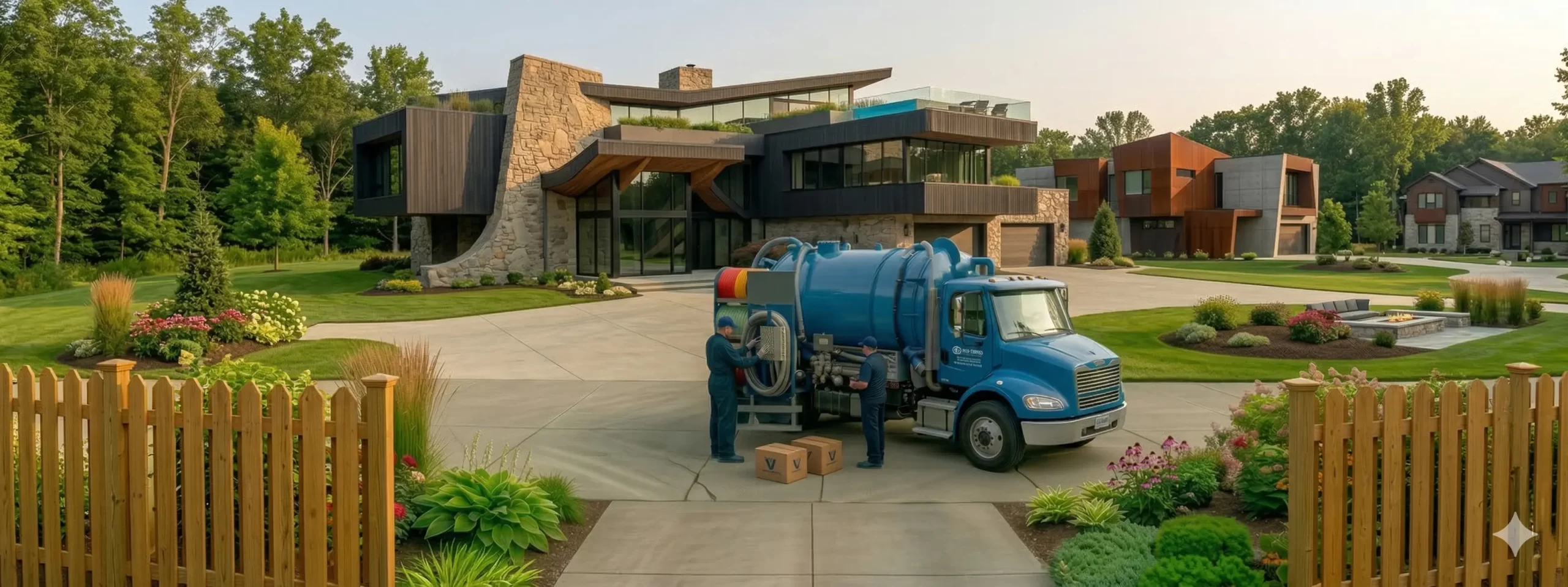
- Luxury Estate Deployments: Servicing sprawling estates deep in the Hill Country requires staging the heavy vacuum truck carefully to avoid crushing delicate limestone features, custom hardscaping, or expensive driveways, often necessitating much longer hose deployments and specialized care.
Furthermore, the specific soil profiles of Travis County dictate maintenance frequency:
| Bee Cave Terrain / Soil | Drainage Capacity | Impact on Wastewater Systems | Maintenance Need |
|---|---|---|---|
| Solid Limestone / Karst Bedrock | Practically Zero | Forces 100% reliance on engineered ATUs. Severe risk of aquifer contamination through rock fissures. Requires jackhammers for legacy excavation. | High (Strict ATU mechanical servicing) |
| Creek Bottomlands (Barton Creek) | Poor | High risk of immediate saturation and flash flooding. Extreme risk of electrical shorts on ATUs and waterway contamination. | High (Flood mitigation checks) |
Cost Estimation by System Profile in Bee Cave:
| Service Description | Estimated Range | Primary Labor Factors |
|---|---|---|
| Engineered ATU Pump-Out & Inspection | $500 – $800+ | Multi-chamber evacuation, cleaning fine-micron diffusers, checking compressors, long hose deployments to protect luxury landscaping, and ensuring strict compliance for Karst protection. |
| Solid Limestone Rock Excavation | $650 – $900+ | Deploying heavy breaker bars and pneumatic jackhammers to chip through solid bedrock just to locate and unseal buried legacy lids. |
| Standard Rural Pump-Out (With Risers) | $450 – $600 | Standard evacuation and visual check. Assumes the tank has PVC surface risers, eliminating grueling rock digging labor. |
Our platform guarantees that you connect with transparent, elite professionals who understand the uncompromising demands, complex machinery, and extreme Karst geology of Travis County.
⚙️ Local Service Details
When a certified vac-truck arrives at your Travis County property, you can expect a rigorous, exhaustive service protocol:
- Low-Impact Equipment Staging: Strategically parking heavy 30,000-gallon vacuum trucks on solid ground, deploying extra-long industrial hose to navigate steep, rocky lots, go over limestone retaining walls, and protect expensive custom hardscaping from crushing weight.
- ATU Karst Diagnostics & Pumping: Meticulously evacuating all chambers of an Aerobic Treatment Unit. Technicians then perform a thorough inspection of all wiring, air compressors, and submersible pumps, ensuring they are functioning properly to treat effluent to a highly purified state before it is dispersed over the sensitive aquifer contributing zone.
- Limestone Bedrock Excavation & Risers: Utilizing heavy pneumatic breakers and jackhammers to break through solid rock to access legacy tanks, followed by the mandatory installation of heavy-duty PVC surface risers to permanently protect the homeowner from extreme digging fees.
- Complete Sludge Evacuation & Root Removal: Engaging high-CFM vacuum power to entirely empty the tank. For severely neglected systems, technicians utilize hydro-jetting to physically extract invasive cedar or oak root masses from the inlet baffles.
- Structural Diagnostics: Performing a critical visual inspection of the emptied tank to detect structural fractures caused by shifting bedrock or severe drought conditions.
This comprehensive, specialized approach guarantees that your luxury property is protected against catastrophic backups and environmental code violations.
🌱 Local Environmental Status
When a septic system is neglected in the Bee Cave area, the localized consequences are distinct and hazardous:
- Aquifer & Watershed Contamination: Because the limestone bedrock has deep fissures and virtually no topsoil for natural filtration, a leaking septic tank or failing legacy drain field sends raw, untreated pathogens directly into the groundwater. This instantly threatens local drinking wells, the Barton Creek Habitat Preserve, and the Lake Travis watershed, triggering massive environmental fines.
- Solid Limestone Bedrock: Traditional gravity drain fields physically cannot work in solid rock. Nearly 100% of new installations in Bee Cave require expensive, mechanically complex Aerobic Treatment Units (ATUs) or specialized drip irrigation systems. These systems are highly vulnerable to biological failure if not meticulously maintained.
- Luxury Estate Sprawl & Hydraulic Overload: Bee Cave is experiencing explosive luxury residential growth. Massive homes with high water usage often push ATUs to their operational limits. A system full of sludge leaves the treated effluent nowhere to go, causing raw sewage to instantly back up into multi-million dollar homes or illegally discharge onto rocky surfaces.
- Catastrophic Root Intrusion: The Hill Country is famous for its massive, resilient live oaks and Ashe junipers (cedar). Their aggressive root systems relentlessly seek out the continuous moisture of septic tanks and drip lines, easily crushing aging PVC pipes and breaching the seams of legacy systems during severe droughts.
To protect their properties and the fragile aquifer ecosystem, homeowners managing ATUs or legacy systems must enforce uncompromising maintenance protocols:
- Strict Pumping Intervals: Schedule a professional vacuum pump-out every 2 to 3 years. ATUs in zero-topsoil areas cannot forgive any solid sludge escaping into the delicate spray heads or drip emitters.
- Continuous ATU Maintenance: Travis County legally mandates that all aerobic systems maintain a continuous service contract. Regular inspections of the air compressor, chlorinator, and dosing pumps are critical to prevent catastrophic biological failure.
- Decommissioning Compliance: As historic properties are updated or expanded, any discovered legacy tanks MUST be legally pumped and abandoned per strict Texas Commission on Environmental Quality (TCEQ) and Travis County codes.
Consistent, environmentally-aware pumping is the absolute baseline of stewardship for homeowners in Bee Cave.
📍 Coverage & ZIP Codes
🏡 Real Estate Transactions
Navigating a property transfer involving an OSSF in Bee Cave requires meticulous attention to documentation:
- ATU System Diagnostics: Because the vast majority of operating septic systems are mechanically complex Aerobic Treatment Units (ATUs), appraisers will demand a full vacuum pump-out and a comprehensive functional inspection to ensure the air compressors, diffusers, and spray heads are fully operational and legally compliant with Travis County codes.
- Legacy System Verifications: Buyers or developers purchasing older properties with traditional gravity systems will require a “tightness test” and structural camera inspection to ensure the concrete tank is not actively leaking raw sewage into the limestone fissures of the aquifer contributing zone.
- Maintenance Contract Transfers: To legally operate an ATU in Travis County, the new buyer must assume an active, continuous maintenance contract before closing. Title companies will block the sale if the system has lapsed compliance records or unresolved violations.
- Appraisal Value Protection: An active sewage leak or a condemned ATU in a highly desirable luxury neighborhood is an environmental and financial nightmare. Providing a potential buyer with a flawless pumping log and a clean maintenance record neutralizes their ability to demand massive price concessions.
Protect your Travis County property’s equity. Securing a professional pump-out and a clean bill of health from our vetted technicians is the most profitable step you can take before listing your Bee Cave estate.
⚠️ Local Regulatory Warning
Homeowners, builders, and developers are legally bound by the following uncompromising mandates:
- TCEQ & Travis County Regulations: The Texas Commission on Environmental Quality (TCEQ) dictates that all septic pumping must be performed exclusively by state-licensed sludge transporters. The waste must be legally manifested and disposed of at approved treatment facilities. Hiring an unlicensed “gypsy” pumper makes you complicit in illegal dumping over a critical water supply.
- Mandatory ATU Contracts: Travis County strictly requires that all properties utilizing an Aerobic Treatment Unit (ATU) maintain a continuous, active service contract with a licensed maintenance provider. Failure to maintain this contract results in immediate citations and potential revocation of your permit to operate the system.
- Property Line & Aquifer Offsets: In densely populated luxury subdivisions or near sensitive Karst features (caves, sinkholes), failing systems that leak raw effluent trigger immediate municipal health citations, forced system condemnation, and massive daily fines.
Consequences of Regulatory Non-Compliance in Bee Cave:
| Environmental Violation | Enforcing Agency | Potential Penalty |
|---|---|---|
| Illegal Surface Discharge (Raw Sewage) | TCEQ / Travis County | Emergency fines up to $500 per day until mitigated; forced system condemnation to protect the aquifer. |
| Lapsed ATU Maintenance Contract | Travis County Environmental Quality | Severe fines, forced inspection fees, and blockage of property sales or renovation permits. |
| Using Unlicensed Pumpers | State Police / TCEQ | Homeowner liability for illegal dumping, massive environmental restitution fees for Karst contamination. |
Protect your finances and your legal standing. Our network only provides access to elite, fully insured, and TCEQ-compliant professionals who protect your property legally and environmentally.
Emergency Index
Local septic trucks are booking up fast. This visualizes the growing local service needs in Bee Cave.
Environmental Defense Strategy
Protect your $15k drain field from local floods or clay expansion. A proactive check is highly recommended.
Time-Restricted Pumping
When you pump is just as important as how you pump. Here is the golden season for Bee Cave residents.
Bee Cave Fleet Status
Check the proximity of the nearest available technician to ensure you get your tank cleared without delays.
Capacity Loss Estimator
We calculate the environmental impact of Bee Cave on your sludge levels. Limit your water usage today.
Financial Breakdown of Neglect in Bee Cave
Calculate exactly how much money you stand to lose by skipping your routine septic tank pumping.
Base Drain Field Replacement in Bee Cave: $14,339
Homeowner Feedback