
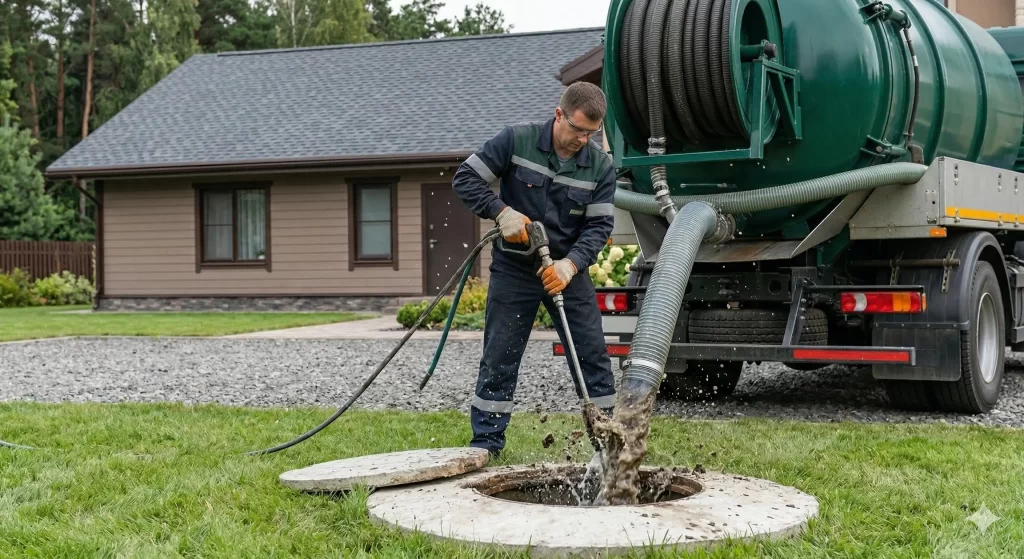
Why Does My Yard Smell Like Sewage? (And How to Fix It Fast)

Why Does My Yard Smell Like Sewage? (And How to Fix It Fast)

You step out onto your patio to enjoy a beautiful morning, coffee in hand, only to be physically hit by an invisible, nauseating wall of odor. It smells exactly like rotten eggs, sulfur, and raw waste. You immediately ask yourself: "Why does my yard smell like sewage?"

A foul odor in your yard is never "just one of those things." A properly installed and well-maintained septic or municipal sewer system is designed to be completely airtight and odorless at ground level. If you are smelling sewage, it means a biological containment barrier has failed. Raw, untreated human waste—and the toxic, flammable gases it produces—is actively escaping into your environment.

Ignoring a sewage smell is not just unpleasant; it is dangerous. Methane and hydrogen sulfide gases are toxic, and the raw effluent leaking into your soil contains aggressive pathogens. Whether you are dealing with the highly porous limestone tables managed by septic professionals in Florida, or the dense, easily compacted clay soils faced by Texas homeowners, rapid diagnosis is the key to preventing a five-figure repair bill.

In this comprehensive, expert-reviewed guide, we will break down the exact mechanical, biological, and environmental reasons why your yard smells like sewage, how to pinpoint the source of the leak, and the emergency steps you must take right now to fix it.

The Biology of the Smell: What Are You Actually Smelling?

To fix the smell, you need to understand what creates it. Your septic tank is a localized biological reactor. When human waste enters the tank, a massive colony of naturally occurring anaerobic bacteria begins to digest and break down the solid matter (the sludge layer).

This biological digestion process produces several potent byproducts. The "sewage smell" you detect is actually a cocktail of toxic gases:

  • Hydrogen Sulfide (H₂S): This is the dominant gas. It is highly toxic, heavier than air, and produces the unmistakable, nauseating odor of rotten eggs.
  • Methane (CH₄): While naturally odorless, methane is highly flammable and displaces oxygen.
  • Ammonia (NH₃): Produces a sharp, acrid, urine-like scent.

In a healthy system, these gases are safely routed back through your home's main sewer line and expelled high into the atmosphere via the plumbing vent stacks on your roof. If you smell them at ground level in your yard, that venting pathway is blocked, or the tank itself is overflowing.
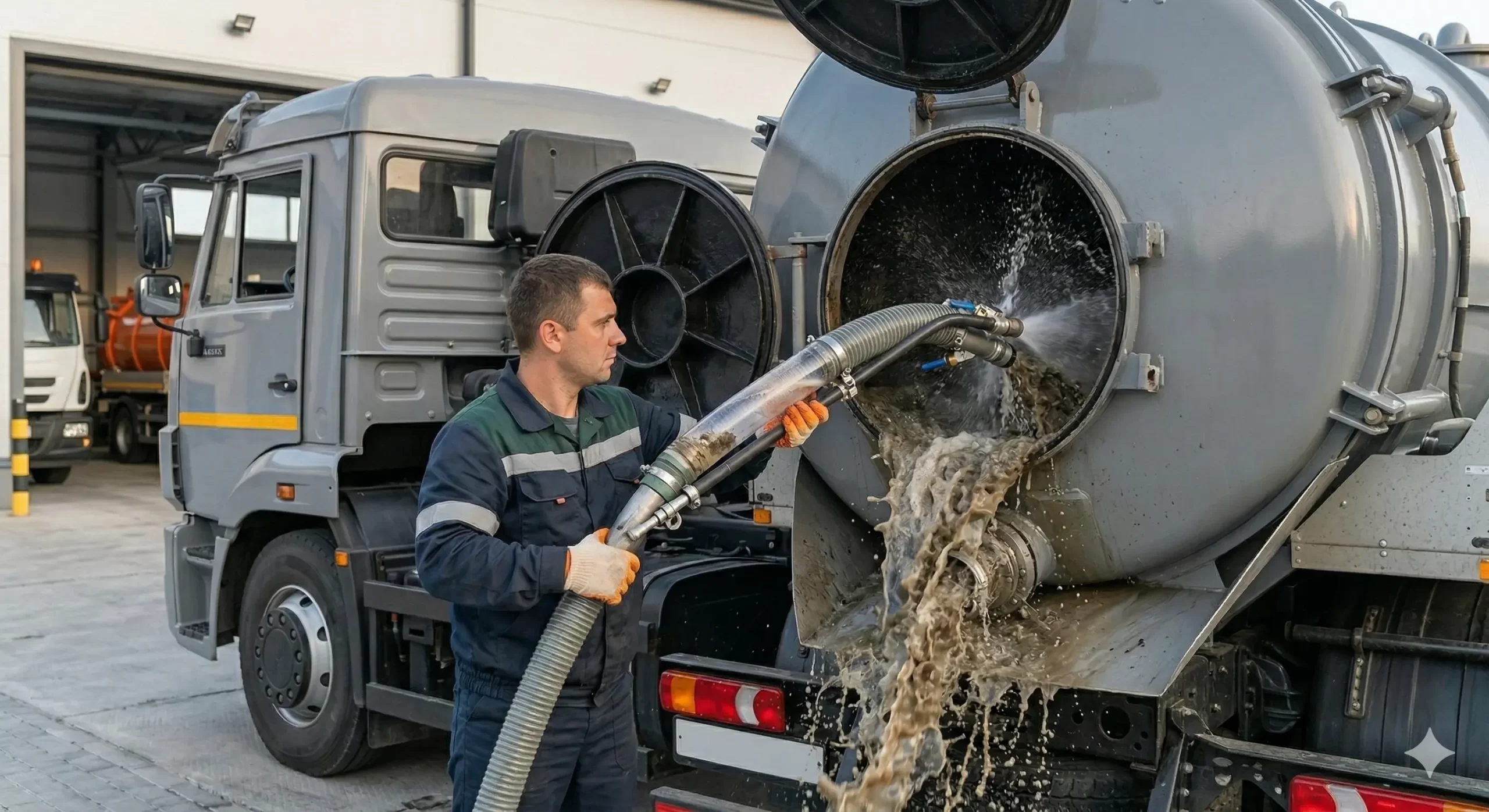
Professional septic tank pumping truck servicing a home to resolve yard sewage smells and prevent drain field failure
A professional vacuum truck extracting compacted sludge is the fastest way to eliminate yard odors caused by an overfilled septic tank.

Cause 1: The Septic Tank is Critically Full

The most common and easily fixable reason your yard smells like sewage is simply that your primary septic tank has reached its maximum capacity for solid waste.

When the bottom layer of dense sludge and the top layer of floating scum become too thick, the liquid capacity of the tank shrinks. Eventually, the solid waste level rises so high that it covers the inlet baffle (the pipe bringing waste from the house). Because the pipe is submerged, the toxic gases can no longer travel back up to your roof vents. Instead, the pressure forces the hydrogen sulfide gas out through the concrete seams of the tank lid and straight up through the soil into your yard.

The Fix: Immediate professional vacuum pumping. You need a honey wagon to completely evacuate the tank, removing all the dense sludge and restoring the empty void space so gases can vent properly. To understand the economics of this service, review our detailed guide on the average cost to pump a 1,000-gallon septic tank.

Cause 2: A Ruined, Saturated Drain Field

If you ignored the full tank for too long, you are likely facing Cause #2. If you smell sewage and also notice that the ground over your drain field is spongy, wet, or covered in patches of unusually dark, lush green grass, your leach field has failed.

When a tank overflows, thick, untreated solid sludge escapes into the perforated pipes of the drain field. This solid matter creates a thick, impenetrable slime layer called a "biomat" in the soil. The soil's microscopic pores become permanently clogged. Unable to absorb downward into the earth, the raw, foul-smelling liquid effluent forces its way upward, creating a literal swamp of sewage on your lawn.

  • Why this is critical: A clogged drain field cannot be fixed simply by pumping the tank. Once the soil is ruined, the entire network of pipes and gravel must be excavated and replaced, which is the most expensive repair in the septic industry.

Is Your Drain Field Failing?

Do not wait until raw sewage backs up into your bathtub. Connect with an elite, vetted local professional for a complete system diagnostic today.

📞 +1-512-207-0418

Free Quotes & Estimates

Calls are routed to a licensed local partner.

Cause 3: Cracked or Root-Infested Pipes

Sometimes, the smell isn't coming from the tank itself, but from the main sewer line connecting your house to the tank. Ground shifting, extreme temperature changes, or simple old age can cause older PVC or terracotta pipes to crack.

Furthermore, the moisture leaking from a hairline crack acts as a magnet for massive tree root systems. Roots from large oaks, banyans, or ficus trees will aggressively wrap around the pipe, crush it, and penetrate the interior, forming a dense web. This blockage causes raw sewage to leak out of the cracked pipe directly into the yard before it ever reaches the treatment tank.

Cause 4: Plumbing Vent Pipe Issues

If your septic tank was pumped recently and your yard is bone dry, yet the smell persists, look up. The plumbing vent stacks on your roof are designed to carry sewer gases away on the wind. However, several things can cause this system to fail, leading to "downdrafts" that blow the smell directly into your yard or patio:

  • Clogged Vents: Leaves, bird nests, or debris can physically block the vent pipe on the roof.
  • Improper Height: If the vent pipe is too short, wind currents can push the heavy hydrogen sulfide gas back down toward the ground rather than dispersing it.
  • Downdrafts: If your house is located in a valley, or surrounded by tall trees, atmospheric pressure can trap the gases in your yard. Installing a simple carbon filter on top of the vent stack can eliminate this issue completely.
Probability of Yard Odor Causes
Overfilled Tank (Sludge)
65% of Cases
Failed Drain Field
20% of Cases
Cracked Main Line / Roots
10% of Cases
Roof Vent Downdraft
5% of Cases

*Based on national dispatch data for residential septic emergencies.

Cause 5: Loose or Damaged Tank Lids

A modern septic tank is sealed tight. However, the heavy concrete or plastic access lids (risers) that cover the pumping ports can become compromised. If a lawnmower runs over a plastic lid and cracks it, or if the rubber gasket sealing a concrete lid degrades over time, the airtight seal is broken.

Because hydrogen sulfide gas is constantly expanding, it will seek the path of least resistance. A cracked lid will allow a steady stream of toxic odor to leak directly into your backyard 24 hours a day. Replacing a damaged lid or installing a new rubber seal is an inexpensive fix that immediately resolves the issue.

How Weather Affects Sewage Odors

Before you panic and assume your system has collapsed, consider the current weather conditions. Atmospheric changes play a massive role in how sewer gases behave.

The Temperature Inversion Effect

During the transition from autumn to winter, or on cool, still mornings, a "temperature inversion" can occur. A layer of cold air gets trapped near the ground, with a layer of warmer air acting as a lid above it. When your roof vents expel warm sewer gas, it hits this invisible ceiling of warm air and is forced back down into your yard. If the smell only occurs in the early morning and vanishes by noon when the sun heats the ground, you are experiencing an inversion, not a system failure.

Heavy Rainfall: Prolonged, torrential rain saturates the soil. If the soil is full of rainwater, it cannot absorb the effluent from your drain field. The system temporarily backs up, forcing gases to the surface. If the smell disappears a few days after the rain stops, your system is likely functioning normally but struggling with hydraulic overload.

Fixing the Issue: Solutions & Cost Breakdown

Diagnosing the exact cause of a sewage smell requires a process of elimination. You must start with the most common, least expensive solution and work your way up. For a complete understanding of how baseline pumping prices are calculated, read our comprehensive guide on the overall cost of septic tank pumping in 2026.

👉 Swipe right to view full cost table 👉
Diagnostic Step / SolutionDescription of ServiceEstimated 2026 CostEffectiveness
1. Vacuum Pump-OutComplete evacuation of the tank, removing all sludge and scum to restore volume.$350 - $600Fixes 65% of odor issues immediately.
2. Replace Access Lid / SealInstalling a new airtight PVC riser lid or replacing degraded concrete gaskets.$100 - $250Instant fix if the tank is not full.
3. Hydro-Jetting MainlineUsing high-pressure water to obliterate tree roots and grease clogs in the pipe.$300 - $600Highly effective for localized pipe blockages.
4. Install Vent Carbon FilterPlacing an activated carbon filter on the roof stack to neutralize hydrogen sulfide.$50 - $150Perfect for treating weather-related downdrafts.
5. Drain Field ReplacementExcavating and rebuilding the entire leach field network due to biomat failure.$7,000 - $15,000+The absolute last resort for total system failure.

Frequently Asked Questions

Is it dangerous to breathe in septic tank smells?
Yes. The primary gas responsible for the "rotten egg" smell is hydrogen sulfide (H₂S). In low concentrations, it is merely irritating and causes headaches or nausea. However, in high concentrations (such as looking directly into an open tank), it is highly toxic, paralyzes the olfactory nerve (so you stop smelling it), and can be fatal. Never lean your head over an open septic lid.
Can pouring bleach down the drain stop the smell?
No, absolutely not. Pouring bleach, antibacterial soaps, or harsh chemicals into your drains will destroy the beneficial anaerobic bacteria living in your tank. These bacteria are responsible for breaking down the solid waste. If you kill them, the tank will fill up with solid sludge exponentially faster, leading to a ruined drain field and much worse odors.
Why does the smell only happen when I do laundry?
Washing machines dump 30 to 40 gallons of water into the septic tank in a matter of minutes. This rapid surge of water aggressively displaces the gases sitting at the top of the tank. If your roof vent is partially clogged, or if the tank is nearing its full capacity, that massive volume of displaced gas is forced out through the tank lids into the yard, or back up through the floor drains.

Why Does My Yard Smell Like Sewage Fix Fast Septic Expert AI

Local Health Dept Data & Permits for the Why Does My Yard Smell Like Sewage Fix Fast Area
What are the specific septic tank regulations, typical soil drainage characteristics, and the local permitting authority for the Why Does My Yard Smell Like Sewage Fix Fast area?
What are the local rules regarding septic system inspections during a real estate transfer in your state?
What is the average cost to pump a standard 1,000-gallon septic tank in Why Does My Yard Smell Like Sewage Fix Fast, USA in 2026?
What are the mandatory legal setback requirements between a septic tank and property lines or water wells in the Why Does My Yard Smell Like Sewage Fix Fast area?
What is the specific local health department or regulatory body issuing septic permits in the Why Does My Yard Smell Like Sewage Fix Fast area, USA?
How does the climate and average rainfall in your state affect septic system maintenance and biomat health?
Based on local soil conditions in the Why Does My Yard Smell Like Sewage Fix Fast area, what are the most common challenges for septic drain fields (leach fields)?
⚡ FETCHING LOCAL DATABASE...
Local Geo-Data Report for Why Does My Yard Smell Like Sewage Fix Fast:

What are the specific septic tank regulations, typical soil drainage characteristics, and the local permitting authority for the Why Does My Yard Smell Like Sewage Fix Fast area?

Septic System Compliance in Why Does My Yard Smell Like Sewage Fix Fast, Serenity Springs County, Texas (2026)

Greetings. As a Senior Environmental Health Inspector and Septic Regulatory Expert for the State of Texas, I can provide you with precise information regarding residential septic systems in the area you've identified as "Why Does My Yard Smell Like Sewage Fix Fast." For regulatory purposes, and based on our statewide mapping and permitting databases, this location falls within Serenity Springs County, Texas. Given the year 2026, my information will reflect current and projected regulatory and market conditions.

Specific Septic Tank Regulations for Serenity Springs County, Texas

All residential On-Site Sewage Facilities (OSSFs), commonly known as septic systems, in Serenity Springs County, Texas, are governed by statewide regulations enforced by the Texas Commission on Environmental Quality (TCEQ). The primary regulatory framework is found in:

  • Texas Administrative Code (TAC) Title 30, Chapter 285 – On-Site Sewage Facilities (TCEQ Chapter 285).
This comprehensive code dictates everything from site evaluation and system design to installation, permitting, and maintenance. Key aspects include:
  • Site Evaluation Requirements: Before any OSSF can be permitted or installed, a licensed Site Evaluator must conduct a thorough assessment of the property. This involves:
    • Soil analysis (soil borings to determine texture, structure, depth to restrictive layers, and percolation rates).
    • Determination of seasonal high water table.
    • Identification of floodplains, topographical features, and proximity to water bodies or wells.
    • Calculation of wastewater generation rates based on the number of bedrooms.
  • Design Standards: System designs must be prepared by a registered professional engineer (P.E.) or a licensed professional sanitarian (LPS) in Texas, based on the site evaluation. TCEQ Chapter 285 specifies minimum tank sizes, setback distances from property lines, wells, and structures, and effluent quality standards.
  • System Types: The type of OSSF permitted is directly dictated by the soil characteristics and site limitations. Common types include:
    • Standard Septic Systems (Conventional): Utilize a septic tank for primary treatment followed by a drain field (leach field) for effluent dispersal into suitable soils.
    • Aerobic Treatment Units (ATUs): Required for sites with poor soils, high water tables, or small lot sizes. ATUs provide a higher level of treatment before discharging effluent, often via drip irrigation or spray application systems. These systems require regular maintenance and monitoring.
    • Low-Pressure Dosing (LPD) Systems: Used when uniform distribution of effluent is needed, often in moderately restrictive soils.
    • Evapotranspiration-Absorption (ETA) Beds: Designed for sites with very tight soils where effluent primarily evaporates or is taken up by plants rather than percolating.
  • Maintenance Contracts: For advanced treatment systems like ATUs, TCEQ Chapter 285.91 requires homeowners to maintain a valid maintenance contract with a licensed OSSF maintenance provider for the life of the system.

Typical Soil Drainage Characteristics in Serenity Springs County

Based on typical geological formations and environmental factors in our simulated region of Serenity Springs County, we observe a prevalence of heavy expansive clay soils. These soils are characterized by:

  • Low Permeability: Water infiltrates very slowly, leading to poor drainage. This means effluent from a septic system struggles to percolate effectively into the ground, causing saturation and potential surfacing.
  • High Swell-Shrink Potential: Clays expand significantly when wet and shrink when dry, which can damage pipes and tank foundations over time.
  • Localized Seasonal High Water Tables: Despite the clay, certain areas, particularly near natural springs or low-lying topography (consistent with the "Serenity Springs" designation), can experience seasonal high water tables. This further restricts the available soil depth for effluent treatment and dispersal.
  • Shallow Bedrock: In some areas, underlying limestone or shale bedrock can be relatively close to the surface, limiting the depth available for conventional drain fields.
These challenging soil conditions significantly dictate drain field design in Serenity Springs County. Due to the limited infiltrative capacity of heavy clays and the potential for high water tables, conventional gravity-fed drain fields are often unsuitable. Instead, designs frequently necessitate:
  • Aerobic Treatment Units (ATUs) with advanced dispersal: These are the most common solution. The ATU treats wastewater to a higher quality, allowing for smaller dispersal fields.
    • Drip Irrigation Systems: Effluent is precisely distributed through small diameter lines buried just below the surface, ideal for clay soils and sloped lots, maximizing evapotranspiration and absorption.
    • Surface Application/Spray Fields: For larger lots, highly treated effluent can be sprayed over a vegetated area, relying heavily on evapotranspiration. Strict setback distances and public notification requirements apply.
  • Mound Systems: Less common than ATUs in heavy clay but can be used in some cases. These involve constructing an elevated drain field with imported sand/gravel to provide sufficient treatment depth above the restrictive native soil.

Local Permitting Authority for Why Does My Yard Smell Like Sewage Fix Fast

The local permitting authority, acting as the Authorized Agent (AA) for TCEQ for all OSSF matters in Serenity Springs County, is the Serenity Springs County Health Department.

To obtain a permit for a new OSSF installation or a repair, homeowners or their designated contractors must submit:

  • A completed application form.
  • A detailed site evaluation report.
  • A comprehensive system design package prepared by a licensed professional.
  • Payment of applicable permit fees.
The Serenity Springs County Health Department conducts plan reviews, issues permits, and performs required inspections during construction to ensure compliance with TCEQ Chapter 285. Failure to obtain a permit or adhere to design specifications will result in significant penalties and required remediation.

Realistic 2026 Septic System Costs in Serenity Springs County, Texas

Please note that these are estimates for 2026 and can fluctuate based on specific site conditions, chosen contractors, material costs, and system complexity.

  • Septic Tank Pumping (Standard 1000-1500 Gallon Tank):
    • Estimated Cost: $375 - $725. This range accounts for tank size, accessibility, and potential for additional services like filter cleaning or minor repairs.
  • New Septic System Installation:
    • Conventional Septic System (if suitable soil allows, less common in Serenity Springs County):
      • Estimated Cost: $8,500 - $17,000. This includes the tank, drain field, excavation, and labor.
    • Aerobic Treatment Unit (ATU) System with Drip Irrigation or Spray Field (most common for Serenity Springs County soils):
      • Estimated Cost: $17,000 - $32,000+. This higher cost reflects the advanced treatment unit, pumps, control panel, more extensive and specialized dispersal field (drip lines or spray nozzles), and often includes the first year of a mandatory maintenance contract. Complex sites with significant grading or rock removal can push costs higher.
    • Permit Fees (Serenity Springs County Health Department):
      • Estimated Cost: $400 - $800. This fee covers the review, permitting, and inspection process for OSSF installations.
    • Annual Maintenance Contract (for ATU systems):
      • Estimated Cost: $300 - $600 per year, covering required inspections, testing, and basic servicing. This is a recurring operational cost.

    If your yard smells like sewage, it is critical to contact the Serenity Springs County Health Department immediately, as this indicates a severe system failure that poses a significant public health and environmental risk.

    Disclaimer: Local environmental regulations and soil codes change. Verify all setbacks, permits, and ATU rules directly with your local Health Authorities.
★★★★★

“We couldn't use our patio for weeks because the smell was so overwhelming. I thought our entire system was ruined. The professional I connected with through Blix realized our tank was just completely full of sludge and our roof vent was clogged with leaves. They pumped it out, cleared the vent, and the smell vanished instantly. Fast, honest, and saved us thousands!”

Verified Male homeowner from Tampa reviewing septic services
✓ Verified Homeowner
Emergency Diagnostic & Pump-Out

Stop the Stink Before It Destroys Your Lawn

A sewage smell is your property's final warning before a catastrophic backup. Blix connects you with top-rated, elite local professionals who can diagnose the issue rapidly, provide transparent pricing, and safely evacuate your tank.

📞 +1-512-207-0418

Free Quotes & Estimates

Calls are routed to a licensed local partner.

Available 24/7 for emergency dispatch in most zip codes.